Introduction
The design of clinically successful ADCs depends not only on the potency of the payload and its attachment points, the stability of the linker, and effective drug release, but also on the choice of antibodies and bioconjugation technology. Over the past decade, all FDA-approved ADCs have existed in the form of heterogeneous mixtures of ADCs, where different amounts of drugs are attached at different positions on the monoclonal antibody. The conjugation sites significantly affect the stability and pharmacokinetics of ADCs; high DAR (Drug-to-Antibody Ratio) often leads to rapid plasma clearance, while ADCs with low DAR exhibit weaker activity. The presence of naked monoclonal antibodies in ADCs is an effective competitive inhibitor. Therefore, over the past decade, a large number of new conjugation strategies have been developed to control the position and amount of small molecule drugs while maintaining structural integrity and homogeneity.
Chemically Specific In Situ Antibody Modification
The natural structure of monoclonal antibodies provides various possibilities for bioconjugation. Chemically specific natural (non-engineered) antibody conjugation has several advantages. It can avoid the complexity of mutations at specific antibody sites and the challenges that may arise in the amplification and optimization of cell culture.
The conjugation sites are highly attractive due to the endogenous amino acids such as lysine, histidine, tyrosine, and cysteine, which connect between disulfide bonds based on the antibody sequence. All FDA-approved ADCs, until 2021, utilized these endogenous amino acids for conjugation. However, antibody scaffolds also contain glycans, which are a result of post-translational modifications in the FC region during monoclonal antibody production. Some studies have reported new strategies for glycoengineering, which seem to be an interesting alternative for bioconjugation.
Conjugation with Endogenous Amino Acids
One of the most common conjugation methods is to utilize the lysine residues of antibodies, where the nucleophilic NH2 group of the amino acid reacts with the electrophilic N-hydroxysuccinimide (NHS) group on the payload. Although the reaction is simple, the high abundance of lysine residues leads to the formation of many ADCs as uneven mixtures under random distribution. The DAR is controlled by the drug/antibody stoichiometric ratio, and this method is widely used, including approved ADCs such as Besponsa, Mylotarg, and Kadcyla.
Recently, specific modifications to lysine sites and residues have also been reported. Through computer-aided design, sulfonyl acrylates have been used as intermediates to modify individual lysine residues on natural protein sequences.

The region-specificity of the reaction is attributed to the design of sulfonyl acrylates and the unique local microenvironment surrounding each lysine. Computational predictions indicate that the lysine with the lowest pKa preferentially reacts in a site-specific manner at weakly basic pH. This reaction has been observed even in the presence of other nucleophilic residues such as cysteine. This technique has been applied to five different proteins and trastuzumab, preserving the original secondary structure and protein functionality after conjugation.
In 2018, Rai et al. reported another site-specific modification utilizing a reversible intermolecular reaction with a “chemical key protein.” This reagent carries various functional groups that reversibly form imine moieties on all available lysine residues. Then, the key protein reacts with proximal histidine residues through an epoxide in the reagent. Thus, under physiological conditions, the key protein is separated from lysine, and the aldehyde is regenerated, allowing for the antibody to be labeled through oxime linkage.
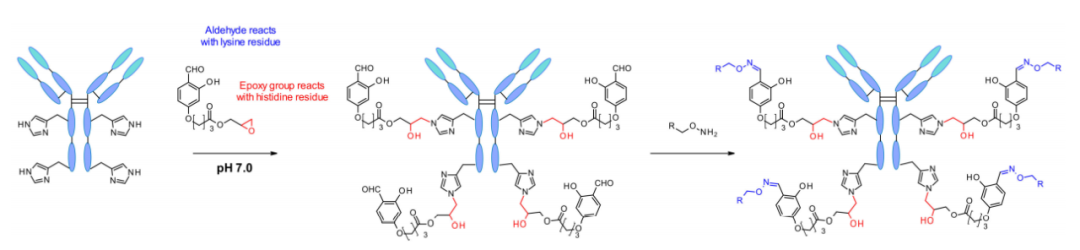
This directed modification technology of the key protein later developed into a single lysine residue labeling technique, which demonstrates undeniable selectivity even in the presence of N-terminal amines. The success of the method relies on Fk1-spacer-Fk2 reagents.
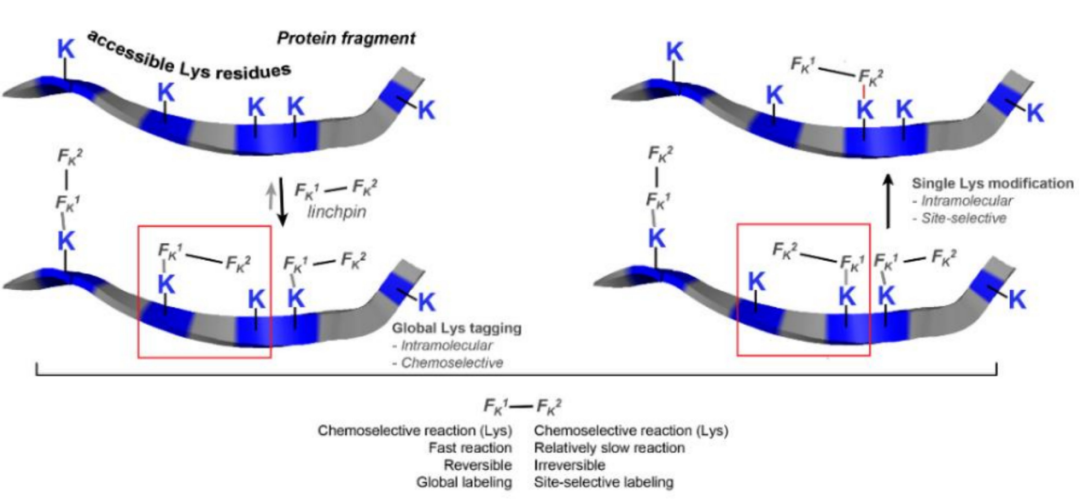
Fk1 functional groups react reversibly with lysine, modulating the microenvironment of the proximal Fk2 lysine residues (K169 and K395). The design of the spacer regulates the conjugation position. This method has been successfully applied to the synthesis of ADC (trastuzumab-emtansine), demonstrating that its cellular activity is comparable to the approved Kadcyla.
Recently, Merlul et al. reported a different conjugation strategy that effectively targets histidine residues on natural antibodies. They introduced a cationic organometallic platinum(II) linker, [ethylenediamine platinum(II)]2+, depicted as Lx.
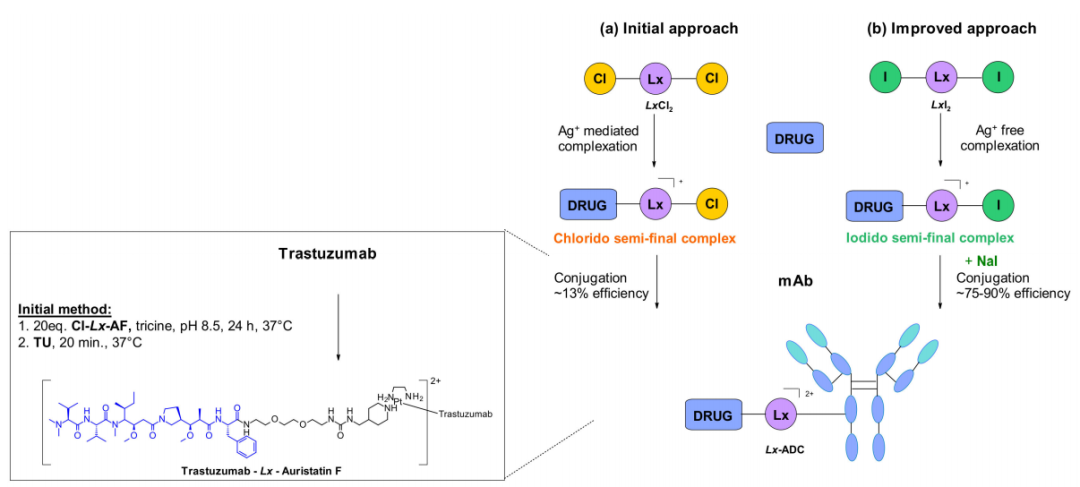
This technique is based on two steps: complexation and conjugation. Nitrogen-containing heterocyclic ligands such as piperidine coordinate with Lx to form complex precursor, a stable intermediate containing a payload and a chloride ion on the ligand. This complex contains a positively charged Pt(II) center, which enhances the water solubility of the linker and payload complex and minimizes antibody aggregation; this method also extends to similar iodine complexes. In a recent report, the use of sodium iodide has been shown to significantly improve the coupling yield and selectivity of this technique. The chloride ligands remaining on the Cl-Lx-drug load complex are exchanged with iodides to generate a more active I-Lx-drug load, resulting in higher coupling yields. This technique has been applied to large-scale production of ADC drugs.
Disulfide Rebridging Strategy
IgG antibodies contain four interchain disulfide bonds, two connecting light chains and heavy chains, and two located in the hinge region connecting the two heavy chains, which maintain the integrity of the monoclonal antibody. Another classic bioconjugation pathway explores the role of these cysteines as effective payload attachment points. The reduction of the four disulfide bonds typically generates eight thiol groups that can react with maleimide linkers, resulting in ADCs with a DAR of 8.
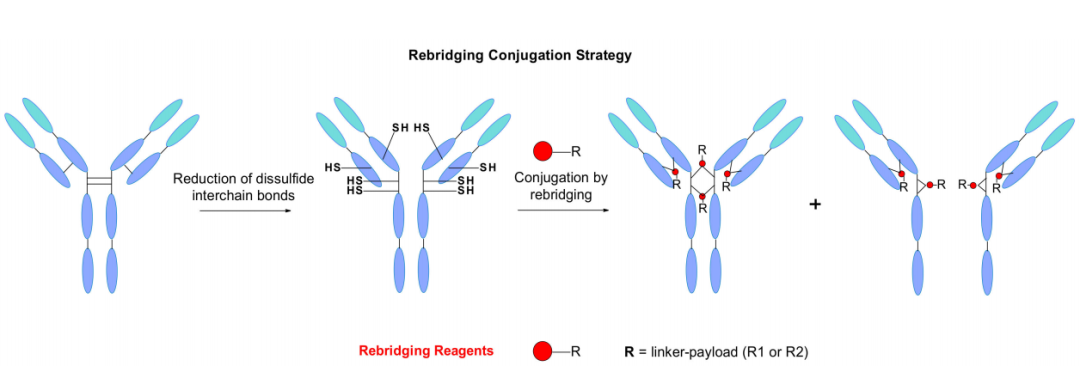
Doronina and colleagues reported an example of a chimeric anti-CD30 monoclonal antibody conjugated to MMAE with a DAR of 8. Compared to classical lysine conjugation, this method of payload loading offers better control. However, it has been reported that higher drug loads increase the risk of aggregation, leading to higher plasma clearance rates and reduced in vivo efficacy.
Badescu et al. reported a new site-specific rebridging conjugation strategy in 2014, being the first to demonstrate that new bis-sulfone could alkylate two thiols from reduced disulfide bonds in antibodies and antibody fragments while minimizing the impact on antigen binding. Later, Wang et al. described a new water-soluble allyl sulfone reagent that enhances reaction activity without in situ activation. It exhibits high stability, high water solubility, and site specificity.
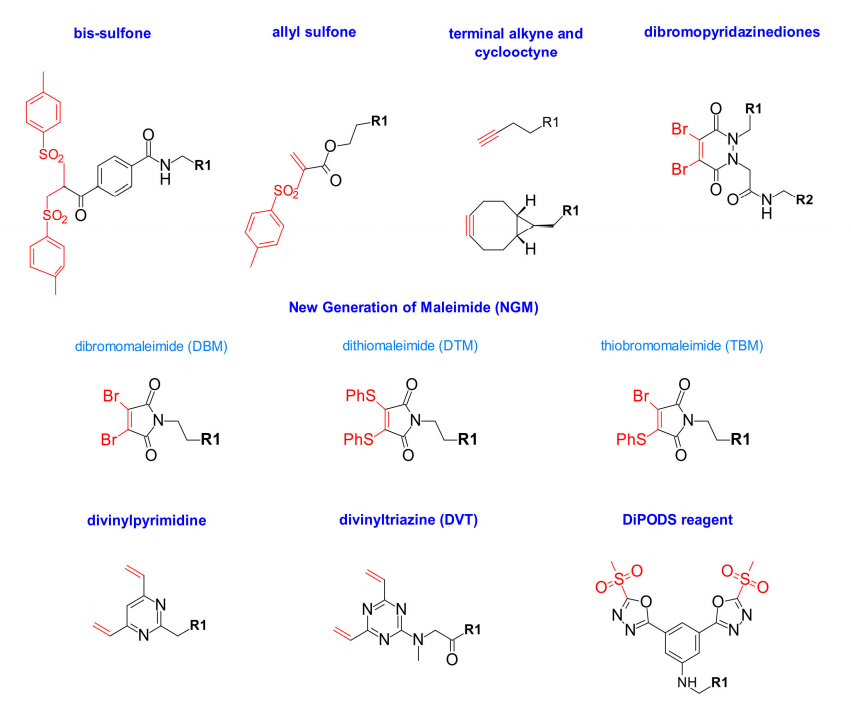
Moreover, there are rebridging techniques involving thiol-alkyne and terminal alkynes and cyclooctyne, further developing a new generation of maleimides such as dibromo- (DBM) and dithio-maleimides (DTM) for site-specific conjugation. These maleimide analogs contain good leaving groups at positions 3 and 4, allowing for rapid, efficient, and high-yield coupling. Recently, hybrid thio-bromo maleimides (TBM) combining the properties of dibromo and dithio maleimides have been reported, showing faster binding and a higher percentage of DAR=4, possibly due to bromine reducing steric hindrance.
In 2015, Chudasama et al. introduced a new class of rebridging reagents, dibromopyridazinediones. They demonstrated its ability to effectively insert into disulfide bonds, and the resulting structure exhibited excellent hydrolytic stability even at high temperatures. However, heterogeneity was also observed with increased temperature during the reduction step, allowing for selective introduction of different functional groups.
Divinylpyrimidine is another effective rebridging reagent capable of producing stable ADCs with a DAR of 4. Spring et al. studied the effect of vinyl heteroaryl scaffolds on cysteine rebridging, suggesting that replacing pyridine with pyrimidine could make the heteroaryl ring a better electron acceptor, thereby increasing crosslinking efficiency. Their work extended to divinyltriazine, which showed higher efficiency in rebridging at elevated temperatures.
To avoid the drawbacks of in vivo instability associated with classical maleimide conjugation, Barbas et al. studied methylsulfonylphenyl oxadiazole, which specifically reacts with cysteine. Their stability is higher compared to cysteine-maleimide conjugates in plasma. Inspired by this, Zeglis designed DiPODS reagents containing two oxadiazole-methylsulfonyl moieties linked by phenyl, which form covalent bonds with two sulfhydryl groups in a rebridging manner. This coupling method exhibits superior in vitro stability and in vivo performance compared to maleimide conjugation.
Glycan Conjugation
Since IgG is a glycoprotein, it contains an N-glycan at the N297 position of each heavy chain in the CH2 domain of the Fc fragment, which can serve as attachment points for connecting effective payloads. The distal positioning of glycans relative to the Fab region reduces the risk of damaging the antibody’s antigen-binding ability after conjugation. Moreover, their chemical composition differs from that of the antibody’s peptide chain, allowing for site-specific modification, making them suitable conjugation sites.
Glycan bioconjugation can be distinguished based on the techniques used to target carbohydrates: including glycan metabolic engineering, glycan transferase treatment after oxidation, and labeling with ketones or azides after treatment with endoglycosidases and transferases.
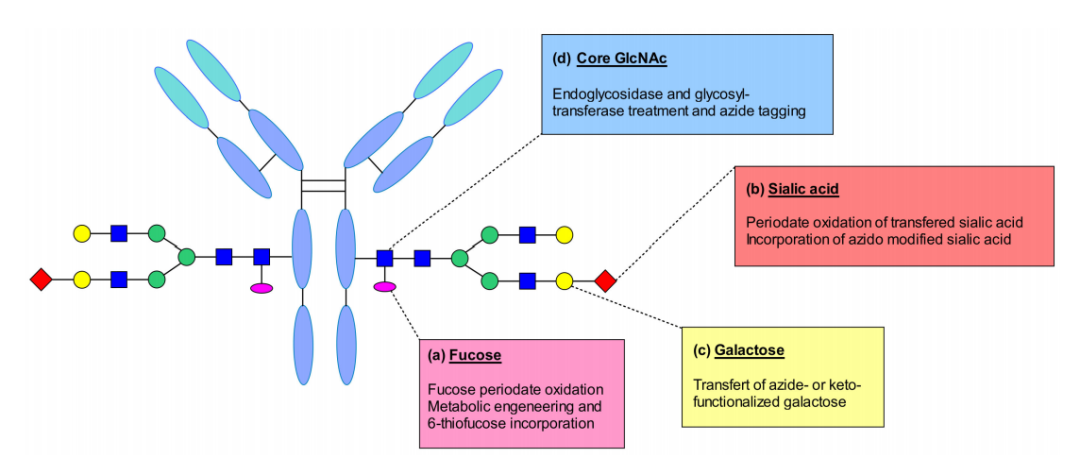
Neri et al. reported site-specific modification of fucose at the N-glycosylation site of IgG antibodies. This sugar contains a cis-diol moiety suitable for selective oxidation. They oxidized fucose residues with sodium periodate, generating an aldehyde that can react with a linker containing hydrazine, allowing the antibody to be connected to the drug through a hydrazone bond.
Senter and colleagues added thiol analogs to cell culture media, incorporating 6-thio-fucose into antibody modifications through metabolism. They believed that the substitution was achieved by hijacking the fucosylation pathway, thus introducing a chemical site for site-specific binding. Compared to classical cysteine conjugates, this method significantly reduces heterogeneity levels and produces conjugates with more predictable pharmacokinetic and pharmacodynamic characteristics.
Recombinant IgG contains little sialic acid; however, it has been shown that using galactosyl and sialyl transferases can enzymatically modify glycine. By adding galactose through enzymatic reactions to obtain G2 glycan, sialic acid is then added to the terminal. This modification generates an aldehyde via high periodate oxidation, which can conjugate with a linker-effective payload bearing a hydroxylamine group. The resulting conjugates exhibit high targeting selectivity and good in vivo antitumor activity. High periodate can also oxidize sensitive amino acids such as methionine, affecting binding to FcRn.
In addition to these conjugation strategies, galactose residues can also serve as modification sites. Several studies have reported substituting galactose with a ketone or azide-containing galactose using mutated β-1,4-galactosyl transferase, opening avenues for efficient coupling with galactose derivatives containing dual orthogonal functional groups. These techniques have been developed for imaging and anticancer applications.
Endoglycosidases EndoS and EndoS2 discovered from pyogenic streptococci can hydrolyze N-glycans of IgG, making the hydrolyzed residues effective sites for bioconjugation. This method helps to homogenize the glycan structure of monoclonal antibodies and is applicable to any IgG subtype. Such methods have been applied to trastuzumab-maytansine, producing glycan-conjugated ADCs with good in vitro and in vivo efficacy.
Site-Specific Bioconjugation of Engineered Antibodies
Advancements in bioorthogonal chemistry and protein engineering have contributed to the production of more homogeneous ADCs. Although there are many available attachment methods for natural monoclonal antibodies, site-specific bioconjugation on engineered antibodies can more effectively control DAR while avoiding alterations in binding affinity to antigens. Thus, introducing natural or non-natural amino acids at certain positions results in homogeneous products with excellent pharmacokinetic and pharmacodynamic characteristics.
Enzymatic Methods
The attachment of effective payloads can be achieved in a highly selective manner by inserting specific amino acid tags into antibody sequences. These tags are recognized by specific enzymes, such as formylglycine-generating enzyme (FGE), microbial transglutaminase (MTG), transpeptidases, or tyrosinases, allowing for site-specific conjugation.
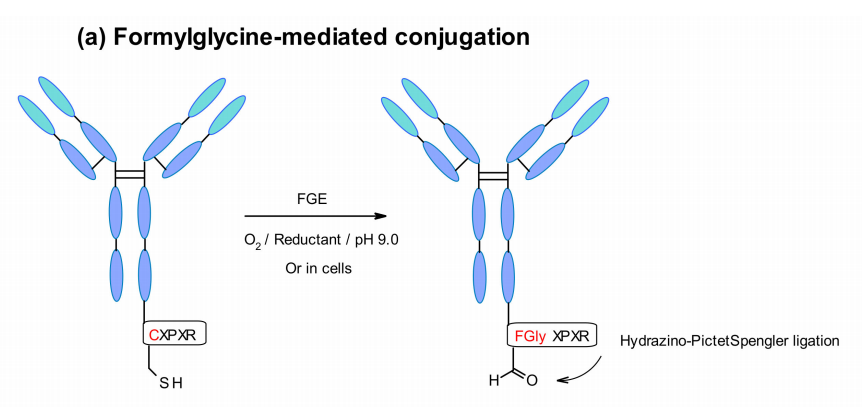
Aaron et al. explored a new site-specific conjugation technique utilizing aldehyde-labeled proteins. This technique leverages a gene-encoded pentapeptide sequence (Cys-X-Pro-X-Arg), where the cysteine residue is recognized by FGE and is co-translationally oxidized to formylglycine during protein expression in cells. Thus, engineered antibodies are selectively conjugated with aldehyde-specific linkers through HIPS (hydrazino-Pictet–Spengler) chemistry.
The microbial transglutaminase (MTGase) strategy is also frequently developed for site-specific conjugation. MTGase catalyzes the formation of peptide bonds between the glutamine side chain at position 295 of deglycosylated antibodies and primary amines of substrates. Compared to other enzyme strategies, MTG is a flexible technology that does not require peptide donors for conjugation. As long as the acyl receptor contains a primary amine, there are no structural limitations.
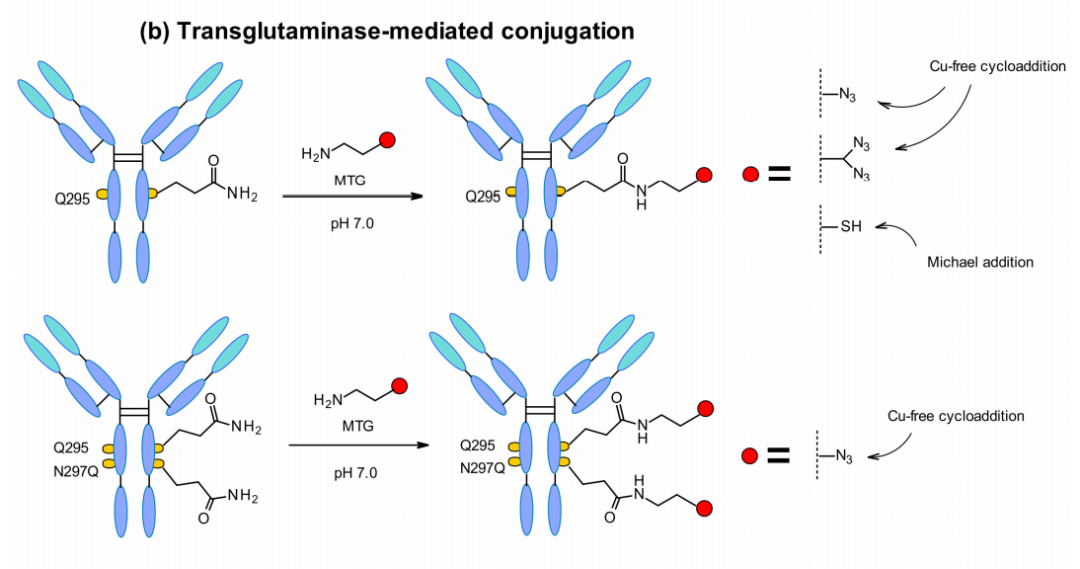
Glutamine residues naturally exist in the Fc region of each heavy chain of monoclonal antibodies. After deglycosylation at position 295, glutamine residues can be conjugated through MTGase-mediated reactions, resulting in homogeneous ADCs with a DAR of 2. To enhance efficiency, branched linkers can be conjugated, thereby doubling the DAR, and mutating the aspartic acid at position 297 to glutamine can also increase the DAR.
NBE Therapeutics has developed a coupling method based on Staphylococcus aureus transpeptidase A. Their strategy utilizes transpeptidase A (SrtA), which cleaves the amide bond between threonine and glycine residues in the LPXTG (X=any amino acid) pentapeptide motif. It then catalyzes the conjugation of the glycine-associated payload with the newly generated C-terminus, forming peptide bonds under physiological temperatures and pH.
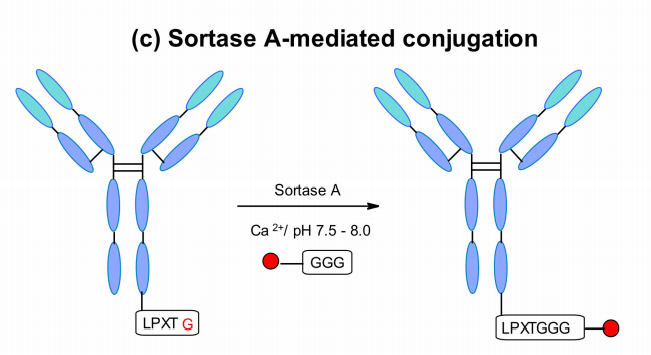
This method has been applied to different antibodies, such as anti-CD30 and anti-Her2, and conjugated maytansine and MMAE with linkers containing 5 glycines; both ADCs exhibited in vitro cell-killing activity similar to classical conjugation. The trastuzumab-maytansine produced by the enzymatic method fully matched Kadcyla in in vivo tests.
In another example, a highly efficient anthracycline toxin derivative PNU-159682 ADC was generated using the transpeptidase method. Interestingly, through this technique, the coupling efficiency even exceeded that of Adcetris and Kadcyla analogs. Moreover, the prepared PNU-159682 ADC exhibited high in vitro and in vivo stability and showed potency exceeding that of ADCs containing microtubule-targeting payloads.
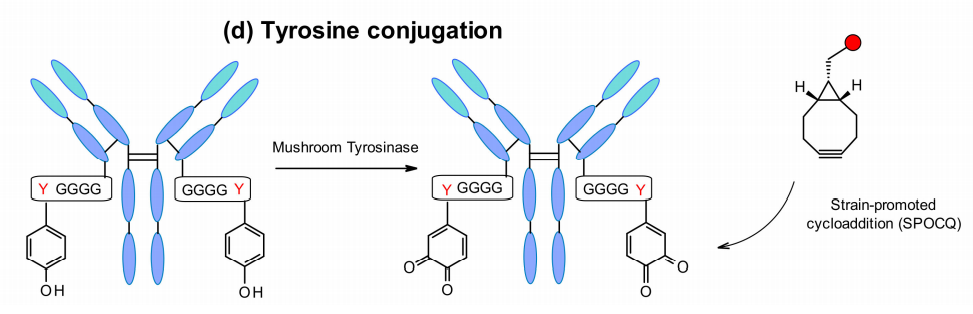
Another emerging method for site-specific antibody labeling is through tyrosine tags, where the tyrosine tag is fused to the C-terminus gene of the monoclonal antibody light chain. Considering site accessibility, Bruins and colleagues utilized an engineered four-glycine-tyrosine residue as a label, providing an easily accessible site for conjugation. Tyrosinase oxidizes tyrosine to 1,2-quinone, allowing for cycloaddition reactions with various bicyclo[6.1.0]nonyne (BCN) derivatives. This method can effectively couple with MMAE containing BCN linkers.
Cysteine Engineering: Thioantibody Technology
Random cysteine conjugation and rebridging utilize naturally occurring cysteine residues within the antibody structure. However, the heterogeneity of random cysteine methods and the fragmentation of monoclonal antibodies in rebridging strategies need to be considered in ADC synthesis, especially when hydrophobic drugs are being conjugated.
In contrast, thioantibody technology achieves site-specific and uniform modification of desired sites on antibodies by utilizing engineered reactive cysteines that do not involve structural disulfide bonds. Generally, the design of cysteine mutations aims to facilitate the coupling of cytotoxic effective payloads while maintaining monoclonal antibody stability, affinity, and minimizing ADC aggregation. To determine the optimal position for mutations, several techniques are often employed, including computational modeling, model system screening, and high-throughput scanning.
Junutula et al. first reported a thioantibody strategy, replacing alanine (HC-A114) at position 114 of the heavy chain of the anti-MUC16 antibody with an engineered cysteine residue. The reactive thiol within the engineered position can react with a maleimide-loaded linker. The synthesized anti-MUC16 ADC exhibited efficacy in xenograft mouse models and showed high-dose tolerance in rats and crab-eating macaques, establishing a general approach for thioantibody conjugation strategies.
Furthermore, maleimide linkers can undergo two parallel reactions in the cytoplasm: reverse Michael reaction leading to loss of linker-effective payload and hydrolysis of maleimide, both of which significantly impact the in vivo activity of ADCs. To improve stability, Lyon and collaborators designed a linker that integrates a basic amino acid adjacent to the maleimide. Incorporating diaminopropionic acid (DPR) promotes the rapid quantitative hydrolysis of thiosuccinimide at neutral pH and room temperature, thus preventing non-specific deconjugation and enhancing in vivo stability. In addition to commonly used maleimides, various cysteine-reactive agents have been explored, such as iodoacetamide, bromomethyl ketone, carbonyl acrylate, and N-alkyl vinylpyridinium salts.
Bioconjugation with Engineered Non-Natural Amino Acids
In addition to thioantibody technology, the incorporation of non-canonical amino acids (ncAA) provides another possibility for site-specific conjugation. This technique uses amino acids with unique chemical structures, allowing for the chemical selective introduction of linker-effective payload complexes. This technique requires the recombination of antibody sequences, utilizing tRNAs and aminoacyl-tRNA synthetases (aaRS) that are orthogonal to all endogenous tRNAs and synthetases within host cells to incorporate ncAA into proteins in response to unassigned codons. Typically, ncAA are added to the fermentation medium during the fermentation process. Selecting non-natural amino acids is crucial, as they may evoke immunogenicity. Common ncAAs include analogs of natural amino acids with unique groups, such as ketones, azides, cyclopropenes, or dienes.
Studies have successfully integrated p-acetylphenylalanine (pAcF) into anti-CXCR4 antibodies. The effective payload Auristin is conjugated to the antibody through an oxime linkage, generating a chemically homogeneous ADC. This ADC exhibited good in vitro activity and completely cleared lung tumors in mice.
Due to the acidic conditions required for oxime linkage and the slow release kinetics of ADCs, another option is to incorporate azides containing ncAA. The widely used p-azidophenylalanine (pAzF) can rapidly undergo CuAAC or SPAAC reactions under physiological conditions, successfully conjugating glucocorticoid effective payloads onto anti-CD74 antibodies using this strategy. In addition to pAcF technology, azide-containing lysine analogs (AzK) have also been successfully integrated into antibodies, producing site-specific ADCs with Auristin, PBD dimers, or microtubule-targeting payloads.
Additionally, cyclopropene derivatives of lysine (CypK) and naturally occurring atypical amino acids such as selenocysteine (Sec) have been successfully integrated into antibodies. The resulting ADCs exhibit good stability, selectivity, and in vitro and in vivo activity.
Conclusion
In recent years, significant progress has been made in the structural optimization and mechanism expansion of ADCs. New conjugation technologies have been developed to achieve higher selectivity for tumors. These conjugation technologies provide ADCs with better stability, selectivity, and in vitro and in vivo activity. The preliminary data from these novel conjugation technologies is encouraging and will greatly promote the rapid development of ADC drugs in the future.
References:
1. The Chemistry Behind ADCs. Pharmaceuticals (Basel). 2021 May; 14(5): 442.
Source: Xiao Yao Shuo Yao, December 23, 2024