In 2024, the term “AI” was ubiquitous in all new 3C digital products, specifically referring to large AI models. Conversely, large AI models are also inseparable from hardware, as any new product must address three critical questions: What is the practical application scenario? How will it be accepted by the market? And how will it generate profit?
Due to their high relevance, this annual summary will encompass both AI and 3C digital products.
During the last major transformation in the tech industry, many internet startups emerged. In contrast, many players in the wave of large AI models are well-known giants; even behind OpenAI and Anthropic, there is a constant struggle between Microsoft and Amazon. These large companies are making hefty bets on the uncertain future of AI and have begun to explore their respective directions as of 2024.
This year, most of the high-profile products came from large companies, but several startups also shone brightly. The diversity of products has significantly lowered the usage threshold this year, allowing even ordinary people to utilize large AI models to create text, images, code, and even intelligent agents, leading to the birth of many productivity tools. In terms of hardware, AI hardware aimed at replacing smartphones and new interactive devices is also brewing, poised to transform the lifestyles of people worldwide.
Following the lines of companies and products, let us review what has transpired in the AI and 3C fields, presenting the underlying logic and trends.
Large Companies Thriving Amid Uncertainty
NVIDIA & TSMC: Enemies at the Gate
For these two ultimate bosses of the tech industry, their competitors are no longer just rival products but larger, more mysterious forces.
NVIDIA and TSMC have, in a sense, become the ultimate bosses of the entire tech industry. NVIDIA launched its next-generation GPU products in 2024, including the H200 based on the Hopper architecture and the B100 based on the Blackwell architecture. Both were in high demand post-launch, and this trend is expected to continue next year.
Meanwhile, TSMC, NVIDIA’s primary foundry partner, is also in a strong position, with its 3nm process capacity beginning to ramp up. The iPhone 15 Pro, which it manufactures, has already been released, and the 2nm process is expected to go into production in 2025, with trial production yields exceeding 60%. Compared to its troubled main competitors, Intel and Samsung, TSMC is considered “far ahead.”
TSMC has encountered varying degrees of trouble in establishing factories in Saxony, Germany, and Arizona, USA. After reaching a market value of $3.34 trillion in June, NVIDIA faced antitrust investigations from the U.S. Department of Justice and the Chinese State Administration for Market Regulation in the second half of the year. As two giants overlooking the industry, their competitors are not just rival products but larger, more mysterious forces.
OpenAI & Anthropic: The Prophets
The significance of the competition between these two companies lies not only in technological advancements but also in the release of much information about the development of AI, encouraging more people to participate in discussions and gain insights into the future.
“We may see superintelligence within a few thousand days.” — Sam Altman
“Powerful AI could arrive as early as 2026, and in pure intellectual fields like biology, AI may even surpass Nobel laureates.” — Dario Amodei
Around the same time, the CEOs of OpenAI and Anthropic expressed optimism about the future of AI. We cannot know if they are referring to the imminent arrival of AGI, but both of the world’s most marketing-savvy AI companies had significant releases this year, maintaining high expectations for AI from capital markets to consumer markets.
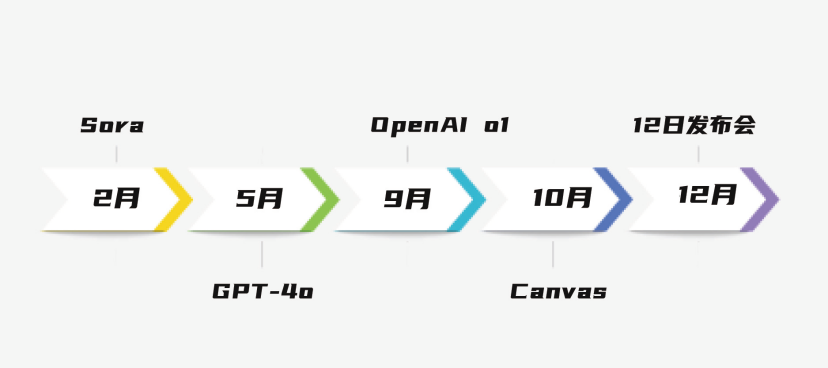
OpenAI gradually unveiled its valuable offerings: the video generation model Sora at the beginning of the year, followed by the multimodal model 4o, then the reasoning-capable model o1, and culminating in a series of 12 product launches over 12 days at the end of the year, including the next-generation reasoning model o3.
Anthropic also released Claude 3 and Claude 3.5 Sonnet this year. Based on user feedback, in many specific scenarios (such as writing), it is even more user-friendly than OpenAI’s products. Additionally, Anthropic has further standardized its expansion policies and AI safety classification, which is perceived as having better safety compared to OpenAI in today’s market.
The significance of their competition lies not only in technological progress but also in releasing much information about the development of AI, encouraging more people to participate in discussions and gain insights into the future.
Apple & Meta: Proposals for an AI Lifestyle
Starting in 2024, Apple and Meta began shaping the possibilities of an AI lifestyle through their products.
Both Apple and Meta embraced AI in their hardware this year, but the market’s response was inconsistent. After a period of popularity, the Vision Pro faced a decline in sales, while the Ray-Ban Meta glasses became a bestseller as a trendy item. Head-mounted glasses have emerged as the most promising category of future AI hardware.

Image Source: Meta.com
Apple integrated Apple Intelligence into the latest iPhone 16 series and the iOS 18.2 system, incorporating ChatGPT to significantly enhance Siri’s conversational abilities, image processing, camera applications, and writing capabilities.
Meta, meanwhile, launched the VR headset Quest 3 alongside the conceptual glasses Orion, showcasing the complete form of future smart glasses, expected to be released in 2027.
Since the surge of large models, AI has begun to emerge as a productivity tool beyond just chatbots. However, its concrete impact on “real life” remains limited. Starting in 2024, Apple and Meta began shaping the possibilities of an AI lifestyle through their products. With their influence, more AI functionalities that combine software and hardware will significantly enter our vision in 2025.
Qualcomm & Intel: AIPC Unfinished
After a strong start, the path for AIPC has become exceptionally unclear.
This year has not been particularly good for Qualcomm, but in comparison to Intel, it seems less dire.
Since the beginning of the year, the two companies have been openly competing over the concept of AIPC. Intel’s Meteor Lake, released last year, integrated a dedicated AI acceleration engine (NPU) for the first time, focusing on edge AI task processing. Subsequently, products like Lenovo’s YOGA Pro 7 and ASUS’s Zenbook 14 2024 were launched at the beginning of this year.
The marketing of AIPC has had some effect; according to IDC data, global PC shipments increased by 1.5% year-on-year in Q1 and by 3% in Q2, marking a good start. However, starting in Q3, shipments began to decline by 2.4%, while Intel reported a net loss of $1.61 billion in Q2, falling short of expectations, leading to a 26% drop in stock price and subsequent turmoil in management and layoffs.
In contrast, Qualcomm’s performance in mobile chips and automotive systems remains strong, achieving nearly $33.2 billion in revenue for fiscal year 2024, even attempting to acquire its old rival and friend Intel. However, in the AIPC field, which is deeply tied to Microsoft, it has also taken a bleak path. Although it released the Snapdragon X Elite and Snapdragon X Plus processors and launched some PC products, the share of devices using the Snapdragon X series in the entire Windows PC market remains below 1.5%. Additionally, in October, it abruptly canceled the Snapdragon developer kit aimed at developers, leaving the once-promising AIPC path increasingly unclear.
Google: A Year-End Turnaround
Major year-end releases indicate that Google still possesses strength, but bureaucratic issues may lead to the loss of top talent, potentially slowing their progress.
From last year to the first half of this year, skepticism about Google’s progress in AI reached its peak, with many media outlets declaring Google lagging in AI and overall innovation. Even CEO Sundar Pichai admitted that the rise of AI was unexpected for him.
However, Google has a solid foundation, and in the second half of this year, the successive launches of online tools like NotebookLM, Gemini 2.0, and the quantum chip Willow injected a boost into Google. After Willow’s release, the stock price surged by 13% within five days, reversing public opinion by year-end.
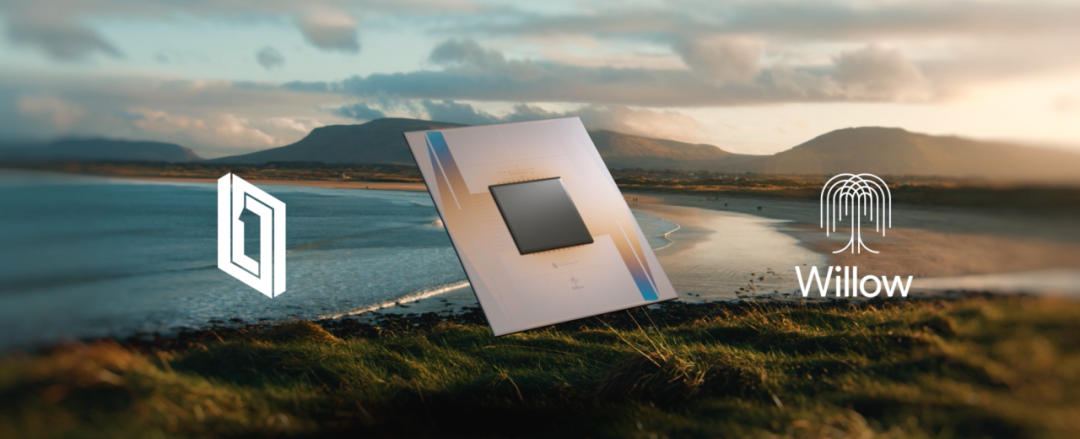
Image Source: blog.google
However, internal management issues at Google seem to persist. For instance, after the explosive success of NotebookLM, its core team collectively left. The bureaucratic problems that have been exposed make it difficult for top talent to remain at Google, even when they produce excellent work internally. This may also explain why Google still possesses strength but appears slow.
Domestic AI: Price-Performance Ratio and Market Competition
A market competition based on “price-performance ratio” is quietly unfolding in China.
Whether due to the late development of large models, a lack of computing resources, or market conditions, domestic large model manufacturers have embarked on a path centered around “price-performance ratio” in 2024.
Recently, Deepseek-V3, dubbed the “Pinduoduo of AI,” has gained widespread attention for pre-training on 14.8 trillion high-quality text data, with training costs around $5.57 million, and the training of a 671B large model requiring only 1/10 of the previous computing power. Its price-performance advantage represents the generally excellent engineering efficiency of domestic models.
The price war regarding price-performance ratio is even more outrageous. In May 2024, ByteDance took the lead in initiating a price war on large model invocation costs in China, with its main model priced at only 0.0008 yuan per 1,000 tokens, approximately 0.8 cents for processing over 1,500 Chinese characters, 99.3% lower than the industry average, causing a market shock.
Subsequently, internet giants like Alibaba Cloud and Baidu announced price reductions for their large model APIs, with some models seeing price cuts of up to 97%, and even offering free versions to capture market share. As a result, OpenAI and Anthropic also began to lower their prices.
To compete for the entry point of AI applications, advertising spending on AI applications has also surged. According to statistics from the blogger “Internet Matters” in October this year, KIMI spent 110 million yuan on advertising for its top 20 proposals in October. Objectively, large-scale advertising has allowed AI applications to begin to penetrate the C-end population and gradually replace some older applications in areas like search and writing. This trend of burning money and the trend of AI replacement will further unfold in 2025.
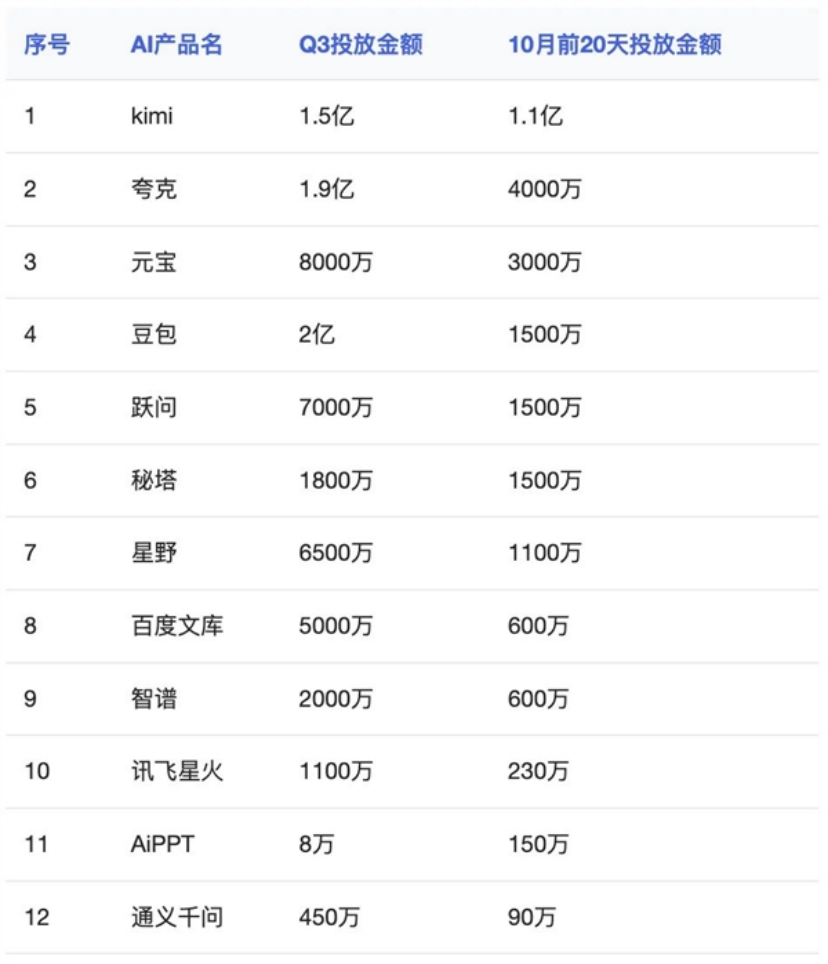
Image Source: Internet Matters
AI Hardware: Feeling Our Way Across the River
Those Failed AI Hardware Products
AI hardware represented by Rabbit and AI Pin may have dealt a significant blow to AI at the beginning of the year.
Rabbit’s founder and CEO, Lu Cheng, previously founded Raven Technology and held important positions at Baidu, with backing from Vinod Khosla, one of the founders of Sun Microsystems. AI Pin received investment from Sam Altman himself. Both AI assistant products boast impressive startup teams and investment backgrounds, but ultimately, their product performance fell short.
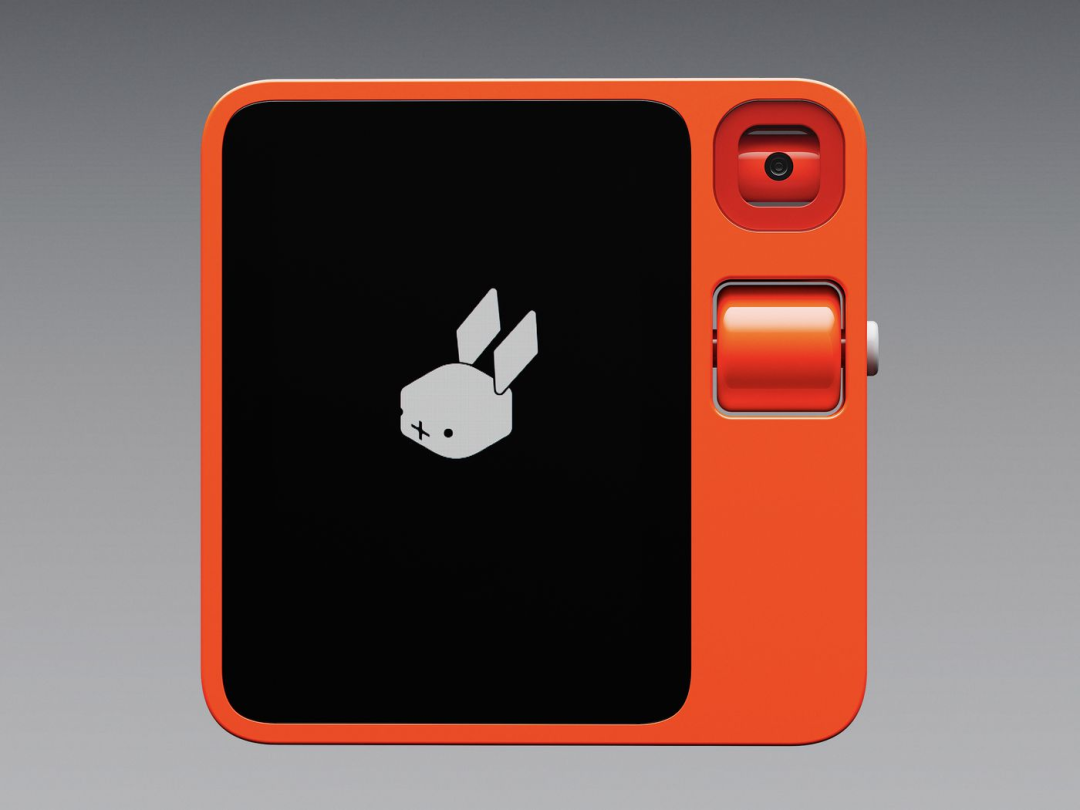
Image Source: rabbit.tech
By September this year, only about 5,000 users were using Rabbit daily. AI Pin, which was launched just a month ago, saw its founder at Humane considering selling the company due to its poor market performance.
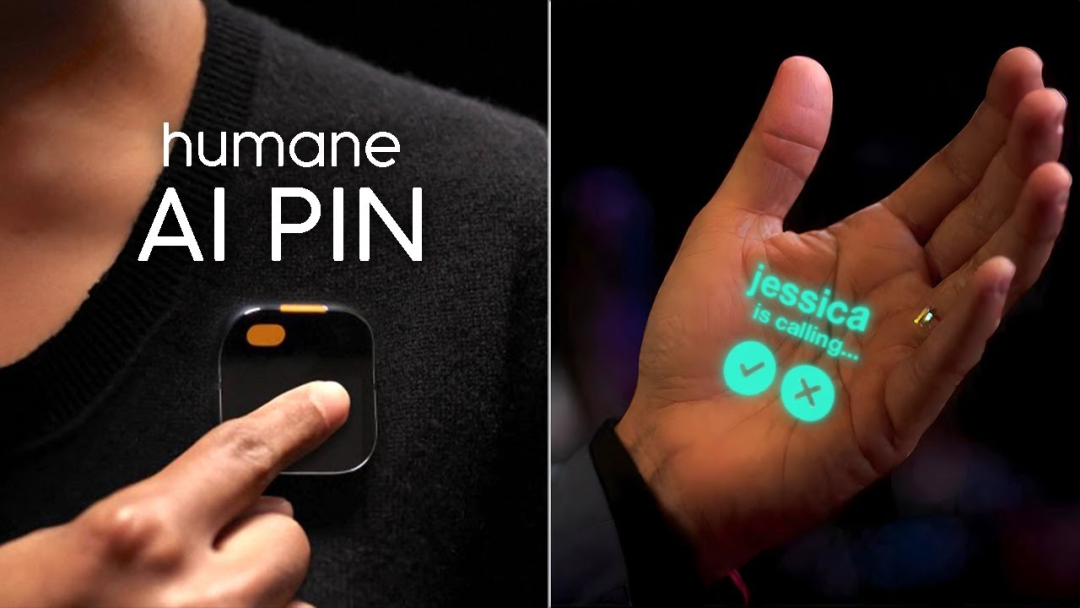
Image Source: humane.com
Will Future AI Hardware Be on Our Faces?
Future AI hardware that will be popular and universal in the mass market will revolve around devices surrounding the face, while niche markets will focus on AI hardware with specific vertical functions, which may take on various forms.
While many AI hardware products are still struggling, the explosive success of the second-generation smart glasses from Ray-Ban and Meta has dramatically changed the direction of AI hardware this year.
The first-generation product from Ray-Ban Meta performed poorly, so even Mark Zuckerberg may not have anticipated that the second-generation product, announced in September 2023, would create a sensation. The second-generation Ray-Ban Meta features significant improvements over the first, including clearer video recording, longer battery life, a 12-megapixel camera, support for 1080p HD video recording, an extended recording time from 30 seconds to 60 seconds, and five-array microphones that allow for complex tasks like taking photos, recording, navigation, and messaging to be controlled entirely by voice through the Meta AI assistant.
These not-so-spectacular technological advancements have led to an all-around upgrade in user experience, quickly gaining market recognition: by September 2024, the second-generation Ray-Ban Meta had surpassed 3 million units sold.
This breakthrough has allowed many entrepreneurs to see the trend. Former Meizu Vice President Li Nan revealed in a podcast that the entrepreneurial circle believes that future AI hardware will concentrate around the face, such as glasses, headphones, and brooch buttons.
The market is indeed developing this way; many popular hardware products this year, whether Apple’s Vision Pro or ByteDance’s Ola Friend, as well as various glasses launched by Starry Sky Meizu and Flash Extreme, are all centered around the face.
Beyond the face, we can also see that products focused on audio recording, like Plaud, and health monitoring devices like the Oura Ring smart ring and WHOOP 4.0 smart band, have also garnered considerable attention.
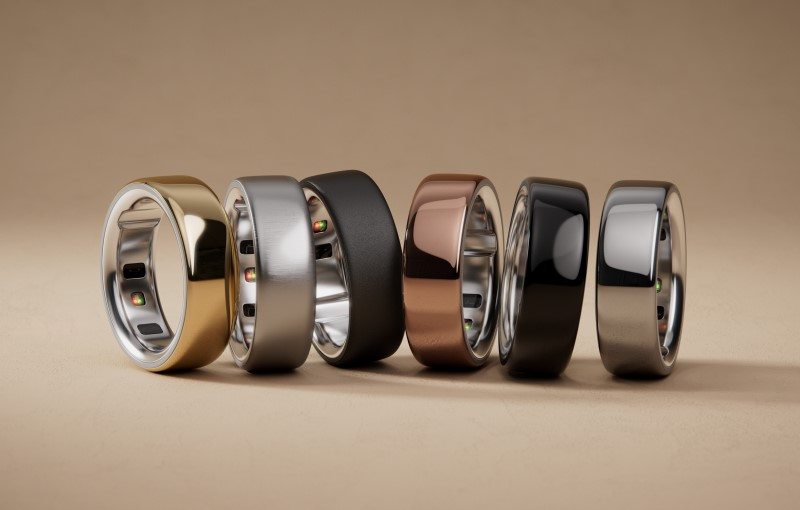
Compared to a simple statement that “AI hardware remains elusive,” I prefer to make this judgment regarding this year’s smart hardware trends: future AI hardware that will be popular and universal in the mass market will revolve around devices surrounding the face, while niche markets will focus on AI hardware with specific vertical functions, which may take on various forms.
So, What About Non-AI?
The current smart industrial revolution is not solely about AI; it also involves the collaborative development of modular supply chains, flexible manufacturing, and automation technologies, allowing more brands to break through traditional business models.
This year marked the comprehensive “invasion” of hardware by AI, but it does not mean that only AI hardware exists this year.
At the beginning of the year, the American startup Augmental unveiled the MouthPad, a mouse controlled by the mouth, which embeds a touchpad into the user’s palate using dental mold technology, allowing users to control computers or mobile devices with their tongues. In September, at Meta Connect 2024, the EMG wristband was introduced alongside the Orion glasses, enabling complete control of AR glasses’ display operations through gestures.
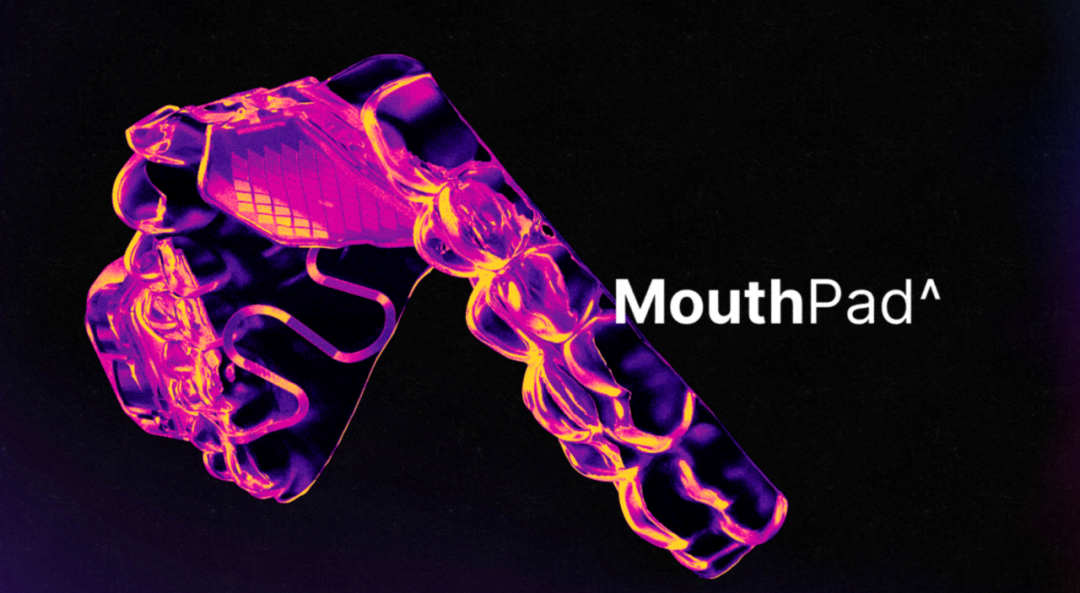
Image Source: augmental.tech
After nearly 20 years without a true revolution in interactive technology following the advent of capacitive touch screens, these two products, announced this year but not yet sold, embody our hopes for hands-free liberation.
In September, Huawei launched its foldable phone. Although many believe that the smartphone category has exhausted its potential, Huawei still managed to innovate. This device, resembling a “folded document,” typically uses high-strength flexible OLED for its screen material, offering excellent display quality and durability, merging the tablet and smartphone categories into one. The existence of this device proves that even in the somewhat “aged” smartphone category, there remains significant room for innovation due to its versatility.
Some older 3C electronics manufacturers are also trying new things, such as Dyson.
Dyson’s products may seem numerous, but they all relate to one thing: motors. In Dyson’s world, everything revolves around motors, providing convenience for quick hair drying and air purification while also generating noise. Dyson engineers spend 20% of their time reducing noise in products, so why not leverage this experience to create a pair of active noise-canceling headphones?
They indeed did. The Dyson Ontrac is Dyson’s first purely headphone product. When worn, it can provide users with 40 decibels of noise cancellation across a frequency range of 6 to 21,000 Hz, while also showcasing higher sound fidelity and clarity.
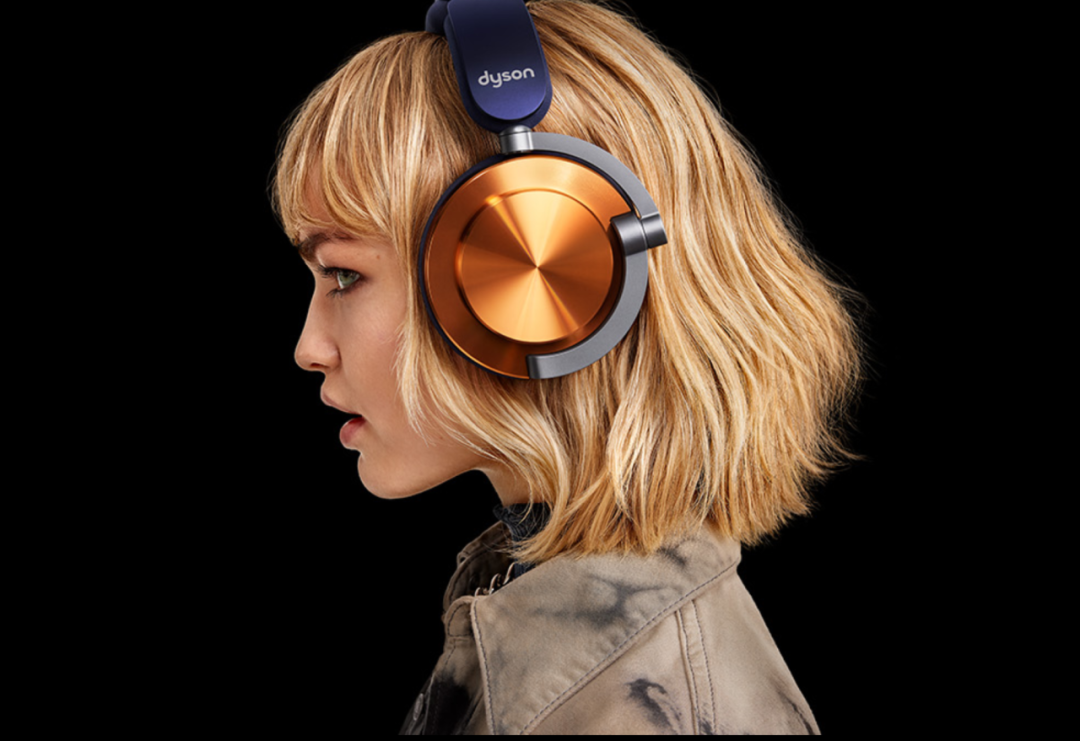
Image Source: dyson.tw
In another sense, the Dyson Ontrac, like Xiaomi’s car and LV’s Bluetooth speaker, signifies the lowering of barriers for cross-industry products. The current smart industrial revolution is not solely about AI; it also involves the collaborative development of modular supply chains, flexible manufacturing, and automation technologies, allowing more brands to break through traditional business models. In 2025 and beyond, we will see more of this cross-industry innovation.
AI Software Applications: Liberation of Productivity
Beyond just a chat window, what other AI software applications can we have?
Indeed, 2024 remains the year of large models. When discussing popular AI news, it is inevitable that products like ChatGPT 4o, o1, Claude 3.5 Sonnet, and Gemini 2.0 will steal the spotlight. However, what everyone ultimately hopes to use are real applications that effectively leverage these models to change our daily work, life, and entertainment patterns.
Better Multimodal Models
Multimodal large models are trending towards “model as application,” and the vigorous development of multimodal large models this year fills us with anticipation for 2025.
Vertical imagination comes from the multimodal process of large models themselves. To date, there is much debate over which is the better video generation model: Sora, Veo 2, Runway, or Keling. Although AI video generation has not yet entered serious content production on a large scale like text-to-text or text-to-image, the competition both domestically and internationally has led to the popularity of content like “bringing old photos to life” or “Dragon Gate Inn x Elon Musk’s dream collaboration” this year. We can expect to see more AI-generated content in 2025, possibly including games driven primarily by AI or entirely AI-driven video channels and films.
Anticipating New Application Scenarios
Throughout this year, AI driven software has not replaced most people’s workflows in reality, but it has indeed improved efficiency in some areas.
Horizontally, the imagination lies in what new applications can be spawned through the APIs of various large models. In 2024, the answer is intelligent agent workflows, AI programming, and knowledge bases.
Since the beginning of the year, how to utilize tools like Coze or Dify to create an AI workflow has become a hot topic on social media. Subsequently, people began to attempt to build intelligent agents with broader applications than just workflows. In this process, using workflows or intelligent agents to write on Xiaohongshu, write papers, or even create companions has become popular. Although these constructions still have a somewhat experimental nature, they have played a role in popularizing AI applications, allowing many to participate in AI creation for the first time.
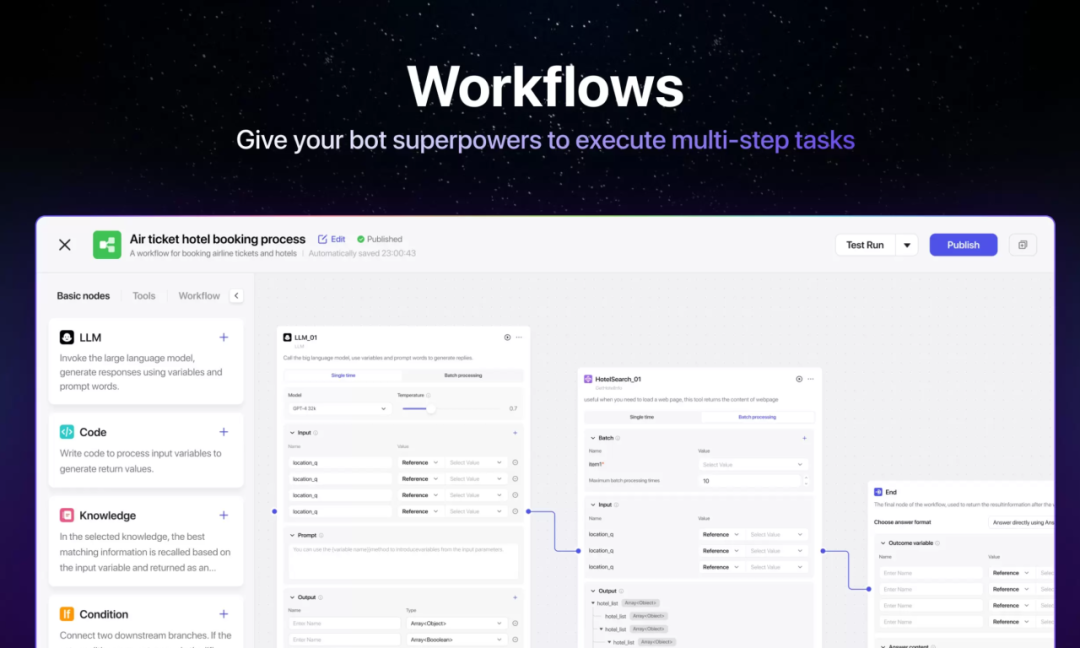
Image Source: guenterchao.net
Services like Cursor and GitHub Copilot have brought real-time code completion and integrated IDE plugins with AI models, driving a transformation in programming work. While the idea of AI replacing programmers remains a meme rather than reality, programmers can indeed use various AI programming tools to enhance their code, providing more options for children’s programming education.
For media professionals, Google’s NotebookLM, Tencent’s ima copilot, and the AI capabilities integrated into established knowledge management software like Notion may provide the most assistance and inspiration. As knowledge management software, all three have enabled AI to deeply construct personal knowledge bases. Among them, NotebookLM even offers conversational podcast output capabilities, truly breaking the limits of traditional work summaries, diaries, or personal data management.
Throughout this year, AI driven software has not replaced most people’s workflows in reality, but it has indeed improved efficiency in some areas. With the plummeting prices of APIs from major model manufacturers, perhaps next year will see the emergence of more efficiency and creative products.
Written by: Timo
Edited by: Luna
One AI
Buy now and save 100%.

This article is from Guokr and may not be reproduced without authorization.
If needed, please contact [email protected]