Lenovo’s New Patent Revealed: Smartwatch Transforms into a Phone with One Click – Can It Really Replace Smartphones?
Recently, Lenovo has stirred things up again. Rumors in the patent circle suggest that Lenovo has submitted a new patent for a “smartwatch that transforms into a phone with one click.” As a mobile KOL who has been in the digital space for years, my first reaction is: will this innovation truly spark a desire for some people to upgrade their devices? Or is it just another gimmick with more hype than practicality? Many fans have messaged me asking for my thoughts, so today I will delve into the details behind this patent and see if it is worth the anticipation.
Price Comparison: Innovation ≠ High Price? Lenovo’s Possible Pricing Strategy
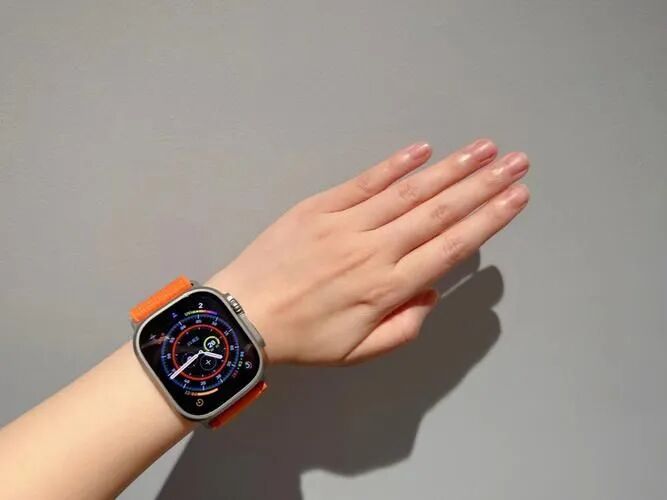
When it comes to price, everyone is certainly most concerned: will this “Transformers”-style device be priced exorbitantly upon release? Let’s first take a look at the current smart wearable market. High-end watches like the Apple Watch Ultra and Samsung Galaxy Watch6 Classic are generally priced between 2500-5000 yuan; meanwhile, there are many more options in the same price range for mainstream smartphones.
Lenovo has always emphasized cost-effectiveness, with earlier models like the ZUK phone and Legion gaming phone taking a more affordable route. If we follow Lenovo’s pricing logic, the launch price of this “watch-to-phone” product is unlikely to exceed 4000 yuan. More importantly, Lenovo often has national subsidy activities and trade-in policies in domestic channels, which could bring the actual price down to below 3500 yuan.
Of course, if you are purely looking for essential communication and health monitoring, Huawei and Xiaomi’s wearable devices can be had for just over 1000 yuan, but they lack the “instant phone transformation” feature. As for competitors, OPPO has showcased a rollable screen concept phone, which has yet to be mass-produced, making its price difficult to estimate. If Lenovo successfully brings this to market, it would indeed be unique.
Configuration Highlights: Transformable Structure + Communication Capabilities, Pros and Cons
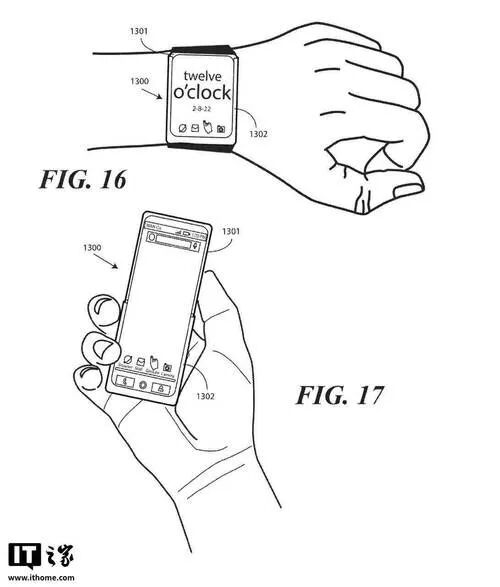
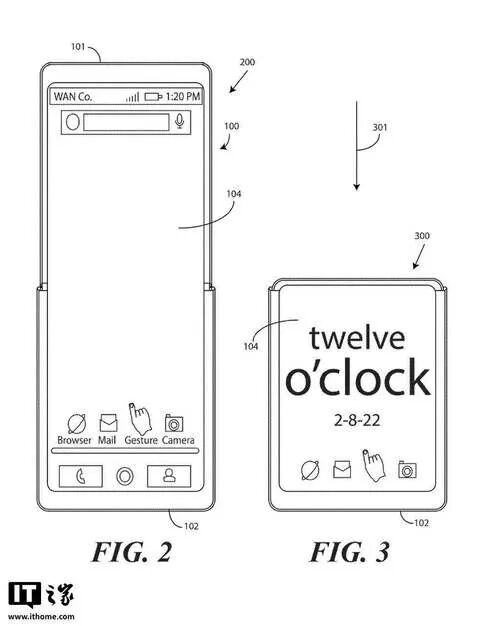
After reviewing the patent diagrams, two highlights left a deep impression on me. First is the “extendable” structural design. The official description states that the main body of the watch can be mechanically extended with one click, doubling the screen area and achieving a seamless transition from watch to phone. Imagine wearing a watch on your wrist, and if you forget your phone when going out, you can easily pull it to transform into a large screen for answering calls and checking WeChat.
The second highlight is that Lenovo is likely to include an independent eSIM communication module. This means that even without a phone, the watch itself can make calls, connect to the internet, and even support 5G. Compared to most current smartwatches that can only “relay” from a phone, this feature is quite impressive.
Of course, the complex structure also brings risks. For instance, the durability of the screen, the thickness after extension, and the mechanical lifespan are all unknowns. Battery life could also be a concern—after all, with a larger screen area, can the battery sustain smartphone-level usage?
User Experience Details: Real-World Scenarios, Can We Say Goodbye to Smartphones?
Imagine a real-world scenario: during your commute, using the watch mode to check the time, measure heart rate, and scan the bus code is convenient; if a friend suddenly messages you, a gentle pull transforms the screen into a larger size, allowing you to handle WeChat, maps, and short videos effortlessly. When exercising, if you don’t want to carry your phone, the watch can directly make calls and play music, completely freeing your pockets.
However, I still have some concerns regarding the experience details. First, after extension, will the weight and thickness allow for comfortable long-term wear on the wrist? Secondly, after the screen is extended, will the tactile feel and sliding operations feel disjointed? And what about temperature control, as the computational pressure in phone mode could lead to overheating?
Additionally, system adaptation is key. Lenovo’s ZUI is fairly standard on phones; whether it can optimize interactions on the wearable side to enhance overall fluidity and usability will directly determine the actual experience of the “phone transformation” feature.
Purchase Recommendations and Target Audience: Who Should Try It, Who Can Wait
To be honest, this type of “watch-to-phone” crossover product is most suitable for two types of people: one is tech enthusiasts and geek players who love to try new things and have a need for a second device; the other is those who often exercise and go out but want to travel light, such as cyclists, fitness enthusiasts, and business travelers.
However, if you have high demands for communication, photography, and gaming performance, or if your primary phone is a necessity, this type of product is more like an auxiliary device and should not be expected to completely replace a smartphone. If your budget is limited, it is advisable to prioritize a fully functional mainstream smartphone plus basic wearables, and consider purchasing this product later when technology matures and prices drop further.
For friends with a budget of 3000-4000 yuan, if you are interested in “black technology” and willing to pay for a fresh experience, Lenovo’s patent product is worth paying attention to. Conversely, if you care more about stability and overall cost-effectiveness, a combination of a mainstream smartphone and a fitness band is a more reliable choice.
Conclusion and Interaction: Would You Pay for a “Watch-to-Phone”?
Overall, Lenovo’s new patent for a “watch-to-phone” is indeed eye-catching. It showcases the innovation of domestic brands and brings new topics to the smart wearable market. However, there is always a threshold between innovation and practicality. As a long-time user, I am very much looking forward to the day it goes into mass production, but I also understand that the number of users willing to pay for it may not be large.
Here’s a question for everyone: do you think watches can really replace smartphones in the future? Would you be willing to pay for such a “Transformers” product? Or do you have any expectations for this type of crossover digital product? Feel free to leave your thoughts in the comments; perhaps your suggestions could be the starting point for the next big hit.