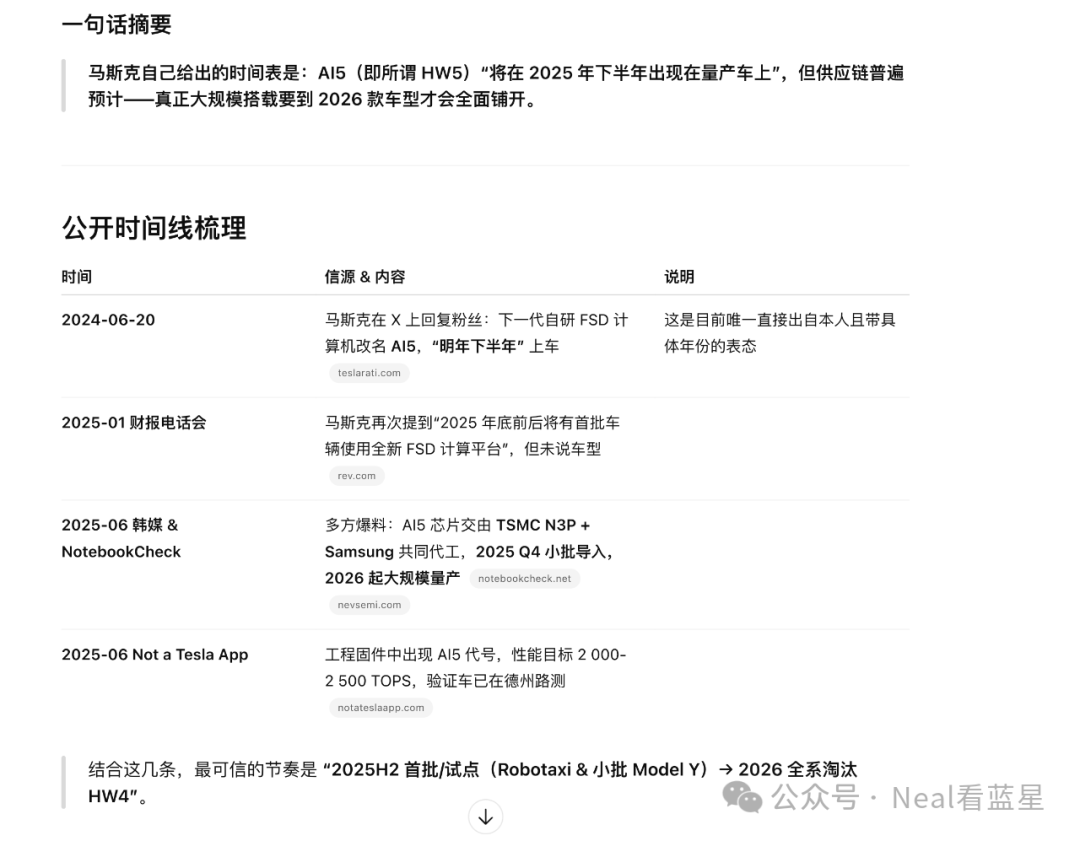
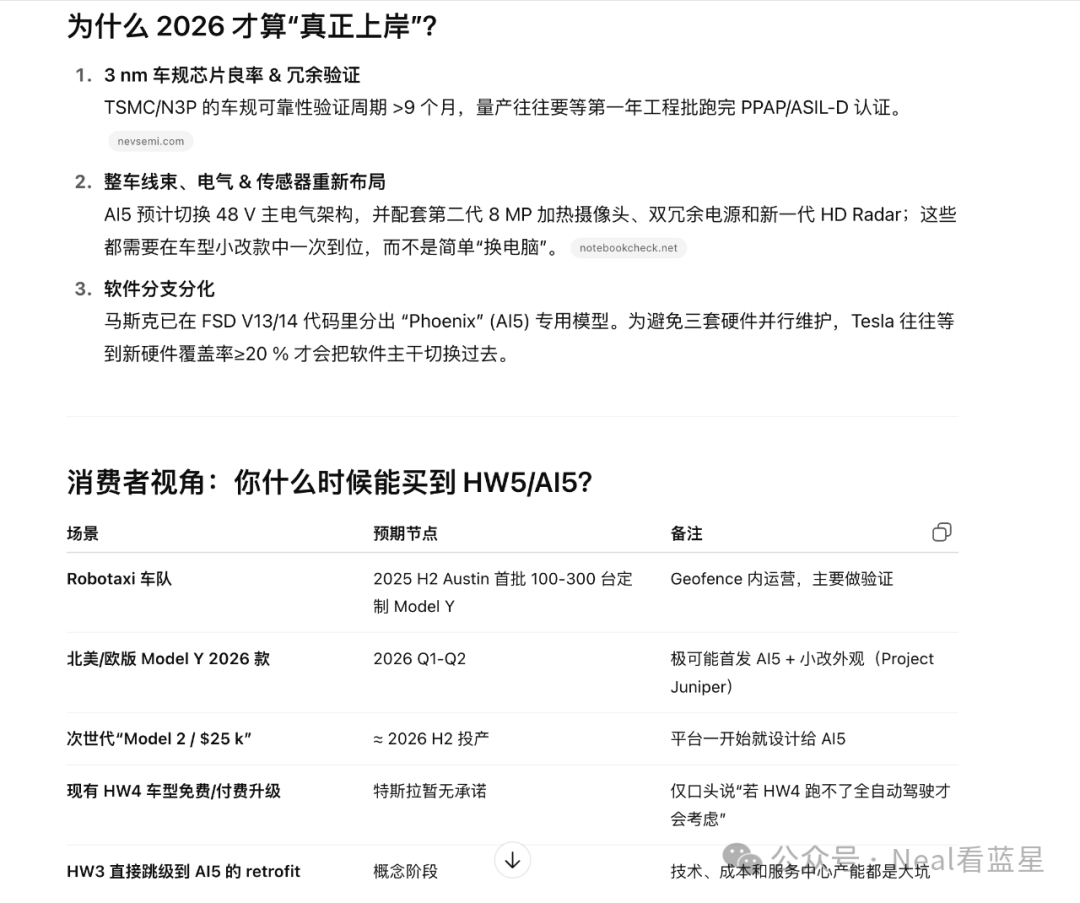
Elon Musk Predicts: The AI5 Chip Will Reshape the Era of Edge AI, How Tesla Protects Travel Safety with Millisecond Speed
Read More:
Edge Inference AI Technology vs. Strategic Transformation of Mining Companies
AI-Driven, Which Company Will Be the Next $1T? Profit Margins Comparable to Nvidia
In the rapidly developing AI technology landscape of 2025, Elon Musk has made another bold declaration: Tesla’s upcoming AI5 chip may become the best inference chip for models with fewer than 250 billion parameters! This statement not only ignites enthusiasm in the tech community but also directly points to the commercial potential of AI in edge devices (such as cars). Imagine a Tesla Model Y traveling at high speed, where the AI chip makes decisions in milliseconds to avoid potential collisions—this is not just a technical showcase, but a commercial revolution concerning life safety. We will delve into the potential of AI5, explore its applications within the Tesla ecosystem, and reveal how low latency drives trillion-dollar market opportunities.
What is an Inference Chip? Why is AI5’s ‘Best’ Declaration So Exciting?
First, let’s clarify some basic concepts. AI chips are generally divided into two categories: Training Chips (used for training models on massive cloud data, such as Nvidia’s H100) and Inference Chips (used for real-world deployment scenarios, making quick “inferences” or decisions). Inference chips act like the brain executors of AI, needing to run models in real-time on resource-constrained devices, rather than training from scratch.
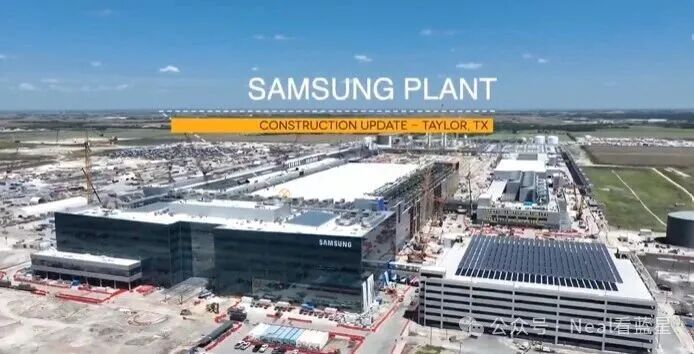
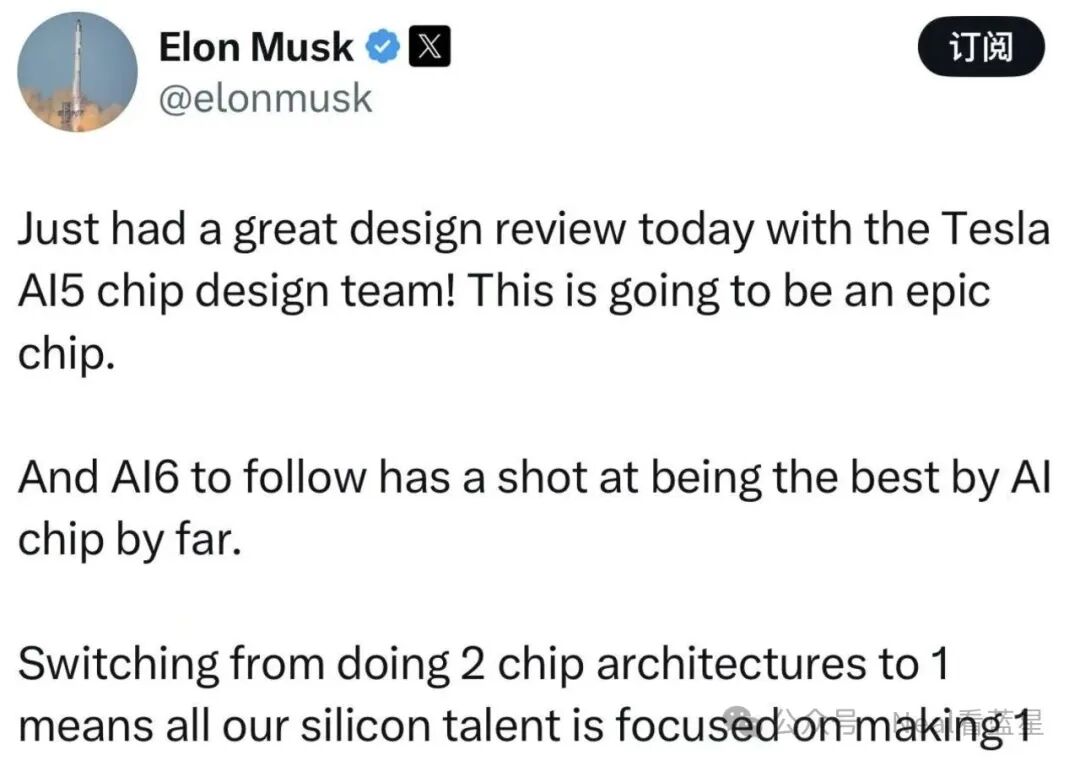
Musk stated in a post on X (formerly Twitter) on September 6: “AI5 could become the best inference chip for any model with fewer than 250 billion parameters. It will have the lowest cost silicon and the best performance/watt ratio.” This is not mere talk. Tesla’s AI chip series started with HW3 (Hardware 3) and has iterated to AI4, with AI5 expected to enter mass production in 2026, utilizing TSMC’s advanced processes, achieving a performance leap of 3-5 times. Unlike cloud giants, AI5 is optimized for edge computing: low power consumption (about 200W), high efficiency (int8 quantized inference), perfectly suited for scenarios like cars and robots..

Why is it the ‘Best’? Musk emphasizes its cost and energy efficiency advantages. For models with fewer than 250 billion parameters (such as Tesla’s FSD full self-driving system), AI5 can provide top inference speeds at a cost far lower than Nvidia’s competitors. What does this mean for business? For car manufacturers, reducing chip procurement and energy costs can directly translate to lower vehicle prices and longer ranges; for developers, it opens the door to standardized edge AI, driving a trillion-dollar market from smart homes to industrial robots.
The AI Revolution on Edge Devices: How Tesla Cars Become ‘Mobile Supercomputers’
The core battlefield for inference chips is edge devices—those terminals far from the cloud, such as smartphones, drones, and especially Tesla cars. Tesla’s FSD (Full Self-Driving) system is a typical case: the vehicle is equipped with 8 cameras, radar, and ultrasonic sensors, processing massive amounts of data every second to make real-time decisions on steering, braking, or lane changes.
Musk revealed that Tesla’s AI chip design team is operating efficiently in Austin, and AI5 will further strengthen this advantage. Compared to previous generations, AI5’s heterogeneous computing core (combining vector and tensor processing) can handle multimodal inputs (such as video + audio), enabling the vehicle to achieve ‘superhuman’ driving in complex road conditions. Imagine this: on a rainy night on the highway, AI5 recognizes pedestrians with millisecond latency and automatically avoids them—this is not science fiction, but a reality already deployed in 4 million Tesla vehicles.
From a business perspective, this brings tremendous leverage to Tesla. By 2025, Tesla’s AI spending is expected to reach $10 billion, half of which will be allocated to onboard inference hardware. When the fleet size reaches 100 million vehicles, peak AI computing power will reach 100GW, far exceeding training needs. This not only enhances FSD subscription revenue (at $99 per month) but also opens the Robotaxi era: idle vehicles can contribute distributed inference computing power, similar to an AI version of ‘SETI@home’, turning waste into treasure and creating new revenue streams.
Millisecond Latency: A Dual Guardian of Safety and Business
Now, let’s discuss the core of user inquiries—why does millisecond speed matter for life safety? In autonomous driving, latency is a lifeline. Studies show that human reaction time is about 200-300 milliseconds, while AI needs to complete the perception-decision-execution loop within 100 milliseconds to match or exceed human safety levels. A study on autonomous driving systems indicated that for every additional 100 milliseconds of network latency, the collision avoidance rate could drop by 20%—this is based on simulation experiments, where delays lead to decision lags, amplifying accident risks.
Why is this so sensitive? Autonomous driving involves V2V (vehicle-to-vehicle) communication and edge computing: vehicles need to share location data in real-time, and if latency exceeds limits, the timing for braking is missed, causing collision probabilities to soar. Tesla’s AI5 is optimized for this: through low-power int8 inference and chip-internal loop testing, end-to-end latency is reduced to below 50ms. This not only enhances safety (FSD has achieved a 37% reduction in collision rates) but also meets regulatory requirements, promoting the commercialization of L4/L5 level autonomous driving.
From a business perspective, low latency is a competitive barrier. Tesla’s Robotaxi plan relies on this: millisecond responses ensure passenger safety, attracting insurance and city permits, with the market expected to exceed $7 trillion by 2030. For enterprise customers, the edge deployment of AI5 means more reliable logistics (such as unmanned trucks) and medical robots, reducing accident compensation costs and enhancing brand trust.
The Future of AI5: The Business Blueprint of the Tesla Ecosystem
Looking ahead, AI6 will further amplify the impact of AI5, with Musk stating it will ‘go further’. Tesla is streamlining its chip strategy, focusing on inference rather than full-stack training, reducing reliance on Nvidia. This injects vitality into xAI and the Optimus robot: AI5 can seamlessly migrate to humanoid robots for real-time environmental interaction.
The business opportunities are evident: Tesla is not just selling cars, but also selling AI computing power. Investors are optimistic about its valuation reassessment—by 2025, stock prices are expected to benefit from the AI narrative, with target prices exceeding $300. For developers, Tesla’s open-source potential (such as Grok AI integration) will foster ecosystem partners to jointly explore the edge AI market.

Musk’s Trillion-Dollar Bet Agreement
- Background: In September 2025, Tesla discussed Musk’s trillion-dollar compensation plan aimed at retaining Musk, addressing technological outlook concerns, and incentivizing shareholder support for his vision. Critics argue that the scale of the plan is unprecedented, calling it ‘irresponsible’.
- Relation to AI5/AI6: The success of AI5 and AI6 is central to Musk positioning Tesla as an AI-driven company (rather than just a car manufacturer). These chips support FSD, Robotaxi, and Optimus projects, which are key to achieving trillion-dollar market growth.
- Agreement Speculation: While specific terms are unclear, they may be linked to FSD deployment, Robotaxi expansion, or chip performance targets, reflecting Musk’s confidence in AI5/AI6 driving breakthroughs in autonomous driving and robotics.
Probability Assessment
The probability of Musk’s trillion-dollar bet agreement being realized is about 60%–70%, depending on the following key factors:
- Short-term (2026–2027): AI5 must be mass-produced as planned and perform excellently in FSD and Robotaxi to lay the foundation for the agreement. Tesla needs to prove AI5’s leading position in edge inference.
- Mid-term (2027–2030): The successful development of AI6 and deployment of Dojo 3 will determine whether Tesla can challenge NVIDIA in the AI hardware space, while the commercialization of Robotaxi and Optimus will drive market value growth.
- Long-term (2030+): If Tesla achieves leadership in the autonomous driving and robotics market, Musk’s vision could propel the company to an $8 trillion market value, significantly increasing the likelihood of the agreement being realized.
Conclusion: Join the AI Edge Revolution, Starting with Tesla
Musk’s AI5 declaration reminds us: AI is not just in the cloud, but also a guardian at the edge. Millisecond latency not only saves lives but also drives business growth. Whether you are a car owner, developer, or investor, now is the perfect time to position yourself—test drive a Tesla equipped with FSD and experience the future firsthand. Safety, intelligence, and profitability, the three are intertwined, and AI5 will lead us towards a better era of travel!
Read More:
Edge Inference AI Technology vs. Strategic Transformation of Mining Companies
AI-Driven, Which Company Will Be the Next $1T? Profit Margins Comparable to Nvidia