ARM has launched the Lumex platform, which will serve as the foundation for the next generation of smartphones, tablets, and PCs. The company promises significant improvements in performance and energy efficiency, emphasizing the capabilities for artificial intelligence and graphics.
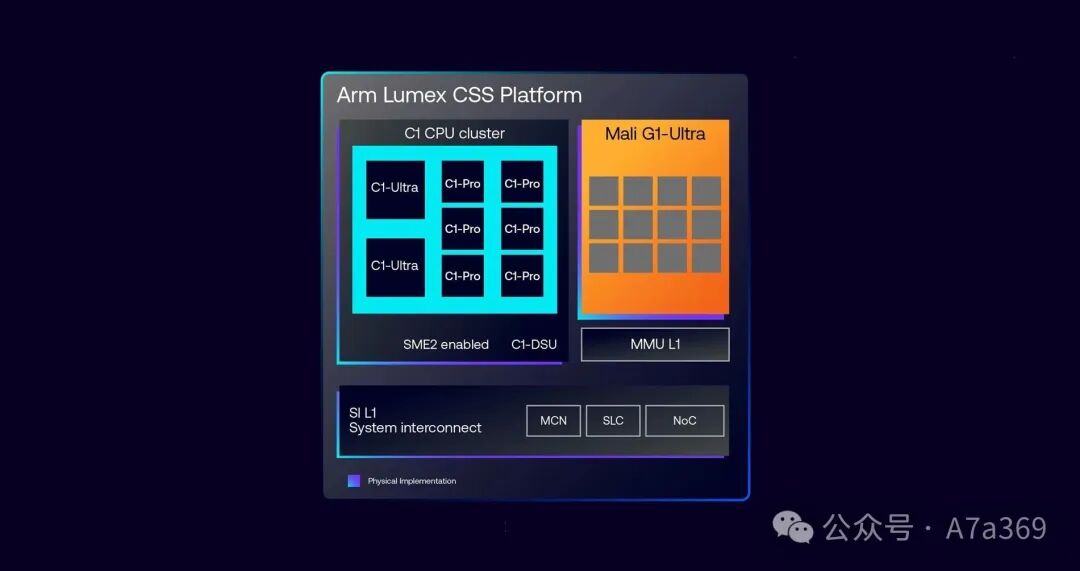
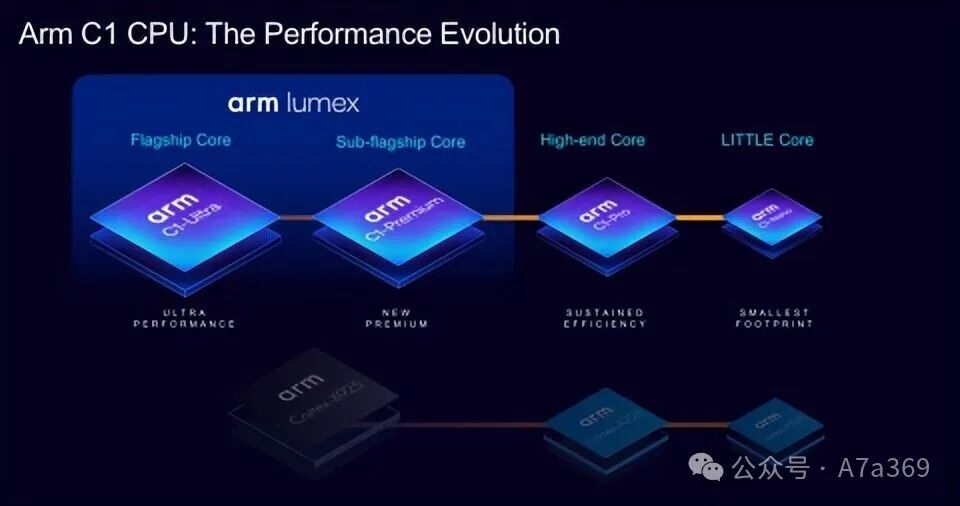
The Lumex C1 series offers four types of processor cores: C1-Ultra, C1-Premium, C1-Pro, and C1-Nano. This design allows for chip performance adjustments based on different devices—from flagship smartphones to more affordable models. According to ARM’s data, the new processor cores improve performance by up to 25% compared to the Cortex X925, and can enhance energy efficiency for AI tasks by up to 3 times.
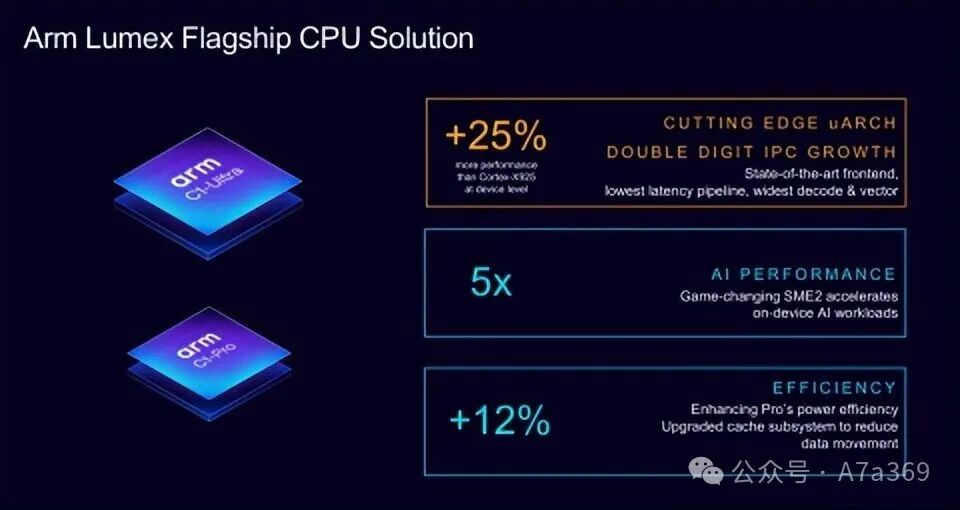
The technology used for artificial intelligence is KleidiAI, which optimizes CPU computations without the need for a dedicated neural processing unit. Therefore, it is claimed to accelerate tasks in computer vision, speech recognition, and audio generation by 5 times. Additionally, the new SME2 (Scalable Matrix Extension 2) instructions further accelerate processing for LLMs and multimedia.
ARM has also updated its graphics processor: the Mali G1-Ultra offers a 20% performance improvement over previous GPU versions. Furthermore, ray tracing speeds have doubled, and more efficient super-resolution rendering has been achieved. In practical scenarios, such as the Solar Bay Extreme test, frame rates can increase by up to 40% by adopting a single-ray lighting model.

Another key innovation of Lumex is the transition of cloud-based AI capabilities to the device itself. ARM demonstrated examples of running large language models directly on smartphones, as well as integrating AI assistants in games like Honor of Kings. This reduces latency and reliance on server-side computation.
The first devices featuring the new chips are expected to be launched in the coming months.