“Bang”—the webpage won’t open, and the browser throws a 404 at you.
“Ding”—the backend crashed, and the server responds with a 500.
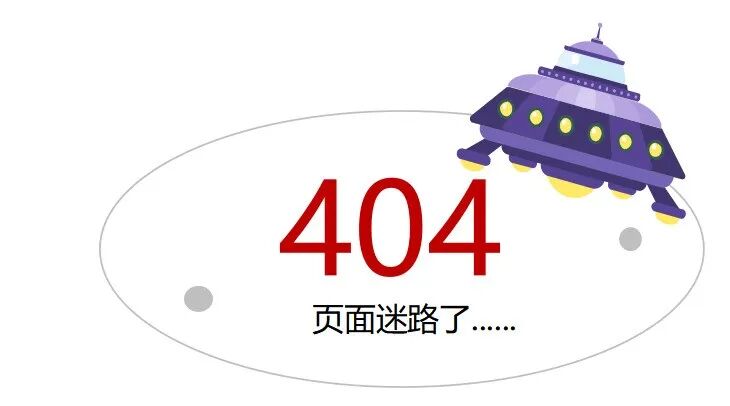
When the browser suddenly goes on strike and only returns a mysterious number? Don’t panic, today we will unveil the mystery behind these numbers, making the internet less of a “mystery”!
1
What is an HTTP Status Code?
We can think of these HTTP status codes as a “restaurant menu”: when the server hands you the menu (webpage), they also attach a little note—perhaps “Order received” or “Item out of stock”.
An HTTP status code is the “digital note” that the website server gives you to inform you of the result of your request.
It is part of the HTTP protocol, like an “emoji” in a network conversation, conveying information succinctly with three digits.
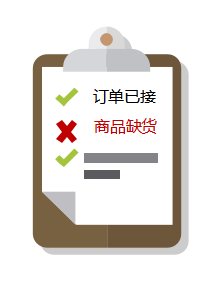 This coding system is designed quite cleverly—the first digit determines the “family identity” of the status code: a 1 indicates “Request received, processing”; a 2 indicates “Successfully completed”; a 3 indicates “Further action required”; a 4 indicates “There is a problem with your request”; and a 5 indicates “Server issues”.This hierarchical design allows the receiver to quickly understand the nature and urgency of the situation.
2
Why do HTTP Status Codes Exist?
These status codes did not just appear out of nowhere!
They are meant to enable efficient “communication” between the client (like your browser) and the server.
Without status codes, browsing the internet would be like groping in the dark: you send a request, and the server might silently process it, but you wouldn’t know if it was successful or failed.
The emergence of status codes makes network communication more orderly, like a well-functioning customer service system: when you contact customer service, the system first gives you a “queue number” (1xx), then the customer service handles your issue (2xx), or transfers you to another representative (3xx).
If you described your issue unclearly, the customer service will tell you “Please clarify” (4xx); if it’s a system failure, they will say “Please wait, we are fixing it” (5xx).
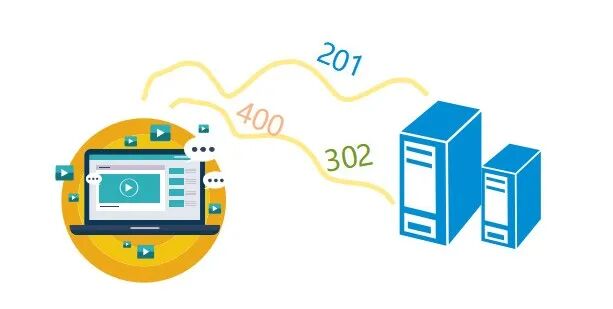
So, what do these status codes look like? Next, let’s take a look at some of the most common “star numbers” and their “friends and family”.
3
What Do HTTP Status Codes Represent?
Success Family (2xx)
-
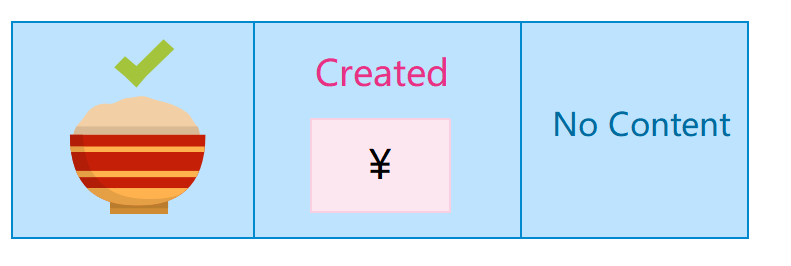
200 OK: This is the most delightful status code! It’s like when you go to a restaurant, and the waiter smiles while bringing you a steaming hot meal—everything is smooth, and the request is successful.
-
201 Created: It’s like when you successfully submit an order online, and the system not only tells you it was successful but also generates a new order number.
-
204 No Content: Just like when you ask your assistant to clear the desk, and they simply reply “Done” without needing to provide any specific content.
Redirection Family (3xx)
-
301 Moved Permanently: It’s like an old friend moving houses, giving you a new address and saying “From now on, come to this new place to find me”.
-
302 Found: Temporary forwarding, like a temporary sign in a mall saying “Promotional items please go to counter B”.
Client Error Family (4xx)
-
400 Bad Request: It’s like when you call customer service and ramble on without making sense, and the other person helplessly says “I don’t understand what you’re saying”.
-
403 Forbidden: It’s like having a building access card but trying to enter a restricted room, and being politely stopped by security.
-
404 Not Found: This code has a bit of a “lost” feeling. It’s like trying to find a non-existent store in a mall, wandering around but unable to find it.
Server Error Family (5xx)
-
500 Internal Server Error: This is equivalent to the server “crashing”! Imagine the kitchen suddenly catching fire, and the chefs are all busy putting it out, with no time to serve food.
-
502 Bad Gateway: Like a delivery hub unable to contact the next stop, your package is stuck halfway.
-
503 Service Unavailable: It’s like a popular restaurant being too crowded, and the manager at the door says “We’re full right now, please come back later”.
Having understood the meanings of these status codes, we naturally wonder: if we encounter a problem, how should we respond? Don’t worry, here are some tips.
4
How to Resolve HTTP Status Codes?
For Client Errors (4xx)
-
For 400: Check the input parameters, just like checking if you misspoke.
-
For 403: Confirm your permissions or contact the administrator for access rights.
-
For 404: First, check if the URL is misspelled, or try refreshing the page. If that doesn’t work, the link may have expired, and you can return to the homepage or search for related content.
For Server Errors (5xx)
-
For 500: This is usually the server “being sick”, and users find it hard to fix directly. It’s recommended to wait and refresh the page later.
-
For 502/503: You can understand it as “the server is too busy”, so it’s best to try again later.
-
If it’s your own website, you need to check server logs, database connections, and other backend statuses.
General Troubleshooting Tips
-
Refresh the page: Simple but often effective.
-
Clear the cache: Sometimes the browser’s “memory” gets confused, and we can clear the cache to refresh it.
-
Check the network: Ensure the network connection is stable.
-
Use developer tools: Press F12 to view specific error messages.
In summary, status codes are the “health indicators” of the online world; learning to interpret them can make your internet experience smoother.
Next time you see these numbers, you’ll be able to diagnose the problem quickly like an experienced doctor!
END
What strange errors have you encountered while browsing the internet? Was it the 404 lost experience, the 500 crash moment, or have you seen even more mysterious status codes?
Source: ZTE Documentation
Editor: endlesscliff
The reproduced content only represents the author’s views
It does not represent the position of the Institute of Physics, Chinese Academy of Sciences
If you need to reprint, please contact the original public account
Recent Popular Articles Top 10
↓ Click the title to view ↓
1. Confirmed, this year’s Nobel Prize is awarded to pasta2. Why is no one mentioning the ozone layer hole from our textbooks anymore?3. Why can’t you whistle? A quick introduction to whistle physics | No.4844. Why can’t LCD screens display pure “black”?5. The great savior that can cure plastic is hidden in the ingredients of your hot pot…6. Why does water spread out when you cut open a chili pepper? | Serious Play7. What if you need it? A serious guide on how to catch a dog8. What is rare earth? Why is it China’s trump card?9. A “top-level nitpicker” has arrived in the math world, specializing in various proofs!10. When writing 300 words, can you guess who consumes more energy, AI or the human brain? The answer is shocking… Click here to view all past popular articles