From the perspective of the touch display industry, with the rise of new technologies such as the Internet of Things, artificial intelligence, and 5G, touch displays are continuously expanding their application fields.
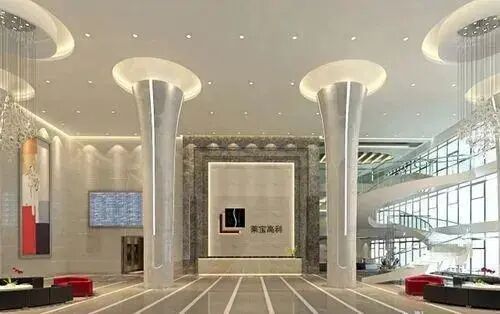
“Laibo High-Tech is about to make strides in the medium-sized LCD display field, but must overcome the shortcoming of a lack of panel resources.” Recently, Laibo High-Tech’s investor interaction platform stated that its wholly-owned subsidiary, Chengdu Laibo Display Technology Co., Ltd., has completed the renovation of the production workshop and the procurement and installation of production equipment for the medium-sized LCD module (TFT-LCM) project, which is set to gradually begin trial production in the second quarter of this year.
Currently, over 85% of Laibo High-Tech’s products are sold for export, primarily targeting mid-to-high-end laptops with touch functionality. The market demand is mainly from overseas markets, leading to customer requests for the company’s touchscreen products for laptops to be completed through export sales.
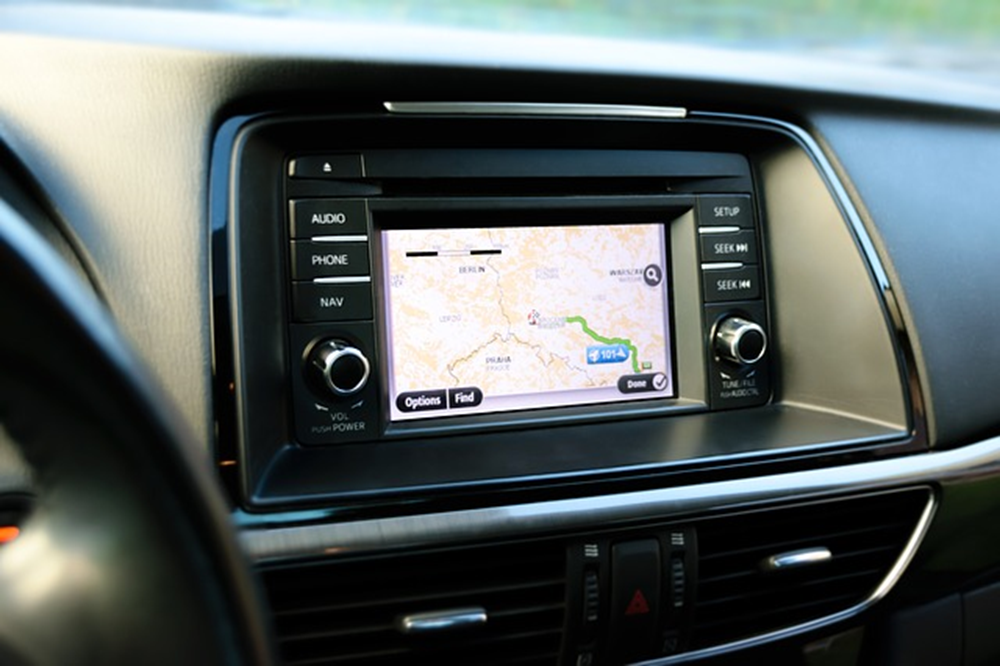
Laibo High-Tech also revealed that its vehicle touch screens are supplied directly to Tier 1 automotive manufacturers, which then integrate them into vehicle assemblies before supplying them to complete vehicle manufacturers including General Motors, SAIC, GAC, Changan, and BYD. The competition in the vehicle touch screen market is becoming increasingly fierce, facing not only competition from industry peers but also from display panel manufacturers who are intensifying their efforts to replace traditional touch displays with InCell structure touch displays. Additionally, to maintain supply chain security and bargaining power, Tier 1 customers typically introduce multiple suppliers for the same vehicle touch screen product project, with each project requiring bidding and negotiation.
Currently, Laibo High-Tech possesses complete technology and production resources for vehicle cover glass, vehicle touch screen sensor panels, vehicle touch screen modules, and full lamination processing for vehicle touch displays, with a supply capacity of over 300,000 vehicle touch screens per month. However, in the first half of this year, demand for vehicle touch screens has decreased due to factors such as a shortage of automotive chips and a year-on-year decline in overall automotive purchasing demand, leading to fluctuations in monthly production and delivery based on specific orders. The company is actively implementing automation upgrades for certain production processes, improving production efficiency, enhancing yield rates, continuously researching new products, and optimizing market expansion strategies to reduce costs and enhance market competitiveness.
With the recent gradual easing of COVID-19 prevention measures in China and the introduction of government incentives to stimulate automotive consumption, domestic automotive consumption is gradually recovering, and demand and production volume for vehicle touch screens are expected to gradually increase in the second half of the year.
It is understood that Laibo High-Tech began entering the vehicle touch screen market in the second half of 2018, optimistic about the future market growth prospects for vehicle touch screens and actively developing new products and markets. However, the company currently lacks resources for vehicle display panels, and vehicle touch screens can only be primarily produced using external structures (G-G, OGS, OGM, etc.). The future development faces the threat of increasing market penetration of InCell structure (integrated touch display) by display panel manufacturers. The company plans to appropriately expand vehicle touch screen production capacity based on relevant resource conditions; if it gains access to vehicle display panel resources in the future, it will further strengthen its efforts in the vehicle touch screen market. The company does not deliberately pursue being the top domestic supplier of vehicle touch screens but focuses more on technological leadership and sustainable, high-quality growth.

To increase its supply of vehicle display panel resources, on October 29, 2020, Laibo High-Tech signed a “Strategic Cooperation and Investment Intent Agreement for the 8.5 Generation New Semiconductor Display Device Project” with the Wuhan East Lake New Technology Development Zone.
The project plans to adopt display technologies such as IPSTFT (In-Plane Switching Thin Film Transistor) and oxide semiconductor TFT technology, with plans to build an 8.5 generation TFT-LCD panel and module production line in the East Lake High-tech Zone. The total planned investment for the project is 11.5 billion RMB (the exact investment amount will be based on actual investment), with a designed capacity of 60K pieces/month for the 8.5 generation TFT-LCD panels (2200mm * 2500mm) and 1 million pieces/month for the TFT-LCM modules; the products will mainly be used in laptops, vehicle instruments, medical/industrial control instruments, and outdoor public displays.
After the project is put into production, the project company plans to invest an additional approximately 1.5 billion RMB (the exact investment amount will be based on actual investment) to expand the capacity to 80K pieces/month for the 8.5 generation TFT-LCD panels and 2.5 million pieces/month for the TFT-LCM modules. However, the recent progress of this project has been far below market expectations, and Laibo High-Tech has also stated that there is significant uncertainty regarding the implementation of the project due to various factors involving cooperation parties and government approvals.
From the perspective of the touch display industry, with the rise of new technologies such as the Internet of Things, artificial intelligence, and 5G, touch displays are continuously expanding their application fields, such as industrial control, automotive, smart home, education, and medical applications, bringing new opportunities for touch screen applications. The future development directions in the display field include large-size ultra-high definition, narrow bezels, cost reduction, and diversified applications.
Taking the automotive field as an example, the future demand for touch screens is expected to be large, with an increasing proportion of large-size screens. With the development of intelligence, human-vehicle interaction has become a part of smart vehicles, and the concept of traditional small screens in central control panels has changed, with larger and more advanced displays becoming the new trend.
In recent years, as people’s demand for human-vehicle interaction has increased, vehicle systems are replicating the development trajectory of smartphones, becoming an extension of smartphones, and vehicles are becoming more intelligent and multifunctional, leading to a gradual increase in the penetration rate of touch screens in vehicle displays.
The vast domestic automotive market lays a solid foundation for the demand for vehicle displays, while also providing a broad growth soil for touch screen demand. According to statistics from the Ministry of Public Security, the number of motor vehicles in the country reached 395 million in 2021, of which 302 million were cars. Industry data also shows that in 2021, domestic automotive production and sales reached 26.082 million and 26.275 million units, respectively, with year-on-year growth of 3.4% and 3.8%. In the first quarter of 2022, domestic automotive production and sales reached 6.484 million and 6.509 million units, respectively, with year-on-year growth of 2.0% and 0.2%, making it the world’s largest automotive production and sales country.
Especially in the area of new energy vehicles, which are easier to upgrade to smart technology, they have become increasingly popular among mainstream consumer groups in recent years, with very rapid market growth. The penetration rate of new energy vehicles in the domestic passenger car market rose from 2.4% in 2017 to 16.0% in 2021; production and sales reached 3.545 million and 3.521 million units, respectively, with both growing by 1.6 times year-on-year, maintaining the world’s largest production and sales scale for seven consecutive years. In the first quarter of 2022, domestic new energy vehicle production and sales reached 1.293 million and 1.257 million units, respectively, with both growing by 1.4 times year-on-year.
Laibo High-Tech also believes that considering the changes in market demand for vehicle touch screens, market development needs, and current production capacity, the company has formulated plans for timely and appropriate expansion of vehicle touch screen production capacity this year, which is not limited to specific customer demands but is more based on the relatively diversified direction of customer development. The company aims to share the market growth opportunities for vehicle touch screens with customers while meeting their order demands.
Written by: 潮电显示与触摸
Previous Review
AAE 2022 Exhibition Concurrently! Six Major Automotive Innovation Technology Forums Not to Be Missed!
Vehicle Displays: Although LCDs currently dominate, Mini/Micro LEDs will become the main technology
Eight Popular Applications of Cameras in Smart Vehicles