Introduction
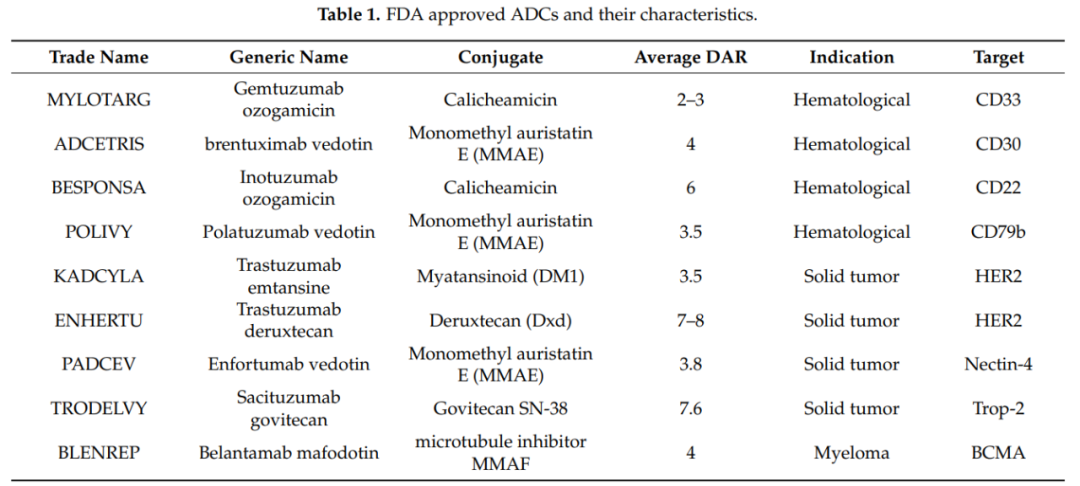
Antibody-drug conjugates (ADC) are formed by linking monoclonal antibodies that target specific antigens with small molecule cytotoxic drugs through linkers, combining the powerful killing effect of traditional small molecule chemotherapy with the tumor targeting ability of antibody drugs. Since the first ADC (Gemtuzumab-ozogamicin (brand name: Mylotarg)) was approved for the treatment of CD33-positive acute myeloid leukemia, several ADCs have been developed for cancer treatment.
The entire development process of ADCs, from selecting the appropriate antibody to the final product, is a daunting and challenging task. Clinical pharmacology is one of the most important tools in drug development, helping to identify the optimal dosage of the product to maintain its safety and efficacy in patient populations. Unlike other small or large molecules that typically measure one component and/or metabolite for pharmacokinetic analysis, ADCs require measurement of multiple components to characterize their PK properties. Therefore, a deep understanding of the clinical pharmacology of ADCs is crucial for selecting safe and effective doses in patient populations.
Overview of ADC Pharmacokinetics
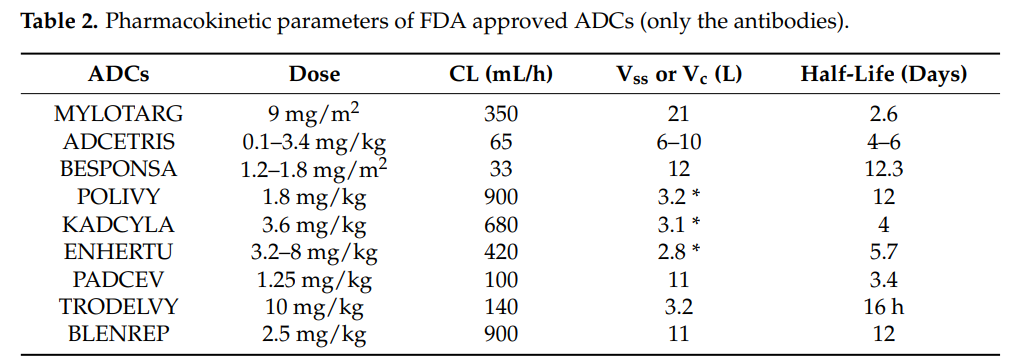
Pharmacokinetics is an indispensable part of clinical pharmacology and modern drug development. The main purpose of pharmacokinetic studies is to obtain information about the drug’s absorption, volume of distribution, clearance, half-life, accumulation after multiple doses, and the effects of various disease states, age, weight, and sex on drug pharmacokinetics. These pharmacokinetic parameters can be used to design the optimal dosing regimen for patients.
It should be recognized that, unlike small molecules and therapeutic proteins (antibodies or fusion proteins), the PK of ADCs is very complex because ADCs consist of several components. It is necessary to consider not only the PK of the monoclonal antibody but also that of the cytotoxic molecule and the physicochemical properties of the conjugate. Since the molecular weight of the monoclonal antibody accounts for over 90%, the PK of the different components of the ADC is greatly influenced by its PK. The overall PK characteristics of the total antibody (ADC+mAb) provide the best assessment of ADC stability and integrity. The conjugate and conjugation site also play important roles in maintaining the stability and PK of ADCs. The table below lists FDA-approved ADCs and their PK characteristics.
Pharmacokinetic Characteristics of ADCs
Generally, there are four processes involved in the body after administration. These processes are absorption, distribution, metabolism, and elimination.
Absorption
Most antibodies are typically administered via intravenous injection or infusion, and antibodies can also be administered subcutaneously (SC). However, for ADCs, the current administration route is intravenous injection or infusion. Due to the response to cytotoxic payloads and local deposition of cytotoxic substances, SC administration may not be suitable for ADCs.
Distribution
The distribution of drugs in the body can be described by the volume of distribution. Due to their size and polarity, the distribution of antibodies and ADCs is usually limited to the vascular and interstitial spaces.
The initial distribution of ADCs is generally limited to the vasculature, and their volume of distribution typically equals blood volume. Subsequently, ADCs can distribute to the interstitial spaces. Additionally, ADC distribution may also be influenced by target antigen expression and endocytosis.
The distribution and accumulation of ADCs within the same tissue can produce adverse (toxic) pharmacological effects due to the release of cytotoxic drugs or metabolites after ADC uptake.
Metabolism
The degradation/metabolism process of ADCs in the body includes the antibody degradation metabolism process and the metabolism of small molecule drugs. ADCs release active molecules either intracellularly (non-cleavable linker) or in the circulatory system (cleavable linker) before reaching tumor cells, with unbound antibodies and antibody fragments following the metabolic pathways of antibodies to produce amino acids that are reused by the body.
Free small molecules and/or small molecules linked with amino acid residues and/or linker metabolites formed after the cleavage or degradation of ADCs may further undergo hepatic CYP450 enzyme metabolism and may also have potential drug-drug interactions.
In addition to the properties of the ADC itself, antigen expression, receptor/cell density, FcRn-mediated recycling, interactions with Fcγ, receptor-mediated endocytosis, and immunogenicity can all affect the degradation and metabolism of ADCs.
Elimination
ADCs are eliminated through degradation metabolism and excretion. ADCs can enter lysosomes through specific pathways by binding to targets, undergo degradation, and be cleared from the body after releasing small molecule drugs; they can also be cleared through non-specific pinocytosis, a pathway involving the neonatal receptor (FcRn) participating in the recycling process.
ADCs, antibodies, large peptide molecules, and amino acid fragments cannot be excreted through glomerular filtration but are reabsorbed in the form of amino acids. Free small molecule drugs, smaller peptide molecules, and small molecule drugs linked with amino acids, as well as smaller antibody fragments can be excreted through glomerular filtration. Additionally, small molecule drugs and metabolites can also be eliminated through enzyme metabolism or excreted into feces via transporters.
Bioanalysis of ADCs
ADCs have several components, and to characterize the PK characteristics of these components, several analytical methods are required, as described below:
-
ELISA immunoassays for measuring the kinetics of conjugates and total antibodies;
-
TFC-MS/MS for quantifying free drugs/metabolites;
-
High-resolution mass spectrometry for in vivo drug-antibody ratio (DAR) analysis.
Additionally, two types of ELISA immunoassays are used for quantitative measurement of ADC analytes: the first type measures total antibodies, i.e., ADCs with DAR greater than or equal to zero. The second analytical method measures drug-conjugated antibodies, defined as ADCs with DAR greater than or equal to one.
Other analytical methods include size exclusion chromatography (SEC) and hydrophobic interaction chromatography (HIC). SEC is the most commonly used liquid chromatography (LC) technique for determining the number of aggregates in antibodies, and this technique can also be applied to ADCs. While HIC is a traditional technique for protein separation, purification, and characterization, it is now being used for ADC characterization and analysis.
Cytotoxic Payloads
The cytotoxic payload of ADCs should possess the following characteristics:
-
The cytotoxic payload should have appropriate lipophilicity.
-
The target of the payload should be located inside the cell.
-
The payload molecule should be small in size, lack immunogenicity, and be soluble in aqueous buffers for easy conjugation.
-
The payload should be stable in blood.
Currently, commonly used cytotoxic drug effect molecules include microtubule inhibitors (such as auristatins, maytansinoids), DNA damaging agents (such as calicheamicin, duocarmycins, anthracyclines, pyrrolobenzodiazepine dimers), and DNA transcription inhibitors (Amatoxin and Quinoline alkaloid (SN-38)). Several ADC drugs that have been approved for market use have employed six different small molecule drugs, among which three ADC drugs use MMAE as the conjugated drug, two drugs use Calicheamicin as the conjugated drug, and others successfully applied include MMAF, DM1, SN-38, and Dxd.
Drug-Antibody Ratio (DAR)
The drug-antibody ratio (DAR) refers to the average number of payload molecules attached to a single monoclonal antibody, usually between two and four molecules. In rare cases, using hydrophilic linkers, a DAR of up to eight can be safely achieved, as seen in Enhertus and Trodelvys. DAR is crucial for determining the efficacy of ADCs, and furthermore, DAR may influence the drug’s stability in circulation, PK, and the toxicity of ADCs.
Studies have shown that ADCs with a high DAR (7 to 14) clear faster and exhibit reduced efficacy in vivo compared to ADCs with a DAR < 6.
The DAR value and its impact on stability and PK also depend on the conjugation site and the size of the linker.
Lysine or cysteine is usually modified to produce ADCs. Lysine is one of the most commonly used amino acid residues for linking substrates and antibodies, as it is often present on the surface of antibodies, making it easy to conjugate. Mylotargs, Kadcylas, and Besponsas all use lysine bioconjugation technology.
Other amino acids such as cysteine and tyrosine can also be modified, with maleimide-modified cysteine used to synthesize ADCs such as Adcetriss, Polivys, Padcevs, Enhertus, Trodelvys, and Blenreps.
Linkers
Linkers are an indispensable part of ADCs, determining the drug release mechanism, PK, therapeutic index, and safety. Early ADC linkers were chemically unstable, such as disulfides and hydrazones. These linkers were unstable in circulation, with short half-lives of generally one to two days. The latest generation of linkers is more stable in the body, such as peptide and glucuronide linkers. The two most common linkers are as follows:
Cleavable Linkers
Cleavable linkers are sensitive to the intracellular environment and release free effect molecules and antibodies through degradation and dissociation in the cell, such as acid-cleavable linkers and protease-cleavable linkers. They are usually stable in blood but rapidly cleave in low pH and protease-rich lysosomal environments, releasing effect molecules. Furthermore, if the effect molecules can cross membranes, they can eliminate tumors through potential bystander effects.
Non-Cleavable Linkers
Non-cleavable linkers are a new generation of linkers that provide better plasma stability compared to cleavable linkers. Because non-cleavable linkers can provide greater stability and tolerability than cleavable linkers, these linkers reduce off-target toxicity and provide a larger therapeutic window.
Immunogenicity
In 11 clinical trials targeting eight ADCs, the baseline incidence of ADAs ranged from 1.4% to 8.1%, and the post-baseline incidence of ADAs ranged from 0 to 35.8%, values that fall within the range of therapeutic monoclonal antibodies. Overall, the incidence of ADAs for ADCs is lower in patients targeting hematological malignancies compared to those targeting solid tumors; most ADAs are against the monoclonal antibody domains of ADCs. Additionally, in most patients, the semi-antigenic structure of these ADCs does not present a greater risk of immune response compared to therapeutic monoclonal antibodies.
Pharmacokinetic Models of ADCs
The application of modeling methods can integrate PK, efficacy, and safety data to meet the needs of different stages of ADC drug development, such as target selection, antibody affinity, linker stability, animal-to-human extrapolation, dose selection and adjustment, exposure-response relationships, DDI studies, and more. Due to the multiple clearance pathways of ADCs (dissociation and degradation) and the complex PK characteristics involving multiple analytes, the kinetic models are also complex.
Different models have different applications; for example, a two-compartment model and a PBPK model can describe the stability characteristics of ADCs using parameters such as clearance rates, dissociation, and metabolic rates. Currently, non-compartmental models, population pharmacokinetic models, mechanism-based models, and physiology-based models are all applied in the pharmacokinetic studies of ADC drugs.
Conclusion
In the development process of ADC drugs, clinical pharmacology plays a very important role. Through continuously evolving bioanalytical techniques, a comprehensive understanding of the PK/PD characteristics of ADC drugs is crucial for promoting the development of low-toxicity and highly effective ADC drugs. ADC drugs will undoubtedly demonstrate even stronger advantages in the field of cancer treatment.
References:
1. Clinical Pharmacology of Antibody-Drug Conjugates. Antibodies (Basel). 2021 May 21;10(2):20.
Source: Xiao Yao Shuo Yao 2024-01-29