
Click the blue text to follow “Textile Report”

In the context of the integration of electronic technology and modern textile technology, wearable devices that are more flexible, with more sensitive and accurate signal transmission, and a wider monitoring range have become a research hotspot. Therefore, researchers are focused on developing new types of flexible electronic materials. Electronic materials refer to materials used in electronic technology and microelectronics technology. Compared with traditional rigid materials, flexible electronic materials have the necessary wearability. In wearable devices, flexible electronic materials are required to provide electrical functions in the sensor module, conductive module, and power supply module.
According to different sensing media, flexible sensors can be divided into flexible electronic sensors and flexible optical fiber sensors.
Flexible Electronic Sensors
Flexible electronic sensors include resistive sensors, capacitive sensors, and piezoelectric sensors.
01
Flexible Resistive Sensors
Currently, scholars are mainly focused on how to balance the relationship between sensitivity, response, durability, and cost-effectiveness of flexible resistive sensors.Ren Meng and others fabricated a porous reduced graphene oxide (rGO)/polydimethylsiloxane (PDMS) flexible sensor using a method similar to that of making sugar cubes, which exhibits good sensitivity and recoverability; Zhu Yinlong and others added carbon black and carbon nanotube powder to alcohol for magnetic stirring, mixed the solution for ultrasonic dispersion, and finally evaporated the alcohol to obtain a CB/CNTs composite electrode, which demonstrated a good balance between linearity and cost-effectiveness.Flexible resistive sensors exhibit strong non-linearity under strain conditions, their output signal is sensitive but very weak, and the characteristics of the materials and devices that compose them may change over time or with the environment, making them unsuitable for long-term monitoring applications.
02
Flexible Capacitive Sensors
Flexible capacitive sensors change the distance between the two plates of a capacitor through mechanical action to alter the capacitance, and are currently mostly used as pressure sensors.The commonly used medium material both domestically and internationally is multi-walled carbon nanotubes (MWCNTs). Zhang Jian and others sprayed a solution of anhydrous ethanol and MWCNTs onto a reusable paper substrate after ultrasonic stirring and then dried it. They then connected copper wires to the paper-based electrodes using conductive copper tape and conductive silver glue, forming a sandwich structure sensor, as shown in Figure 1. Compared to flexible resistive sensors, this sensor has higher sensitivity, shorter dynamic response time, and good repeatability and stability, but its application scenarios are somewhat limited.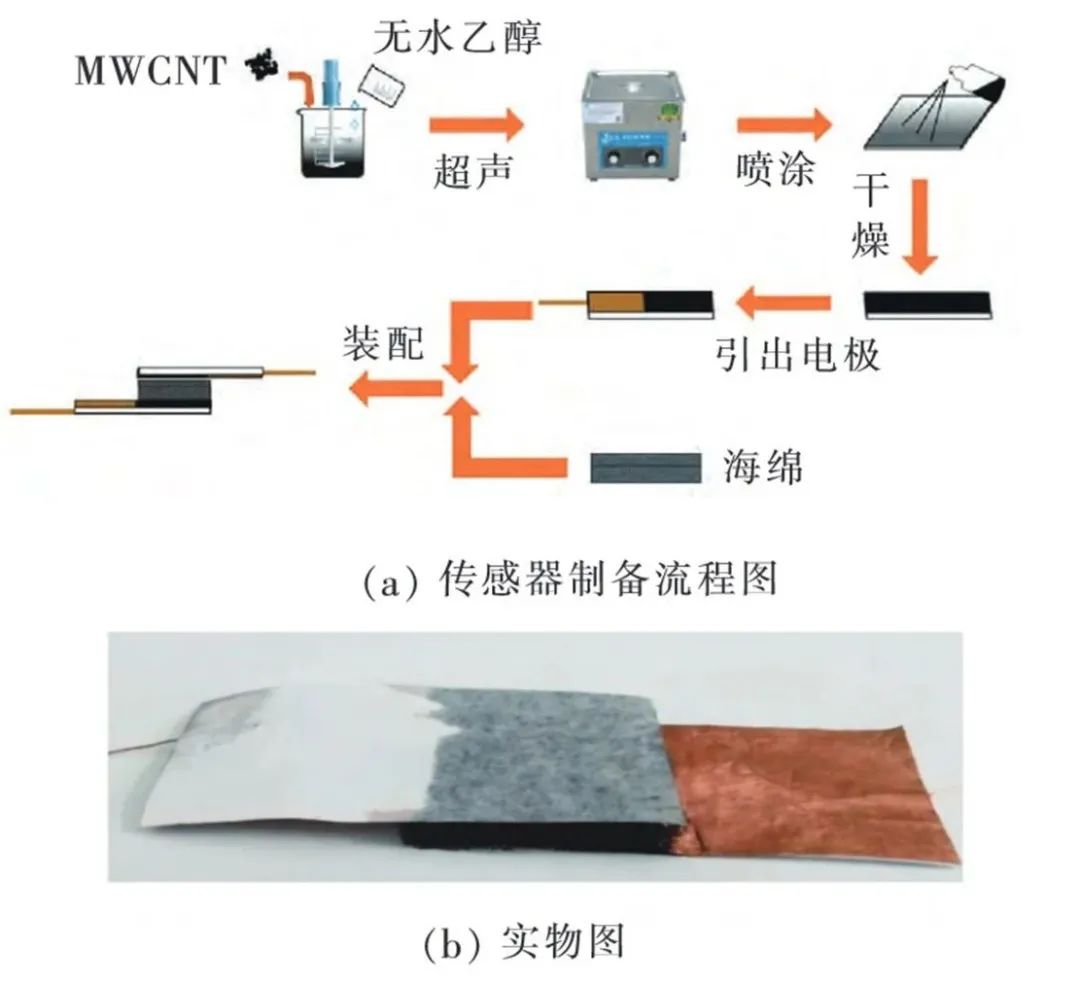 Figure 1 Preparation of Paper-Based Sensors
03
Flexible Piezoelectric Sensors
Materials with piezoelectric effects in flexible piezoelectric sensors are not only used as sensor media but are also commonly used in the energy supply module of smart wearable devices.Chen Guangzhou and others prepared flexible electrodes for the sensors using a thermal evaporation gold plating method, orienting the gold-plated sides of two PET films toward a polyvinylidene fluoride/graphene oxide (PVDF/GO) nanofilm (Figure 2), which demonstrated good sensitivity and piezoelectric performance; Chi Zhemin and others used electrospinning technology combined with high-temperature sintering to prepare lead zirconate titanate (PZT) nanofibers, and then created flexible piezoelectric sensors based on polyimide (PI)/PZTNFs composite materials, testing that when the mass fraction of PZTNFs in the composite material is 70%, the sensor’s force-to-electric conversion performance is optimal. These sensors are characterized by high sensitivity and good responsiveness, but costs need to be further controlled.
Figure 2 Preparation of Nanocomposite Piezoelectric Films
Flexible Optical Fiber Sensors
Flexible optical fiber sensors weave optical fibers into textiles, allowing for signal perception without affecting the characteristics of the textiles themselves. Compared to electronic sensors, they are more flexible, easier to process, have low hysteresis, and high precision.Qiao Feng and others embedded a single-mode quartz optical fiber with fiber Bragg gratings (FBG) in a sinusoidal structure within an Ecoflex0030 film, designing a highly sensitive flexible optical fiber grating strain sensor, which has high stretchability, and the sensor exhibits high sensitivity and accuracy. Zhang Huixin and others designed a PDMS sponge structure as a sensitivity-enhancing structure for flexible optical fiber pressure sensors, which deforms more under stress. The flexible substrate is made of PDMS and melamine polyurethane foam, with a single-mode optical fiber embedded in the middle, as shown in Figure 3. Testing found that the sensor’s sensitivity increases as the thickness of the PDMS sensitive substrate decreases, and under fully cured conditions, the sensor’s sensitivity increases as the curing temperature decreases.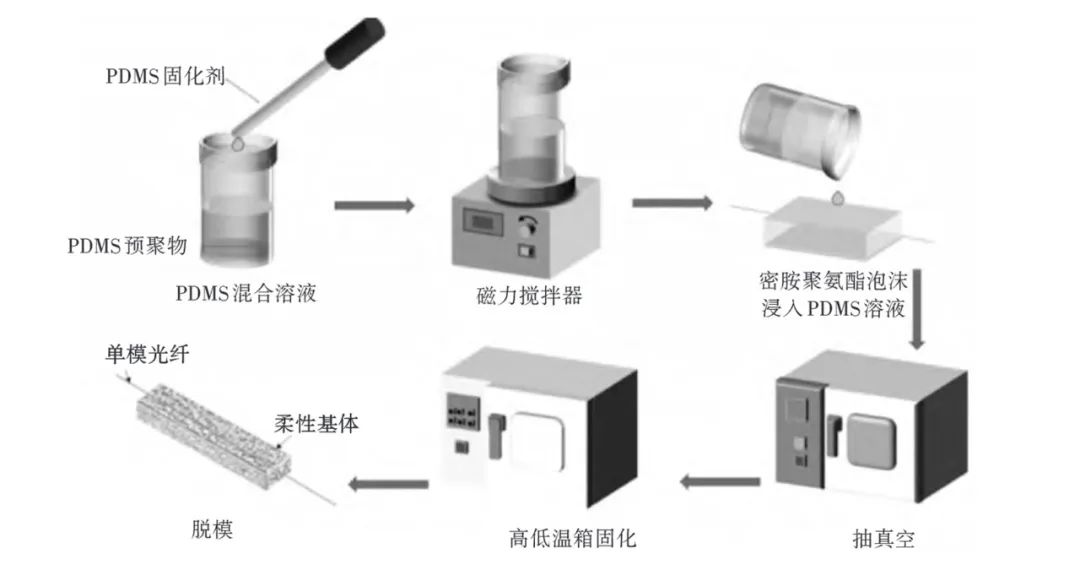 Figure 3 Preparation Process of Flexible Optical Fiber Pressure Sensors Based on PDMS Sponge MediumFor more content, please follow this journal’s article “Research Progress of Flexible Electronic Materials in Wearable Devices” in the 2024 Issue 3.(Some images are sourced from the internet; if there are any infringements, please contact for removal)



【Review】Previous High-Quality WeChat Articles:

Welcome to reprint, please indicate the source, thank you!
“Textile Report”Magazine is a guiding technology journal sponsored by the China Textile Information Center, aimed at in-depth reporting and analysis of textile technology development dynamics, authoritative interpretation of technological policies and industry rules, serving as a weather vane for government agencies and industry organizations’ technology policies and trends, and an important window to help industry and business decision-makers grasp the current state of textile technology and the technical market context.
Official Website of Textile Report:www.texleader.com.cn
Distribution Hotline:010-84463638-8850
Advertising Inquiries:010-84463638-8830