1. Overview of Industry Concepts
A touchscreen human-machine interface (HMI) refers to a system for information interaction between humans and machines through a touchscreen. It is not only a collection of hardware (such as touchscreens and controllers) but also an integration of software (including graphical interfaces, drivers, and logic control). Its core value lies in transforming complex machine languages into intuitive graphics, icons, and touch commands, significantly enhancing user operation convenience and efficiency.
In China, HMIs are regarded as a key component in numerous core areas of “smart manufacturing” and “digital economy,” such as industrial automation, smart vehicles, and smart homes, serving as a bridge between the physical and digital worlds.
2. Market Characteristics
-
High Fragmentation and Customization: The market has numerous participants, ranging from international giants (like Siemens and Rockwell) to leading local companies (such as Inovance Technology and Boke Automation), as well as many small and medium-sized enterprises. The diverse application scenarios necessitate a high degree of industry customization and solution orientation.
-
Technology-Driven Market: Technological advancements are the core engine of market development. Innovations in display technology (from TFT-LCD to OLED), touch technology (from resistive and capacitive to embedded and haptic feedback), processor performance, and software ecosystems continuously drive industry upgrades.
-
Wide Downstream Applications: Demand is highly correlated with macroeconomic conditions and the prosperity of downstream industries. The main driving forces come from:
-
Industrial Automation/Smart Manufacturing: The largest application area, used for controlling and monitoring devices such as PLCs, CNCs, and robots.
-
Automotive Electronics: The popularity of smart cockpits has made large, multi-screen, high-resolution in-car HMIs standard in new vehicles.
-
Smart Home and Consumer Electronics: There is a strong demand for compact, low-cost HMIs in smart appliances and wearable devices.
-
Medical, Retail, Finance, etc.: Human-machine interaction interfaces for various terminal devices.
Strong Synergy in the Industry Chain: The upstream (chips, display panels, touch sensors), midstream (HMI manufacturers, software developers), and downstream (complete machine manufacturers) are closely linked, and any technological breakthrough or price fluctuation in one link will affect the entire industry chain.
3. Current Industry Status
-
Market Size and Growth: China has become one of the largest HMI markets globally. Driven by policies such as “Made in China 2025” and Industry 4.0, the market continues to grow steadily. Despite the impact of global supply chain fluctuations and macroeconomic pressures, rigid demand remains, and the compound annual growth rate (CAGR) is expected to maintain at 8%-12% over the next 3-5 years.
-
Competitive Landscape:
-
Foreign Brands Dominate the High-End Market: In high-end manufacturing and large projects, companies like Siemens, Schneider, and Rockwell still dominate due to their strong brand, technological accumulation, and complete automation product lines.
-
Rapid Rise of Local Brands: Local companies represented by Inovance Technology, Boke Automation, and Xinjie Electric have secured a solid position in the mid-range market with high cost-performance ratios, quick responses, and flexible customization services, while continuously penetrating the high-end market.
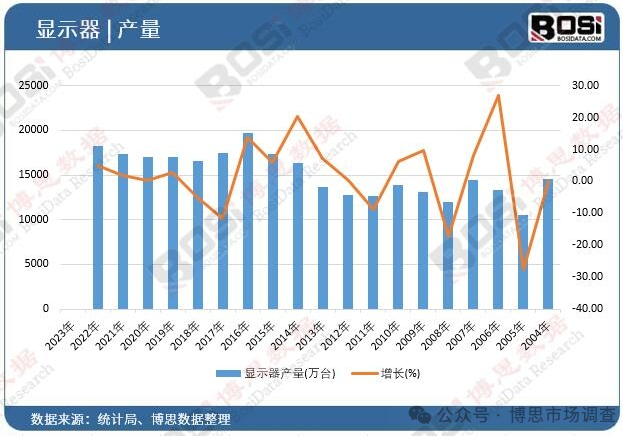
Level of Technological Development:
-
Increased Hardware Homogeneity: The technical threshold for basic touchscreen functions has gradually lowered, leading to intense market competition.
-
Software and Ecosystem as New Barriers: HMIs are no longer just “displays” but are hubs for data visualization, edge computing, and cloud platform connectivity. User experience (UX/UI) design, operating system compatibility, and support for industrial internet protocols have become core competitive advantages.
-
Integration of New Technologies: AI (for predictive maintenance and gesture recognition), IoT (for remote monitoring and data collection), and 5G (for low-latency, high-bandwidth transmission) are deeply integrated with HMIs, giving rise to a new generation of smart HMIs.
4. Future Trends
-
Intelligence and Integration: HMIs will integrate more AI functionalities, achieving intelligent diagnostics, voice interaction, and AR/VR-assisted operations. They will evolve from passive command-executing terminals to intelligent nodes that actively provide decision support.
-
Cloud-Edge-End Collaboration: Future HMIs will be the core of the “edge side” in the industrial internet system. They will perform real-time control locally (edge) while uploading data to cloud platforms for big data analysis and model training (cloud), forming a closed loop.
-
User Experience First: The demand for high-definition, wide color gamut, high refresh rate displays, as well as smoother and more intuitive multi-touch and gesture operations will become standard. The importance of UI design will be on par with hardware performance.
-
Deepening Industry Solutions: Growth in generic HMIs will slow, while deeply customized solutions for specific industries (such as new energy lithium batteries, photovoltaics, and semiconductor manufacturing) will become the main growth point.
5. Challenges and Opportunities
Challenges:
-
Dependency on Core Technologies: High-end chips and specific display panels still partially rely on imports, posing “bottleneck” risks and supply chain pressures.
-
Intense Price Competition: The homogeneity of products in the mid-to-low-end market leads to severe price wars that compress profit margins for companies.
-
Talent Shortage: There is a severe shortage of composite talents with expertise in hardware, software, and industry knowledge.
-
Cybersecurity Risks: As HMIs become increasingly connected to networks, the risks of data security and cyberattacks have significantly increased.
Opportunities:
-
Continuous Release of Policy Dividends: National strategies such as “new infrastructure,” “digital economy,” and “smart manufacturing” provide long-term, certain growth space for the HMI market.
-
Acceleration of Domestic Substitution: Under the guidance of a self-controllable national strategy, local HMI companies are facing historic opportunities in core technology breakthroughs and market share acquisition.
-
Emerging Application Scenarios Exploding: The rapid popularization of new energy vehicles, widespread deployment of AIoT devices, and upgrades of medical equipment are opening up new blue ocean markets for HMIs.
-
Value of Services and Software Highlighted: Companies can shift from single hardware sales to a “hardware + software + services” business model, enhancing customer unit price and loyalty through value-added services (such as data analysis and remote maintenance).
Investment Recommendations:
-
Key Focus Areas: Investors are advised to focus on companies with deep layouts in automotive HMI and intelligent HMI solutions for the industrial internet.
-
Core Assessment Indicators: Emphasis should be placed on examining the proportion of R&D investment, software platform capabilities, customer cases in high-growth industries, and supply chain management capabilities.
-
Long-Term Perspective: The HMI industry is a long-term growth sector, and investors should maintain a long-term perspective, focusing on companies’ core competitiveness and continuous innovation capabilities rather than short-term performance fluctuations.
In this process, Bosi Data will continue to monitor industry dynamics, providing accurate and timely market analysis and recommendations for related enterprises and investors.
Chapter 1Overview of the Touchscreen Human-Machine Interface (HMI) Industry
Chapter 2Global Development Overview of Touchscreen Human-Machine Interfaces (HMI)
Chapter 3Market Research on China’s Touchscreen Human-Machine Interface (HMI) Industry
Chapter 4Current Status and Trend Forecast of Touchscreen Human-Machine Interface (HMI) Technology Development from 2024 to 2025
Chapter 5Analysis of China’s Touchscreen Human-Machine Interface (HMI) Submarkets and Downstream Applications
Chapter 6Price Mechanism and Competitive Strategies of Touchscreen Human-Machine Interfaces (HMI)
Chapter 7Assessment of Key Regional Markets in China’s Touchscreen Human-Machine Interface (HMI) Industry
Chapter 8Overall Development and Financial Analysis of China’s Touchscreen Human-Machine Interface (HMI) Industry from 2019 to 2024
Chapter 9Analysis of Import and Export Situations in China’s Touchscreen Human-Machine Interface (HMI) Industry from 2019 to 2024
Chapter 10Research and Analysis of Key Enterprises in the Touchscreen Human-Machine Interface (HMI) Industry
Chapter 11Analysis of the Competitive Landscape of China’s Touchscreen Human-Machine Interface (HMI) Industry
Chapter 12Investment Strategy Analysis for Touchscreen Human-Machine Interface (HMI) Enterprises in 2025
Chapter 13Risks and Countermeasures in China’s Touchscreen Human-Machine Interface (HMI) Industry
Chapter 14Prospects and Development Trends of China’s Touchscreen Human-Machine Interface (HMI) Industry from 2025 to 2031
Chapter 15Research Conclusions and Recommendations for the Touchscreen Human-Machine Interface (HMI) Industry
For the complete report directory, please click on “Read the original text” below.