In the wave of explosive growth in the global artificial intelligence and robotics industry by 2025, Hubei Jimei Biotechnology Development Co., Ltd. is breaking the shackles of the traditional health industry with its innovative triangular strategy of “AI + Robotics + Big Health,” leading the way in achieving a full-chain intelligent leap from product research and development to service implementation. By deeply integrating embodied intelligence, big data analysis, and regenerative medicine technology, Jimei is reconstructing the future landscape of health services.
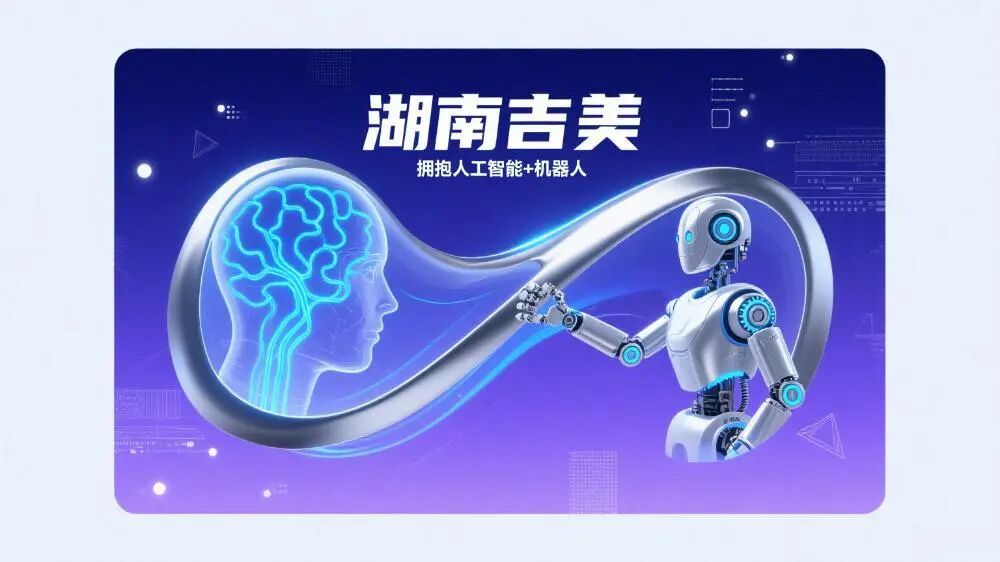
1. AI Gene: Reshaping R&D and Service Ecosystem
“Digital Li Shizhen” Activates a Millennium of Pharmacopoeia The AI system developed by Jimei in collaboration with research institutions integrates 3,000 ancient Chinese medicine texts and 200,000 modern pharmacological data, constructing a multi-dimensional association model of “Traditional Chinese Medicine – Components – Targets – Diseases” through graph neural networks, enhancing the efficiency of new drug development by 12 times. This system accurately identifies cellular signaling pathways for complex diseases such as chronic inflammation and metabolic syndrome, with the efficacy of the developed targeted products comparable to imported biological agents, injecting hardcore technological genes into the modernization of traditional Chinese medicine.
The AI Revolution in Personalized Health Management Users complete their constitution identification through a mobile app, and the AI system generates customized plans based on lifestyle habits and physiological indicators. For example, the “Silver Age Peptide” series developed for the elderly utilizes enteric-coated targeted delivery technology to enhance absorption by three times, and designs sugar-free formulations and swallow-friendly forms to achieve precise interventions tailored to individuals.
2. Robotics Empowerment: Opening New Scenarios for Health Services
Cultural and Entertainment Scenarios: The “Pioneer Test Field” for Health Services In response to the three-step strategy for the industrialization of humanoid robots (first entertainment, then industry, and finally home), Jimei deploys service robots in shopping malls, hotels, and other scenarios, integrating health detection and interaction functions. Users can complete basic screenings such as blood pressure and body fat through the robots, with data real-time synchronized to the AI health cloud brain, forming dynamic health records—this serves as both a low-cost testing ground for technology implementation and an entry point for user education.
Home and Medical Scenarios: Full-Link Coverage from Assistance to Treatment
Home Care: Humanoid robots equipped with Jimei’s health monitoring system provide medication reminders, fall alerts, and remote medical connections for elderly individuals living alone, addressing the “last mile” care challenges for the silver-haired population;
Regenerative Medicine Collaboration: In conjunction with its subsidiary Jimei Rui Sheng’s lung stem cell product REGEND001 (in Phase III clinical trials), robots assist postoperative patients in rehabilitation training and achieve motion correction through force control sensors (with an accuracy of 0.5% FS), forming a closed loop of “treatment – rehabilitation – care.”
3. Integrated Software and Hardware: Building a New Paradigm for the Industry
Open Ecosystem Breaking Technological Islands Jimei actively participates in the national humanoid robot open-source community, integrating health management algorithm modules into the robot operating systems of leading companies such as Galaxy General. By providing open API interfaces, it attracts developers to jointly optimize applications in chronic disease management, emergency response, and other vertical scenarios, accelerating the accessibility of technology.
Hardware Innovation Breaking Cost Bottlenecks Leveraging the mature benefits of the domestic supply chain, Jimei employs lightweight magnesium alloy joints (reducing weight by 25%) and hollow cup motors (increasing power density by three times) to compress the overall cost of health service robots by 40%. Modular design further supports flexible functional expansion—such as switching a disinfection module to a medication delivery module to respond to public health emergencies.
“Cloud Brain + Terminal” Restructuring Service Logic Relying on its self-built Zhi Mei Cloud IoT platform, Jimei connects the intelligent detection devices of 300 offline stores, home robots, and mobile terminal data, creating a super entry point for health management. After users undergo testing at offline stores, the AI instantly generates reports and recommends products; online consumer behavior data feeds back into R&D iterations, forming an intelligent closed loop of “perception – decision – optimization.”
Future Blueprint: From Health Enterprise to Ecological Platform
According to Jimei’s strategic roadmap, it is advancing three major layouts:
Technology Integration Layer: Collaborating with the National Earth Center to develop a medical-specific robot operating system, tackling high-level scenarios such as surgical assistance;
Industry Collaboration Layer: Centered on regenerative medicine products, with robot services as the network, creating an ecosystem of “cell therapy + intelligent health care”;
Social Value Layer: Upgrading the “Health Express” public welfare project to an AI mobile clinic, with robots providing screening services in remote areas.