Whether you are an IC design engineer, verification engineer, FPGA engineer, architecture engineer, or a student in microelectronics, you must be familiar with the ARM architecture.
Choosing the Arm architecture is a very suitable option because its advantages include easy commercial promotion, the ability to utilize Arm’s mature ecosystem, and use Arm’s mature IP. Coupled with TSMC’s manufacturing process, it can lower the threshold in the early stages, achieving an international first-class standard through technology introduction, with CPU performance and R&D speed being faster than self-developed solutions.
Arm Cortex-A SoCs are widely used in the market, with a market share of 99% in mobile chips. In addition, they cover chip fields such as AI, autonomous driving, video processing, and most chip companies involved in such applications will use Arm’s Cortex-A processors.
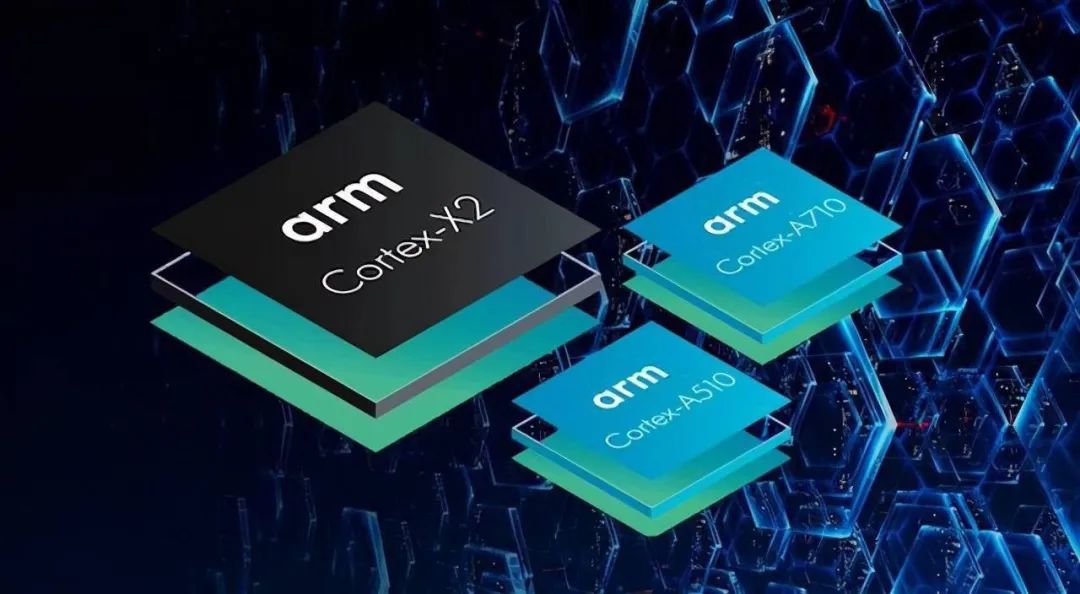
Armv8-A and Armv9-A architectures are widely used in SoCs with high performance requirements. However, due to the complexity of their architectures and the high technical capabilities required, understanding the entire Armv8-A and Armv9-A architecture SoCs can be quite challenging. Therefore, mastering the Armv8-A and Armv9-A processor architectures and their SoC implementations is a significant enhancement to one’s technical level.
1. ARM v8/v9 Chips Are Mainstream
With the continuous evolution of the Arm architecture, our lives are changing rapidly. For example, the evolution from ARM v5 to ARM v6 brought us from the era of the “brick phone” into the world of multimedia smartphones. After ARM v6 was replaced by ARM v7, it introduced the classic Cortex-A8 architecture, opening up the era of touchscreen smartphones. The transition from ARM v7 to ARM v8 brought “64-bit computing” to mobile phones for the first time, allowing us to play large mobile games and take higher quality photos, while also paving the way for the arrival of 5G.
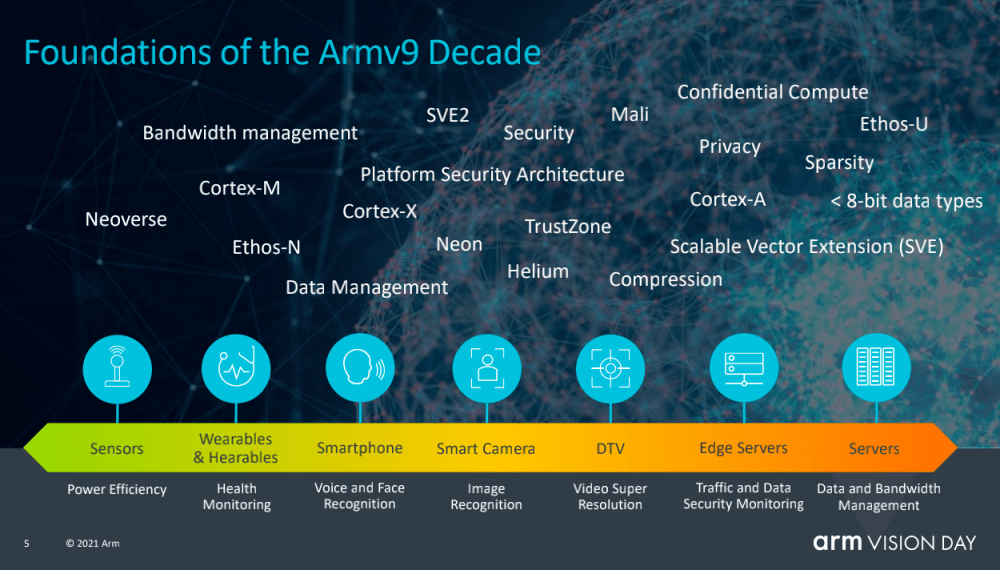
Furthermore, with the rapid global development of artificial intelligence, the Internet of Things (IoT), and 5G, the new features in Armv9 will accelerate the transition of every application from general computing to more specialized computing. Armv9 will not only appear in smartphones, servers, laptops, and networking devices, but we will also see its presence in autonomous vehicles, in-car intelligence, and IoT devices in the future.
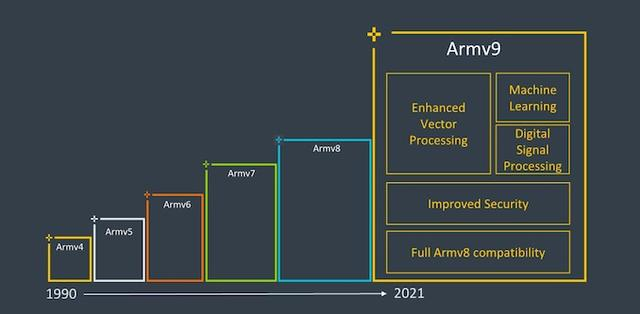
Compared to ARM v8, the ARM v9 architecture has improved in three main areas: memory security, AI performance, and digital signal processing capabilities. Chips based on the ARM v9 architecture will see a performance increase of 30%, bringing more possibilities to users and developers.
Since its release, chips based on the ARM v8/v9 architecture have gradually become the market’s “mainstream”. According to information released on ARM’s official website, companies such as Google, Nvidia, NXP, Fujitsu, and Red Hat from abroad, as well as MediaTek, OPPO, VIVO, and Xiaomi from China, have all established collaborations with ARM v9.
2. Mastering the Basics of ARMv8/ARMv9
Learning the fundamentals of ARMv8/ARMv9 is crucial for understanding the entire software and hardware architecture. Although ARM’s official website provides a lot of learning materials, the official documents can be obscure, and translated materials are often incomplete, making the learning process still painful. In companies, many engineers encounter the following problems when working on projects:
● Complexity: The architectural design of Arm processors is very complex, containing a large number of instruction sets, registers, and features. Beginners may feel overwhelmed and confused.
● Abstract Concepts: Processor architecture involves many abstract concepts, such as virtual memory, cache coherence, and exception handling. Understanding these concepts may require time and effort.
● Instruction Set Encoding: The Arm instruction set uses variable-length encoding, and the different instruction lengths and formats can lead to difficulties in understanding. Learning how to decode and execute different types of instructions may require patience and practice.
● Operating Modes: Arm processors support multiple operating modes, such as user mode, privileged mode, and exception mode. Understanding the switching between these modes and permission management can be challenging.
● Hardware Dependency: When learning the Arm architecture, it is often necessary to consider specific hardware implementations and chip characteristics. Different families and product lines of Arm processors may have subtle differences that require in-depth study of specific hardware.
● Documentation Resources: Arm provides a wealth of documentation and technical resources, but sometimes it may take time to find relevant information and example codes.
3. A Boon for Learning ARMv8/ARMv9
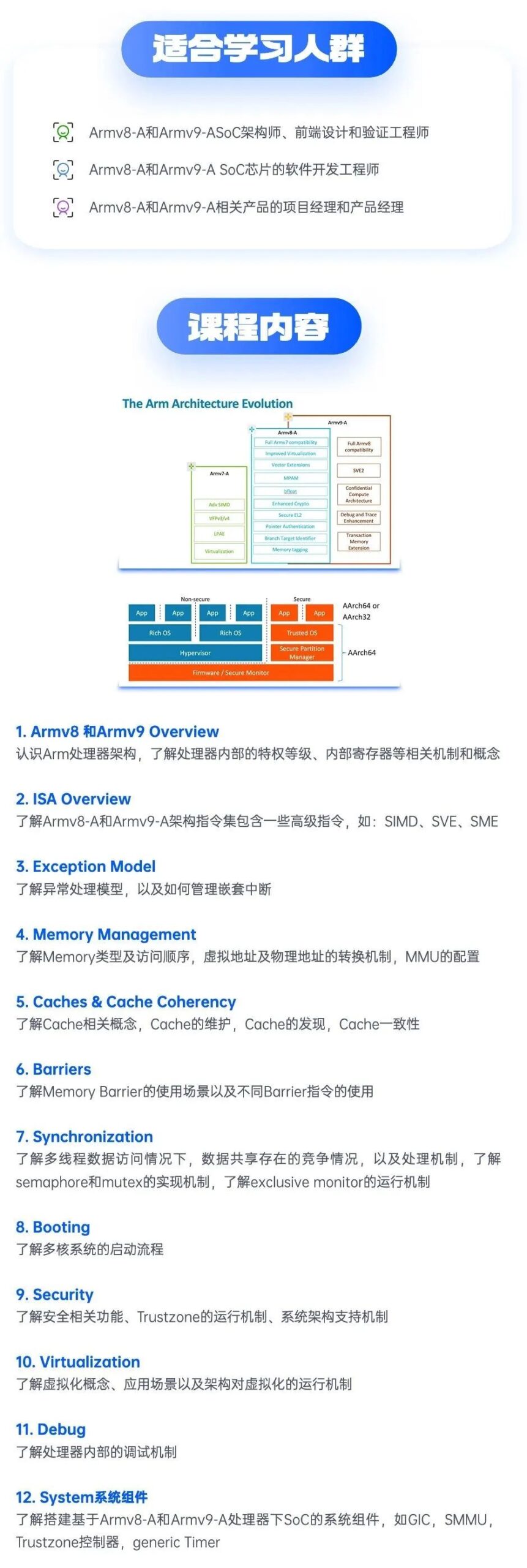
The founder of Yizhi leads a team with invited senior ARM technical experts, carefully refining the “Armv8-A and Armv9-A Processor Architecture” new course upgrade, covering all skills of Armv8-A and Armv9-A in one course. Authorized by ARM Education, all materials and IP come from ARM’s official sources, and the course content is based on the latest version from ARM.
This course starts with basic knowledge and gradually deepens, covering all aspects of the Armv8-A and Armv9-A processor architectures, helping everyone deepen their understanding of concepts and providing valuable practical experience.
Classes are starting soon, scan to consult the teacher
Scan to receive a free trial class
Reserve your seat in advance
You can also receive a discount on course fees~
▼▼▼
The goal of Yizhi is to provide targeted explanations of the difficulties that align with practical learning situations, helping everyone to quickly get started. Wishing everyone to master ARMv8/ARMv9 as soon as possible!