 The ADC Field Is Flourishing, with new technologies evolving like a raging torrent, propelling biomedicine into a sprint mode, this is the best of times. As early as the beginning of the 20th century, Paul Ehrlich first proposed the concept of the “magic bullet”, but the first ADC drug Mylotarg® (gemtuzumab ozogamicin) was not approved until nearly a century later. Who has not faced storms? Only by enduring can one see the moonlight after the clouds clear. As of July 2022, a total of 14 ADC drugs have been approved globally for hematologic malignancies and solid tumors[1]. Moreover, there are currently over 100 ADC candidates in various stages of clinical trials. With the continuous expansion of targets and indications, ADCs are leading a new era in targeted cancer therapy, promising to change the future landscape of targeted drug treatment[2].
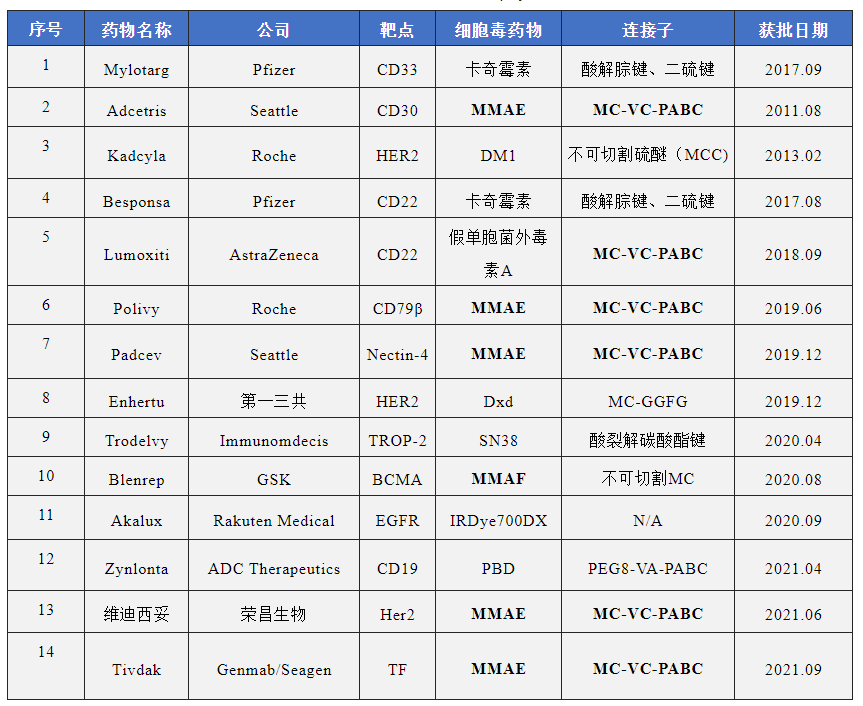
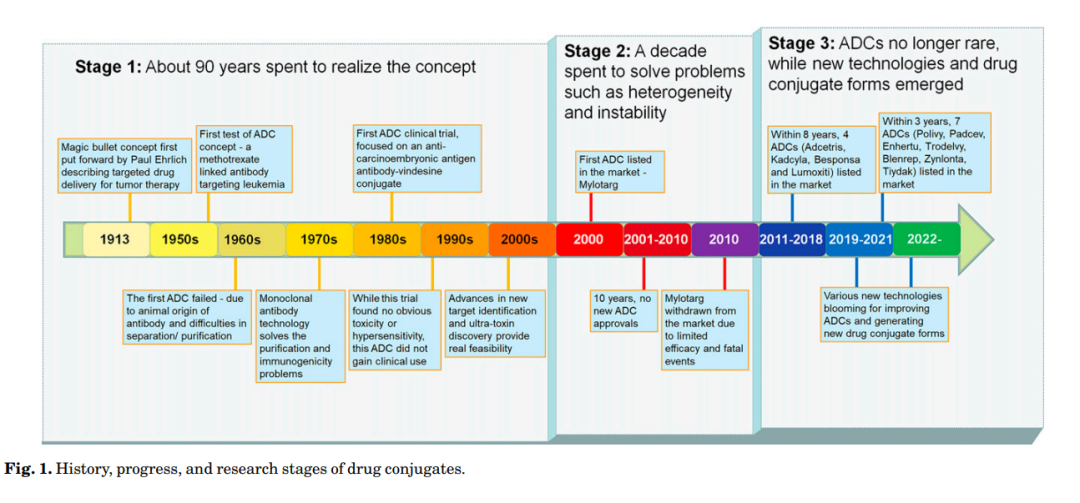 Figure 1 Milestones in ADC Development[1] Among the 14 approved ADC drugs, those with a payload of MMAE or MMAF account for 6 drugs, nearly 50%. Similarly, there are 6 ADC drugs with a linker that can be cleaved by protease B, also accounting for nearly 50%. Meanwhile, there are over 40 ongoing pipelines using MMAE as an effective payload, and the protease-cleavable VC is also the leading active ADC drug pipeline in research[3].Table 1: Technical characteristics of the linker and payload of the 14 approved ADCs
Source and Binding Mode of MMAE/MMAFMMAE/MMAF are auristatin analogs; auristatin E was designed in 1992 by researchers at Arizona State University based on the structure of the natural cytotoxin dolastatin 10 (from the sea hare). Dolastatin 10 was isolated from the marine mollusk [6].MMAE is a peptide composed of five units: three non-natural amino acids Dolavaline (Dov), dolaisoleuine (Dil), dolaproine (Dap), one natural amino acid Valine, and a C-terminal Norephedrine [6]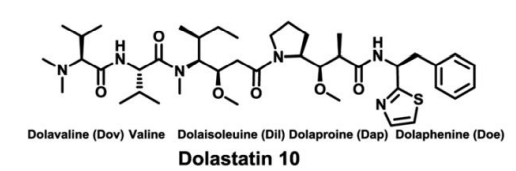
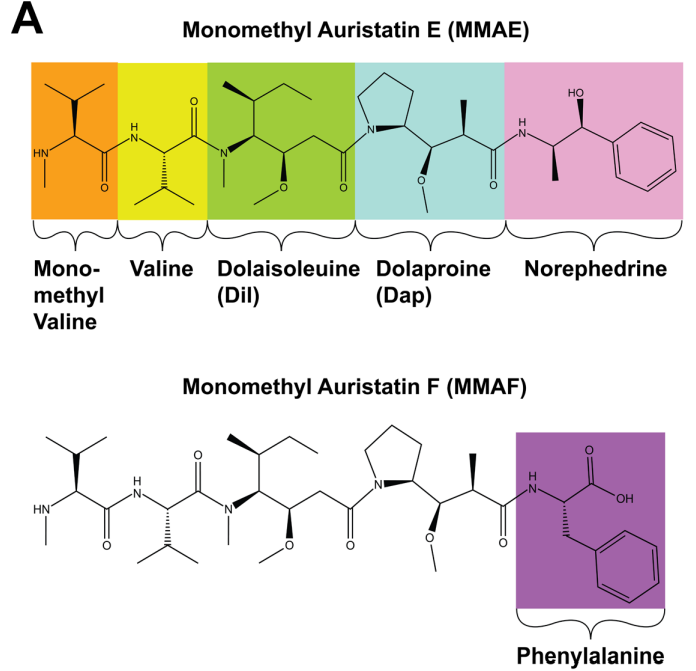 Figure 2 Structures of dolastatin 10 and MMAE/MMAF[7][8] Microtubules are the basic units that compose microtubules. Microtubules are formed by the polymerization of α- and β-tubulin molecules into heterodimers, which are highly dynamic[8]. MMAE/MMAF inhibits cell division by blocking the polymerization of tubulin, achieving its anti-tumor purpose. Its molecules are highly stable, showing no signs of degradation in plasma, liver lysosomal extracts, or proteases such as cathepsin B. In several clinical trials of lymphomas, leukemias, and solid tumors, MMAE has also demonstrated strong activity[9].To date, most auristatin-based ADCs use one of two auristatins, namely MMAE and MMAF. Due to their C-terminal modifications, these two compounds have different properties and allow for different conjugation strategies for monoclonal antibodies. The anionic carboxyl group prevents MMAF from escaping cancer cells through passive diffusion across the cell membrane, thus limiting bystander effects.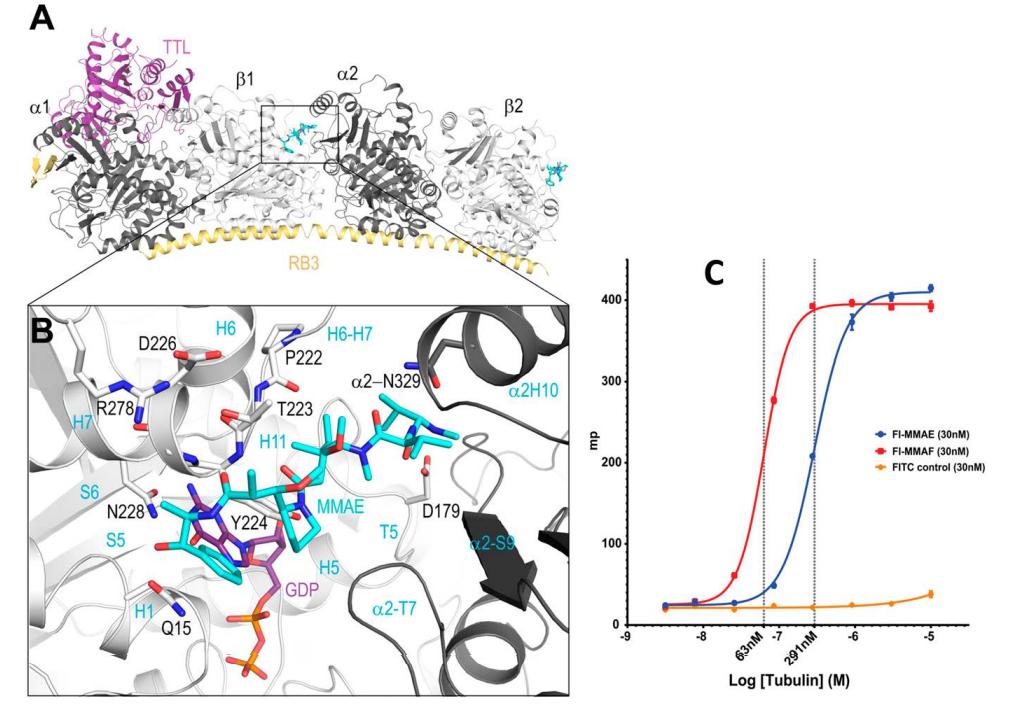
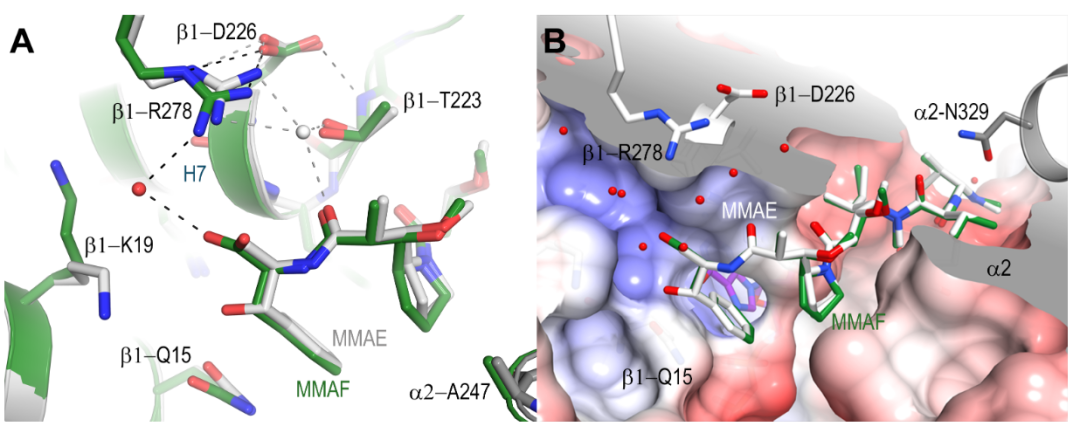 Figure 3 Binding Sites of Microtubulin with MMAE/MMAF[7] The MMAE molecule (blue) binds at the interface between the β-tubulin subunit (light gray) and the α-tubulin subunit (dark gray), with broader contact with the β-tubulin subunit. The binding constant (KD) of FITC-MMAE is 291 nM, and that of FITC-MMAF is 63 nM; MMAF has a stronger binding force with tubulin than MMAE[7][8].Patent Status of MMAE/MMAF and Their LinkersIn 1993, scientists at BMS filed a patent describing a protease B-cleavable linker composed of PABC-VC (US 6214345; Figure 5). In 2001, scientists at Seattle Genetics designed a derivative of auristatin E called monomethyl auristatin E (MMAE; US 6884869;)[4].
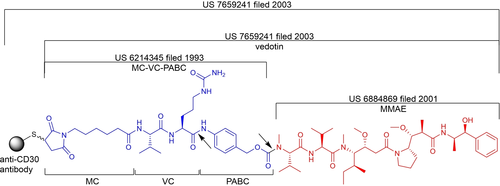 Figure 4 Patent Status of MC-VC-PABC-MMAE[4]In 2003, Seattle Genetics filed a patent describing the conjugation of MC-VC-PABC with MMAE; this linker-cell payload is known as vedotin (US 7659241; Figure 5). This patent also describes an ADC targeting CD30.In 2004, scientists at Seattle Genetics designed an auristatin F analog with a monomethylated amino portion linked with a linker (US 7662387). The MC linked to MMAF, known as mafodotin (US 7498298), was also described in a patent in 2007, which included various MMAF analogs, including MMAF derivatives with two carboxyl groups (US 7745394). In 2009, GlaxoSmithKline signed a licensing agreement with Seattle Genetics to utilize their linker-payload technology.
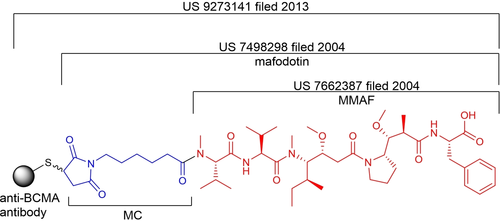 Figure 5 Patent Status of MC-MMAF[4] Haoyuan Pharmaceutical has nearly 70 CDMO clients for Payload-Linker, serving projects at various stages including preclinical, clinical I/II/III, and commercialization phases. Among them, there are nearly 40 clients related to Auristatin, with collaborative products including MMAE, Vc-MMAE, MMAF, etc. DMF filings include high-level intermediates of Vc-MMAE[3].As of July 2022, Haoyuan Pharmaceutical has registered five small molecule products related to ADC drugs with the US FDA DMF, including:— MMAE CAS#474645-27-7 (DMF code: MF036741);— High-level intermediate of MMAE CAS#160800-65-7 (DMF code: MF035548);— High-level intermediate of MMAE CAS#863971-44-2 (DMF code: MF035549);— High-level intermediate of Vc-MMAE CAS#159857-80-4 (DMF code: MF035550);— Exatecan mesylate CAS#169869-90-3 (DMF code: MF036708);SummaryBased on the analysis of the 14 approved ADC drugs, ADCs using MC-Val-Cit-PABC, MMAE/MMAF as linkers and payloads are currently the most commonly used, most successful, and highest drug-like combinations. For innovative pharmaceutical companies, choosing suppliers with DMF filings and directly referencing their DMF filing data during application can save a significant amount of human and material resources and communication costs, thereby accelerating the approval process of IND applications.About DMFThe US DMF (Drug Master File) guidelines are archival documents submitted to the FDA (the authoritative global drug regulatory agency) for review, implemented since 1989 and still in use today. DMF contains confidential details regarding the facilities, operational processes, and substances used during the production, handling, packaging, and storage of products.About Haoyuan Pharmaceutical
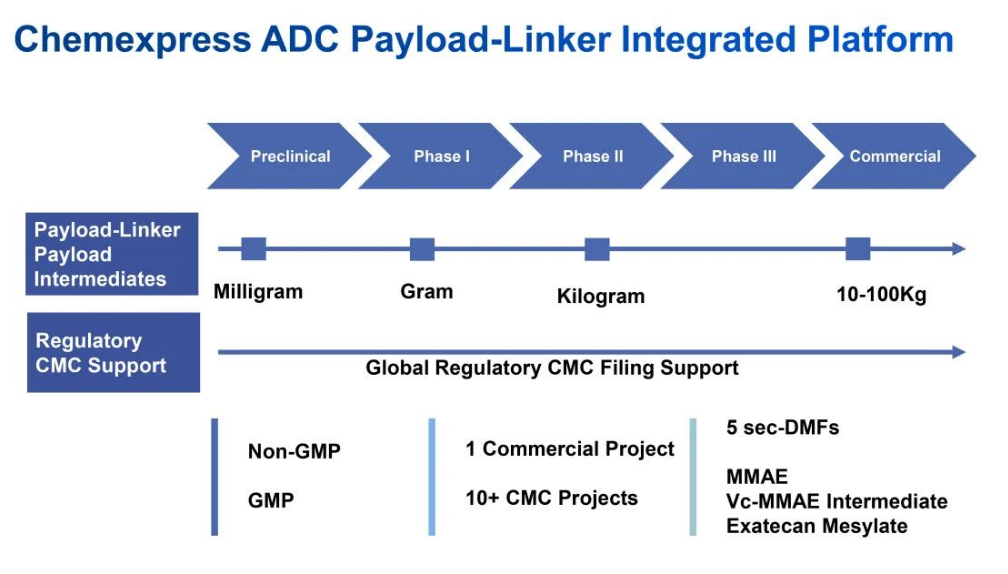 Shanghai Haoyuan Pharmaceutical Co., Ltd. (hereinafter referred to as “Haoyuan Pharmaceutical”) is one of the earliest enterprises in China to carry out ADC Payload-Linker research, having developed a series of cutting-edge highly active toxins and constructed a rich and diverse Payload-Linker library, mainly providing CMC and CDMO services related to the small molecule chemical part of ADC drugs, covering various aspects including the research and development of toxins (Payload), linkers (Linker), and effective payloads (Payload-Linker), process optimization, process validation, registration application, and GMP industrialization.For a long time, Haoyuan Pharmaceutical has served the research and production of ADC drugs at home and abroad, possessing strong capabilities in product and intermediate development, a wide variety of inventory, large-scale production, fast supply in the industry, and high cost-effectiveness. To date, it has accumulated over 500 synthesis experiences related to ADC small molecules, assisting clients in completing multiple Payload-Linker CMC services and clinical registration applications, efficiently and qualitatively providing professional CDMO services.References:[1] New Technologies Bloom Together for Bettering Cancer Drug Conjugates. Pharmacol Rev 74:680–711, July 2022[2] Antibody drug conjugate: the “biological missile” for targeted cancer therapy. Signal Transduction and Targeted Therapy (2022) 7:93[3] Service Introduction | Haoyuan Pharmaceutical Focuses on Payload-Linker CDMO Services, Safeguarding the Most ADC Development Pipelines for MMAE. Haoyuan Pharmaceutical. 2022.06.02[4] A Patent Review on FDA-Approved Antibody-Drug Conjugates, Their Linkers and Drug Payloads. ChemMedChem 2022, e202200032 (1 of 11)[5] “Magic Bullet” ADC. Haoyuan Pharmaceutical 2021.11.24[6] Drugs and cosmetics from the sea. Mar. Drugs 2004, 2(2), 73-82[7] Structural Basis of Microtubule Destabilization by Potent Auristatin Anti-Mitotics. PLOS ONE, August 12, 2016[8] Cytotoxic Payloads for Antibody–Drug Conjugates. The Royal Society of Chemistry 2019[9] Anti-CD22 and anti-CD79B antibody drug conjugates are active in different molecular diffuse large B-cell lymphoma subtypes. Leukemia, 2015, 29(7): 1578-86.[10] Good News | Haoyuan Pharmaceutical MMAE Obtained US FDA DMF Filing. Haoyuan Pharmaceutical 2022.07.2