A multimeter, also known as a multi-tester, is a multifunctional and multi-range measuring instrument. Generally, a multimeter can measure direct current (DC) and voltage, alternating current (AC) voltage, resistance, and audio levels. Some models can also measure AC current, capacitance, inductance, and certain parameters of semiconductors. It is a commonly used tool for electricians.
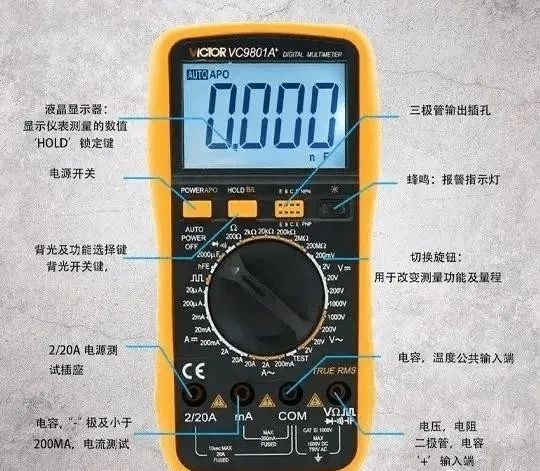
1. Check the range before measuring; do not measure without checking.
Every time you pick up the probes to prepare for measurement, be sure to double-check that the measurement category and range selection switch are set correctly. For safety, this habit must be developed.
2. Do not change the range during measurement; switch to the off position after measuring:
Do not arbitrarily turn the selection knob during measurement, especially when measuring high voltage (e.g., 220V) or large current (e.g., 0.5A), to avoid generating an arc that could damage the contacts of the switch. After measurement, the range selection switch should be turned to the “?” position.
3. The dial should be level, and the reading must be aligned.
When using a multimeter, it should be rotated to a level position, and the line of sight should be directly aligned with the needle when reading.
4. The range must be appropriate; the needle should deflect more than half.
When selecting a range, if the size of the measurement cannot be estimated in advance, try to select a larger range first, then gradually switch to a smaller range based on the deflection angle until the needle deflects to about two-thirds of the full scale.
5. Measure resistance without power; discharge before measuring capacitance.
It is strictly forbidden to measure resistance in a powered circuit. When checking large capacitors in electrical equipment, discharge the capacitor before measuring.
6. Zero the meter before measuring resistance; zero adjustment is required when changing ranges.
When measuring resistance, first turn the switch to the resistance range, short the two probes, and adjust the “Ω” zero potentiometer so that the needle points to zero ohms before measuring. Each time the resistance range is changed, the ohm zero point should be readjusted.
Measuring AC Voltage
Select the AC range on the switch, ensuring the unit matches the requirements;
Connect the probes across the circuit, ensuring the polarity is correct;
When measuring high voltage, change the socket; do not forget to switch off the power before changing the range;
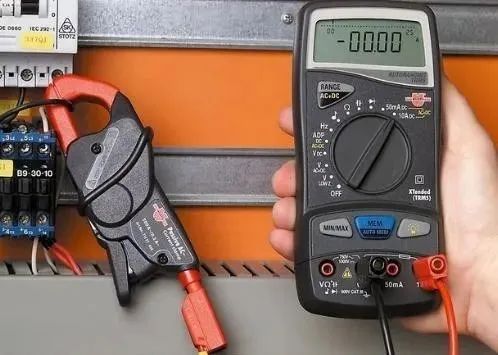
Precautions for Using a Multimeter
When using an analog multimeter, connect the two measurement probes with the red probe to positive (+) and the black probe to negative (-) as required, then confirm that the needle is at the “0” position. The needle should align with the end line on the left side of the scale; if not, zero adjustment is necessary.Before measuring current and voltage, estimate the range of the current and voltage to be measured, starting with a larger range and then adjusting to an appropriate range to avoid burning out the multimeter due to excessive current.
During measurement, consider the impact of the multimeter’s internal resistance. For example, to measure voltage, connect the probes to the circuit being measured; at this point, current also flows through the multimeter’s internal resistance, which can affect the measurement value. When measuring the voltage at the same point using different ranges, the internal resistance of the multimeter varies, affecting the measurement degree differently.
When measuring transistor electronic circuits, it is better to select a DC range with an internal resistance of 20kΩ/V, which is usually marked on the multimeter’s scale. Additionally, transistor circuits often require measuring low voltages, such as 0.1V, so the selected multimeter should have a measurement range of 1V.
精彩阅读
电压kV为什么k要小写,原因你知道吗?

发一份德国的电气图纸,看一下与我国的区别在哪里

什么是三段式电流保护?

万用表使用口诀,绝对干货!

双电源供电与双回路供电的区别是什么?

10kV开关柜二次接线图解    三相电零线共线的后果是什么?90%的电工不知道!