A multimeter, also known as a multi-tester, is a versatile measuring instrument that can measure various electrical parameters such as direct current, direct voltage, alternating voltage, resistance, and audio levels. Some models can also measure alternating current, capacitance, inductance, and certain semiconductor parameters.It is a commonly used tool for electricians.
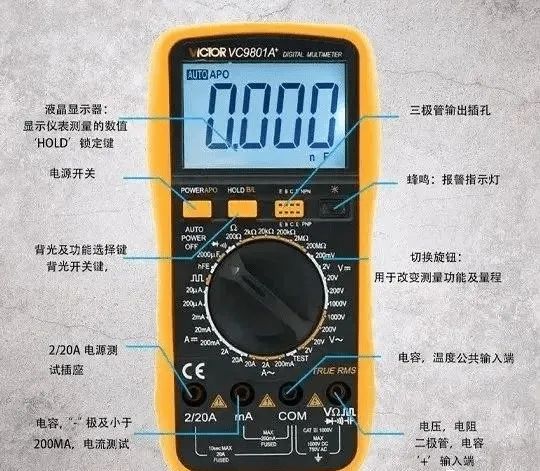
1. Always check the range before measuring: Never measure without checking.
Every time you pick up the probes to measure, make sure to double-check that the measurement category and range selection switch are set correctly. For safety, this habit must be developed.
2. Do not change the range during measurement; set to ‘off’ after measuring:
Do not arbitrarily adjust the selection knob during measurement, especially when measuring high voltage (such as 220V) or large current (such as 0.5A), to avoid generating an arc and damaging the switch contacts. After measuring, set the range selection switch to the ‘off’ position.
3. Keep the dial level, align your reading:
When using a multimeter, keep it level, and your line of sight should be directly in line with the needle.
4. Choose the appropriate range, needle should deflect more than half:
When selecting a range, if you cannot estimate the size of the measurement beforehand, choose a larger range first, then gradually switch to a smaller range based on the deflection angle until the needle deflects to about 2/3 of the full scale.
5. Measure resistance without power; discharge before measuring capacitance:
It is strictly forbidden to measure resistance on a live circuit. When checking large capacitors on electrical devices, discharge the capacitor first before measuring.
6. Zero the meter before measuring resistance and adjust zero when changing ranges:
When measuring resistance, first turn the switch to the resistance range, short the two probes, and adjust the ‘Ω’ zero adjustment potentiometer until the needle points to zero ohms before measuring. Each time you change the resistance range, you must readjust the ohm zero point.
Measuring AC Voltage:
Select the AC range on the switch, ensuring the unit matches the requirements;
Connect the probes across the circuit, with positive and negative polarity;
To measure high voltage, change the socket; do not forget to turn off the power before changing settings;
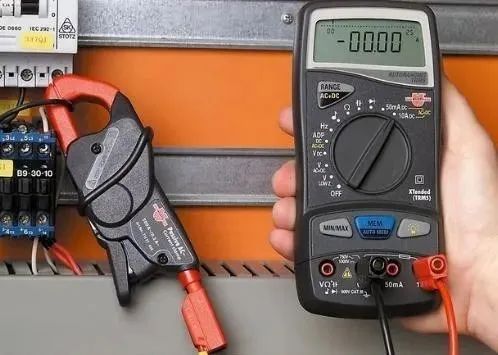
Important Notes for Using a Multimeter
When using an analog multimeter, connect the two measurement probes with the red probe to positive (+) and the black probe to negative (-), then check if the needle is at the ‘0’ position. The needle should align with the end line on the left side of the scale; if not, zero adjustment is needed.Before measuring current and voltage, estimate the expected range and start with a higher range before adjusting to a suitable range to avoid burning out the multimeter due to excessive current.
During measurement, consider the effect of the multimeter’s internal resistance. For example, when measuring voltage, the probes are connected to the circuit being measured, and current also flows through the multimeter’s internal resistance, which can affect the measurement value. When measuring voltage at the same point using different ranges, the internal resistance of the multimeter varies, leading to different levels of impact.
When measuring transistor circuits, it is better to select a DC range with an internal resistance of 20kΩ/V, which is usually marked on the multimeter scale. Additionally, transistor circuits often require measuring low voltages, such as 0.1V, so the selected multimeter should have a measurement range that includes 1V.