Author: Jin Dao Tian Cheng
Introduction
The AI Agent is writing a new chapter in the energy revolution. When technological maturity and policy support come together, we may witness a new type of power system characterized by “high proportions of renewable energy, high reliability, and high efficiency.”
The wind farm in Inner Mongolia experiences a sudden drop in wind speed at midnight, while a photovoltaic power station 200 kilometers away sees a surge in power generation as the clouds disperse—this dramatic fluctuation in renewable energy generation has kept grid operators awake at night. However, the AI Agent system of the Southern Power Grid can complete the entire process of power prediction, unit adjustment, and load distribution in just 0.3 seconds, reducing the impact of such sudden situations on the grid by 90%. Driven by the dual goals of carbon neutrality and the energy revolution, the AI Agent is redefining the operational logic of power systems as a “smart brain,” solving the century-old problem of integrating renewable energy and ensuring grid safety.
1. Industry Pain Points: The Sharp Contradiction Between Volatility and Rigidity
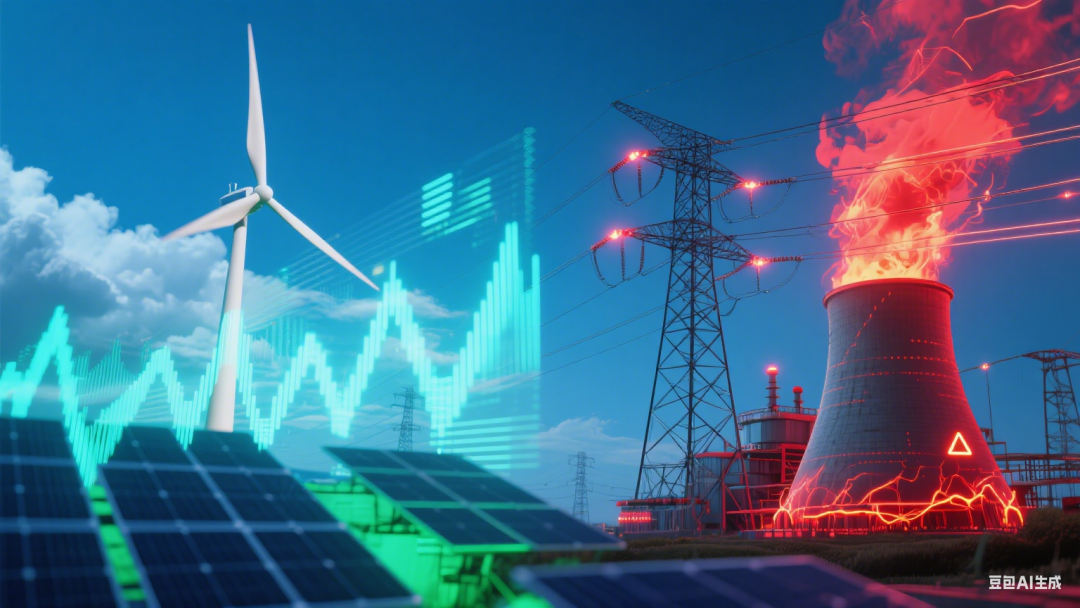
When a wind farm in Gansu sees its daily power generation plummet from 1.2 million kWh to 350,000 kWh, and a photovoltaic park in Qinghai experiences a 70% drop in output within an hour due to a sandstorm—these extreme fluctuations highlight the irreconcilable contradictions between renewable energy and traditional grids. According to data from the National Energy Administration, in 2023, China’s installed capacity of wind and solar power exceeded 1.2 billion kW, yet the curtailment rates for wind and solar in some regions remain at 5%-8%. This reflects a profound conflict between the inherent intermittency and randomness of renewable energy and the rigid requirements for safe grid operation.
This conflict manifests in three dimensions. First, there is insufficient accuracy in power forecasting; traditional numerical weather forecasts have an error rate of 15%-20% over a 24-hour scale, forcing the grid to maintain a large number of backup units. A director at a provincial power dispatch center revealed that to cope with renewable energy fluctuations, the minimum operating capacity of thermal power in the province is 30% higher than actual demand, resulting in an additional consumption of 1.2 million tons of standard coal annually. Second, the response of peak-shaving resources is delayed; when renewable output suddenly drops, thermal power units take 4-6 hours to ramp up to full load, which is far slower than the rate of fluctuation; and the installed capacity of flexible resources like pumped storage accounts for only 8% of renewable capacity, making it difficult to play a leading role in peak shaving.
Even more severe is the risk of fault propagation. Renewable energy stations are often located in remote areas, with long and complex grid connections; once a fault occurs, traditional monitoring systems take 20-30 minutes to locate the fault point. In 2022, a fault in the collection line of a wind farm led to voltage collapse in the surrounding three county grids due to delayed handling, affecting over 500,000 users. This “fluctuation – fault – propagation” chain reaction has become a major bottleneck restricting the large-scale integration of renewable energy.
2. Southern Power Grid Practice: Breakthroughs from Intelligent Dispatch to Fault Diagnosis
As the largest provincial grid operator in the country, the AI Agent practice of Southern Power Grid provides a replicable solution for the industry. The intelligent system it has built demonstrates the transformative power of technology in traditional grid operations in two major scenarios: intelligent dispatch and fault diagnosis.
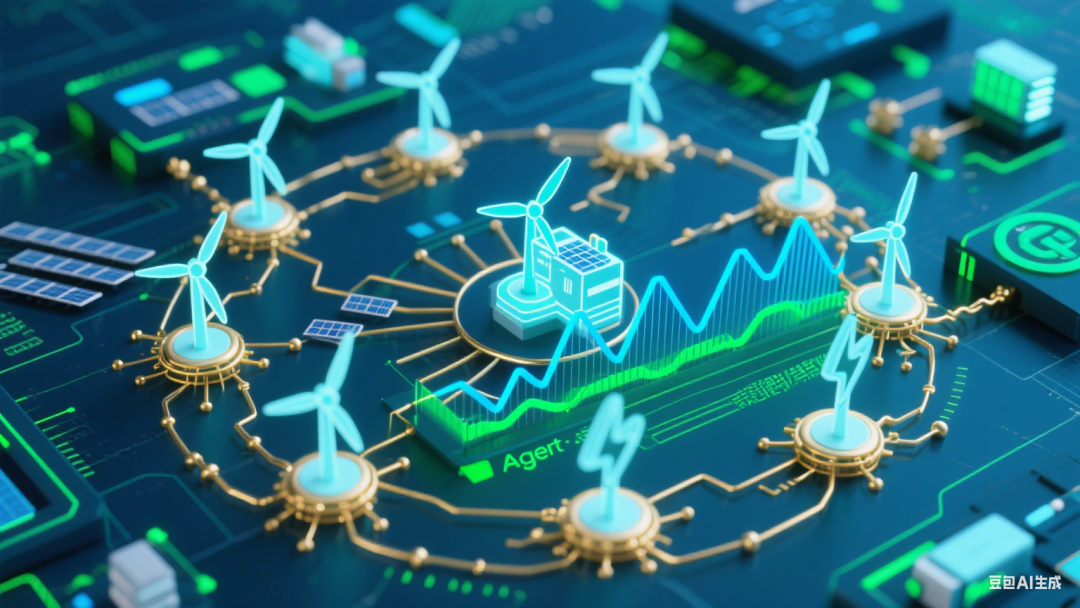
The dynamic balance art in intelligent dispatch lies in the AI Agent’s ability to coordinate multiple energy types. In the dispatch center of the Yunnan grid, 1,200 specialized agents form a hierarchical decision-making network: the load forecasting agent updates electricity demand every 15 minutes, the renewable forecasting agent integrates meteorological data to generate output curves, and the unit adjustment agent allocates generation plans based on the principle of “prioritizing renewable energy consumption + flexible peak-shaving from thermal power.” When the system detects that wind power output will drop by 500,000 kWh in 10 minutes, it immediately initiates a three-level response: first, it calls on the short-term storage of the photovoltaic station to release 100,000 kWh, then instructs nearby gas units to increase output by 250,000 kWh, and finally reduces 150,000 kWh of industrial load through demand-side response. This dynamic balancing mechanism has reduced the wind curtailment rate in the Yunnan grid from 12% to 1.2%, increasing the clean energy consumption by over 3 billion kWh annually.
Even more noteworthy is the self-learning capability of the agent system. At an integrated wind-solar-storage power station in Guangxi, the AI Agent analyzed 1,500 extreme weather events over the past three years and autonomously summarized the decision rule of “reducing wind power output by 20% two hours before a typhoon arrives,” resulting in a 68% reduction in wind power accident rates in the region. Data from Southern Power Grid shows that after deploying the intelligent dispatch system, the inter-provincial power transmission capacity increased by 18%, while the coal consumption of frequency regulation units decreased by 12 grams/kWh, equivalent to an annual reduction of 2.3 million tons of CO2 emissions.
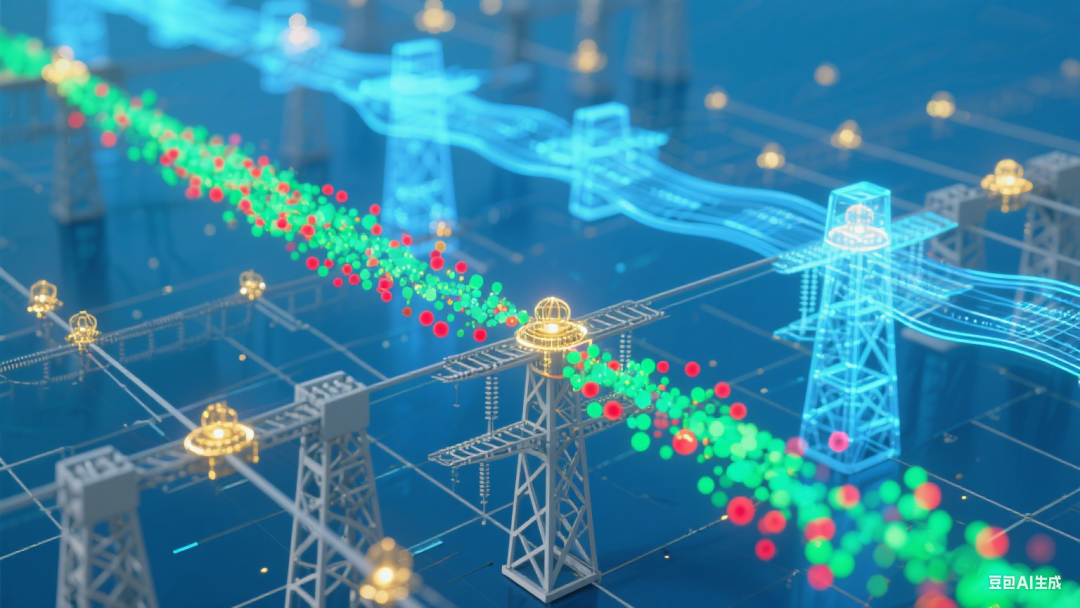
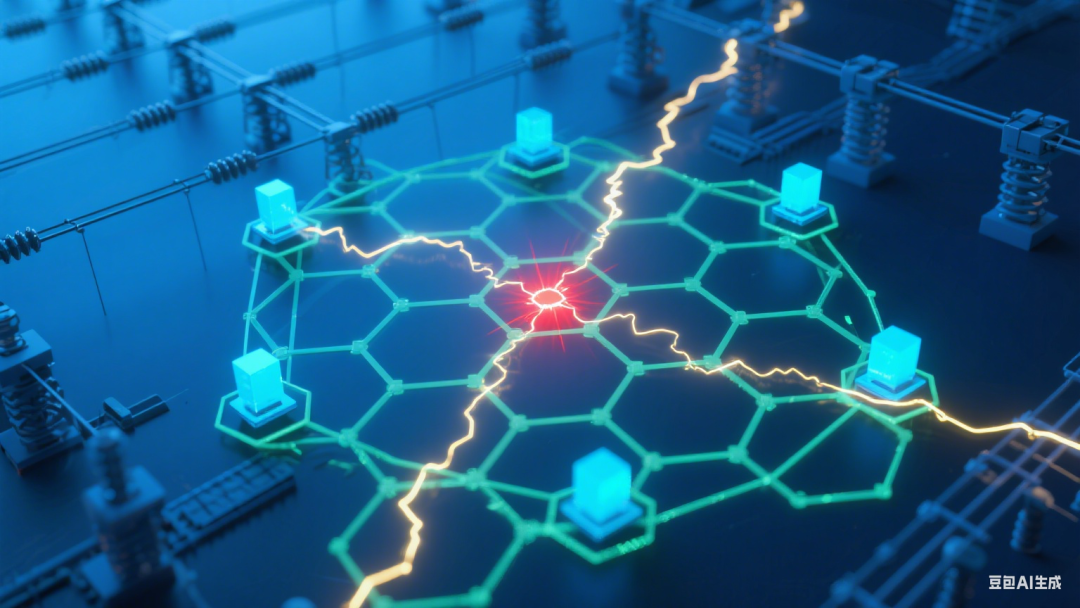
The revolution in fault diagnosis through the distributed agent network has redefined the response speed for grid safety. In the traditional model, line fault location requires maintenance personnel to carry equipment along the line for inspection, while Southern Power Grid has deployed 5,000 monitoring agents in the Pearl River Delta region that can achieve millisecond-level fault identification through synchronized phasor measurement technology. When a single-phase grounding fault occurs on a 220 kV line, the agents at both ends of the substation exchange fault waveform data within 0.08 seconds, and combined with the line parameter agent’s information on wire type, length, etc., they can immediately calculate the fault point to within a 5-meter range. Even more innovative is the autonomous execution of isolation decisions—without human intervention, the intelligent circuit breakers on both sides of the fault point will trip within 0.3 seconds, while the agents of adjacent lines automatically adjust the power flow distribution to ensure a smooth load transfer.
This distributed architecture’s advantages are particularly evident in extreme weather. During Typhoon “Shanmao” in 2023, the agent system handled 27 line faults within 3 hours, with an average isolation time of only 1.2 minutes, reducing the time by 97% compared to traditional methods, and tripling the power restoration speed in affected areas. Statistics from Southern Power Grid show that after deploying the fault diagnosis agents, the average fault repair time for lines decreased from 4.8 hours to 52 minutes, reducing power outage losses by over 1.5 billion yuan annually.
3. Technological Integration: The Dual Drive of Digital Twin and Reinforcement Learning
The deep application of AI Agents in the energy industry relies on the technical support of digital twins and reinforcement learning. The integration of these two technologies is constructing a closed-loop optimization system for the grid from the “physical world” to the “digital space.”
The digital twin technology creates a mirrored world of the grid, providing an infinite testing ground for AI Agents. At the Guizhou Digital Grid Operation Center, a virtual system that maps 1:1 with the physical grid is running in real-time: from 500 kV substations to 0.4 kV distribution areas, from generators to residential charging piles, all operational parameters of the equipment are synchronized to the virtual space at a rate of 300,000 points per second. When the planning department needs to test the impact of integrating an additional 500,000 kW of wind power, the AI Agent simulates 1,000 operating scenarios in the digital twin, analyzing 28 indicators such as voltage stability, short-circuit current, and grid loss rate, ultimately generating the optimal integration plan. This virtual debugging mode has shortened the integration cycle of renewable energy projects from 180 days to 60 days, and the post-commissioning failure rate has decreased by 75%.
The combination of digital twins and AI Agents has also achieved “predictive maintenance” for the grid. In the practice of the Guangzhou Power Supply Bureau, the system can predict potential failures 30 days in advance with 92% accuracy by analyzing data on transformer temperature, vibration, and oil chromatography. A 500 kV substation preemptively replaced an aging transformer based on this, avoiding a potential power outage loss of 500 million yuan. This “virtual monitoring – risk warning – proactive maintenance” model has reduced the full lifecycle cost of grid equipment by 23%.
The virtual power plant empowered by reinforcement learning provides a market-oriented solution for renewable energy consumption. In the traditional model, distributed energy sources struggle to participate in electricity market transactions due to their small scale and high volatility, while AI Agents aggregate dispersed resources to form a “virtual power plant,” enabling them to compete on equal footing with traditional power plants. In an industrial park in Jiangsu, rooftop photovoltaics from 120 companies, 2,000 electric vehicle charging piles, and 50 gas boilers were integrated into a virtual power plant by the AI Agent, which continuously optimizes pricing strategies through reinforcement learning algorithms: selling photovoltaic power at 0.8 yuan/kWh during peak hours and purchasing grid power at 0.3 yuan/kWh during off-peak hours for electric vehicle charging. This flexible participation model has generated annual revenues of 8.6 million yuan for the virtual power plant, shortening the investment payback period to 3.5 years.
The advantage of reinforcement learning lies in handling the uncertainties of the electricity market. An AI Agent from a virtual power plant learned to automatically lower prices by 10% when the “weather forecast accuracy is below 70%” by analyzing market transaction data from the past two years, increasing the transaction success rate from 62% to 89%. Industry estimates suggest that if AI Agent technology is fully applied across the country, it could increase renewable energy consumption by 120 billion kWh annually, equivalent to a reduction of 36 million tons of standard coal consumption.
4. Policy Drive: The Wave of Large-Scale Application Under Dual Carbon Goals
The speed of AI Agent penetration in the energy industry resonates strongly with the pace of national dual carbon policy advancement. A series of policy documents from the central to local levels provide institutional guarantees for the large-scale application of agent technology in microgrid fields.
The “Guiding Opinions on Accelerating the Construction of a National Unified Electricity Market System” clearly states, “Encourage the application of artificial intelligence technology in power dispatch,” while the “New Energy Vehicle Industry Development Plan (2021-2035)” opens up space for the application of AI Agents in V2G (Vehicle-to-Grid) technology. Under policy guidance, provinces such as Guangdong, Zhejiang, and Jiangsu have established over 50 AI Agent demonstration microgrids, covering various scenarios such as industrial parks, islands, and renewable energy bases.
The energy autonomy practice of island microgrids is particularly representative. On Yongxing Island in Sansha City, Hainan, the AI Agent system manages a microgrid composed of 2,000 kW of wind power, 3,000 kW of solar power, and 5,000 kWh of storage. The system can dynamically adjust the energy structure based on tidal patterns, tourist numbers, and weather conditions: automatically switching to diesel generators for backup power during typhoons and increasing storage charging during peak evening hours in tourist seasons. This intelligent management has reduced diesel consumption on the island by 78%, and the reliability of power supply has increased from 92% to 99.9%, completely ending the history of frequent power outages.
In the industrial park scenario, the large-scale application of AI Agents is reshaping energy consumption patterns. In a microgrid at an automotive factory in Shanghai, the agent system integrates workshop photovoltaics, battery storage, electric vehicle charging piles, and welding equipment loads into an organic whole, achieving “self-consumption and surplus power fed into the grid” through real-time optimization. Data shows that this system has increased the proportion of renewable energy in the factory from 15% to 42%, saving 12 million yuan in electricity costs annually, while also gaining an additional 3 million yuan in revenue by participating in grid peak shaving. This dual benefit of “cost reduction + revenue increase” is prompting more and more enterprises to actively deploy AI Agent systems.
Another significant achievement driven by policy is the improvement of industry standards. The “AI Agent Application Guidelines in the Power Industry” to be released in 2024 will standardize the technical requirements for agents in dispatch, operation and maintenance, and trading scenarios, addressing interoperability issues between different vendors’ systems. A representative from a power technology company stated, “After the standards were introduced, our AI Agent can seamlessly connect with distribution automation systems from five different brands, shortening the project implementation cycle by 40%.”
Jin Dao was established in 1995 and is one of the most competitive desktop, application, and cloud computing operation service providers in China. With nearly 2,000 service engineers located in offshore service centers (ODC) in Xi’an, Guiyang, Dongguan, Dalian, and other locations, as well as customer data centers and office sites, Jin Dao provides safe, fast, and high-quality services to over 30 Fortune 500 clients.
Jin Dao’s Mission:
To ensure the safe and continuous operation of customers’ ICT systems with professional and fast services.
Jin Dao’s Business:
-
Key Clients:Technology, retail, pharmaceuticals, and other industries;
-
Core Services:Cloud computing delivery and operation, desktop operation, AI + data;
-
Customer Value:High security, fast delivery, low cost.
With the help of processes, knowledge bases, and AI large models, Jin Dao’s professional technicians create high-security, fast delivery, and low-cost ICT services for customers.
-
Cloud Computing Delivery and Operation:Providing construction, migration, troubleshooting, and change services for cloud computing vendors and large clients, as well as on-site services for data centers;
-
Desktop Operation:Providing 7×24 consulting, troubleshooting, and change services for customers’ production and office systems;
-
AI + Data:Implementing intelligent menus for the chain catering industry to significantly enhance store revenue.
The expectations of customers are the direction of Jin Dao’s efforts!
-
High Security:Certified engineers with strict control over processes and operational standards;
-
Fast Delivery:Rapid deployment and delivery of services to support customer business growth;
-
Low Cost:Using AI to replace manual labor, continuously reducing service costs.
Flexible charging models can be priced based on usage and profit sharing.
-
Usage-Based Charging:Charging based on work orders and equipment quantity;
-
Profit Sharing:Sharing part of the profits for saving costs and creating new revenue for customers.
5. Future Outlook: A Leap from Assistive Decision-Making to Autonomous Evolution
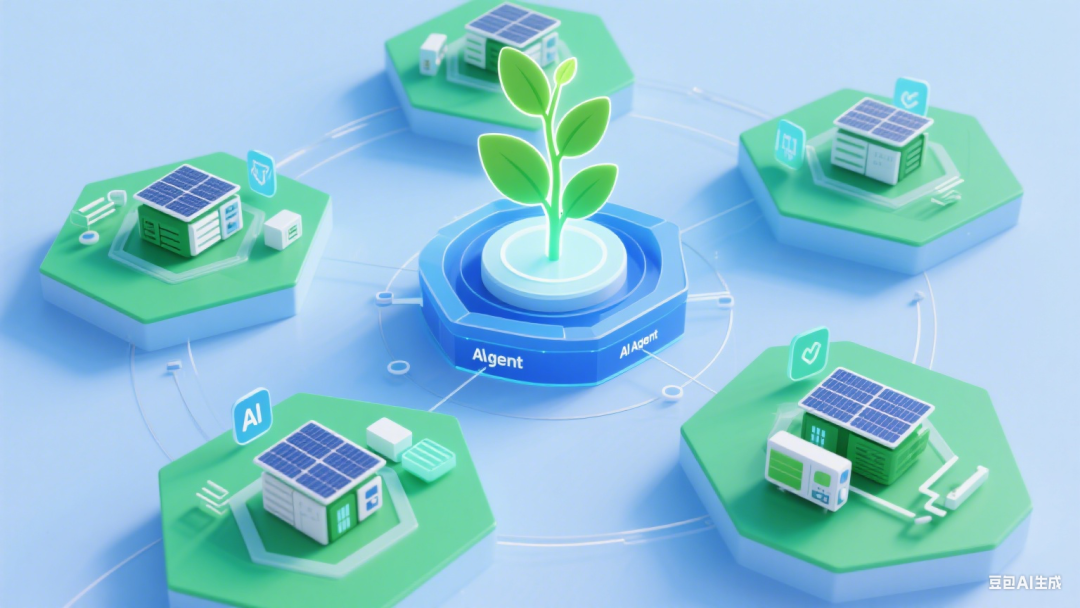
The next decade for AI Agents in the energy industry will see a qualitative change from “assistive tools” to “autonomous systems.” Experts predict that three major technological breakthroughs will reshape the industry landscape: first, the cross-domain collaboration of multi-energy agents; in the future, AI Agents for electricity, gas, and heat networks will form alliances, automatically increasing the proportion of renewable energy generation when natural gas prices rise; second, federated learning will ensure data security sharing, allowing agents from different grid companies to train collaboratively without disclosing core data, enhancing overall decision-making levels; third, real-time interaction between digital twins and the physical world will accelerate simulations through quantum computing, achieving second-level optimization for grids with hundreds of millions of nodes.
However, challenges remain. The safety requirements of energy systems demand that AI Agents possess extremely high reliability; a survey shows that 76% of grid operators state they “cannot accept errors in critical decisions made by agents.” Additionally, the technical costs remain a barrier for small and medium-sized enterprises, with the initial investment for a complete AI Agent system being around 20 million yuan, posing pressure on county-level power companies. Addressing these issues requires a multi-faceted approach of “technological iteration + policy support + business model innovation.”
From the intelligent dispatch of Southern Power Grid to the market bidding of virtual power plants, from the mirrored simulation of digital twins to the large-scale application of microgrids, AI Agents are writing a new chapter in the energy revolution. When technological maturity and policy support come together, we may witness a new type of power system characterized by “high proportions of renewable energy, high reliability, and high efficiency”—where wind, solar, water, and thermal energy coexist harmoniously, and the grid functions like an organic entity with self-awareness, capable of sensing, deciding, and evolving, ultimately supporting humanity’s dual carbon dream.
<END>