Choosing between a Programmable Logic Controller (PLC) and a Distributed Control System (DCS) requires a specific analysis based on the situation, as different applications have varying requirements for control systems. When communicating with clients, we can approach the discussion from the following aspects!
PLC and DCSPLC
1. Development from switch control to sequential control, transport processing, and multifunctional continuous PID control from the bottom up, with PID in the interrupt station.
2. A single PC can serve as the master station, with multiple identical PLCs as slave stations.
3. A single PLC can also act as the master station, with multiple identical PLCs as slave stations, forming a PLC network. This is more convenient than using a PC as the master station: when user programming, there is no need to know the communication protocol; just follow the manual format.
4. The PLC grid can function as an independent DCS or as a subsystem of a DCS.
5. PLCs are primarily used for sequential control in industrial processes, and new PLCs also have closed-loop control capabilities.
DCS
1. The Distributed Control System (DCS) integrates
4C (Communication, Computer, Control, CRT) technology into a monitoring technology.
2. A top-down tree topology large system, where communication is key.
3. PID in the interrupt station, connecting computers with field instruments and control devices in a tree topology and parallel continuous link structure, with numerous cables running from the interrupt station to field instruments.
4. Analog signals, A/D—D/A, with microprocessor integration.
5. Each instrument connects to I/O with a pair of wires, linked to the local area network (LAN) by the control station.
6. DCS has a three-level structure: control (engineer station), operation (operator station), and field instruments (field measurement and control station). It is used for large-scale continuous process control, such as in petrochemicals.
How to Choose Between PLC and DCS Systems
Choosing between a Programmable Logic Controller (PLC) and a Distributed Control System (DCS) requires a specific analysis based on the situation, as different applications have varying requirements for control systems.
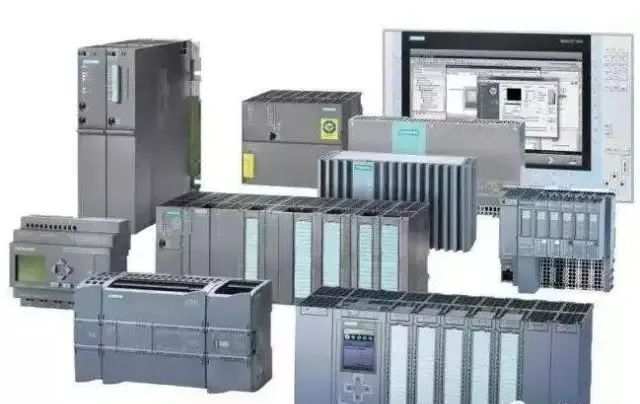
The choice of control system platform will significantly impact how automation systems meet the demands for optimized production, maintaining availability, and data acquisition. A lack of foresight in selecting a control system may affect future scalability, process optimization, user satisfaction, and company profits.
In addition to some basic principles (such as how to control processes), design teams must also consider various factors such as installation, scalability, maintenance, and upkeep.
Currently, while PLC systems may be the most cost-effective for small devices, DCS systems offer more economically scalable capabilities and are more likely to yield a higher return on initial investment.
PLC is an industrial computer used to control manufacturing processes, such as robotics, high-speed packaging, bottling, and motion control. Over the past 20 years, PLCs have added more functionalities, creating more benefits for small factories and installations. PLCs typically operate as standalone systems but can also integrate with other systems through communication. Since each PLC has its own database, integration requires some degree of mapping between controllers. This makes PLCs particularly suitable for small applications that do not have significant scalability needs.
DCS systems, on the other hand, distribute controllers throughout the automation system and provide universal interfaces, advanced control, system-level databases, and easily shareable information. Traditionally, DCS is mainly applied in process industries and larger factories, where large system applications are easier to maintain throughout the lifecycle of the plant.

PLC is developed from relay control principles, executing logical operations, sequential control, timing, counting, and arithmetic operations through stored instructions; it controls various machinery or production processes via digital input and output operations. The user-defined control program expresses the process requirements and is stored in the PLC’s user program memory in advance. During operation, the program is executed step by step according to the stored content to fulfill the operational requirements of the process.
Engineering Analysis Comparison of PLC and DCS
The CPU of the PLC has a program counter that indicates the storage address of the program steps. During program execution, this counter automatically increments by 1 after executing a step, with the program executing sequentially from the starting step (step number zero) to the final step (usually the end instruction), then returning to the starting step for cyclic operation. The time required for a PLC to complete one cycle of operation is called a scan cycle. The scan cycle varies from 1 microsecond to several tens of microseconds depending on the PLC model. This cyclic operation of the program counter is something that DCS does not possess, which is also why PLC redundancy is not as robust as that of DCS.
DCS is developed based on operational amplifiers. It successfully creates functional blocks (some DCS systems refer to them as bloated blocks) for all functions and process variable relationships. The main difference in performance between DCS and PLC lies in the logical resolution of discrete signals and the computation of analog signals. Even though there has been some overlap between the two, distinctions remain.
Since the 1980s, PLCs have significantly enhanced their algorithmic capabilities for control loops beyond logical operations, but programming PLCs using ladder diagrams makes analog signal computation less intuitive and more cumbersome. However, PLCs excel in logical resolution, performing 1k logical programs in less than 1 millisecond at the microsecond level. They treat all inputs as discrete signals, with 16 bits (or 32 bits) representing one analog signal.
In contrast, DCS treats all inputs as analog signals, with 1 bit representing a discrete signal. The resolution of a logic operation in DCS occurs in the hundreds of microseconds to milliseconds range. For PLC, the computation of a PID operation takes several tens of milliseconds, which is comparable to DCS’s computation time.
Regarding grounding resistance, the requirements for PLC may not be stringent, but for DCS, it must be below several ohms (usually below 4 ohms). Analog signal isolation is also very important.
For systems with the same number of I/O points, using PLC is generally less expensive than using DCS (approximately 40% savings). PLCs do not have dedicated operator stations; their software and hardware are generic, resulting in significantly lower maintenance costs compared to DCS. If the controlled objects mainly involve equipment interlocks and relatively few loops, using PLC is more appropriate.
If the primary control involves analog signals and numerous functional computations, it is best to use DCS. DCS excels in redundancy for controllers, I/O boards, communication networks, and advanced computations, as well as meeting specific industry requirements, far surpassing PLC capabilities. Due to the use of generic monitoring software, PLCs are easier to integrate into the management information systems of design enterprises.
PLC and DCS systems are generally suited for discrete and process manufacturing, respectively. Discrete manufacturing facilities using PLC systems typically consist of individual production units, primarily for assembling components, such as labeling, filling, or grinding. Process manufacturing facilities usually employ automation systems to produce according to recipes rather than by individual items. Large continuous processing equipment, such as refineries and chemical plants, utilize DCS automation systems. Mixed applications often use both PLC and DCS systems simultaneously. Choosing a controller for a specific application requires consideration of process scale, scalability, future upgrade plans, integration needs, functionality, high availability, and the return on investment over the entire lifecycle of the plant.
Factors Influencing the Choice
Process Scale:How many input/output (I/O) points are needed? Small systems (<300 I/O points) may have a lower budget, making PLC systems more suitable. Applying DCS systems to smaller projects is generally challenging; conversely, they perform better in large factory applications. With a global database, DCS systems are easier to manage and upgrade, as any changes are global.
Upgrade Plans:Smaller industrial processes can utilize PLC systems, but if the process requires expansion or upgrades, additional PLC hardware and databases will need to be added, requiring separate maintenance. This is a time-consuming and labor-intensive process that is prone to errors. DCS systems are easier to upgrade, as user access can be managed from a central hub, making maintenance and upkeep simpler (see Figure 1).
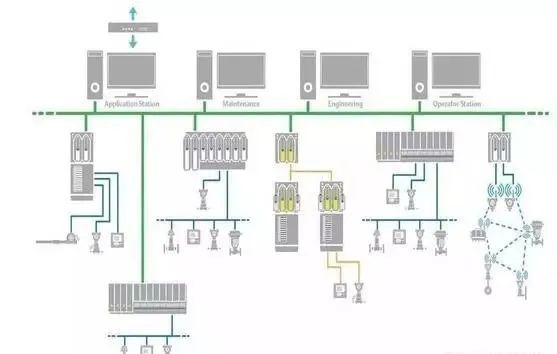 Figure 1: DCS system structure with a single database allows users to maintain and operate the system from a central control station
Integration Needs:For standalone devices, PLC systems are ideal. When a factory is configured with multiple PLC systems, interconnection requirements arise. This is generally difficult to achieve, as it often requires using communication protocols for data mapping. Integration is certainly possible, but when changes are needed, users face challenges: if one PLC system undergoes changes, it may disrupt communication between two PLCs due to affected data mapping. For DCS systems, mapping is not necessary; configuration changes are a straightforward process, as the controllers are built into the system.
High Availability:For processes with high availability requirements, DCS systems can provide redundancy configurations (see Figure 2).
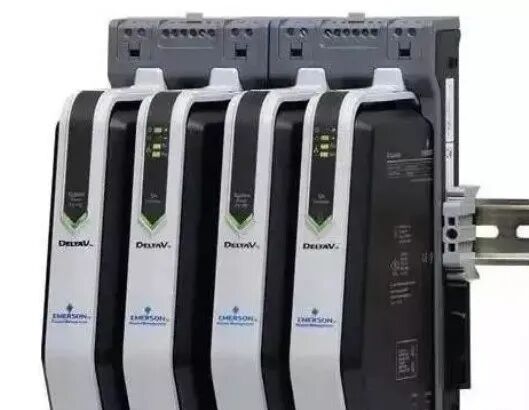 Figure 2: Redundancy is crucial for long-term operation in processes with high availability requirements
Efficiency and ease of achieving redundancy are critical for keeping costs within budget.
Functional Requirements:Some industries and facilities require historical databases, streamlined alarm management, and centralized control rooms with configurable user interfaces. Others may require integration with Manufacturing Execution Systems (MES), advanced control, and asset management. DCS systems come with these applications built-in (see Figure 3), making it easy to add them to automation engineering applications without the need for additional servers or increased integration costs. From this perspective, DCS systems are more economical and can enhance productivity while reducing risks.
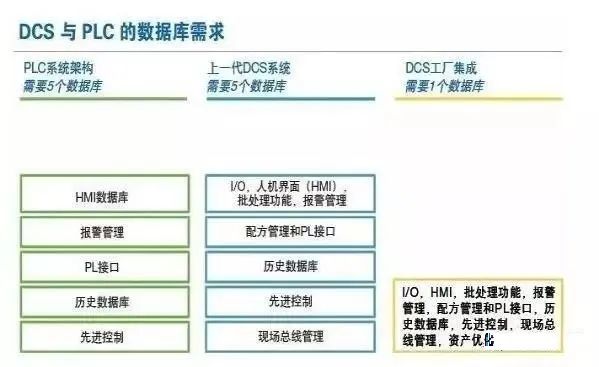 Figure 3: Each system platform has unique database requirements
Lifecycle Return on Investment:Facility demands vary by industry. For smaller process engineering projects with no expansion needs and no requirement for integration with other process areas, PLC systems offer a better return on investment. While DCS systems may have higher installation costs, the increased output and safety benefits they provide over the entire lifecycle can offset some of these costs. Balancing short-term needs with long-term vision is crucial for operational certainty and improving plant operations and maintenance.
Welcome to join the alliance!

Joining the community not only provides access to resources but also allows you to join seven WeChat groups covering photovoltaic, lithium batteries, semiconductors, data centers, biopharmaceuticals, supplier connections, and more. By joining the community, you can access all group chats.
Welcome to participate in the exhibition!

Recommended past premium content
Documents related to factory management (HVAC, electrical, water management, gasification, secondary distribution, design, construction, standards, safety, management, special equipment) are waiting for you!
30,000+ factory management professionals’ grand event, absolutely worth attending!
What factory engineers should know (HVAC mechanical section)
What factory engineers should know (Electrical section)
What factory engineers should know (Water supply and drainage section)
What factory engineers should know (Gas power section)