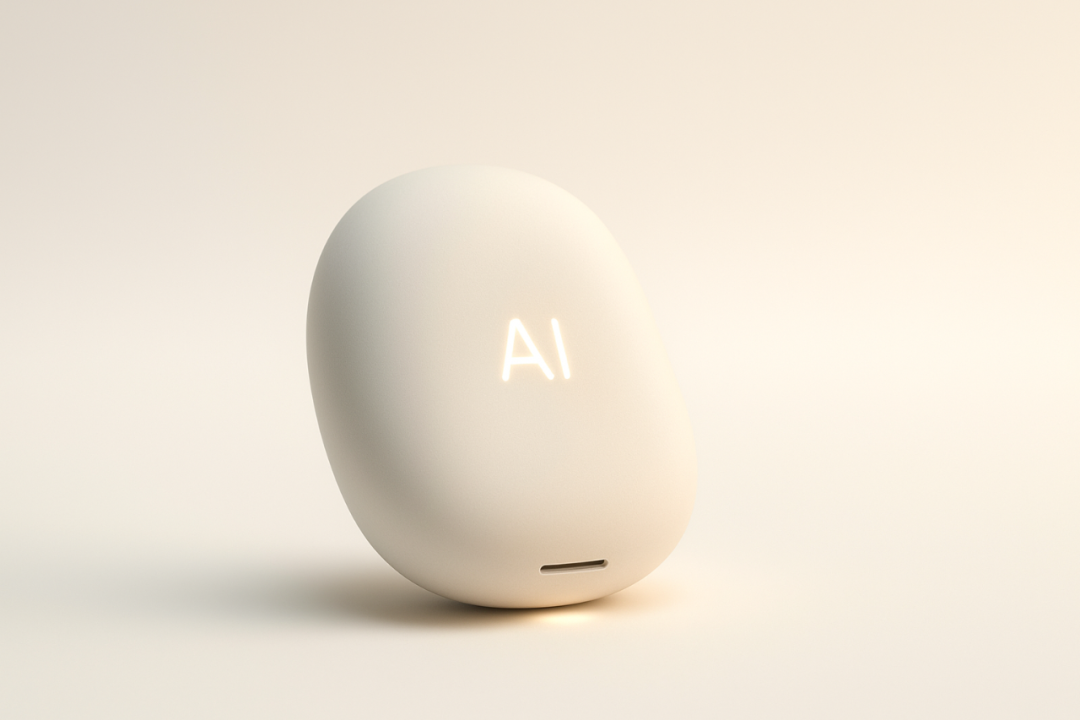
photo by ChatGPT
OpenAI CEO Sam Altman and former Apple “design guru” Jony Ive have finally confirmed: their first AI hardware prototype is complete and expected to be launched within two years. (Industry | OpenAI Invests $6.5 Billion to Replicate the “Jobs + Ive” Duo for AI Hardware Development)
Altman stated that it is not a replacement for a phone, but rather an AI companion that filters noise, accompanies users, and possesses long-term contextual intelligence. This device completely eliminates the display, relying on voice and sensors for interaction, acting like an invisible butler who understands your thoughts, only pushing information at critical moments while remaining silent at other times. Altman described the experience as “not like standing in Times Square, but like sitting in a small cabin by a mountain lake.” Jony Ive insists on extreme minimalism, pursuing a design that is “seemingly naive yet profoundly deep,” with a form that even aims to achieve a tactile quality that makes one want to take a bite.
The hardware team has now expanded to over 100 people, led by former iPhone chief designer Tang Tan. OpenAI acquired Ive’s startup, io, for approximately $6.5 billion in May this year, marking its official entry into the consumer hardware arena. Industry insiders generally believe this is a key step for OpenAI to create the “iPhone moment” of the AI era.
A dimensional reduction attack on the “attention economy”? This is not only an innovation in hardware form but also a declaration of war against modern internet business models. Traditional mobile applications profit by exploiting users’ “attention time,” while this device attempts to restore tranquility to human life. Jony Ive is personally burying the “touchscreen era” he created, trying to use AI to liberate humanity from the algorithmic cage of apps. This signifies a shift in computing terminals from “competing for attention” to “invisible companionship.” The device will continuously sense context, automatically determining when to remind and when to remain silent, long-term remembering what users have read, said, and thought, allowing AI to truly become an “invisible assistant” rather than a “notification bombardier.” This means that future interaction methods may completely detach from screens, integrating into daily life in a more natural, low-friction manner.
However, the biggest challenge may not be technical, but rather human nature. When the screen disappears, we lose the only window to verify AI decisions. This “black box trust” of completely entrusting life to AI may be the psychological barrier that humanity finds truly difficult to overcome in two years.
In two years, would you be willing to put the noise of your phone back in your pocket and switch to a “breathing quiet device”?
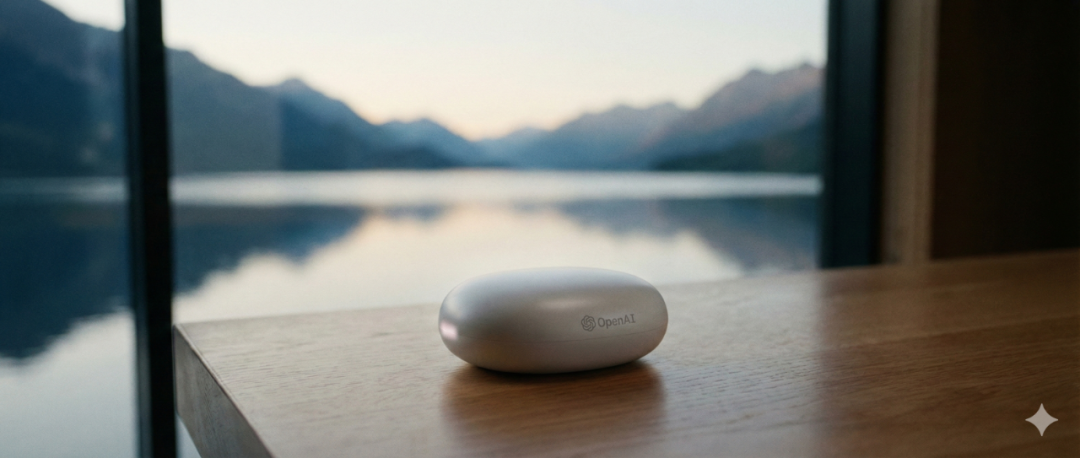
photo by Nano Banana Pro
This article was written on November 26, 2025
Day 607 of continuous daily updates, article 637

⬆️Follow me to explore the AI frontier together⬆️