The following article is sourced from the Smart Manufacturing Industry Circle , author: Zhi Zao Jun
In the rapid development of industrial automation, PLC engineers play a crucial role. They are the builders and maintainers of automation systems and a key force driving the progress of Industry 4.0. Becoming an excellent PLC engineer requires going through different growth stages, each corresponding to different skill levels and responsibilities. Below are the six levels of PLC engineers, along with specific practical examples and growth paths for engineers at each level.
Level One: Beginner
– **Theoretical Knowledge**:Master the basic principles and working mechanisms of PLCs.
– **Basic Programming**:Learn the basic programming languages of PLCs and write simple control logic.
– **Hardware Identification**:Identify and understand the hardware components of PLCs, including input/output modules, CPUs, etc.
– **Safety Standards**:Understand the safety standards and operating procedures of industrial automation.
Beginner engineers typically just graduated from school, have some understanding of PLC basics, but lack practical engineering experience. For example, Xiao Li is a fresh graduate in automation. Through laboratory studies and course designs during school, he mastered the basic programming and operation of PLCs. Now, he is interning at a manufacturing company, gradually familiarizing himself with the working principles and application scenarios of PLCs through hands-on operation. At this stage, Xiao Li needs to continuously learn by reading professional books, attending industry seminars, and practicing hands-on operations to improve his technical level.
Level Two: Basic Practitioner
– **Programming Practice**:Independently write practical PLC programs to solve specific control problems.
– **Troubleshooting**:Diagnose and repair common PLC hardware and software faults.
– **System Integration**:Effectively integrate PLCs with other automation components (such as sensors and actuators).
– **Communication Protocols**:Master industrial communication protocols to enable effective communication between devices.
At this stage, engineers begin to independently undertake some simple PLC programming and maintenance tasks. For example, Xiao Wang has been working in the automation industry for two years and can independently complete PLC programming for production lines, successfully solving multiple on-site issues. During a production line upgrade, he was responsible for writing new control programs and ensuring the smooth implementation of the project. Through continuous practice and solving real problems, Xiao Wang has accumulated valuable experience, significantly improving his technical and problem-solving abilities.
Level Three: Intermediate Expert
– **Advanced Programming Skills**:Proficient in designing complex programs and able to write optimized and efficient PLC code.
– **System Design Capability**: Able to design medium-sized automation systems, including system planning and configuration.
– **Project Management**:Manage project progress, coordinate resources, and ensure projects are completed on time and with quality.
– **Multi-Platform Operation**:Familiar and able to develop and maintain on different brands and models of PLC systems.
Engineers at the intermediate expert level possess considerable PLC programming and application experience. For example, Engineer Zhao has five years of industry experience and has participated in multiple cross-brand PLC projects, gaining in-depth understanding of other components of automation systems. In a multinational cooperation project, Engineer Zhao was responsible for integrating automation equipment from different countries and ensuring the stable operation of the system. At this stage, Engineer Zhao needs not only a solid technical foundation but also good communication and coordination skills to work effectively in a multicultural work environment.
Level Four: Senior Consultant
– **Needs Analysis**:Deeply understand customer needs and provide practical automation solutions.
– **Performance Optimization**:Conduct in-depth analysis and optimization of existing systems to enhance performance.
– **Leadership and Coordination**:Possess team leadership abilities, guiding team members and promoting project success.
– **Industry Insights**:Understand industry development trends and apply new technologies in practical work.
Engineers who reach the senior consultant level not only have a deep technical foundation but also possess rich project management and team collaboration experience. For example, Consultant Sun has worked in the automation field for over fifteen years, providing key technical consulting for a large manufacturing company, helping to optimize production processes and significantly improve production efficiency. At this stage, Consultant Sun needs to leverage his expertise and industry experience to provide strategic advice and solutions to clients, helping them maintain a competitive edge in a fierce market.
Level Five: Innovative Leader
– **Innovative Thinking**:Possess innovative thinking, able to propose and implement new automation concepts and technologies.
– **R&D Capability**:Participate in or lead the development of new technologies, driving innovation in automation technology.
– **Strategic Planning**:Develop technology development strategies for enterprises, leading the direction of technological development.
– **Interdisciplinary Integration**:Combine automation technology with information technology, the Internet of Things, and other fields.
Engineers at the innovative leader level are industry leaders and innovators, proficient in PLC technology while possessing forward-thinking and innovative capabilities. For example, Dr. Li is an expert in smart manufacturing, and the team he leads developed an IoT-based smart monitoring system that can monitor production line status in real-time and automatically adjust production parameters to optimize efficiency. Dr. Li has driven the development of automation technology through continuous exploration of new technology applications, bringing revolutionary changes to enterprises.
Level Six: Industry Master
– **Authoritative Influence**:Have an authoritative status in the automation industry, significantly influencing the development of industry technology.
– **Education and Mentorship**:Committed to cultivating a new generation of engineers, imparting profound knowledge and rich experience.
– **International Cooperation**:Participate in international projects, share experiences, and promote global exchanges and development of automation technology.
– **Continuous Innovation**:Constantly explore new technologies, leading the ongoing innovation and application of automation technology.
Industry masters are the highest level of PLC engineers, achieving a high level of technical proficiency and having a significant reputation and influence in the industry. For example, Professor Zhang is an authority on automation technology, having given important speeches at multiple international conferences and authored several professional books. Professor Zhang is committed to nurturing young engineers by offering courses at universities and guiding graduate students, passing on his knowledge and experience to the next generation. His contributions are reflected not only in technological innovation but also in leading the future of the industry and cultivating future talents.

The growth path of PLC engineers is a process of continuous learning, practice, and innovation. Each level represents an enhancement in technical capability, practical experience, and industry influence. No matter which level you are currently at, you should maintain a love for technology and a thirst for learning, continuously improving yourself and contributing to the automation industry. With continuous effort and growth, every PLC engineer has the potential to become a backbone force driving the development of industrial automation. In this process, engineers need to continuously update their knowledge systems, master the latest automation technologies and industrial development trends. At the same time, they also need to cultivate their innovative thinking and leadership abilities to propose innovative solutions and lead teams to achieve goals in an increasingly complex industrial environment. Moreover, interdisciplinary learning and collaboration are becoming increasingly important, as modern automation systems often involve knowledge from multiple fields such as mechanics, electrical engineering, computer science, and network communication.
In summary, the career development of PLC engineers is a process full of challenges and opportunities. Through continuous learning and practice, every engineer has the chance to become an expert in their field, contributing to the development of enterprises and the advancement of industrial automation. In this process, they can not only achieve personal career growth but also promote the entire industry forward, achieving smarter, more efficient, and sustainable production methods.

Digital Factory MES/MOM Solution PPT
2024-03-31
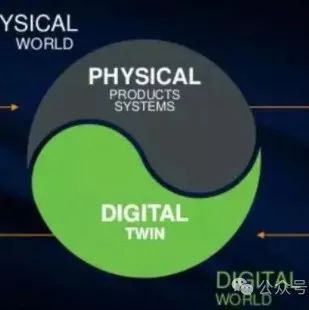
Overview of the Top 10 Industrial Digital Twin Platforms: The “Virtual Mirror” of Smart Factories
2024-03-29
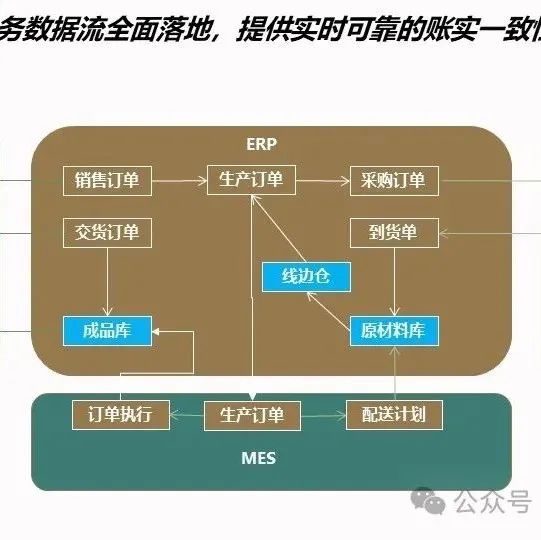
Detailed Explanation of the 10 Major System Integrations in Manufacturing: The Relationships Among SCADA, MES, PLM, ERP, SCM, WMS, APS, QMS, CRM, and EAM
2024-03-26
57-page ERP Project Informationization Proposal PPT for a Certain Automotive Company
2024-03-27
Siemens, Schneider, ANSYS, SAP: Global Ranking of Industrial Software Companies by Market Value
2024-03-25

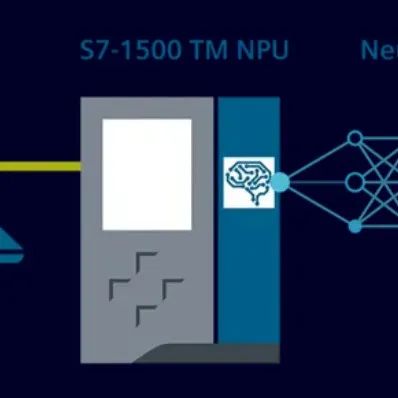
Siemens, AB, Beckhoff, etc. Layout PLC + AI: Automatically Generate PLC Code, What Should Engineers Do?
2024-03-21
Industrial Software: Sharing Open Source PLC Systems
2024-03-18