On September 18, 2025, NVIDIA announced a $5 billion investment in Intel at a price of $23.28 per share, establishing a long-term strategic partnership between the two companies.
In the future, Intel is expected to produce x86 SoC chips integrated with NVIDIA GPU chips, enhancing performance through NVLink coupling. Intel’s custom x86 CPUs will also be integrated into NVIDIA’s AI platform, providing x86 solutions in addition to ARM architecture for the market.
Today, let’s break down the SoC chips.
Data Chart: Research Database
(Public data compilation, industry research sharing, not for investment advice)
Introduction to the SoC Chip Industry
Basic Concept of SoC
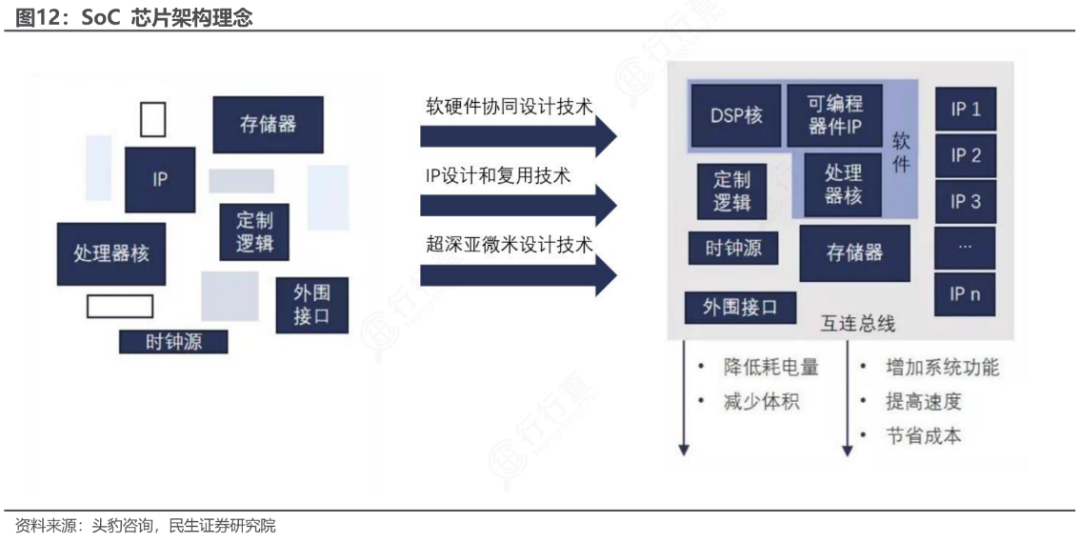
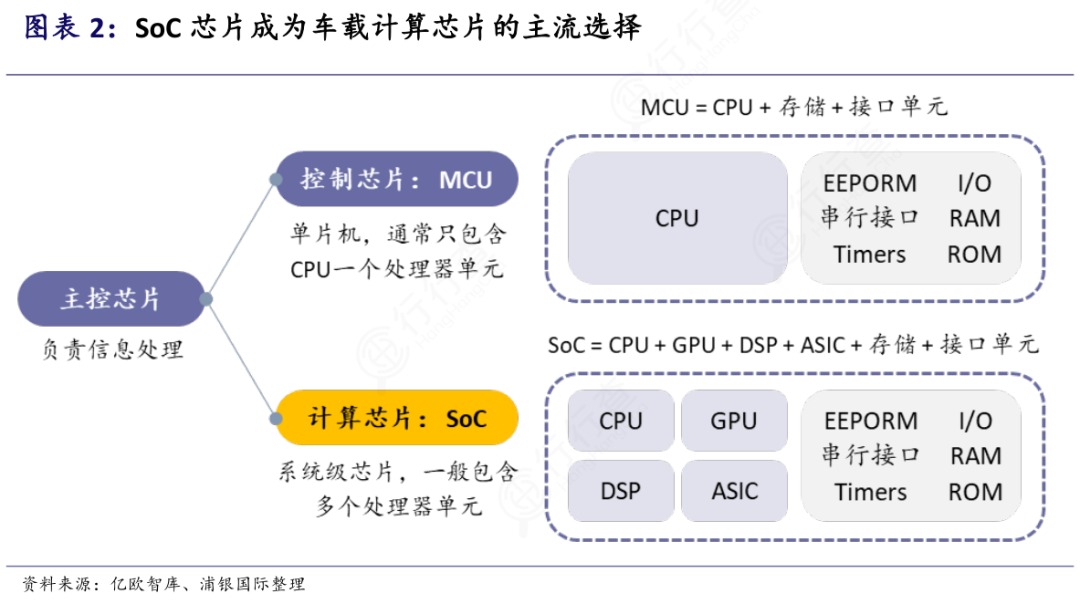
SoC (System on Chip) refers to a microelectronic system that integrates a processor, memory, peripheral interfaces, dedicated functional modules, and software firmware on a single semiconductor chip, forming a complete system functionality. It is not merely a simple assembly of components but achieves the goal of “one chip is one system” through hardware architecture optimization and software co-design.
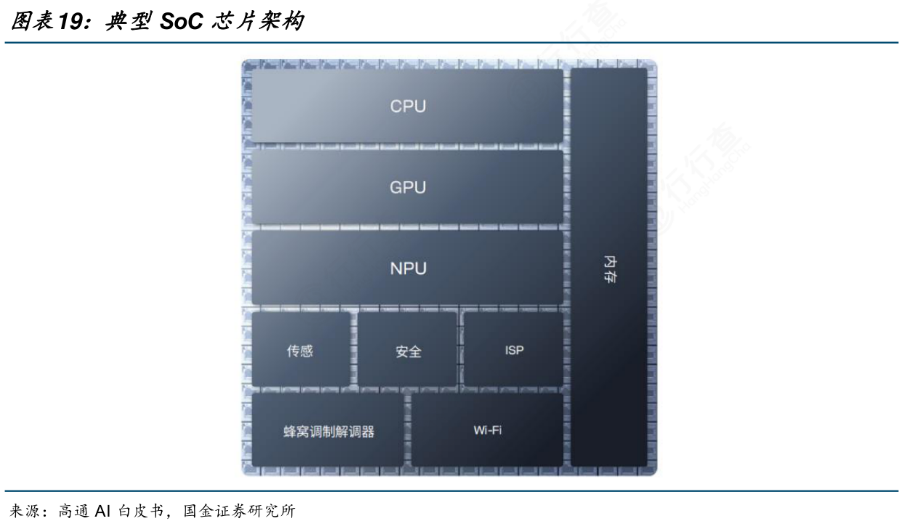
Compared to traditional systems built with discrete components, SoC chips integrate originally dispersed circuit modules into a single chip, meeting the demands for miniaturization, low power consumption, and high reliability in complex electronic devices. They are the core supporting technology for the miniaturization and high performance of modern smart devices, widely used in products such as smartphones, automobiles, and IoT terminals.
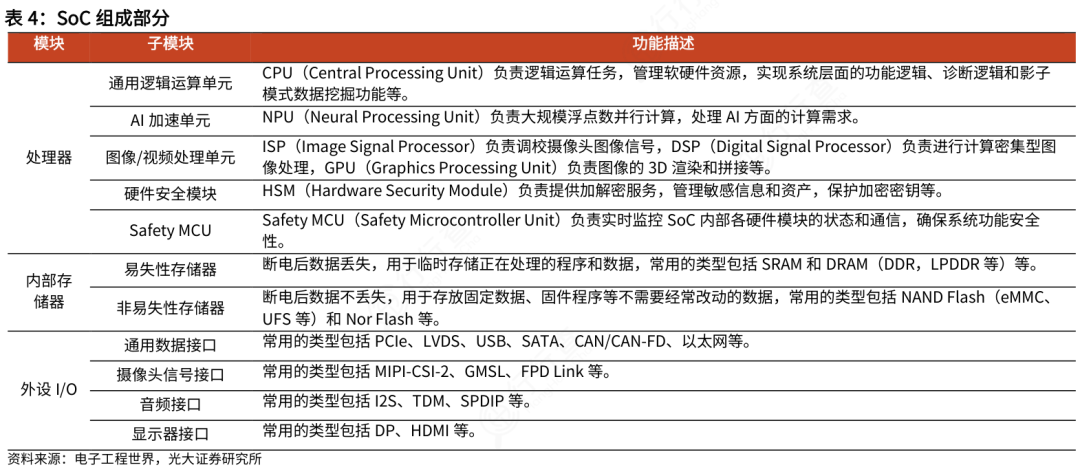
Components of SoC Chips
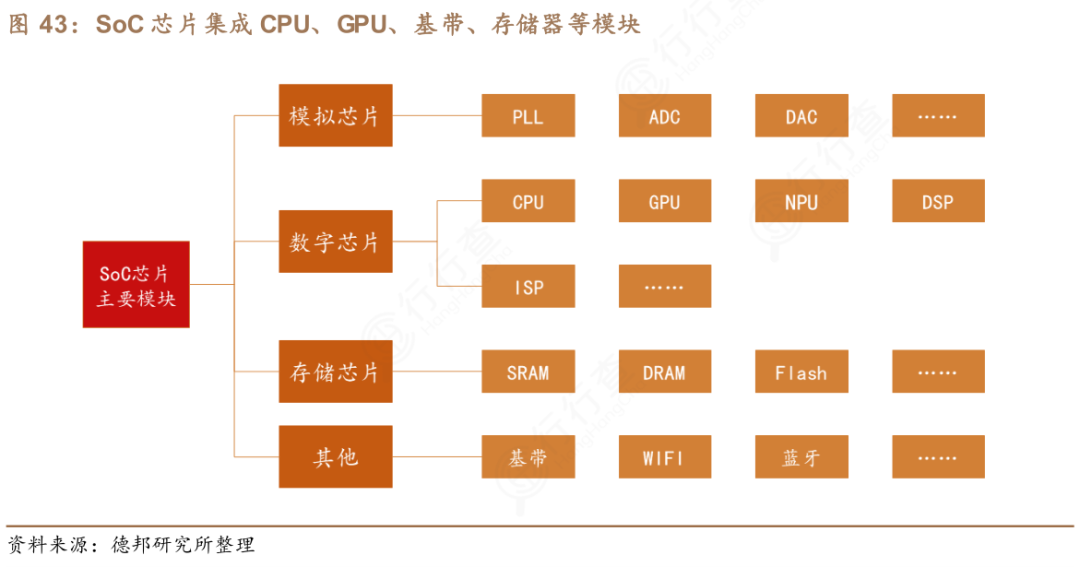
The composition of SoC chips follows the architecture logic of “core + auxiliary + control,” with clearly defined roles and collaborative work among modules, mainly consisting of five core parts:
1) Core Processor Module
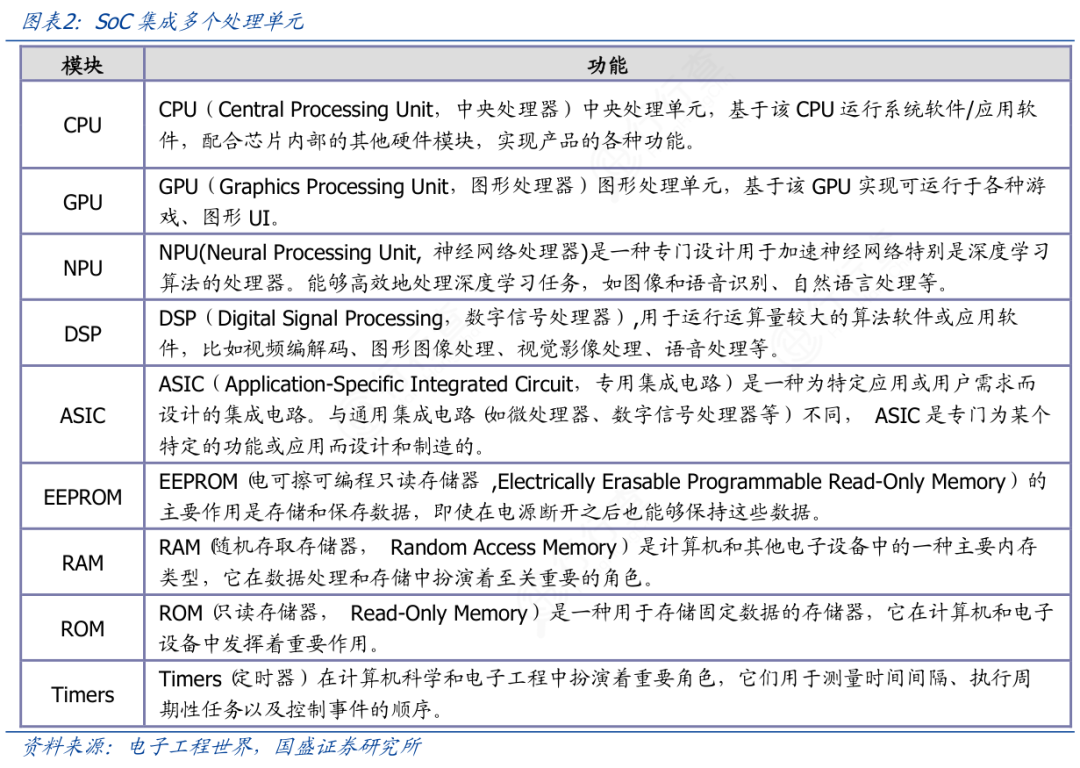
As the “brain” of the SoC, it is responsible for instruction computation and system control. Common components include general-purpose processors (CPU), graphics processors (GPU), digital signal processors (DSP), and dedicated accelerators (such as AI acceleration units NPU). Different processors are assigned roles based on scenarios, such as CPU for system scheduling and NPU focusing on AI inference.
2) Storage Module
Responsible for storing data and programs, divided into volatile and non-volatile storage. Volatile storage includes SRAM (Static Random Access Memory) and DRAM (Dynamic Random Access Memory); non-volatile storage includes Flash.
3) Peripheral Interface Module
As the “bridge” between the SoC and external devices, it provides data exchange channels. Common interfaces include USB, PCIe (high-speed serial bus for connecting SSDs and graphics cards), HDMI/DP, SPI/I2C (low-speed interfaces for connecting sensors and EEPROM), and wireless communication interfaces (such as WiFi, Bluetooth, and 5G baseband).
4) Dedicated Functional Module
Hardware modules designed for specific application scenarios, such as audio codecs, image signal processors, and security encryption modules. These modules can reduce CPU load and improve processing efficiency for specific functions.
5) Power Management and Clock Module
The Power Management Unit (PMU) is responsible for distributing stable voltage to each module, achieving low power control; the clock module provides a unified clock signal to ensure synchronous operation of each module. Both are key to the stable operation and low power design of SoC.
Manufacturing Process of SoC Chips
The manufacturing of SoC chips includes three core processes: wafer manufacturing, packaging, and testing. Wafer manufacturing is the core, mainly involving the preparation of high-purity silicon wafers, EUV lithography, as well as etching, doping, and thin film deposition processes; currently, mainstream processes are 7nm, 5nm, and 3nm, with smaller nodes resulting in higher transistor density.
Packaging connects the bare chip to the pins and protects it, with technologies such as DIP, QFP, BGA (commonly used in mobile SoCs), and SiP, ensuring stable connections and heat dissipation resistance. Testing runs throughout the entire process, with wafer-level testing screening qualified bare chips, and finished product testing checking electrical performance, functionality, and reliability to ensure an 80%-90% yield rate.
Advantages of SoC Chips
Compared to traditional “discrete chips + PCB board” system solutions, SoC chips have four core advantages:
1) High integration, smaller size and weight
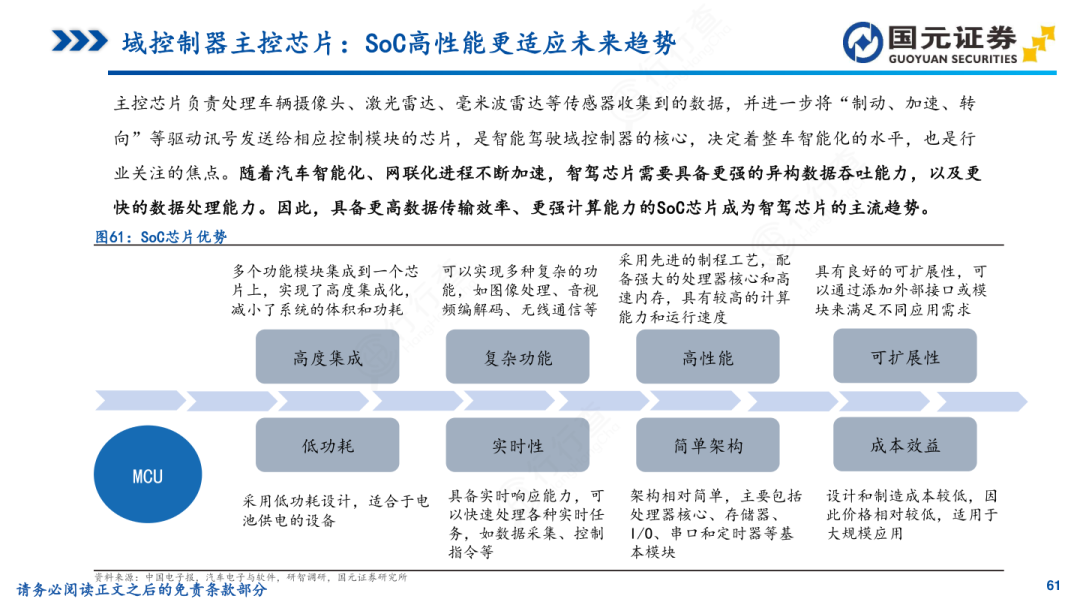
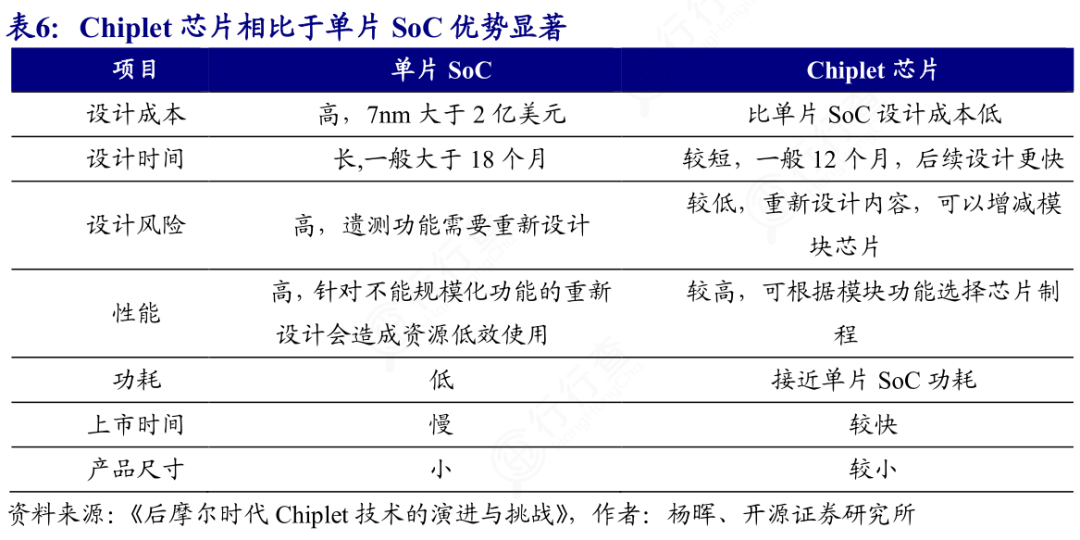
Traditional solutions require connecting CPU, GPU, memory, interface chips, etc., through a PCB board, resulting in a larger size; whereas SoC integrates all modules into a single chip, reducing size by more than 50% and weight by 30%, meeting the design needs of small devices such as smartphones, smartwatches, and IoT sensors.
2) Efficient performance, lower latency
In traditional solutions, discrete chips transmit data through wires on the PCB board, resulting in higher transmission latency (usually in the nanosecond or even microsecond range); internal modules of SoC are connected via high-speed buses, reducing data transmission latency to the picosecond level while minimizing signal interference and enhancing data transmission stability, especially suitable for high real-time scenarios.
3) Lower power consumption, stronger battery life
In discrete chip solutions, each chip is powered independently, leading to significant power waste (e.g., idle chips still require basic power supply); SoC achieves “on-demand power supply” through the power management unit, dynamically shutting down power or reducing frequency for idle modules, resulting in lower power consumption compared to traditional solutions, which can enhance smartphone battery life.
4) Controllable costs, simplified supply chain
Traditional solutions require purchasing multiple discrete chips, and the PCB board design is complex, needing to consider wiring, signal interference, and other factors, leading to high material and production process costs; SoC chips only require a single chip, reducing the number of discrete chip purchases while simplifying PCB board design, lowering production and R&D costs.
Applications of SoC Chips
With high integration, low power consumption, and high performance characteristics, SoC chips have deeply penetrated multiple fields, driving industry intelligence.
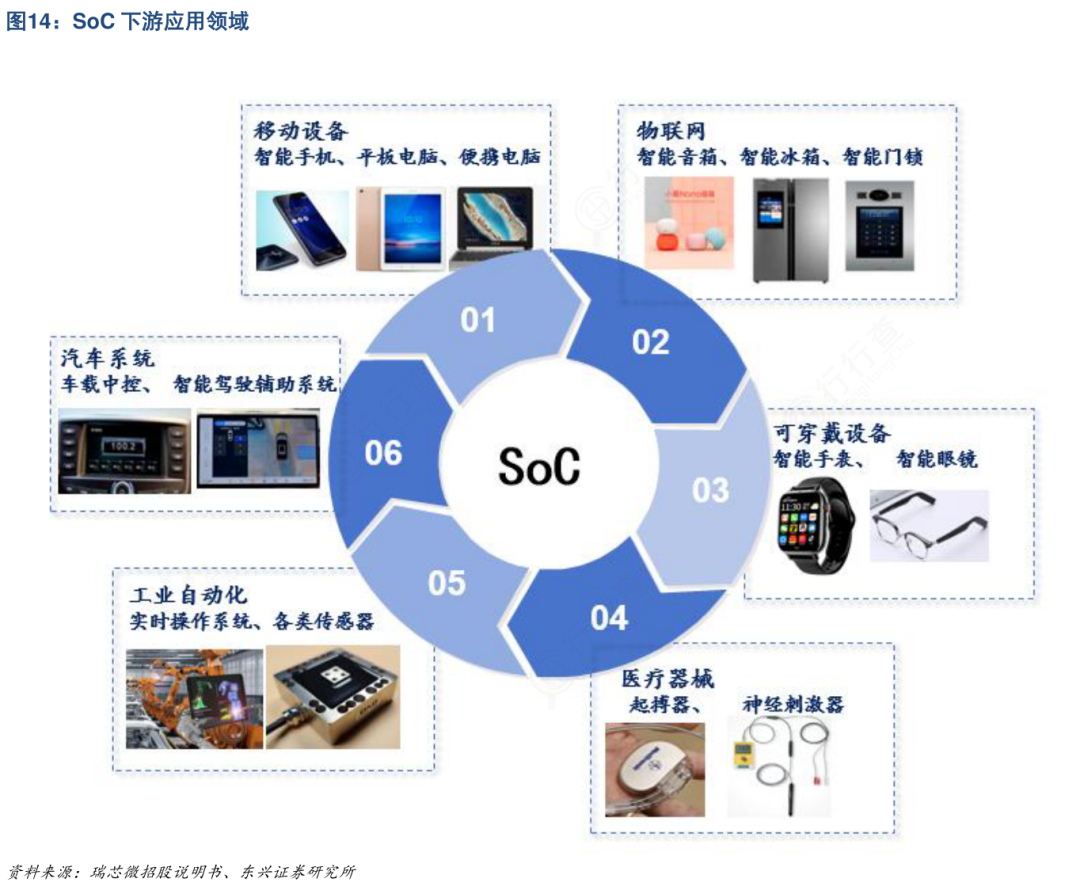
1) Consumer electronics are the core scenario, with Qualcomm Snapdragon, Apple A series, etc., SoCs enabling communication and computation in smartphones, tablets (such as Apple M series) supporting HD playback, and smart home devices (such as smart speakers) and wearables (such as smartwatches) balancing performance and power consumption to ensure battery life.
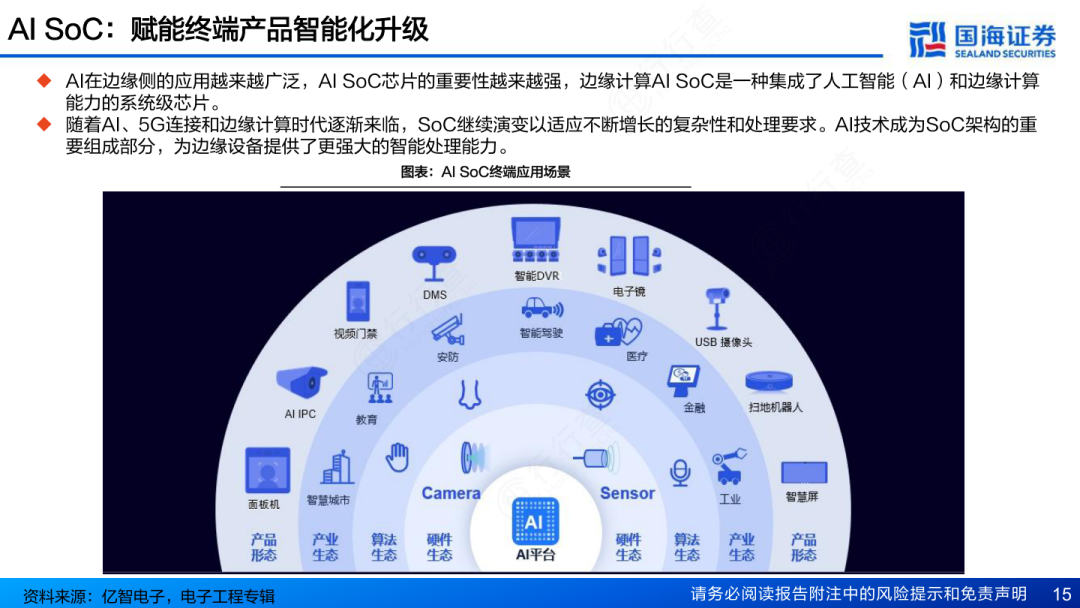
2) In automotive electronics, SoCs are core to autonomous driving (Tesla FSD processing perception data), in-vehicle entertainment, and body control, needing to meet automotive-grade AEC-Q100 standards and a lifecycle of over 10 years.
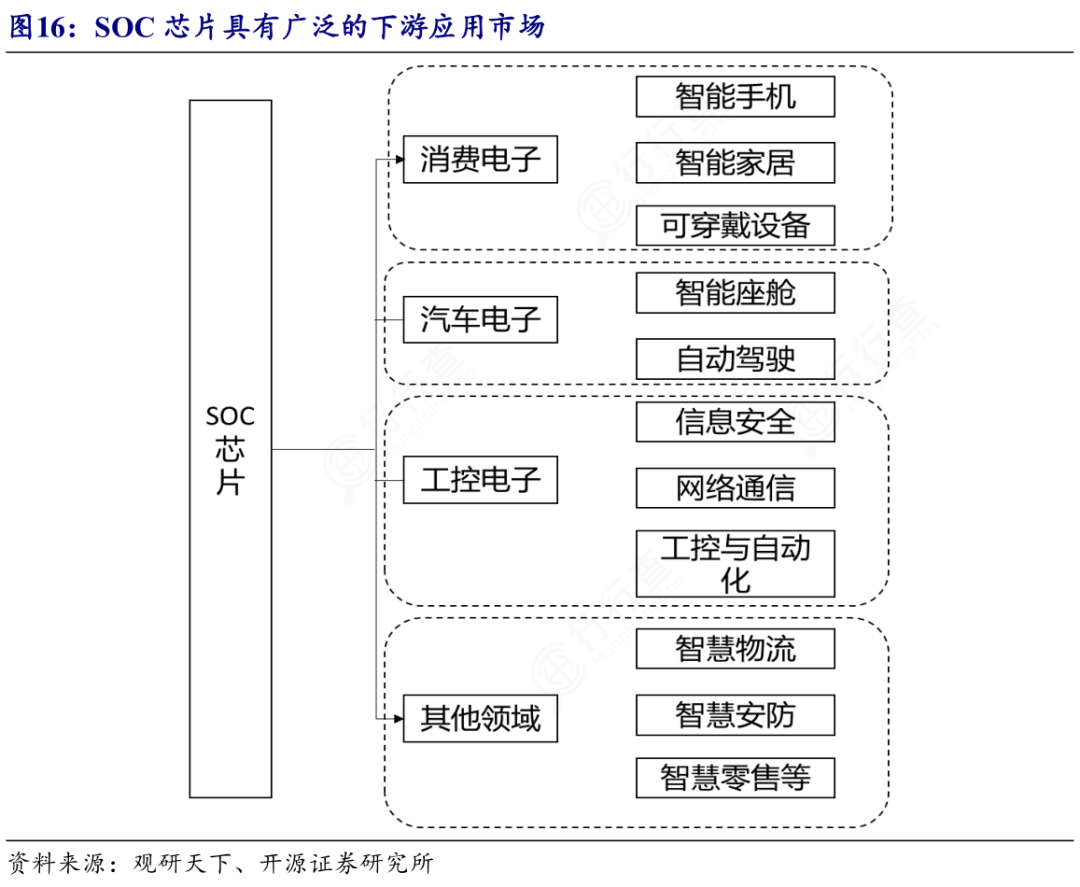
3) In the industrial control field, SoCs like Texas Instruments AM335x control robots for precise movement, and PLC SoCs support industrial Ethernet, needing to be interference-resistant and adaptable to a wide temperature range of -40℃ to 85℃.
4) In the AI field: SoCs rely on NPUs for AI inference, while IoT SoCs are low power and integrate wireless interfaces;
5) In the medical field: SoCs can be used in ECG machines and ultrasound devices, needing to comply with ISO 13485 standards and ensure data security.
SoC Chip Industry Chain
The SoC chip industry chain includes upstream components such as chip IP cores, EDA software, semiconductor materials, and equipment, where semiconductor materials include silicon wafers, photoresists, and target materials, and semiconductor equipment mainly includes lithography machines, etching machines, and thin film deposition equipment, dominated by overseas manufacturers.
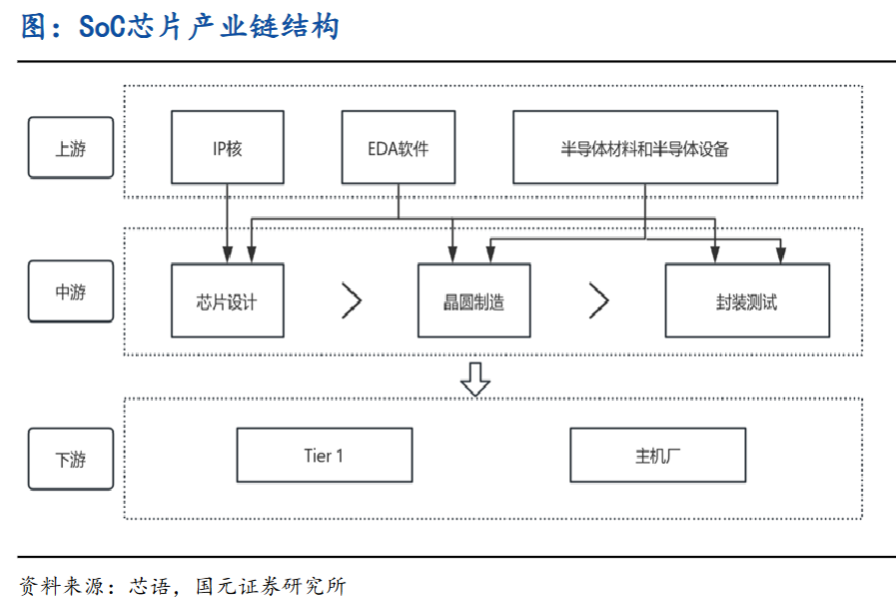
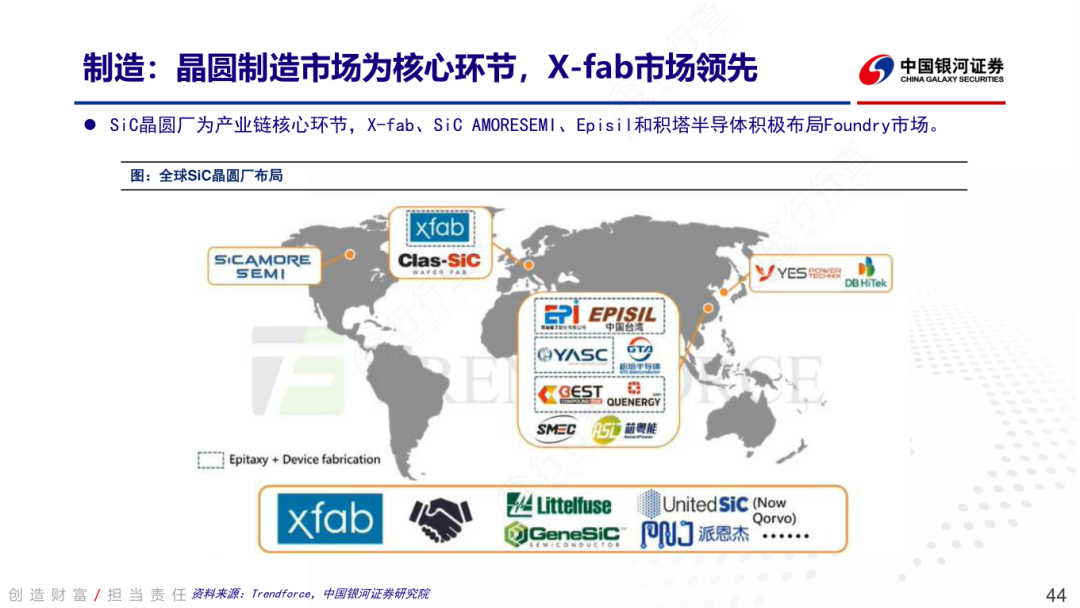
The midstream is the core manufacturing link, including chip design, wafer manufacturing (with TSMC, Samsung, etc., responsible for wafer processing), packaging, and testing.
The downstream is the application end, where Tier 1 suppliers (such as Bosch, Continental, etc.) integrate SoCs into domain controllers and other systems for OEMs; some automakers participate in layout through self-research and joint ventures, promoting the application of automotive SoCs.
SoC Chip Market Size
According to MarketResearch data, the global SoC (System on Chip) market size was approximately $150 billion in 2022, and it is expected to grow to over $320 billion by 2032, with a compound annual growth rate (CAGR) of 8% over the decade.
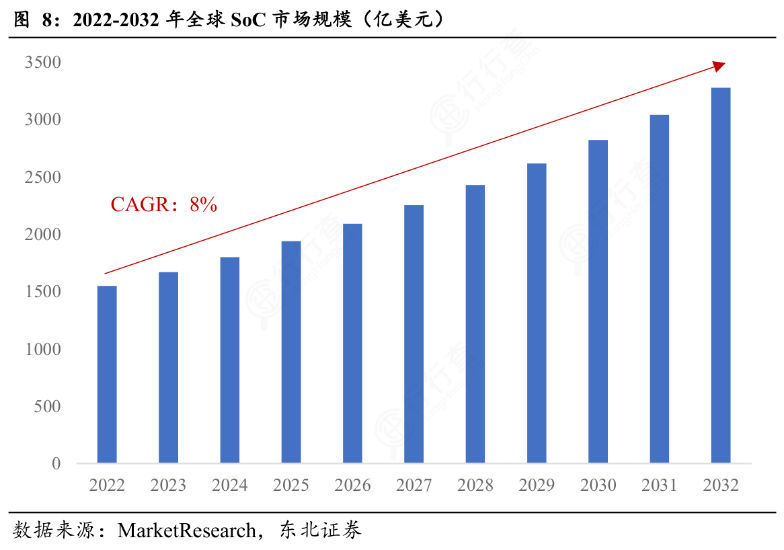
(Data as of August 2025)
According to the prospectus of Naxin Micro, the Chinese chip-level sensor market shows strong growth from 2020 to 2029; it is expected to grow from 18.3 billion yuan in 2020 to 60 billion yuan in 2029, with a significant compound growth rate.
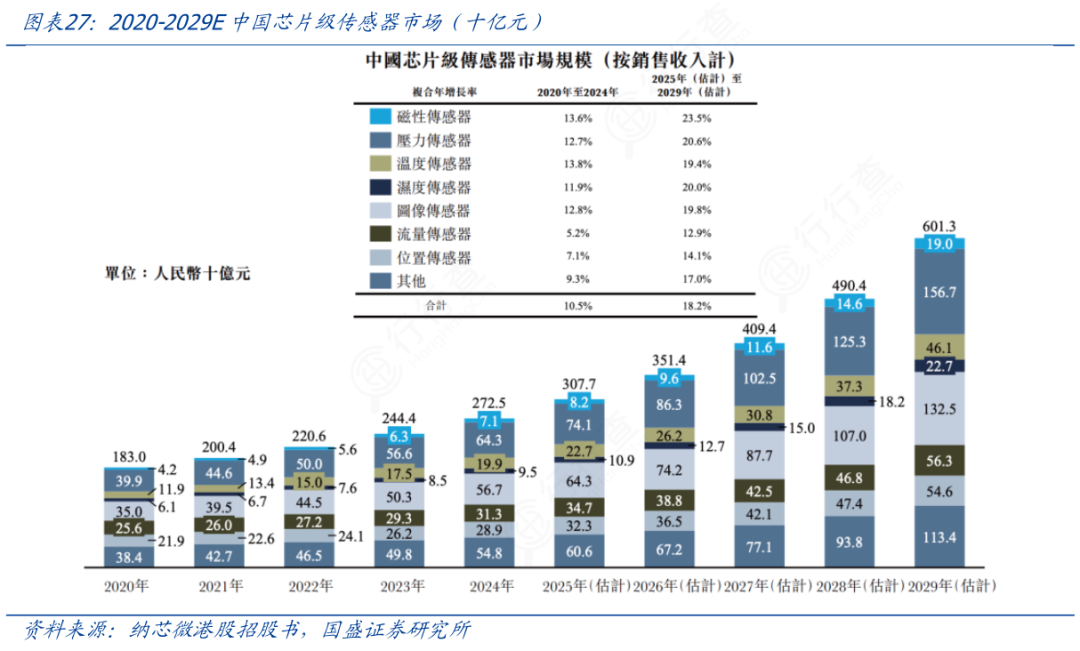
(Data as of May 2025)
Key Companies in the SoC Chip Industry
First Tier: Global leaders in SoC chip technology and market
Qualcomm (USA): Mobile processor SoCs (Snapdragon series), integrating 5G modems and AI engines, dominating the smartphone market.

Apple (USA): Self-developed A/M series chips, integrating CPU/GPU/NPU, covering iPhone, Mac, and AIoT devices, setting industry benchmarks for performance and energy efficiency.

Samsung (South Korea): Exynos series mobile SoCs, integrating 5G communication and ISP technology, while also developing automotive and AI chips.

Huawei HiSilicon (China): Kirin series mobile SoCs + Ascend/Kunpeng AI/server chips, fully self-developed architecture, breaking through high-end chip technology barriers.

MediaTek (Taiwan, China): Dimensity series mobile SoCs with over 50% global market share, covering all price ranges for 4G/5G, while also focusing on automotive-grade chips.

NVIDIA (USA): Tegra series mobile SoCs + Orin autonomous driving platform, leading in GPU and AI computing integration capabilities, empowering smart cars and robots.

Broadcom (USA): Network/storage SoCs (such as Tomahawk series), enterprise-level chip solutions, dominating data centers and communication infrastructure.

Renesas Electronics (Japan): Automotive electronics SoCs (such as RH850 series), covering ADAS, in-vehicle infotainment, and body control, with global leading automotive-grade reliability.

NXP (Netherlands): Automotive and IoT SoCs (such as S32 series), with in-vehicle communication (CAN/LIN) and security chips (SE050) occupying core markets.

Second Tier: Representatives of technological breakthroughs and innovations in niche fields
Marvell Technology (USA): Storage/network SoCs (such as SSD controllers), enterprise-level chips supporting PCIe 5.0 and NVMe protocols, key suppliers for data centers.
Unisoc (China): Tiger series mobile SoCs + Spring Ivy IoT chips, targeting the mid-to-low-end market and smart wearable devices, an important force for domestic substitution.
Horizon Robotics (China): Journey series autonomous driving SoCs, collaborating with automakers like BYD and Changan, providing automotive-grade AI computing platforms.
Xilinx (USA, now AMD): Zynq series FPGA + SoCs, programmable architecture supporting industrial automation, 5G base stations, and aerospace equipment.
Infineon (Germany): Automotive electronics SoCs (such as AURIX series), integrating automotive-grade MCUs and power devices, ensuring real-time performance and safety for autonomous driving.
Texas Instruments (USA): Embedded processor SoCs (such as Jacinto series), providing high-reliability solutions in industrial control, medical devices, and consumer electronics.
STMicroelectronics (Switzerland/Italy): Automotive and industrial SoCs (such as STM32 series), integrating MEMS sensors, supporting Industry 4.0 and smart homes.
Realtek Semiconductor (Taiwan, China): Network communication SoCs (such as RTL8192 series), leading market share in router and switch chips, covering home and enterprise networks.
Ambarella (USA): CV series video processing SoCs, mainstream suppliers for security cameras and in-vehicle DMS (driver monitoring) chips.
Allwinner Technology (China): Consumer electronics SoCs (such as T527 series), widely used in smart hardware, in-vehicle infotainment, and edge computing scenarios.
Rockchip (China): RK series chips, enabling smart voice interaction and multimodal perception SoCs, empowering AIoT devices and industrial robots.
(Public data compilation, industry research sharing, not for investment advice)
(END)
– Author Introduction –
Contact: jaydata888


Jay’s Industry Universe
Author of “Illustrated 100 Industry Chains”
Author of “Illustrated 100 Business Models”