In the wave of AI technology reshaping industries, the competitive logic of the chip IP industry is shifting from “single technology leadership” to “ecological value creation.” At the ICCAD exhibition in Chengdu in November 2025, Arm Technology’s CEO Chen Feng announced the “AI Arm CHINA” strategy. The deeper significance of Arm Technology’s “AI Arm CHINA” strategy lies in reconstructing the development logic of the chip IP industry through a combination of “self-developed IP + open ecosystem + scenario implementation,” transforming from a traditional “IP supplier” to an “AI computing ecosystem enabler,” thereby establishing a foundational computing power for China’s AI industry.

PART 01
The Bottleneck of the Traditional Chip IP IndustryThe business model of the traditional chip IP industry is often limited to “technology licensing + service fees,” with companies focusing primarily on the performance parameters and compatibility of IP. Collaborations with customers typically remain at the “technical delivery” level. This model faces significant bottlenecks in the AI era: the rapid iteration of AI technology requires IP to have continuous upgrade capabilities, fragmented scenario demands require IP to provide customized solutions, and the diverse needs of developers necessitate an open software toolchain. Pure IP licensing is no longer sufficient to meet the comprehensive demands for AI computing power in the industry.
PART 02
Arm Technology’s Model Breakthrough: From “IP” to “Ecosystem Entry Point”Arm Technology’s breakthrough lies in viewing “IP” as an “entry point” to the ecosystem rather than the final product. Through its four self-developed IPs: “Zhouyi” NPU, “Xingchen” CPU, “Shanhai” SPU, and “Linglong” multimedia, Arm Technology has built core capabilities covering “computing power supply – security assurance – multimedia support,” and then, using the Compass AI platform as a link, transforms hardware capabilities into reusable software tools for developers, attracting partners through an open ecosystem to jointly develop scenario-based solutions. This “IP + software + ecosystem” model fundamentally changes the value chain of the traditional IP industry — shifting from “selling technology” to “selling services,” and from “point delivery” to “full-cycle empowerment.”

Technical Leadership of Self-Developed IP: The Ecological FoundationIn this model, the “technical leadership of self-developed IP” is fundamental. The DSP+DSA hybrid architecture of the “Zhouyi” X3 NPU, the tenfold performance improvement for large models, the AIoT adaptability of the “Xingchen” STAR-MC3 CPU, the security encryption technology of the “Shanhai” SPU, and the multimodal support of the “Linglong” multimedia ensure that Arm Technology possesses differentiated competitive advantages at the IP level. More importantly, these IPs are not isolated; they form synergies through the Compass AI platform — for example, the computing power of the “Zhouyi” X3 combined with the video processing capabilities of the “Linglong” multimedia can support multimodal interactions in smart car cockpits; the security features of the “Xingchen” CPU combined with the “Shanhai” SPU can empower trusted AI inference for IoT devices. This collaborative capability allows Arm Technology’s IP combination to far exceed the value of individual products.
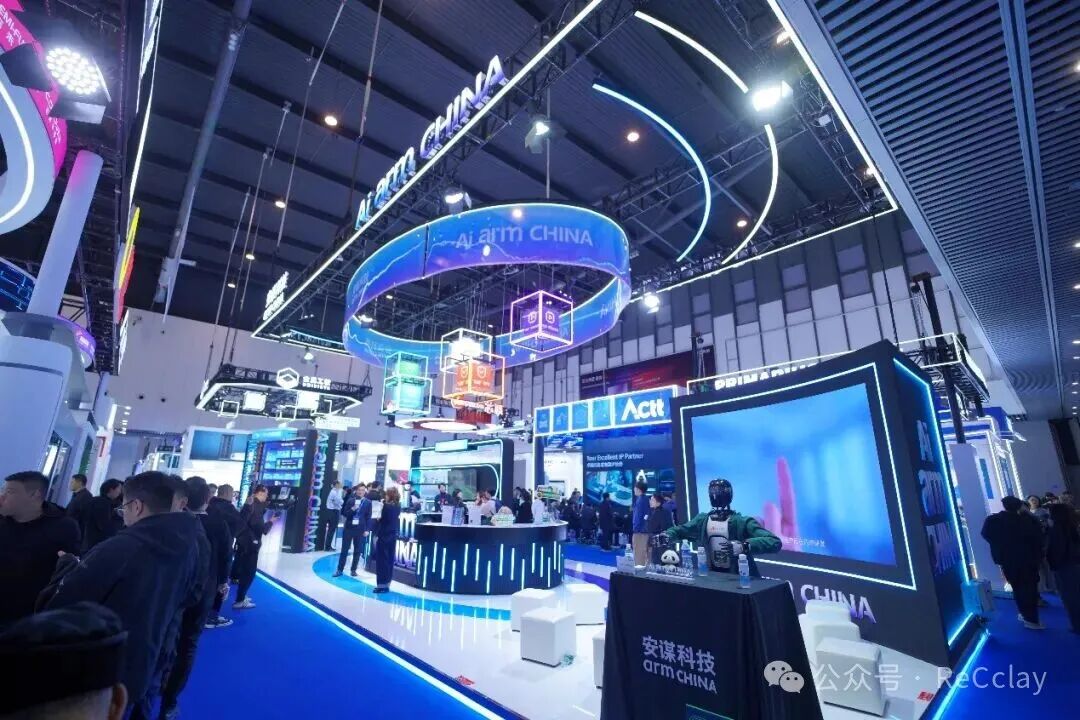
Building an Open Ecosystem: The Core of the ModelThe “building of an open ecosystem” is the core of the model. Arm Technology has open-sourced core components of the Compass AI platform, such as the Parser, Optimizer, and Driver, supporting developers in customizing operators and providing pre-silicon simulation tools. These measures may seem like “giving benefits,” but in reality, they create greater value by activating the ecosystem. As of now, the Compass AI platform has attracted over 200 developers to contribute custom operators, forming an operator library covering smart cars, healthcare, and industrial applications; collaborating with over ten partners to jointly develop scenario-based solutions, such as optimizing ADAS algorithms with smart car manufacturers and jointly debugging AI Agent applications with mobile phone manufacturers; in the Hugging Face community, deployment tutorials for models based on the “Zhouyi” NPU have become popular content, with the number of developers increasing by an average of 30% per month.In terms of usability, the Compass platform makes the X3 “user-friendly.” Its core AIPULLM toolchain supports developers in downloading models from Hugging Face and completing one-stop transformation and deployment, significantly lowering the development threshold. At the same time, the platform supports mainstream quantization solutions for large models, such as GPTQ, making rapid model adaptation possible.In terms of customization, the Compass platform enables users to truly “make good use of” the X3. Arm Technology Arm China understands that for customers, the most efficient algorithms are often their differentiated competitive advantages. To empower customers while protecting their intellectual property, the Compass platform adopts a deep open strategy.This open ecosystem brings about a virtuous cycle of “industry chain collaborative innovation.” Developers can quickly deploy AI models through the platform, reducing application development costs; partners enhance product competitiveness through customized development; and Arm Technology continuously optimizes IP and software platforms by collecting ecosystem feedback, forming a closed loop of “demand – development – verification – optimization.” For example, a medical device manufacturer developed a lesion detection operator through DSL, which, after feedback to Arm Technology, was optimized and integrated into the Compass AI platform’s Model Zoo for reuse by other developers in the healthcare field; a car manufacturer’s request for low-latency ADAS requirements prompted an upgrade of the “Zhouyi” X3 hardening scheduler, further reducing scheduling latency by 20%.Scenario Implementation: Breaking the Traditional Disconnection ProblemIn terms of scenario implementation, Arm Technology’s model breaks the traditional problem of “disconnection between IP suppliers and end users.” Through deep cooperation with ecosystem partners, Arm Technology can directly reach the demands of end scenarios — from ADAS in smart cars to local inference in AI phones, from device monitoring in industrial IoT to interactive experiences in smart homes, and then transform these demands into optimization directions for IP. This “scenario-driven” R&D model allows Arm Technology’s IP to always keep pace with industry demands, avoiding the risk of “disconnection between technology and market.”
PART 03
Industry Impact and ResultsFrom an industry impact perspective, Arm Technology’s model is reconstructing the competitive landscape of the chip IP industry. The core competitiveness of traditional IP manufacturers is “technology accumulation,” while Arm Technology incorporates “ecological capability” into its core competitiveness. This shift not only enhances its own moat but also provides a new path for the development of China’s chip IP industry — integrating industry chain resources through an open ecosystem to bridge the gap with international giants in single technology fields, forming a differentiated advantage of “ecological synergy.”Data shows that Arm Technology’s ecological model has achieved significant results: the repurchase rate of customers for self-developed IP has reached 80%, far exceeding the industry average of 50%; solutions developed based on the Compass AI platform have an average time-to-market shortened by 60%; in the domestic edge AI NPU market, Arm Technology’s share has risen to 35%, becoming a mainstream choice. These results prove that the “IP + software + ecosystem” model is feasible and provides a guarantee for the long-term development of the “AI Arm CHINA” strategy.
PART 04
Future OutlookLooking ahead, as AI technology penetrates deeper, the ecological attributes of the chip IP industry will become more pronounced. Through the “AI Arm CHINA” strategy, Arm Technology is building a complete system of “global technology + local innovation + open ecosystem + scenario implementation,” which not only lays out a plan for its own development but also builds a foundational computing ecosystem for China’s AI industry. As Dr. Shu Hao, head of Arm Technology’s NPU product line, stated: “In the AI era, chip IP is no longer an isolated technical module but the ‘infrastructure’ of the ecosystem. Arm Technology’s goal is to make this ‘infrastructure’ robust and open enough to support China’s AI industry in becoming globally leading.”