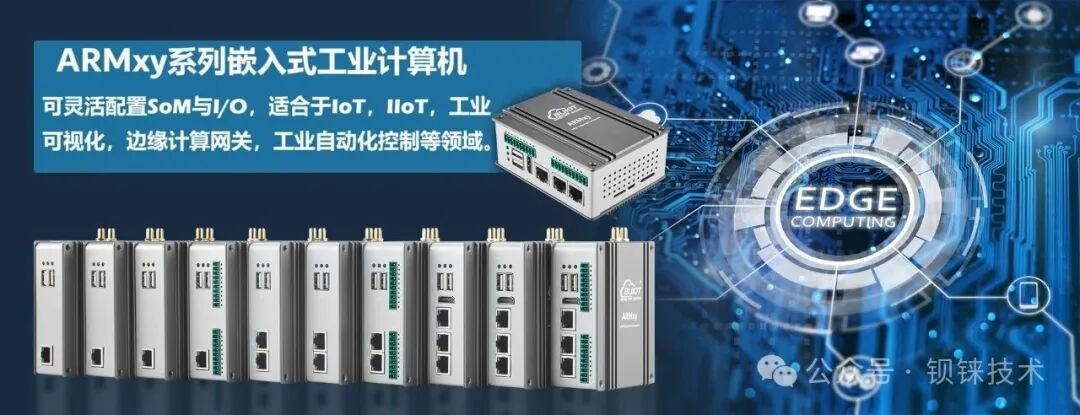
1. Solution Description Based on the integration of the ARMxy series industrial-grade edge computing gateways (such as models BL410, BL450, etc.) with the ThingsBoard IoT Gateway, this solution enables multi-protocol device access, edge data processing, and cloud collaborative management, suitable for scenarios such as industrial automation, smart cities, and smart agriculture. This solution leverages the high-performance ARM architecture of ARMxy (such as RK3568, TI AM62x processors, NXP) and rich interfaces (RS485, CAN, Ethernet, WiFi/4G), combined with the multi-protocol adaptation capabilities of the ThingsBoard gateway (Modbus, OPC-UA, MQTT, etc.), to build an integrated “edge – cloud” IoT system.

2. Hardware Selection and Deployment
Entry Level: BL340, suitable for lightweight data collection and protocol conversion, supports 2 100M Ethernet ports, RS485/DI/DO expansion, ideal for small-scale IoT scenarios.
High Performance: BL450 (RK3588J, 8-core A76*4+A55*4 2.0/2.4GHz processor, 6TOPS NPU), with AI inference capabilities, supports gigabit Ethernet, multiple industrial buses, and can handle complex edge computing tasks (such as equipment fault prediction).
3. Software Configuration and Cloud Platform Connection
1. Install ThingsBoard IoT Gateway (install from specified source)
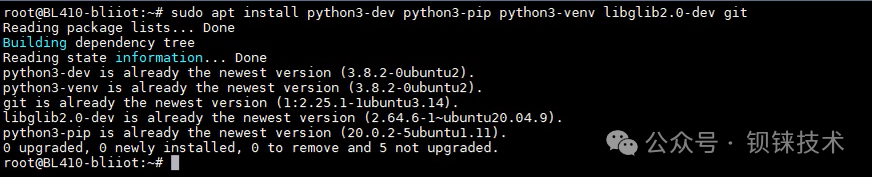
Use apt to install the required libraries into the system.
sudo apt install python3-dev python3-pip python3-venv libglib2.0-dev git
Download the gateway installation package from GitHub
git clone –recurse-submodules https://github.com/thingsboard/thingsboard-gateway.git –depth 1

After installation, enter ls, and we can see a thingsboard-gateway folder.

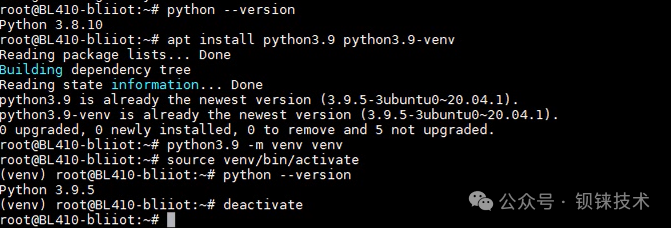
Running ThingsBoard requires python3.9, enter the commandpython –version to check the installation. If the installation is below python3.8, we need to recreate the virtual environment. First, enterapt install python3.9 python3.9-venv to download python3.9. After installation, enterpython3.9 -m venv venv to create a new virtual environment, entersource venv/bin/activate to activate the new virtual environment, enterdeactivate to exit the virtual environment.
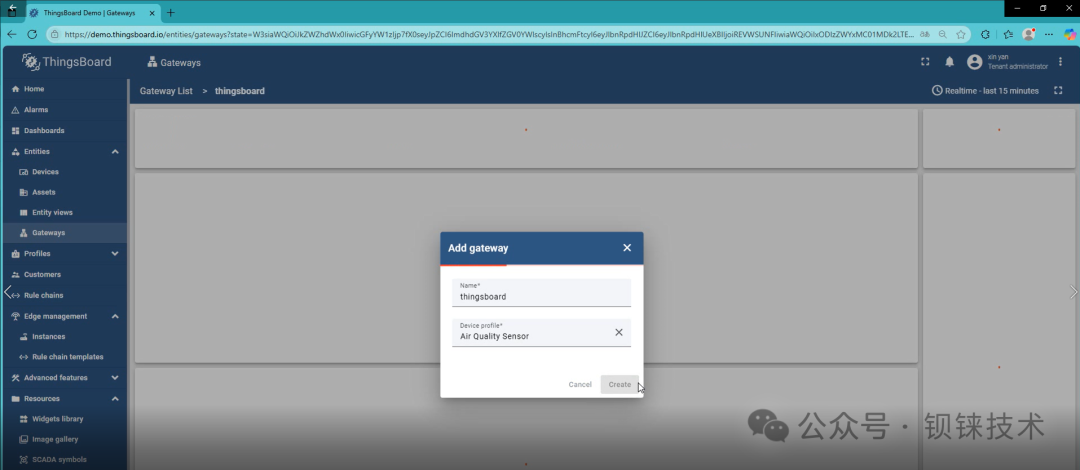
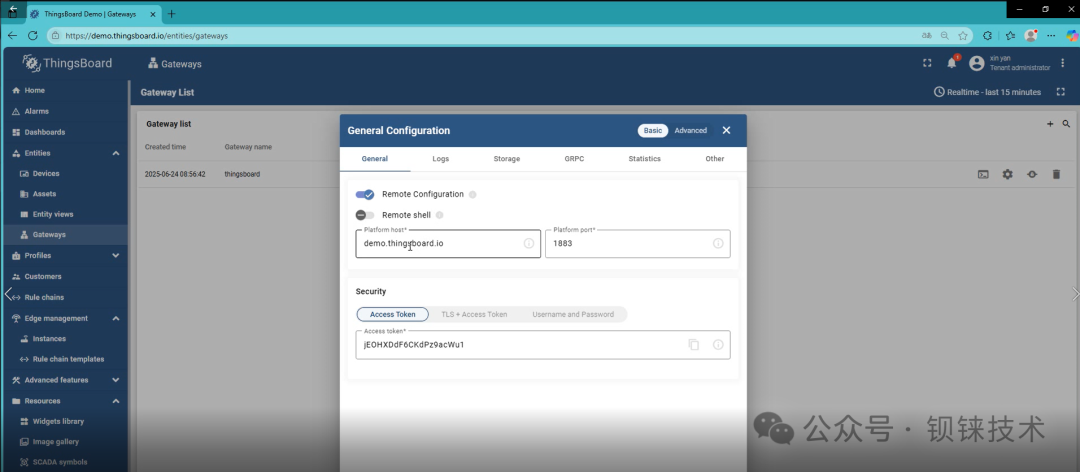
Enter the ThingsBoard cloud platform to obtain the Platform host and Access token. First, go to Entities -> Gateways, click Add Gateway, fill in the relevant information, and create the gateway.
Click General configuration, record the Platform host and Access token
Return to ARMXY enter the device operating system, type cd thingsboard-gateway, enter python3 -m venv venv && source venv/bin/activate to enter the virtual environment.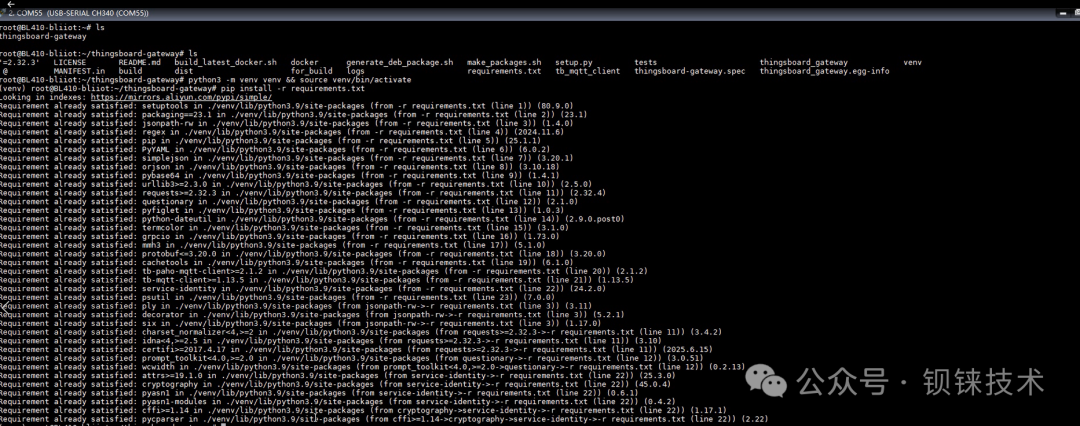
Install the required python libraries with pip install -r requirements.txt, install the related libraries python setup.py install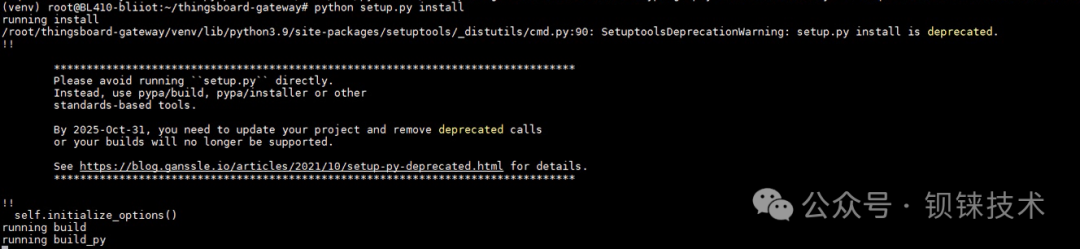
Create a “logs” folder, enter mkdir logs.

Enter thingsboard-gateway/thingsboard_gateway/config.

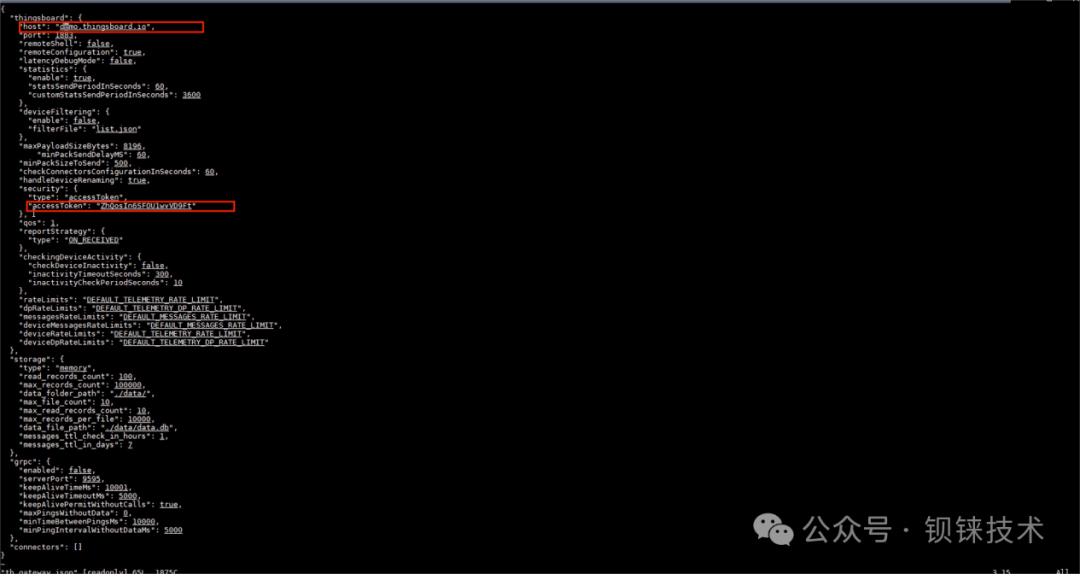
Open vi tb_gateway.json, modify the values of “host” and “accessToken” to the previously recorded Platform host and Access token.
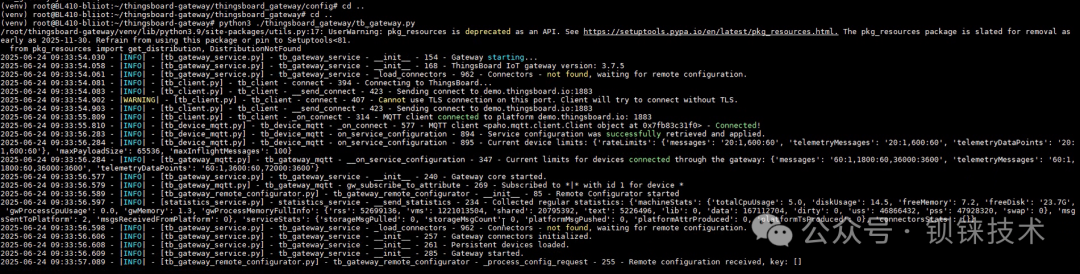
Run the gateway, enter python3 ./thingsboard_gateway/tb_gateway.py.
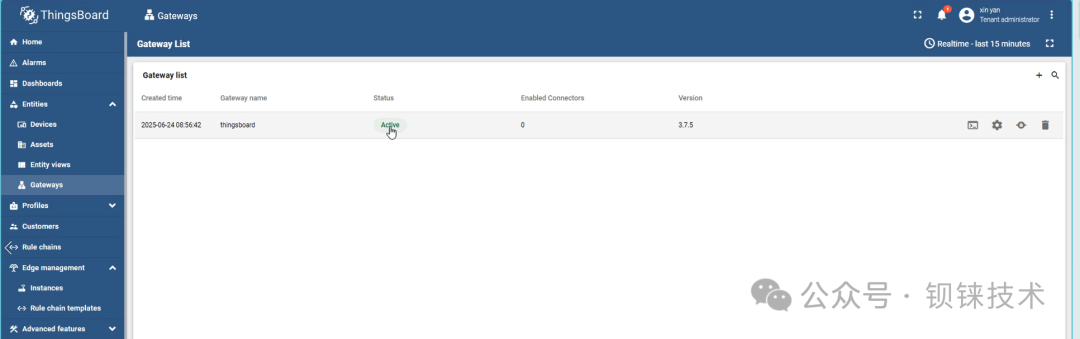
Return to the ThingsBoard platform to check if the status has changed. If it becomes Active, the connection is successful.
2. Protocol Conversion and Data Flow
l ARMxy connects to Modbus sensors via RS485 interface, and the ThingsBoard gateway converts register data into standard MQTT messages, uploading them to the cloud device shadow.
l Supports local data persistence (such as SQLite), caches data during network outages, and automatically synchronizes after network recovery.
4. Typical Application Scenarios
1. Predictive Maintenance of Automotive Parts Intelligent Production Line Scenario Requirement: In the automotive engine cylinder processing line, the tool wear and spindle failures of 12 CNC machines can easily lead to product scrap and unplanned downtime, requiring real-time monitoring of equipment status and early warning of faults. Hardware Deployment: Select the ARMxy BL410 gateway with NPU (Cortex – A55 architecture), connecting 12 CNC machines through 4 RS485 interfaces, while inserting a 4G module to ensure cloud communication; the gateway connects to the production line local area network via a gigabit Ethernet port, reserving interfaces for connecting production line alarm indicator lights. Software and Protocol Configuration: The ThingsBoard IoT Gateway enables Modbus TCP connector to collect real-time data from over 20 measurement points such as spindle vibration frequency, cutting fluid temperature, and motor current, with a collection interval set to 100ms; a lightweight AI model of TensorFlow Lite is locally deployed on the ARMxy gateway to extract features from vibration data. The gateway is configured to communicate with the cloud MES system, synchronizing equipment event logs. Core Process: The AI model continuously analyzes data, and when it detects abnormal vibration frequency (close to the tool wear threshold), it first triggers the alarm indicator light to flash through local logic, while simultaneously pushing early warning information to the administrator via the ThingsBoard platform; if the wear reaches a critical value, the gateway sends a stop command through the soft PLC function to avoid processing defects. This scenario can reduce unplanned downtime by about 45%.
2. Energy Optimization Management in Chemical Plant Scenario Requirement: The energy consumption of equipment such as air compressors, steam boilers, and refrigeration units in chemical plants is high, and each device operates independently, requiring coordinated management to reduce overall energy consumption while monitoring for energy leaks and other anomalies. Hardware Deployment: The ARMxy gateway is deployed in the central control room of the plant, connecting over 300 distributed smart electric meters, water meters, and gas meters via Modbus RTU interface, and connecting controllers of large equipment such as air compressors and boilers through CAN bus; the gateway adopts a dual-port design, one connecting to the plant intranet and the other to the ThingsBoard cloud platform. Software and Protocol Configuration: The ThingsBoard IoT Gateway configures the Modbus connector to collect energy consumption data, enabling BACnet protocol to interface with the central air conditioning control system; InfluxDB is used locally on the ARMxy gateway to store historical energy consumption data, and ThingsBoard is used to build a digital twin model of the plant’s energy topology. Core Process: The gateway summarizes energy consumption data from each device in real-time, and the digital twin model simulates the energy flow direction of the steam pipeline and power lines. Combining real-time electricity prices and gas prices data, the system automatically generates optimal start-stop strategies for devices, such as starting backup air compressors for energy storage during low electricity price periods; when a sudden increase in electric meter data is detected in a certain area, it is determined that there may be a power leak, and an alarm is immediately pushed and the leak area is located. This solution can reduce the overall energy cost of the plant by 18%.
3. Remote Monitoring and Automatic Control of Smart Water Pump Stations Scenario Requirement: In urban suburbs, multiple decentralized sewage lifting pump stations need to remotely monitor the pump operation status and liquid levels in the tanks to avoid overflow due to high liquid levels, while reducing manual inspection costs to cope with unattended pump station scenarios. Hardware Deployment: Each pump station deploys 1 ARMxy BL340 entry-level gateway, connecting submersible pump controllers, liquid level sensors, and water quality sensors (detecting COD, suspended solids concentration) via RS485 interface; the gateway communicates with the ThingsBoard cloud platform through a 4G module to overcome network limitations in remote areas. Software and Protocol Configuration: The ThingsBoard IoT Gateway enables MQTT connector, collecting liquid level data every 5 seconds, water quality data and pump operation parameters (voltage, current, running time) every 30 seconds; the gateway’s local caching function is configured to prevent data loss during network outages. Core Process: When the liquid level reaches the set high value, the ThingsBoard platform remotely issues a start command, and the gateway controls the backup pump to start; when the water quality sensor detects COD exceeding the standard, the platform marks that batch of sewage for subsequent traceability; administrators can view all pump station operation data through the ThingsBoard dashboard, generating maintenance plans based on pump running time, reducing inspection frequency by 60%.
4. Full Process Monitoring of Cold Chain Logistics Vehicle Environment Scenario Requirement: In cold chain transportation, fresh produce and pharmaceuticals have strict requirements for temperature and humidity, requiring full process recording of environmental data to prevent abnormal temperature and humidity due to equipment failure during transportation, while ensuring data traceability. Hardware Deployment: Each cold chain vehicle installs 1 miniaturized ARMxy gateway, connecting temperature and humidity sensors in the compartment via BLE, and connecting the refrigeration unit controller via RS232 interface; the gateway integrates a GPS module to collect vehicle location information in real-time, relying on the onboard 4G network to communicate with the ThingsBoard platform. Software and Protocol Configuration: The ThingsBoard IoT Gateway enables BLE and MQTT connectors, with a temperature and humidity data collection interval set to 1 minute, and vehicle location and refrigeration unit status collection interval set to 5 minutes; data encryption transmission is configured to ensure compliance. Core Process: During transportation, data is uploaded to the ThingsBoard platform in real-time, generating a full-process environmental curve; if the temperature exceeds the threshold (e.g., pharmaceuticals must be kept at 2 – 8℃), the gateway immediately triggers the onboard alarm, while pushing alerts to the driver and logistics management backend; after transportation is completed, the platform automatically generates an environmental monitoring report for customer and regulatory department verification, avoiding disputes caused by product deterioration.
5. Remote Fault Early Warning of Wind Turbines in Wind Farms Scenario Requirement: Wind turbines in wind farms are distributed in remote mountainous areas, and the maintenance costs of components such as gearboxes and bearings are high. Traditional manual inspections are difficult to detect early faults, requiring remote monitoring to identify problems in advance. Hardware Deployment: Each turbine nacelle deploys 1 ARMxy gateway, collecting vibration data from gearboxes and generators via vibration sensors, and collecting oil temperature and wind speed data via analog interfaces; the gateway communicates with the ThingsBoard platform through a 4G Cat M1 network (suitable for weak signals in remote areas). Software and Protocol Configuration: The ThingsBoard IoT Gateway enables MQTT protocol to upload data, and the gateway locally deploys a bearing fault prediction model; a federated learning module is configured to support joint iterative optimization of models from multiple turbines. Core Process: The gateway continuously collects wind turbine operation data, and the local model analyzes vibration spectra in real-time. When it detects early fault features such as bearing wear or abnormal gearbox noise, it pushes early warnings 30 days in advance through the ThingsBoard platform; simultaneously, it uploads fault feature data to the cloud for optimizing the global prediction model. In this scenario, the fault prediction model has a high accuracy rate, significantly reducing wind turbine maintenance costs and downtime losses.
6. Security and Energy Consumption Coordination Control in Smart Parks Scenario Requirement: In a large technology park with 20 office buildings, it is necessary to coordinate the management of lighting and air conditioning systems to reduce energy consumption while linking access control and monitoring devices to ensure security, achieving the goal of lights on when people arrive and lights off when people leave, and adjusting air conditioning based on personnel density. Hardware Deployment: Each building deploys 1 ARMxy gateway, connecting smart lighting switches and human body sensors via BLE, interfacing with the central air conditioning controller via OPC-UA, and connecting access control and network cameras via Ethernet; all building gateways are aggregated to a central ARMxy gateway through the park’s fiber optic network, which is then connected to the ThingsBoard platform. Software and Protocol Configuration: The ThingsBoard IoT Gateway configures BLE and OPC-UA multi-protocol connectors, with a data collection interval of 2 seconds for human body sensors; energy optimization logic is configured in the central gateway, linking the operational status of lighting and air conditioning. Core Process: When the human body sensor detects that the office is unoccupied, the gateway issues a command to turn off the lighting and set the air conditioning to energy-saving mode (raising to 26℃ in summer); the access control system records personnel entry and exit data, and if unauthorized personnel swipe their card at night, the gateway links the camera to capture images and uploads them to the ThingsBoard platform for alerts. This solution can reduce the annual overall energy consumption of the park by more than 18%.
7. Coordinated Control of New Energy and Energy Load in the Park (Low Carbon + Security Redundancy) Scenario Requirement: A 12,000㎡ photovoltaic power generation system is deployed on the roof of the park, along with a 2MWh energy storage battery, requiring dynamic matching of photovoltaic output with building electricity load to reduce dependence on the municipal power grid, while ensuring power supply for key systems such as security and emergency lighting during unexpected power outages, balancing low carbon and safety. Hardware Deployment: The ARMxy gateway interfaces with photovoltaic inverters, energy storage controllers, and the park’s main electric meter via Modbus TCP; each building’s ARMxy gateway collects real-time power consumption of air conditioning, lighting, elevators, etc. via OPC-UA; emergency lighting fixtures and backup power supplies are deployed in key areas such as security centers and fire exits, connected to building gateways via BLE; all device data is aggregated to the ThingsBoard platform to build a digital twin model of the park’s energy. Software and Protocol Configuration: The ThingsBoard IoT Gateway enables Modbus and MQTT protocol connectors, with energy data collection intervals of 1 second and device power consumption data reported every 3 seconds; the central gateway deploys an AI load forecasting model, dynamically generating photovoltaic-storage-grid collaborative strategies based on historical energy consumption data, weather forecasts, and the number of office personnel. Core Process: During working days from 10:00 to 14:00, when photovoltaic output peaks, the system prioritizes using photovoltaic power to supply building loads, storing excess electricity in the energy storage battery; during peak electricity usage from 18:00 to 20:00, the energy storage battery releases electricity to supplement the power supply gap from the grid; if a power outage occurs, the system immediately switches to “emergency mode,” cutting off power to non-essential devices, ensuring that access control, monitoring, emergency lighting, and fire systems continue to operate, while pushing power outage alerts and remaining energy storage levels to the operations team via the ThingsBoard platform, guiding orderly power restoration. This solution can reduce the park’s dependence on municipal electricity by 35%, with the security system maintaining power supply for more than 4 hours during unexpected outages.
8. Chemical Plant Dosing Process and Energy Consumption and Security Coordination Control Scenario Requirement: A medium-sized water plant is responsible for supplying water to 150,000 residents in the surrounding area. The traditional dosing process relies on manual experience for control, which can easily lead to reagent waste or water quality not meeting standards, and the long-term continuous operation of water plant pumps and dosing equipment results in excessive energy consumption; at the same time, areas such as sedimentation tanks and reagent warehouses need to prevent unauthorized personnel from entering to avoid safety accidents, requiring coordinated management of precise dosing control, equipment energy consumption optimization, and security protection. Hardware Deployment: Each dosing workshop in the water plant deploys ARMxy edge gateways, connecting turbidity sensors and reagent flow sensors via BLE, and interfacing with dosing pump controllers and smart electric meters via Modbus TCP; infrared intrusion detectors and access control systems are installed in the reagent warehouse, and high-definition cameras are deployed in sedimentation tanks and distribution rooms; all edge gateways are aggregated to a central ARMxy gateway via the plant’s local area network, connecting to the ThingsBoard platform and linking to the water plant dispatch system. Software and Protocol Configuration: The ThingsBoard IoT Gateway configures BLE and Modbus TCP multi-protocol connectors, with turbidity sensor data collection intervals set to 1 second, and reagent flow and electric meter data reported every 2 seconds; the central gateway presets turbidity threshold values (≤5NTU), establishing a linkage algorithm model between dosing amount and turbidity, binding access control of the reagent warehouse and security alarm logic. Core Process: When the turbidity sensor detects that the raw water turbidity exceeds 5NTU, the gateway automatically calculates the required reagent dosage through algorithms, issuing commands to increase the dosing pump power to ensure that the water quality meets standards; when the water quality is detected to be up to standard and the water volume decreases, the dosing pump frequency is reduced, and some pumps are switched to intermittent operation mode; when unauthorized personnel attempt to enter the reagent warehouse, the access control system automatically locks, and the infrared detector triggers an alarm, linking the camera to capture images and upload them to the platform; when the electric meter in the distribution room detects abnormal current fluctuations, it immediately pushes equipment fault alarms and links to cut off the power supply of the faulty circuit. This solution can reduce reagent consumption by 25%, pump energy consumption by 16%, and the incidence of safety accidents to zero.
9. Intelligent Sorting and Equipment Operation and Maintenance Coordination Control in Clothing Warehousing Scenario Requirement: The clothing storage center faces low sorting efficiency due to the variety of clothing styles, potential hazards of shelves becoming loose due to long-term weight, and frequent failures of sorting robotic arms, requiring rapid sorting of clothing, fault early warning for shelves and robotic arms, improving warehousing turnover efficiency and ensuring equipment safety. Hardware Deployment: Each sorting line deploys 2 BL450 controllers, connecting 3D vision sensors and sorting robotic arms via gigabit Ethernet, and connecting shelf vibration sensors and weight sensors via BLE; stress sensors are added to critical load-bearing parts of the shelves; all BL450s connect to the central platform via fiber optic networks, linking to the clothing warehousing sorting system. Software and Protocol Configuration: Configure ONNX Runtime tools, deploy YOLO object detection models to identify clothing labels and styles; set the data collection interval for 3D vision to 0.3 seconds, and the data collection interval for shelf sensors to 1 second; preset vibration thresholds for robotic arm operation and safety thresholds for shelf load, binding fault alarms and sorting pause linkage logic. Core Process: The 3D vision sensor captures clothing appearance and label information, transmitting it to the BL450, whose NPU accelerates YOLO model inference, quickly identifying clothing styles and sizes, driving the robotic arm for precise sorting, compressing the sorting time to within 50ms per item; shelf sensors monitor load and vibration data in real-time, and if stress exceeds the limit or vibration is abnormal, the BL450 uses FFT spectral analysis to assess the risk of shelf loosening, immediately pushing alerts to the maintenance end; simultaneously monitoring the vibration data of the robotic arm motor to identify issues such as gearbox wear in advance, avoiding sorting interruptions. Application Value: The accuracy of clothing sorting reaches 99.8%, sorting efficiency increases by 40%; the failure rate of shelves and robotic arms decreases by 40%, and equipment maintenance costs reduce by 30%, significantly reducing losses caused by equipment failures leading to warehousing stagnation.