#Love Technology#
“One of the biggest benefits of this year’s performance boost is voice synthesis. We have enhanced the voice synthesis capabilities in iOS 13, providing more natural language processing features, all thanks to machine learning and the neural engine.”
This article is translated from Wired.
————————
This content is authorized to be reprinted from 36Kr; pushed by Love Technology.
Author / OM MALIK
Translator / boxi
Source | 36Kr
In the 72nd minute of the annual iPhone launch event, Apple’s Senior Vice President of Marketing Phil Schiller began inviting Sri Santhanam to the stage to talk about the new A13 Bionic chip embedded in all three new phones. The somewhat shy and slender Apple engineering vice president Santhanam spoke for about four minutes. In many ways, this was the most crucial four minutes of the entire event. However, not everyone noticed this — the audience’s attention was captivated by the shiny new iPhones, the three-camera system, the magical night mode, impressive video capabilities, and most importantly, the increased battery life.By the time Santhanam finished his introduction, all I could think about were the numbers. Apple’s new chip contains 8.5 billion transistors. Additionally, it has six CPU cores: two high-performance cores running at 2.66 GHz (called Lightning) and four efficiency cores (called Thunder). It features a four-core GPU, an LTE modem, an Apple-designed image processor, and an eight-core neural engine capable of performing over 50 trillion operations per second.
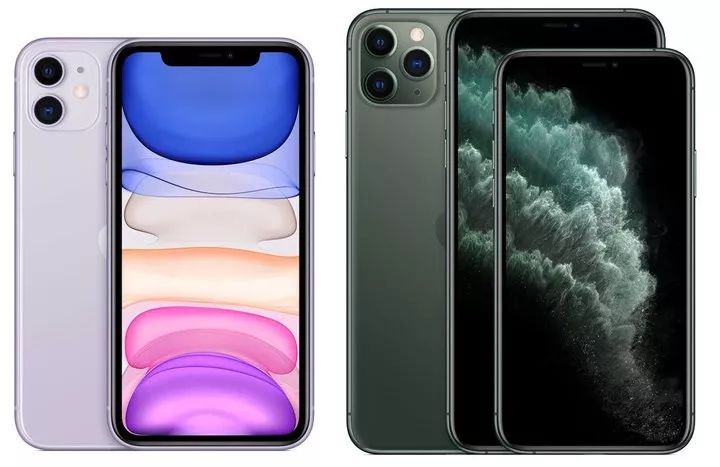
This new chip is smarter, faster, and more powerful, yet somehow it achieves lower power consumption than its predecessor. Its efficiency is about 30% higher than last year’s A12 chip, which is one of the factors that extended the new iPhone’s daily battery life by five hours.The launch of the iPhone 11 series merely reaffirms that Apple’s true advantage over competitors lies in its control over the entire tech stack: software, system hardware, and chip design. From augmented reality features to computational photography modes like Deep Fusion and night mode, you can see the benefits of this approach in the feature set of the iPhone.When discussing the A13 Bionic and its capabilities, Schiller said, “One of the biggest benefits of this year’s performance boost is voice synthesis. We have enhanced the voice synthesis capabilities in iOS 13, providing more natural language processing features, all thanks to machine learning and the neural engine.”
Clock Cycles
Since the launch of the first iPhone in 2007, Apple has come a long way. The first iPhone was slow and couldn’t even perform basic tasks like copying and pasting text. Its battery life was terrible, and its camera made supermodels look like Frankenstein’s wife. The original iPhone had almost no multitasking capabilities, as its chip ran at only 412 MHz. At that time, phones were cobbled together from a bunch of components, including chips used in Samsung DVD players. It’s hard to imagine that such a device would one day revolutionize our views on phones, computing, and communication.For Apple, it quickly became clear that if it wanted to maintain a competitive edge, especially over competitors in the Android ecosystem, it needed to build its own technology stack, which would take a lot of time. At some point in 2008, Apple decided to design and manufacture its own chips. At that time, the company had only 40 engineers dedicated to integrating chips from various suppliers. Then, in April 2008, Apple acquired a chip startup called PA Semi for $287 million. This increased the total number of chip engineers to about 150 and brought in the most important expertise in mobile: power efficiency. The group’s work was first showcased in the iPad 4 and iPhone 4, powered by a processor called A4, an improved version of ARM-designed chips. The A4 primarily focused on making the Retina display standout.Over the years, Apple’s chips have facilitated features that have elicited gasps at those famous events. Siri, video calls, fingerprint and image-based identity recognition, various camera functions — all of these are the result of Apple’s advancements in chip technology. In a blog post about the iPhone X released in 2017, I wrote, “FaceID is a perfect example of Apple’s not-so-secret ‘secret sauce’ — a perfect symbiosis of silicon, physical hardware, software, and design for delight. The ability to turn complex technology into magical moments depends on harmonizing various needs.” This is the true legacy that Steve Jobs left to the company he co-founded.
Intense Competition
Johny Srouji manages Apple’s expanding chip business and other hardware technologies. Many believe that a significant portion of Apple’s annual R&D budget is allocated to Srouji and his team. A few years ago, Srouji told Bloomberg Businessweek, “Jobs concluded that the only way for Apple to truly stand out and deliver something unique and great is to own its chips.” It is said that the company’s chip department has hundreds of people, and when we asked Apple executives for details, they did not respond.The industry has not overlooked Apple’s chip advantage. Commercial chips are not enough to catch up with Apple, which continues to forge its chip advantage, each time only for one phone and one tablet. Huawei and Samsung (the latter has always been a friendly foe to Apple) quickly realized that the future of mobile technology would require custom chips to outpace other Android competitors and better compete with Apple.

At the Steve Jobs Theater in Cupertino, California, Apple Vice President Sri Santhanam introduced the A13 Bionic chip on stage last week.
These companies are competing with Qualcomm in a silicon arms race, with rankings constantly being reshuffled. At the announcement, the previous generation A12 Bionic chip was slightly ahead of Apple’s competitors. Then this year, Apple used the iPhone 11 launch event to solidify its lead.Linley Gwennap, founder of the research consulting firm Linley Group and publisher of the influential newsletter Microprocessor Report, is considered one of the most important processor experts. Gwennap has spent most of his life tracking and researching processors and chips, and marketing tricks don’t easily impress him. His view is that Apple certainly still has an advantage and has won benchmark tests, but Apple’s advantages are not extensive.In an interview discussing the previous generation A12 Bionic, Gwennap pointed out that while Apple leads in single CPU competition, other companies are not far behind.He said, “I don’t think others are lagging too far behind. I expect Samsung, Qualcomm, and Huawei to work hard to catch up.”So, since the launch of last year’s A12, have they caught up a bit? How does the new six-core A13 Bionic compare to the latest chips from Apple’s three main competitors? Let’s take a look at the numbers.Samsung’s latest processor, the Exynos 9825, has eight cores divided into three clusters: two custom Mongoose cores with a clock speed of 2.73 GHz, two Cortex A75 cores with a clock speed of 2.4 GHz, and four Cortex A55 cores focused on efficiency with a clock speed of 1.9 GHz. Additionally, there is a Mali GPU and Samsung’s neural processing unit, along with LTE and memory functions.Huawei’s chip, called Kirin 990 5G, employs a similar three-cluster, eight-core design. It has two high-performance Cortex A76 cores with a clock speed of 2.86 GHz, two additional A76 cores with a clock speed of 2.35 GHz, and four efficiency-focused Cortex A55 cores with a clock speed of 1.95 GHz. Additionally, this chip is equipped with a 16-core GPU and a three-core Da Vinci neural engine. The number of transistors in Huawei’s chip reaches 10.3 billion.Qualcomm’s new Snapdragon 855 Plus is very similar to the Kirin 990 and Exynos. It features custom Kryo 485 Gold cores, one of which has a clock frequency of 2.96 GHz and is powerful, while three Kryo 485 Gold cores have a clock frequency of 2.42 GHz, and four efficiency-focused Kryo 485 Silver cores operate at 1.78 GHz. It also includes an Adreno GPU and Qualcomm’s Hexagon 690 AI engine.These chips have more components running faster, so you might think their performance is better than Apple’s. However, the reality is that we hardly ever utilize the full capabilities of mobile device chips. One or two high-performance cores are enough to meet most of our needs for a phone. Compared to competitors’ eight-core processors, Apple’s six-core design seems to lag behind, but in reality, its two large processors can easily outperform the competitors’ designs. Apple’s processors are more energy-efficient, giving them a clear advantage over competitors. For instance, Samsung’s Mongoose chips need to be used cautiously to avoid overheating the devices they are housed in. Even the A13’s new custom efficiency cores can outperform competitors.Gwennap noted in an earlier report from Microprocessor Report this year, “While Apple’s cores may not be the largest, they still lead in mobile performance.” He wrote that article when discussing the A12 chip. The performance of the A13 has improved by about 20%.Therefore, it should be noted that specifications and benchmarks do not account for Apple’s true advantage — the tight integration with the device and the company’s development strategy, which extracts more runtime from the battery while improving performance in key applications.
Energy Efficiency Performance
So how should smartphone companies articulate these technical advantages to resonate with customers? The introduction of chips is irrelevant. What matters is having the best camera, the fastest phone, and the largest battery. The more time we spend on Instagram, Facebook, or YouTube, the more we are willing to spend on these premium phones. Apple’s new iPhone 11 Pro and iPhone 11 Pro Max will check the battery boxes. These phones will enjoy an additional four and five hours of battery life, respectively. How do they achieve this?The answer to this question clearly illustrates Apple’s inherent advantages in completing the entire technology stack. To understand how the advantages of vertical integration manifest in chips like the A13 Bionic, I sat down with Schiller and Anand Shimpi, who was once an influential semiconductor and systems journalist and the founder of the website AnandTech. Shimpi is now a member of Apple’s Platform Architecture team.The new A13 significantly outperforms last year’s A12, with all major components having a 20% performance improvement: six CPU cores, the graphics processor, and the neural engine. For a chip that was already high-performing, seeing such a significant performance increase is like watching Bolt beat his own sprint record.Shimpi said, “We often discuss performance publicly, but the reality is we see performance as a function of energy consumption. We view performance as energy efficiency, and if you are doing efficiency design, you are also doing performance design.”Shimpi and Schiller are very clear about this obsession with power efficiency and performance. For example, the CPU team studies how applications are used on iOS and then uses that data to optimize future CPU designs. So when the next version of the device is released, it will be better at handling most of what people do on their iPhones.Shimpi said, “For applications that do not require extra performance, you can run last year’s performance while consuming much less power.”This strategy applies not only to CPUs. The same performance-per-watt rule is applied to machine learning functions and graphics processing. For example, if a developer of iPhone camera software finds that GPU utilization is very high, they can collaborate with the GPU architect to find better handling methods. This will lead to higher efficiency in future-designed graphics chips.
Silicon Synergy
So what happens inside the A13 Bionic when it is working? It generally involves allocation, authorization, and handover concepts. For low-energy tasks (like opening and reading emails), the iPhone will use more efficient cores. However, for heavier tasks like loading complex web pages, the high-performance cores take over. For some routine, mature machine learning tasks, the neural engine can handle them on its own. But for newer, more advanced machine learning models, the CPU and its dedicated machine learning accelerator can provide assistance.However, Apple’s secret is that all these different parts of the chip come together to save battery power. Typical smartphone chips operate by turning on a part of the chip to perform specific tasks. You can think of it as turning on the power for the entire community to have dinner, watch “Game of Thrones,” and then turn off the power, and then turn on the neighbor’s power for users to play video games.The A13 also uses this local switch method, but the scope of this switch is controlled at the household level, so less energy is wasted.Schiller said, “Whether managing battery life or optimizing performance, the machine is always learning. Ten years ago, there was no machine learning running. Now, it runs constantly, doing things.”Ultimately, the development of this technology depends on our simple demands for phones — we want gaming on our phones to be as smooth as on gaming consoles, or we want to take clear, beautiful photos even in dimly lit environments. As we tap and swipe the screen, Apple’s engineers are closely monitoring, readjusting their designs, and then creating a chip next year that will entice us to upgrade our phones again.