Hongruan High-Tech has achieved multiple breakthroughs in the multi-sensor fusion technology for the perception layer of autonomous driving, addressing core pain points such as adaptability to complex scenarios, data collaboration accuracy, and adaptation to extreme environments. These advancements are reflected in algorithm innovation, hardware adaptation, and scenario optimization across various dimensions.
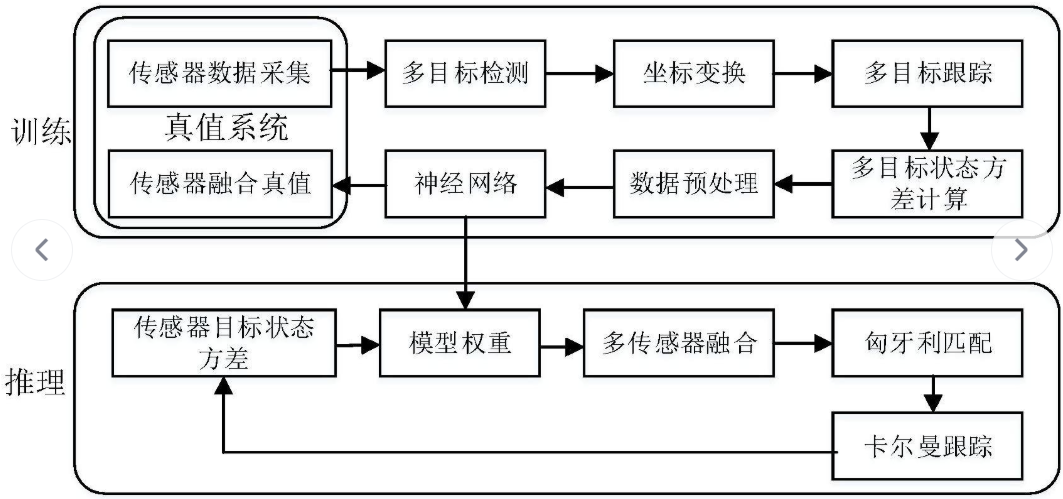
Hongruan breaks the limitations of traditional single-sensor systems by constructing a multi-modal heterogeneous fusion perception network, forming a deep collaboration system of LiDAR, high-definition cameras, and millimeter-wave radar, significantly enhancing detection and prediction accuracy. On one hand, it optimizes the data collaboration mechanism between LiDAR and high-definition cameras, allowing the LiDAR’s3D point cloud data to supplement the image information lost by the camera due to insufficient light in nighttime scenarios, increasing the target detection accuracy from82% to94%; on the other hand, it combines the real-time speed detection capability of millimeter-wave radar with visual semantic segmentation algorithms for the first time, solving the problem of inaccurate target trajectory prediction in traditional solutions, resulting in a30% improvement in dynamic target trajectory prediction accuracy. This fusion network can also handle complex urban road conditions such as alternating light and dark in tunnels and shadows from overpasses, effectively avoiding the perception blind spots of single sensors in special scenarios through complementary verification of multi-sensor data, ensuring perception stability.
In response to industry pain points where adverse environments like rain, fog, and dust can lead to sensor misidentification, Hongruan has achieved significant technical breakthroughs, greatly enhancing perception reliability in extreme weather. Firstly, it equips LiDAR with multi-echo technology, intelligently filtering different echo signal characteristics to capture the last echo reflected by objects, thereby filtering out interference signals from rain and fog particles and accurately locking onto the contours of obstacles; secondly, it strengthens the basic ranging capability of LiDAR, ensuring that the detection distance for distant targets in rainy and foggy conditions is no less than80% of that in clear weather, supported by a strong10% reflectivity; thirdly, it deepens the fusion strategy between LiDAR and millimeter-wave radar, leveraging the strong penetration advantages of millimeter-wave radar, with real-time cross-validation of data from both sensors. Even if the camera cannot identify vehicles ahead due to blurred images from rain and fog, the fusion system can still clearly present the target’s position and speed information through radar data, maintaining a target detection accuracy of over85% in extreme environments such as heavy rain and dense fog.
The breakthroughs in perception technology and hardware upgrades create an efficient synergy, as Hongruan further enhances the support capability of the perception system through hardware adaptation optimization. In terms of sensor miniaturization, Hongruan has restructured and innovated materials for LiDAR, reducing its size by40% and weight by35%, while still maintaining a maximum detection distance of150 meters and an angular resolution of0.1°, ensuring that core perception performance is not compromised and leaving ample space for vehicle design and installation layout. At the same time, it has developed the second-generation automotive-grade computing platform“XingheX2”, which boasts500TOPS of high AI computing power to efficiently process the massive heterogeneous data collected synchronously from multiple sensors, controlling data processing latency within20 milliseconds, and can operate stably in a wide temperature range from-40℃ to50℃, providing solid hardware computing power support for real-time computation of multi-sensor fusion algorithms and achieving instantaneous response for perception decisions.
Hongruan’s “All-Scenario Testing” conducted globally fully verifies the practical effectiveness and reliability of the multi-sensor fusion technology. The tests cover20 countries and150 cities, encompassing diverse geographical environments such as extreme cold, high temperatures, plateaus, and coastal areas, with a cumulative testing mileage exceeding500,000 kilometers and over5 million pieces of extreme scenario data collected. For example, in the extreme cold environment of minus30℃ in Northern Europe, the test vehicle equipped with this technology completed a 24-hour continuous driving test, with the sensor’s low-temperature startup speed and data collection accuracy unaffected; in the flooded road sections after a typhoon in Shenzhen, the system can dynamically adjust the fusion weights through multi-sensor data characteristics, ensuring the accuracy of perception regarding water depth and road obstacles. This all-scenario practical test not only verifies the practicality and universality of the technology but also feeds back real scene data for algorithm optimization, forming a virtuous cycle of“technology research and development–practical verification–iterative upgrades” that lays a solid foundation for subsequent technology implementation.