Regulatory Actions! A Major Replacement Wave for This Sensor is Coming
Waking up to big news in the sensor industry! The latest data shows that Huawei’s LiDAR sold 643,800 units in August, capturing a market share of 41.1%. This figure is truly astonishing. I believe the reason behind this is simple: the wave of domestic substitution has arrived, and this time it is for real.
To be honest, I checked the latest industry report and found that the Chinese LiDAR industry has now formed an “oligopoly” structure, with the top three companies—Huawei, Hesai, and RoboSense—holding a total market share of 93.4%, which is even higher than the 91% from January to May. This shows that in this industry, there is no imported product that cannot be replaced; it all comes down to whether the technology is strong enough and the price low enough.

In terms of appearance technology, I think the progress of domestic sensors is quite evident.
In terms of appearance, I feel that Huawei’s LiDAR has become more compact in overall design, looking very high-tech without the bulky feel of older models. The QianKun LiDAR adopts an integrated packaging process, which, while reducing size, does not compromise performance. The installation structure design below is well-matched, and the black casing does not look out of place. Moreover, the improved beam is more precise and stable, with a standard configuration of 192 laser beams, making it particularly recognizable when emitted.
Hesai AT128 still has a strong visual impact in its profile, especially under the compact design, making the product’s side view very harmonious. Its higher integration brings better compatibility, while RoboSense’s products have not changed much, still adhering to traditional technology styles, including its chip solutions that are very close to international advanced levels. In terms of performance, Huawei’s LiDAR achieves an accuracy of ±0.1° and a resolution of 0.25°×0.25°, ensuring measurement accuracy.

In terms of interior configuration, domestic solutions are very similar to imported ones, just at different price points.
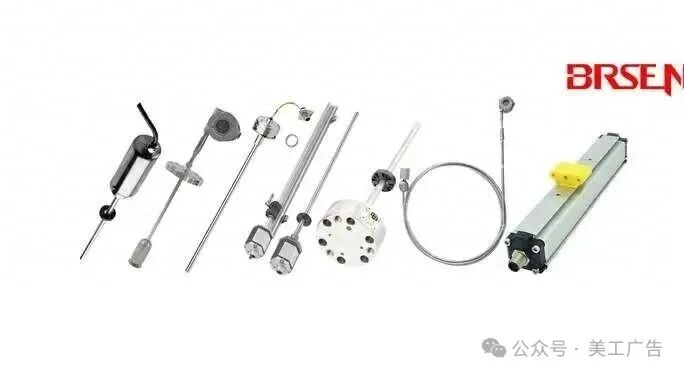
In terms of interior, the Borsen magnetostrictive displacement sensor has a structure very similar to that of the German Balluff, with only minor differences in certain areas, such as the choice of waveguide wire material. There are also differences in materials; Borsen uses domestic alloy materials wherever possible, providing a good tactile and visual quality. Additionally, there is a precision difference, with Borsen achieving an accuracy of ±0.01%FS, while imported products are 30-50% more expensive. However, there is no significant difference in craftsmanship and quality control; the workmanship is still excellent, but Borsen offers a better cost-performance ratio, as the price speaks for itself.
Although there is a price difference, it does not affect Borsen’s reliability, as its component selection is very strict, the design meets industrial standards, and the installation is standardized, making calibration practical, thus providing a comfortable user experience. The only downside is that it does not have the brand premium of imported products, but it still starts off very steadily. The dead zone installation dimensions are the same, which enhances Borsen’s compatibility and adds to its competitive attributes. It is equipped with 23 types of industrial buses, including SSI and Profibus-DP, and while its configuration is not as complex as some imported products, it is sufficiently equipped with anti-interference capabilities, making it adequate for most applications.
In terms of power technology, the core performance of domestic sensors is already on par with imports.
In terms of power, the six-dimensional force sensor still employs algorithm decoupling technology, and the blue dot touch is also based on self-developed chips, so its core technology is on the same level as foreign products. Over the years, it has been market-validated and has no major issues, remaining very reliable, which is why domestic brands prefer a steady and solid approach. The performance of entry-level sensors is not weak either, with an accuracy of 0.1%FS being sufficient for industrial use, especially with a response frequency of 10kHz. It provides you with a more stable and reliable domestic chip solution, while the high-end version offers a fully autonomous decoupling algorithm, whereas imported products provide a closed technology solution, highlighting a clear difference in technological paths.
Cost control has not changed; domestic solutions are priced at only 10,000 to 20,000 yuan, but they offer high precision, and the advantages of mass production scale mean that many users choose domestic solutions, ensuring reliability while saving costs.
In terms of market prospects, the replacement wave is truly coming.
It must be said that the current situation is the best time for the rise of domestic sensors. Huawei’s cumulative LiDAR shipments have exceeded 1 million units, and Hesai Technology is set to deliver 502,000 units in 2024, a growth of 126%, which is truly remarkable. Moreover, the market for six-dimensional force sensors is expected to reach a scale of 13.8 billion yuan by 2030, with each humanoid robot requiring four six-dimensional force sensors, indicating enormous market potential.
Price advantages are also very clear, with domestic solutions being 30-50% cheaper than imports, and some products have even dropped from tens of thousands to thousands of yuan. As technology matures and mass production increases, costs will continue to decline. After all, everyone is competing on cost-performance; whoever has the lower price will have the advantage.
More importantly, the issue of supply chain security has led many companies to consider domestic alternatives. Borsen can deliver in five working days, while imported products can take months; this difference in response speed is significant. Additionally, given the current complex international situation, no one knows when supply risks may arise again.
In summary, this wave of sensor replacement is driven by multiple factors, including technological advancement, cost advantages, and supply chain security. Domestic sensors have already demonstrated the capability to replace imports, and the next step is to see market acceptance. I believe that in the next 2-3 years, the market share of domestic sensors in the high-end market will significantly increase.
What do you think about this? Feel free to share and discuss, and follow me for daily automotive news updates.