
From detecting temperature and humidity to identifying sound, pressure, and frequency… the sensors invented by scientists can convert various physical, chemical, or biological quantities from the external environment into data or signals that can be understood by humans or computers. Sensors are not only an important foundation for achieving intelligent manufacturing in industry but also a crucial part of maintaining life and health in medicine, serving as the “eyes, ears, mouth, and nose” for various forms of embodied intelligence.
In this issue of Technology Weekly, reporters visited several research institutions and technology companies in Guangzhou to explore the latest achievements in the field of sensors.
Sensor Detects Air Pockets Inside Plastics
Today, plastics are widely used. However, most plastic products still rely on traditional manufacturing methods, using product molds, injection molding machines, and various types of plastic granules to process different plastic products. The high cost of product quality inspection, low defect detection efficiency, and low machine adjustment efficiency hinder the improvement and upgrading of the injection molding industry.
Dr. Yao Ke from the Advanced Manufacturing and Automation R&D Department of the Hong Kong University of Science and Technology (HKUST) told reporters that their team has developed a capacitive sensor capable of real-time detection of internal defects in plastics, which was launched this year. It can achieve automated, full-process monitoring and automatically sort out defective products, enhancing the quality and efficiency of high-end plastic product production.
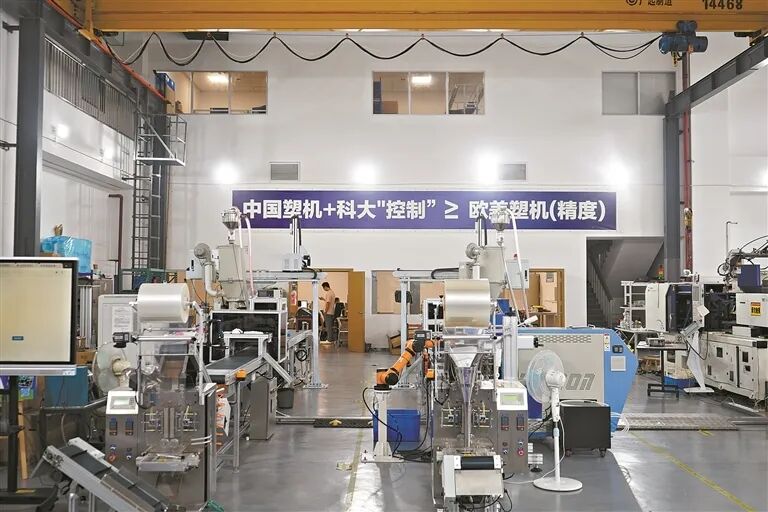
Advanced Manufacturing Laboratory at HKUST
It is reported that traditional flat capacitors consist of two opposing metal plates, and the capacitance data is only related to three parameters: the area of the two metal plates, the distance between the two plates, and the dielectric constant of the medium between the plates.
“Our sensor probe is cleverly designed to form the two poles of the capacitor, which is placed inside the mold. Once the mold is closed and injection molding begins, the area and distance of the metal plates are fixed, and the only variable affecting capacitance is the dielectric constant of the medium. During the injection molding process, the medium inside the mold changes from air to molten plastic and then to solidified plastic, allowing us to observe a continuously changing capacitance value curve on the computer connected to the sensor.”
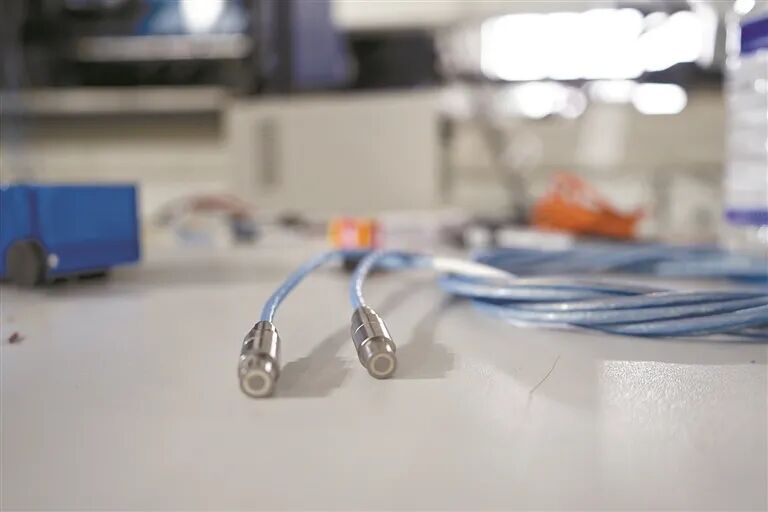
Sensor Probe
Using this capacitive sensor on the injection molding production line, producers can first set a qualified capacitance curve for plastic products and monitor the quality of the products based on this standard curve. During the injection molding process, if any quality defects occur inside the plastic, or if there are issues with the material quality, fluctuations in the injection molding machine, or changes in pressure, the capacitance curve output by the sensor will differ from the standard curve. At this point, the computer can use relevant algorithms to determine that defective products have emerged in the injection molding process, directing the robotic arms on the intelligent production line to sort the corresponding products. If the product curve closely matches the standard curve, it can be highly likely confirmed that the product quality is qualified.Previously, detecting quality issues in plastic products, such as identifying air bubbles, could not be achieved by mere visual inspection. Although ultrasonic testing can be used, it is too costly, and sometimes sampling and cutting for inspection is the only option. With this capacitive sensor, it can easily detect bubble issues during the plastic production process, “If plastic components contain bubbles, it will greatly affect their mechanical strength, fatigue life, and load-bearing capacity, which customers cannot accept.”
“With the development of artificial intelligence technology, we can not only use this sensor to detect problems but also analyze and solve them,” Dr. Yao said. In the injection molding workshop, parameters can be set and adjusted to discover and resolve issues. Previously, judgments were mainly based on the experience of skilled workers, which was inefficient and costly. Now, with the help of the capacitive sensor, plastic processing is moving towards intelligent manufacturing.”
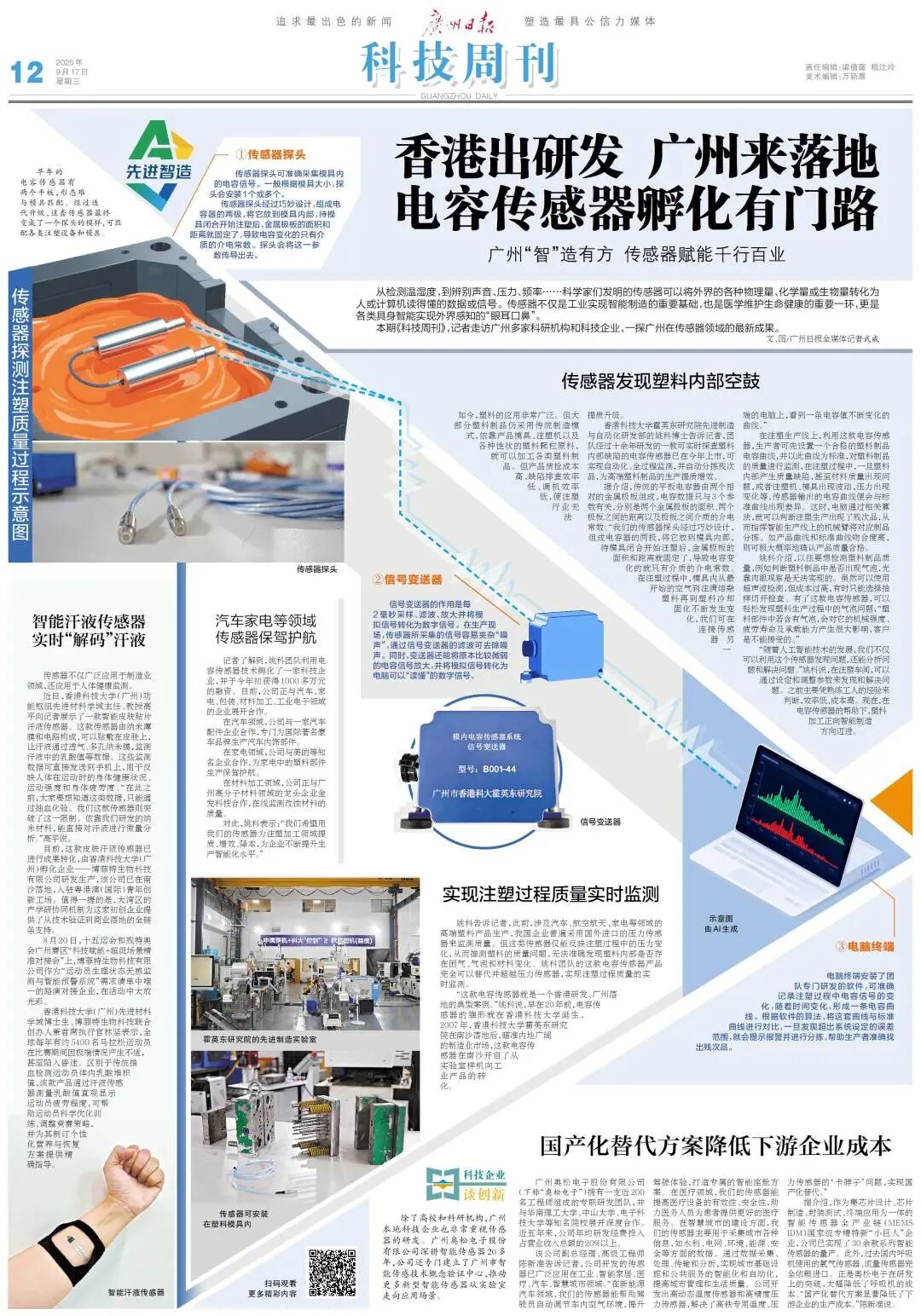
Illustration of Sensor Detecting Injection Molding Quality Process
In the past, capacitive sensors had two flat plates, making it difficult to match with molds. After iterations and upgrades, this sensor has finally evolved into a probe shape that can match various injection molding equipment and molds.
01Sensor Probe
The sensor probe can accurately collect capacitance signals inside the mold. Generally, based on the size of the mold, one or more probes will be installed.
The sensor probe is cleverly designed to form the two poles of the capacitor, which is placed inside the mold. Once the mold is closed and injection molding begins, the area and distance of the metal plates are fixed, and the only variable affecting capacitance is the dielectric constant of the medium. The probe will transmit this parameter outside.
02Signal Transmitter
The role of the signal transmitter is to sample, filter, amplify, and convert the analog signal into a digital signal every 2 milliseconds. In the production site, the signals collected by the sensor are easily mixed with “noise”; filtering through the signal transmitter can remove this noise. At the same time, the transmitter can amplify the originally weak capacitance signal and convert the analog signal into a digital signal that the computer can “understand.”
03Computer Terminal
The computer terminal is equipped with software specifically developed by the team, which can accurately record the changes in capacitance signals during the injection molding process, forming a capacitance curve over time. Based on the software’s algorithms, this curve is compared with the standard curve, and once deviations beyond the system’s set error range are detected, alarms will be triggered, and sorting will be performed to help producers accurately identify defective products.
Real-time Monitoring of Injection Molding Quality
Dr. Yao told reporters that previously, in the production of high-end plastic products in fields such as automotive, aerospace, and home appliances, Chinese companies generally used imported pressure sensors to monitor quality. However, these sensors can only reflect pressure changes during the injection molding process, inferring potential quality issues in plastics, and cannot accurately detect whether there are trapped air, bubbles, or material changes inside the plastic. The capacitive sensor product developed by Dr. Yao’s team can completely replace and surpass pressure sensors, achieving real-time monitoring of injection molding quality.
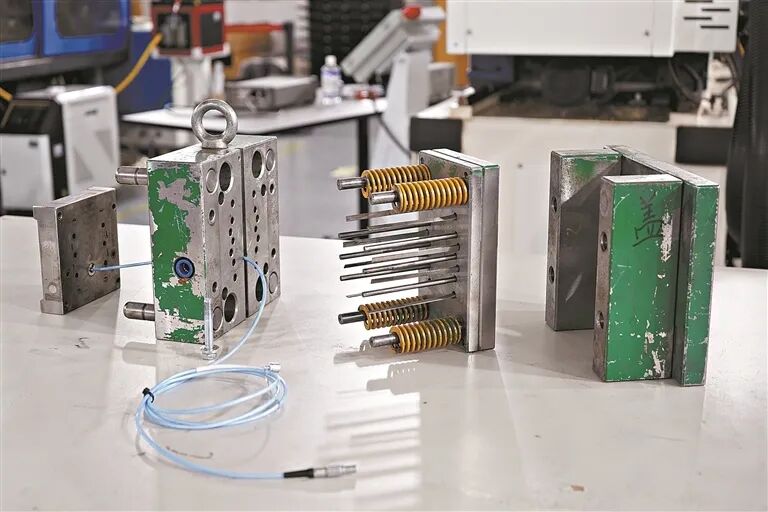
The sensor can be installed inside plastic molds
“This capacitive sensor is a typical case of R&D in Hong Kong and landing in Guangzhou,” Dr. Yao said. As early as 20 years ago, the prototype of the capacitive sensor was born at HKUST. In 2007, after the establishment of the HKUST Ho Ying Tung Research Institute in Nansha, it aimed at the vast manufacturing market in mainland China, and this capacitive sensor began its transformation from laboratory prototype to industrial product in Nansha.
Sensors Safeguarding Automotive and Home Appliance Fields
According to reports, Dr. Yao’s team has incubated a technology company using capacitive sensor technology and has secured over 10 million yuan in financing earlier this year. Currently, the company is collaborating with enterprises in the automotive, home appliance, packaging, materials processing, and industrial electronics fields.
In the automotive sector, the company is working with an automotive parts manufacturer to produce interior components for internationally renowned luxury car brands.
In the home appliance sector, the company collaborates with well-known enterprises like Midea to ensure the quality of plastic components in home appliances.
In the materials processing sector, the company is working with leading enterprises in polymer materials in Guangzhou, such as Kingfa Technology, to monitor the quality of modified materials online.
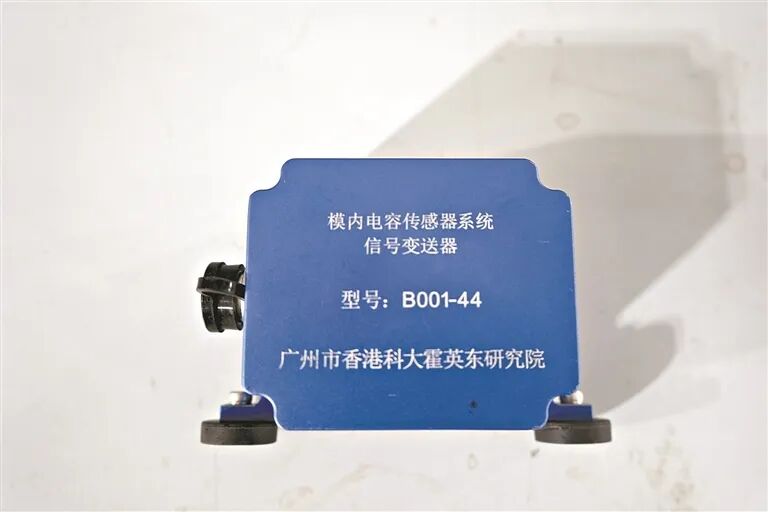
Signal Transmitter
In this regard, Dr. Yao stated: “We hope to use our sensors to improve quality, increase efficiency, and reduce costs in the injection molding processing field, continuously enhancing the intelligent production level of enterprises.”
Smart Sweat Sensors Real-time “Decoding” of Sweat
Sensors are not only widely used in the manufacturing industry but also in human health monitoring.
Recently, Professor Gao Ping, Director of the Advanced Materials Domain at HKUST (Guangzhou), showcased a smart skin patch sweat sensor. This sensor, composed of a nano-film and circuitry, can be applied to the skin, allowing sweat to pass through the breathable, porous nano-film to monitor data such as lactate levels in sweat. This monitoring data can be directly sent to a mobile phone, reflecting the body’s health status, exercise intensity, and fatigue level during physical activity.
“Previously, to obtain such data, one had to rely on blood tests. Our sensor breaks this limitation. Using the nano-materials we developed, it can directly analyze sweat in small amounts,” Gao Ping said.
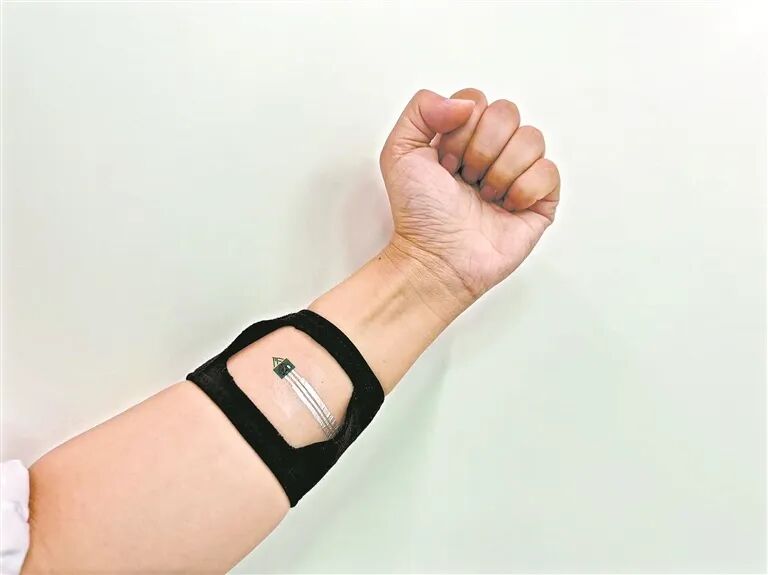
Smart Sweat Sensor
Currently, this skin sweat sensor has undergone results transformation, developed and produced by the incubated company of HKUST (Guangzhou) – Bofit Biotechnology Co., Ltd., which has settled in Nansha and is part of the Guangdong-Hong Kong-Macao (International) Youth Innovation Workshop. Notably, the collaborative mechanism of industry, academia, and research in the Greater Bay Area provides this startup with full-chain support from technology validation to commercial landing.
On August 20, at the “Technology Empowerment + Super Scene Precision Matching Conference” for the 15th National Games and the Special Olympics in Guangzhou, Bofit Biotechnology Co., Ltd. stood out as the only company presenting at the “Athlete Physiological State Non-invasive Monitoring and Intelligent Early Warning System” demand list.
Dr. Lin Jian, a doctoral student at HKUST (Guangzhou) and co-founder and CEO of Bofit Biotechnology, stated that approximately 5,400 marathon runners worldwide experience discomfort or even fainting during competitions each year due to extreme conditions. Unlike traditional blood tests that measure lactate accumulation in athletes, this product visually displays the fatigue level of athletes through the sweat sensor, helping athletes scientifically optimize training, adjust competition strategies, and provide precise guidance for personalized nutrition and recovery plans.
Technology Companies Discuss InnovationDomestic Replacement Solutions Reduce Costs for Downstream Enterprises
In addition to universities and research institutions, local technology companies in Guangzhou also place great importance on the R&D of sensors. Guangzhou Aoshun Electronics Co., Ltd. has been deeply engaged in smart sensors for over 20 years and has established a Smart Sensor Technology Concept Verification Center in Guangzhou to promote more new smart sensors from the laboratory to application scenarios.
Guangzhou Aoshun Electronics Co., Ltd. (hereinafter referred to as “Aoshun Electronics”) has a dedicated R&D team of nearly 200 engineers and has established deep collaborations with well-known universities such as South China University of Technology, Sun Yat-sen University, and University of Electronic Science and Technology of China. In the past five years, the company’s annual R&D expenditure has accounted for more than 20% of its total revenue.
The company’s deputy general manager and senior engineer, Chen Xinzhuan, told reporters that the sensors developed by the company have been widely applied in industrial, smart home, medical, automotive, and smart city fields.
“In the field of new energy vehicles, our sensors can help drivers automatically adjust the air environment inside the car, enhancing the driving experience and creating a personalized smart cockpit solution.
In the medical field, our sensors can improve the effectiveness and safety of medical devices, assisting medical personnel in providing better medical services to patients.
In the construction of smart cities, our sensors are mainly used to collect various information about the city, such as data on water resources, power grids, environment, energy, and safety. Through data collection, processing, transmission, and analysis, we achieve the intelligence and automation of urban infrastructure and public services, improving urban management and quality of life. The company has developed high-dynamic temperature sensors and high-precision pressure sensors, solving the “bottleneck” problem of temperature and pressure sensors specifically for high-speed rail, achieving domestic replacement.“
It is reported that as a national-level specialized and innovative “little giant” enterprise integrating chip design, manufacturing, packaging testing, and terminal applications in the smart sensor industry chain (MEMSIDM), the company has achieved mass production of over 30 series of smart sensors.
Moreover, previously, oxygen sensors and flow sensors used in domestic ventilators were entirely dependent on imports. It is precisely Aoshun Electronics’ breakthroughs in R&D that have significantly reduced the costs of ventilators.“Domestic replacement solutions have significantly lowered the production costs for downstream enterprises,” Chen Xinzhuan said.

Coordinated Editing: Liang Qianwei, Ji ShenlingText, Images / Guangzhou Daily New Flower City Reporter: Wu WeiVideo / Guangzhou Daily New Flower City Reporter: Wu WeiPoster / Zhang Yan, Cui SuhuaGuangzhou Daily New Flower City Editor: Xi Leyao
 Guangzhou Daily X Guangzhou Tower Theater “National Day Fairy Tale Carnival” Fan Benefits Are Here
Great place for family fun during the National Day holiday
Guangzhou Tower Theater transforms into a fairy tale wonderland
Newly adapted original plot
Bringing imaginative visions to life on stage
Come meet the Ice Princess and the Little Prince!
From September 12 to September 21, like, share, and recommend any article from Guangzhou Daily WeChat, take a screenshot and send it to the backend with the message “Fairy Tale + Name + Phone Number”. On September 22, 10 fans will be drawn, each receiving 2 tickets for the same performance, with the following sessions:“Ice Princess Magic Mirror Adventure” on October 1 and 2 at 3 PM; “The Little Prince” on October 3 and 4 at 3 PM; “Three Princes and the Ugly Princess” on October 7 at 3 PM*Sessions are randomly given and cannot be exchanged; please pay attention to the time and watch on time.

扫码观看
广州日报视频号