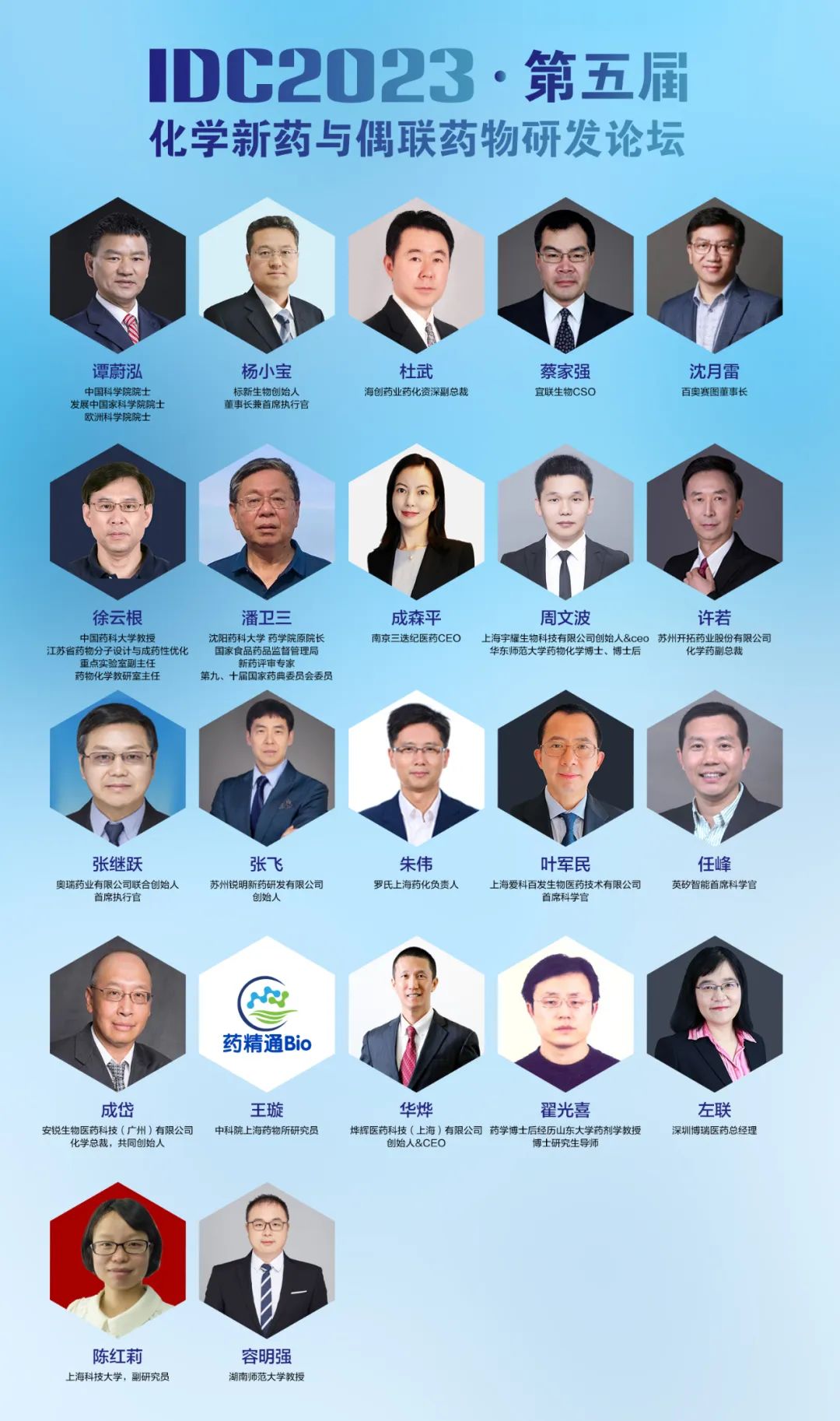
 IDC2023 Fifth Chemical Innovation Drug and Small Molecule Conjugate Drug R&D Forum is coming with 10 major sections over 2 days, 80+ Speakers and 1200 guests gathering in Suzhou to discuss: chemical innovation drugs, modified new drugs, ADCs, small molecule conjugates, peptide conjugates, and more. Cooperation hotline: Li Xinxin 15800452389. Click the image to view the first batch of heavyweight guest lineup↑
Another Domain of Drug Conjugation: PDC
The concept of drug conjugates originated in the early 20th century. In 1910, Paul Ehrlich proposed the “Magic Bullet” theory, aiming to describe a drug that could selectively kill malignant cells without harming normal tissues, meaning these “bullets” could deliver drugs to specific sites. In 1957, Mathé first used methotrexate conjugated with anti-leukemia 1210 antigen immunoglobulin for the treatment of leukemia, marking the beginning of research on drug conjugates. ADCs, as the initial and most typical representatives of drug conjugates, use antibodies as carriers to form antibody-drug conjugates, delivering antibodies and cytotoxic drugs (payloads) to cancer cells. In fact, carriers of drug conjugates can also include peptides, proteins, small molecule drugs, and nucleic acid aptamers, fundamentally composed of a carrier, linker, and payload.
01Overview and Mechanism of PDC
PDCs consist of three parts: targeting peptides, linkers, and cytotoxic drugs, covalently linking specific peptide sequences with cytotoxins through a linker. The guiding part of PDCs, the cell-targeting peptide, delivers the drug conjugate into the cell via receptor-mediated endocytosis, targeting the cytotoxin to be released in a localized manner after activation by the tumor microenvironment, thus killing tumor cells. Furthermore, by concentrating the drug in the target tissue, PDCs reduce the concentration of toxins in other tissues, potentially lowering adverse reactions and improving efficacy.
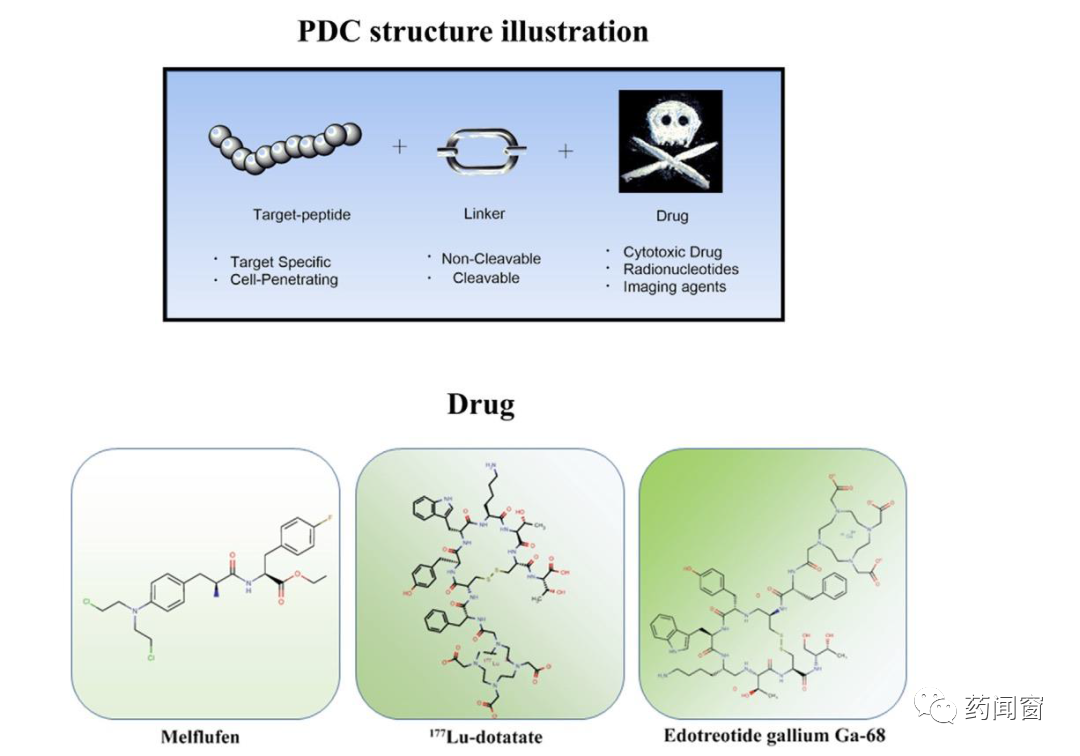
Figure1 PDC Drug Structure
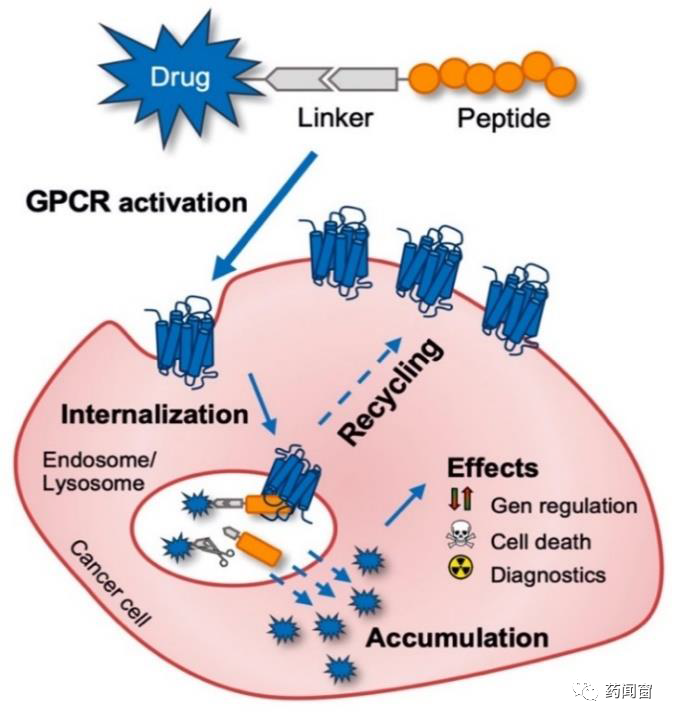
Figure2 Mechanism of PDC
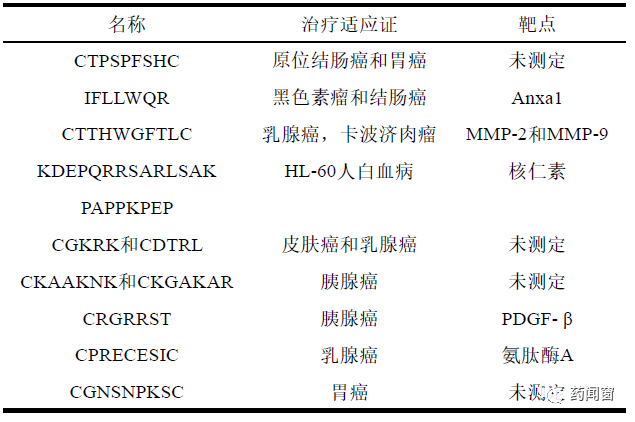
PDCs have the core advantages of enhanced cell permeability and increased drug selectivity. Two drugs have been approved by the U.S. Food and Drug Administration (FDA). Currently, the most researched PDCs are anti-tumor drugs, with specific markers (proteins or receptors) expressed in tumor blood vessels that differ structurally and morphologically from normal vascular systems. Identifying these markers and understanding their heterogeneity can achieve organ-specific targeted delivery of anti-tumor drugs. Although PDCs show significant therapeutic effects, they have drawbacks such as poor stability, low bioactivity, long development times, and slow clinical development processes.
Table1 Targeting Tumor Blood Vessel Peptides
PDCs, as a new type of drug conjugate, not only retain the functions and bioactivity of peptides but also have the cleavable characteristics of linkers, allowing for responsive drug release. Compared to ADCs, PDCs enter cells through direct permeation or mediated endocytosis, then stimulate the cleavage of the cleavable linker, resulting in drug release.
Table2 Comparison of PDC and ADC

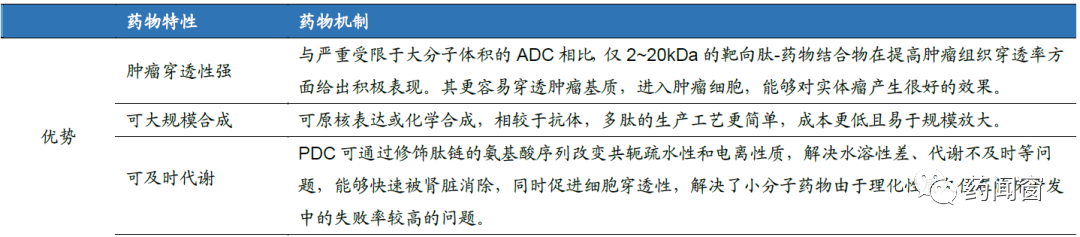
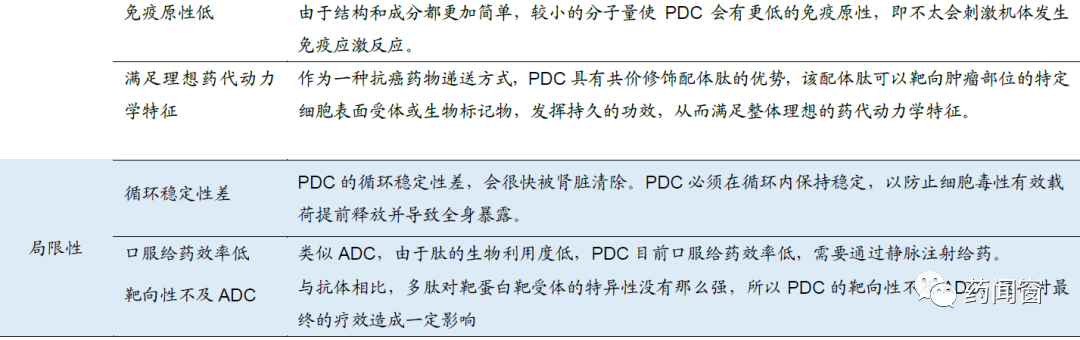
PDCs can compensate for the shortcomings of traditional small molecule chemotherapeutics, achieving targeted drug delivery with lower doses and better therapeutic effects for tumors. Peptides can exhibit high affinity and specificity towards targets, while also being convertible into highly potent drugs, significantly reducing drug side effects. Compared to ADC drugs, PDC drugs feature smaller molecular weights, better tumor penetration, lower immunogenicity, large-scale synthetic feasibility, and relatively better pharmacokinetics, but they also face limitations due to instability and low bioavailability of peptides.
Table3 Advantages and Disadvantages of PDC Drugs
02Research Progress of PDC Drugs
PDC drugs have unique advantages and are still in the early stages of development. In January 2018, the FDA approved Novartis’ Lutathera, the world’s first PDC drug, for the treatment of gastroenteropancreatic neuroendocrine tumors (GEP-NETs) in adult patients with somatostatin receptor positivity. Lutathera is a Lu-177 labeled somatostatin analogue peptide, which acts by binding to somatostatin receptors that may be present on certain tumors. After binding to these receptors, the drug enters the cell and damages tumor cells through radiation.
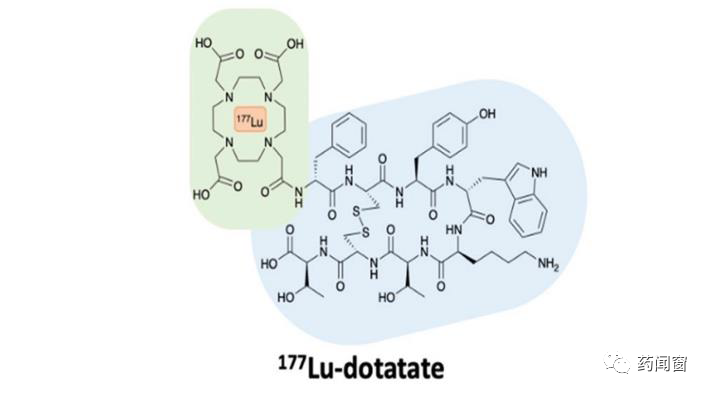 Figure3 Structure Diagram of Lutathera
Another remarkable research achievement is the dual-cyclic peptide series PDC from Bicycle Therapeutics. Bicycle’s dual-cyclic peptides exhibit high targeting, stability, and affinity. BT1718 consists of a cleavable disulfide-linked payload toxin DM1 and a dual-cyclic peptide, currently in clinical phases I/II. Studies have shown that the cyclic structure increases the surface area of the peptide, enhancing its binding affinity and selectivity towards proteins.
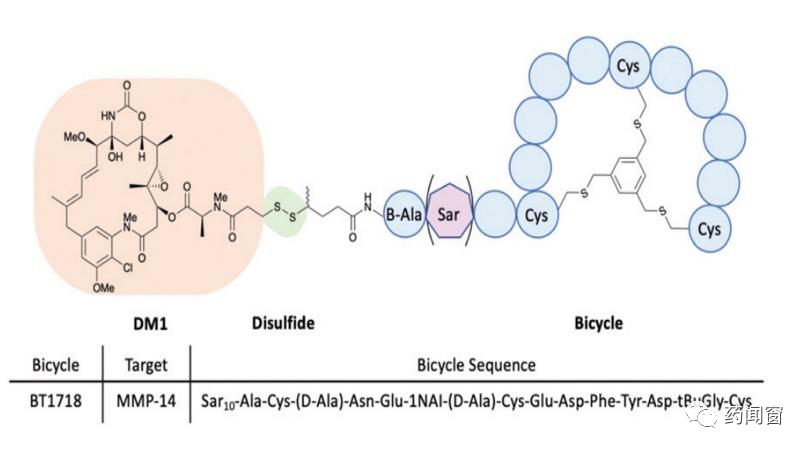 Figure4 Structure Diagram of BT1718
Table4 PDC Drug Pipeline Overview
|
Name |
TTP |
Payload |
Linker |
Indications |
Clinical Progress |
Company |
|
ANG1005 |
Angiopep-2 |
Paclitaxel |
Succinic Acid |
Leptomeningeal Metastasis |
3 |
Angiochem |
|
Glioma, Glioblastoma Brain Tumor, Recurrent |
1 |
|||||
|
Breast Cancer Brain Metastasis |
2 |
|||||
|
Advanced Solid Tumors with or without Brain Metastasis |
2 |
|||||
|
GRN1005 |
Angiopep-2 |
Paclitaxel |
Succinic Acid |
Breast Cancer Brain Metastasis; Non-Small Cell Lung Cancer (NSCLC) with Brain Metastasis |
2 |
Angiochem |
|
BT1718 |
MT1-MMP Binder |
DM1 |
Disulfide |
Advanced Solid Tumors, Non-Small Cell Lung Cancer, Non-Small Cell Lung Sarcoma, Esophageal Cancer |
2 |
Bicycle Therapeutics |
|
BT5528 |
EphA2 Binder |
MMAE |
Amide |
Solid Tumors, EphA2 Positive Non-Small Cell Lung Cancer |
2 |
BicycleTx Limited |
|
BT8009 |
Nectin-4 Binder |
MMAE |
Amide |
Solid Tumors |
2 |
BicycleTx Limited |
|
TH1902 |
TH19P01 |
Docetaxel |
Succinic Acid |
Solid Tumors |
1 |
Theratechnologies |
|
TH1904 |
TH19P01 |
Adriamycin |
||||
|
G-202 (Mipsagargin) |
DγEγEγEγE |
Poisonous Carrot |
Amide |
Solid Tumors |
2 |
GenSpera |
|
NGR015 (NGR-hTNF) |
CNGRCG(1,5 SS) |
hTNF |
Amide |
Malignant Pleural Mesothelioma |
3 |
AGC Biologics |
|
tTF-NGR |
GNGRAHA |
tTF |
Amide |
Malignant Solid Tumor Lymphoma |
1 |
University Hospital Münster, German Cancer Aid |
|
PEN-221 |
fCYwKTCC(2,7 SS) |
DM-1 |
Disulfide |
Neuroendocrine Tumors, Small Cell Lung Cancer |
2 |
Tarveda Therapeutics |
|
Zoptarelin Doxorubicin |
D-Lys6-LHRH |
Adriamycin |
Amide |
Previously Treated Advanced/Metastatic Recurrent Endometrial Cancer |
3 |
AEterna Zentaris |
|
CBP-1008 |
CB-20BK |
MMAE |
Amide |
Advanced Solid Tumors |
1 |
Tongyi Pharmaceutical |
|
CBP-1018 |
LDC10B |
MMAE |
Amide |
Lung Tumor |
1 |
Tongyi Pharmaceutical |
|
SOR-C13 |
Folic Acid |
MMAE |
Amide |
Advanced Malignant Solid Tumors |
1 |
MD Anderson Cancer Center, National Cancer Institute (NCI) |
|
Melflufen (delisted) |
Flufenamide |
Marfalan |
Acetic Acid |
Multiple Myeloma |
Approved |
Oncopeptides AB |
|
177Lu-dotatate (Lutathera) |
Tyr3-Octanoic Acid |
177Lu |
DOTA |
Neuroendocrine Tumors |
Approved |
Novartis |
|
177Lu-PSMA-617 |
Glu-urea-R |
177Lu |
DOTA |
Prostate Cancer |
1 |
Novartis |
|
[18F]AlF-NOTA-octreotide |
Octreotide |
18F |
NOTA |
PET or GEP-NETs; Neuroendocrine Tumors |
1~2 |
Central South University Xiangya Pharmaceutical |
|
[18F]Fluciclatide |
RGD |
18F |
PEG |
PET Imaging |
2 |
GE Healthcare |
|
[18F]RGD-K5 |
cyclo(RGDfK) |
18F |
NOTA |
PET Imaging |
2 |
Siemens Healthineers |
|
68Ga-NODAGA-E [cyclo(RGDyK)]2 |
E [cyclo(RGDyK)]2 |
68Ga |
NODAGA |
PET Imaging |
2 |
Rigshospitalet, Denmark |
|
68Ga-NOTA-BBN-RGD |
cyclo(RGDyK) and BBN |
68Ga |
NOTA |
PET/CT and PET Imaging |
1 |
Peking Union Medical College Hospital, National Institute of Biomedical Imaging and Bioengineering |
|
90Y-DOTATOC |
3Tyr-Octanoic Acid |
90Y |
DOTA |
PRRT |
2 |
University of Iowa, National Institutes of Health (NIH), National Cancer Institute (NCI) |
|
9mTc-3PRGD2 |
3Tyr-Octanoic Acid |
99mTc |
3PRGD2 |
Breast Cancer SPECT/CT Scanning |
3 |
Molecular Insight Pharmaceuticals |
|
111In-DTPA-octreotide |
3Tyr-Octanoic Acid |
111In |
DTPA |
Brain and Central Nervous System Tumor PET Imaging |
1 |
Yale University, National Cancer Institute (NCI) |

END

IDC2023 Fifth Chemical Innovation Drug and Small Molecule Conjugate Drug R&D Forum is coming, with 10 major sections over 2 days, 80+ Speakers and 1200 guests gathering in Suzhou to discuss: chemical innovation drugs, modified new drugs, ADCs, small molecule conjugates, and more. Cooperation hotline: Li Xinxin 15800452389. Click the image for conference details
 Click to read the original text, consult for booth setup and register for the conference!