1. Overview
Antibody-drug conjugates (ADCs) rejuvenate the concept of targeted chemotherapy by coupling cytotoxic payloads to antibodies. The first stage of the complex intracellular toxin delivery process of ADCs is endocytosis. Analyzing the endocytic action of target receptors and ADCs can greatly advance preclinical research, clinical translation, and patient treatment outcomes. The in vitro efficacy platform of Sanofi provides the most comprehensive endocytosis methods, facilitating precise and efficient screening of ADC drugs.
At the end of the article, there is a JPM23 PPT benefit share!!!
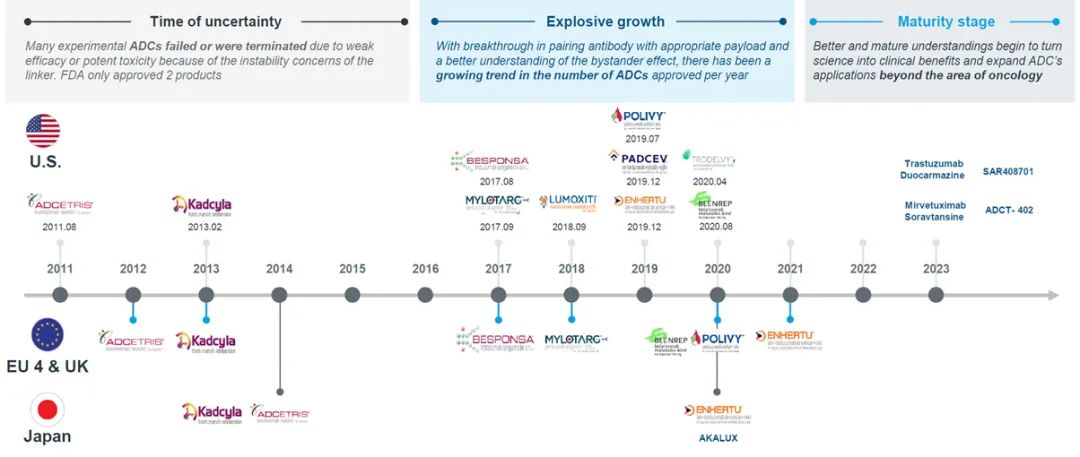
2. Development History of ADCsAs early as the early 20th century, German scientist Paul Ehrlich proposed the concept of ADCs, but due to the limited technological conditions at that time, ADCs remained in the conceptual stage for a long time. On August 19, 2011, the FDA approved Adcetris for the treatment of Hodgkin lymphoma (HL) and systemic anaplastic large cell lymphoma (ALCL); in 2013, Roche’s trastuzumab emtansine (T-DM1) was launched in the United States, marking the true maturation of ADC drug development technology and its commercial success.
From 2017 to 2020, ADC drugs experienced rapid development. In 2017, Besponsa was launched for the treatment of relapsed or refractory pre-B cell acute lymphoblastic leukemia; the following year, moxetumomab pasudotox was launched as a freeze-dried powder ADC drug; in April 2020, Trodelvy received accelerated approval from the FDA, becoming the first ADC drug specifically approved for the treatment of relapsed or refractory mTNBC, and the first ADC drug targeting Trop-2 approved by the FDA.
Subsequently, the development of ADC drugs entered a mature phase. In January 2020, T-DM1 was approved by the NMPA for marketing in China, marking the beginning of the era of ADC drugs in China. On April 24, 2022, DS8201, jointly developed by AstraZeneca and Daiichi Sankyo, applied for marketing in China. In just two years, the Chinese ADC drug market has rapidly joined the global ADC drug market.
 3. Market Performance of ADCs
▶3.1. Sales Revenue
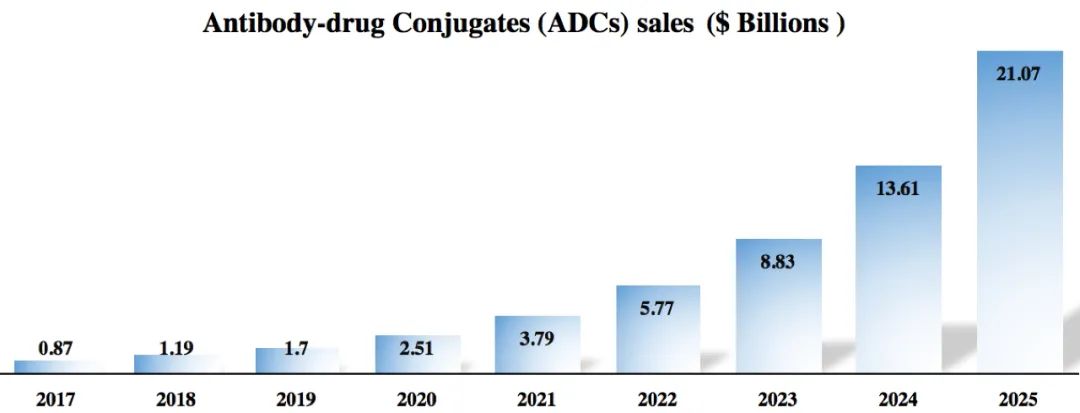 The global ADC drug market is growing rapidly. In 2014, the global ADC drug market was valued at $460 million, and by 2020, it had grown to $2.51 billion, with a compound annual growth rate of approximately 32.9%; it is expected that by 2025, the ADC market size could reach $21.07 billion, with a compound annual growth rate exceeding 50%.
 ▶3.2. Clinical TargetsTable 1. Clinical stages with 1-2 ADC drugs targeting
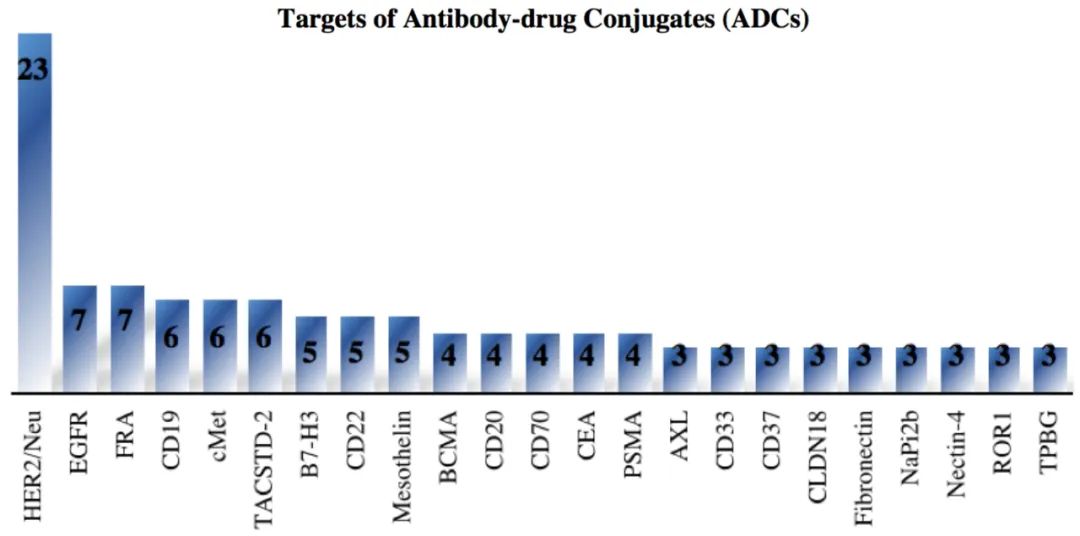
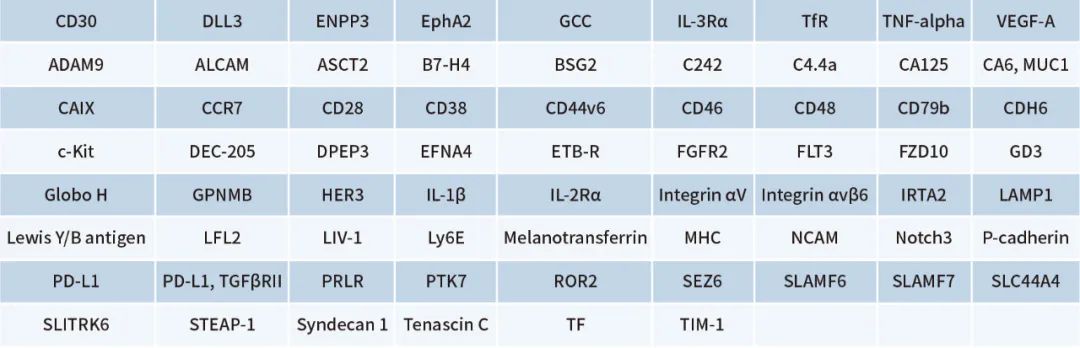 The clinical progress of popular targets is shown in the figure, with 23 ADC drugs targeting the Her2 target and 7 targeting EGFR and FRA. The targets with 1-2 ADC drugs in clinical stages are listed in Table 1. Differentiated layouts and finding suitable drug targets have become hotspots for ADC R&D companies.
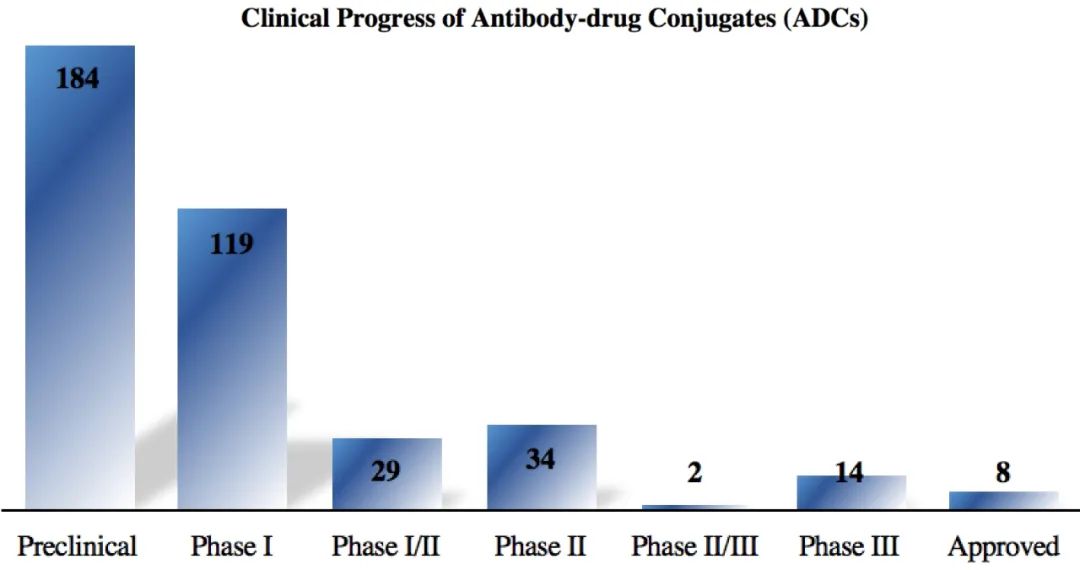
▶3.3. Clinical StagesTable 2. Information on ADC drugs in clinical phase III and approved for marketing
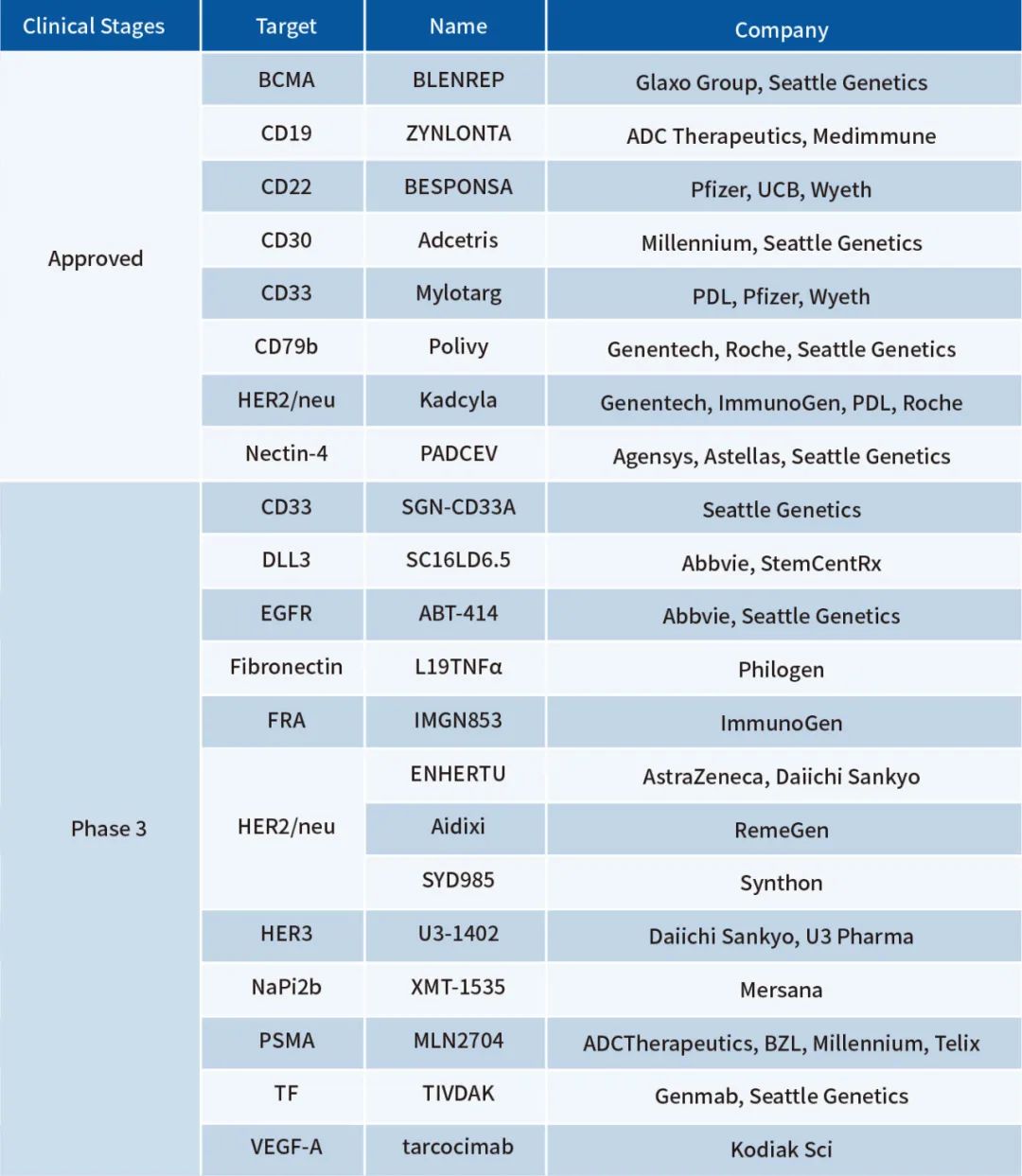
Currently, there are 8 ADC drugs on the market; 14 ADC drugs in clinical phase III; and 2 ADC drugs in clinical phases II/III. Information on ADC drugs in clinical phase III and approved for marketing is shown in Table 2. With the increasing number of global ADC drug approvals, it can be foreseen that under the policy environment of the Chinese government encouraging innovation and accelerating the entry of urgently needed clinical drugs into China, more and more domestic pharmaceutical companies will begin to layout ADC drug R&D, and the R&D of ADC drugs will enter a period of rapid development.4. Key Points and Principles of ADC Drug Screening▶4.1. DS-8201On August 12, the FDA announced the accelerated approval of the ADC drug Enhertu (DS-8201), jointly developed by AstraZeneca and Daiichi Sankyo, for expanded indications to treat patients with unresectable or metastatic non-small cell lung cancer (NSCLC) carrying activating HER2 mutations. This is the first drug approved by the FDA for the treatment of HER2-mutated NSCLC.It is worth mentioning that this is the first drug approved by the FDA for the treatment of HER2-mutated NSCLC. Previously, the FDA had approved DS-8201 for HER2 low-expressing or positive breast cancer and gastric/gastroesophageal junction (GEJ) adenocarcinoma patients.At this year’s ASCO conference, DS-8201 brought a turning point for patients with HER2 low-expressing breast cancer. According to clinical results, DS-8201 extended the progression-free survival of patients with HER2 low-expressing breast cancer by six months and overall survival by ten months.DS-8201 has broken through the HER2 barrier for the first time, which is not only its success but also a significant milestone in the development of HER2-targeted therapies.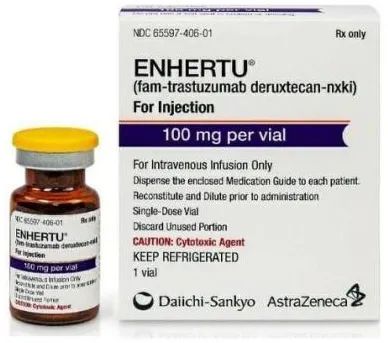 ▶4.2. Mechanism of ADC DrugsADCs reach cancer cells through the bloodstream, first binding to the corresponding antigen and entering the cell through receptor-mediated endocytosis. The linker breaks down under low pH or lysosomal protein action in the cell, releasing the active cytotoxic drug. The free small molecule cytotoxic drug binds to the corresponding target, leading to tumor cell death.
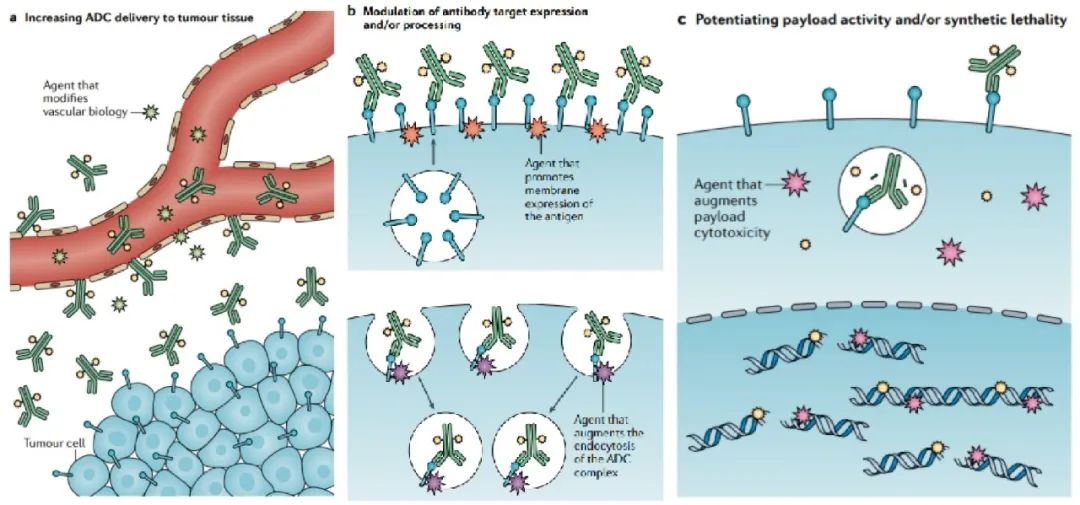
Drago JZ, Modi S, Chandarlapaty S. Nat Rev Clin Oncol. 2021 Feb 8. doi: 10.1038/s41571-021-00470-8.▶4.3. Core Elements of ADC DrugsAntibody-drug conjugates (ADCs) consist of three core elements: antibody, linker, and small molecule drug.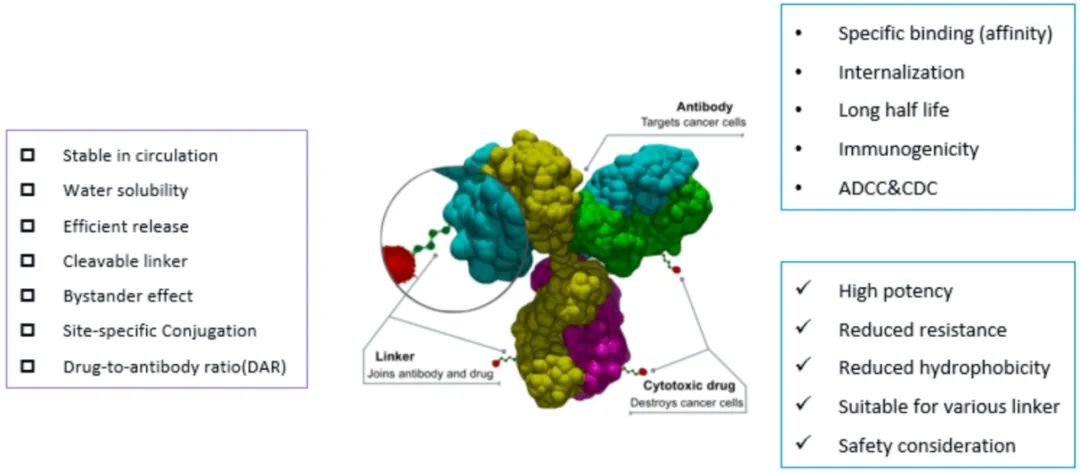 https://en.wikipedia.org/wiki/Antibody-drug_conjugateThe key to ADC drugs lies in the selection of four core elements:1) Selection of the right target: highly expressed on tumor cell surfaces, low or not expressed in normal tissues;2) Selection of the linker: stable in circulation, water-soluble, effective release, cleavable linker, bystander effect, site-specific binding, drug-to-antibody ratio (DAR);3) Selection of the antibody: specific binding to the target, targeting antigens must be cell surface antigens, efficient internalization;
4) ADC small molecule toxicity: effective pharmacological action, non-immunogenic, capable of binding with the linker through modification. Identifying antibody internalization is key to advancing ADC projects.
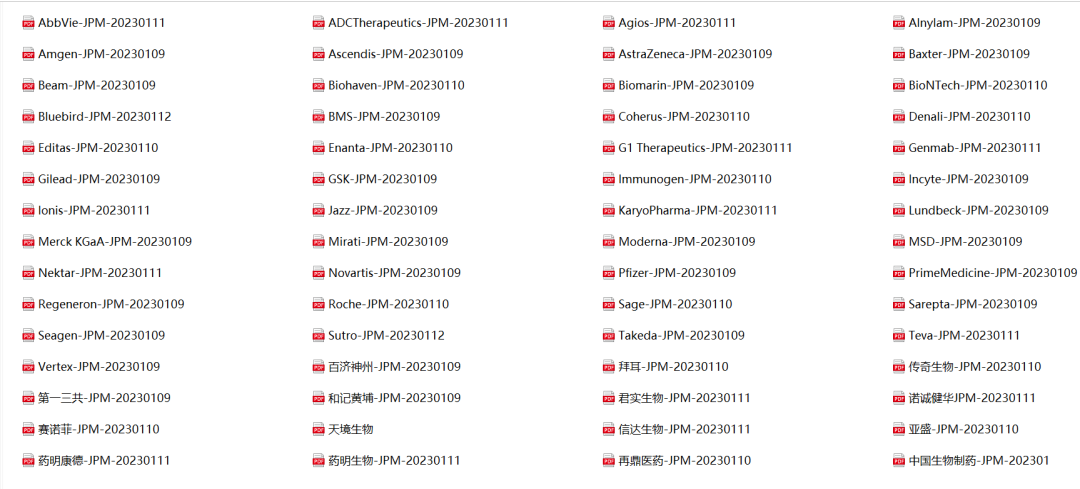
Reply “JPM23” on the Antibody Circle WeChat public account to download60 pharmaceutical company PPT collection.
Scan the QR code to add the editor of the Antibody Circle, and those who meet the conditions can join the Antibody Circle WeChat group!Please specify: Name + Research Direction!


This public account’s reprinted articles are for the purpose of conveying more information, and the sources and authors are clearly indicated. If any media or individual does not wish to be reprinted, please contact us ([email protected]), and we will immediately delete it. All articles only represent the author’s views and do not represent the position of this site.