
Bispecific antibodies are antibodies that can bind to two different antigens simultaneously, providing greater flexibility in their mechanisms of action. Bispecific antibodies have achieved success in hematologic malignancies, with two bispecific antibodies already approved for market: blinatumomab, targeting CD19/CD3, and Mosunetuzumab, targeting CD20/CD3. Additionally, numerous bispecific antibodies targeting hematologic cancers have shown impressive efficacy in clinical trials. However, in the treatment of solid tumors, only amivantamab (EGFR/cMET) developed by Johnson & Johnson has been approved, while many bispecific antibodies aimed at activating T cells have failed to meet expectations due to toxicity issues. Antibody-drug conjugates (ADCs), which target and deliver toxins, have seen significant success in treating solid tumors. Unlike bispecific antibodies that kill tumors through the immune system, ADCs primarily inhibit and kill tumor cells through their payloads. However, current ADCs also struggle to achieve optimal therapeutic windows due to toxicity problems. What would the effect be if bispecific antibodies were combined with ADCs? Could they leverage each other’s strengths? Preliminary clinical data suggest that some bispecific ADCs not only demonstrate better efficacy than naked antibodies but also possess good safety profiles, although their ultimate effectiveness needs to be validated in clinical settings. This article reviews and introduces some known bispecific antibody ADCs that are either in clinical trials or have preclinical data available.
1
ZW-49
ZW-49 is a bispecific antibody ADC developed by Zymeworks that can specifically bind to two non-overlapping epitopes of the HER2 receptor (ECD4/trastuzumab and ECD2/pertuzumab). This bispecific antibody ADC is based on ZW25, linked through proteolytic cleavage to conjugate the Auristatin toxin A. In preclinical non-human primate models, the maximum tolerated dose of this bispecific ADC reached 18 mg/kg.
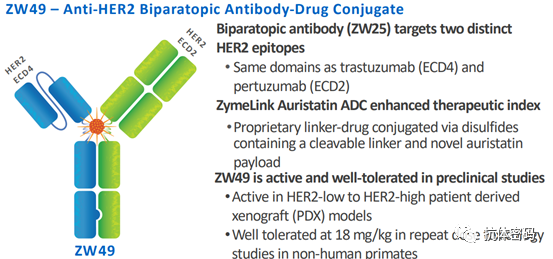
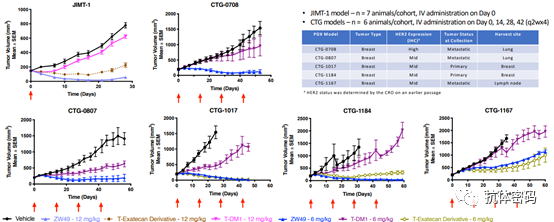
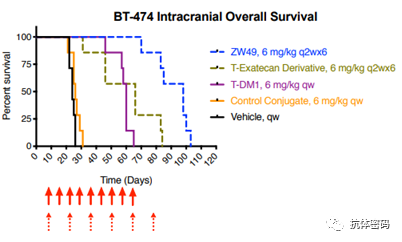
Since this drug is a modification of the bispecific antibody ZW25, it retains many advantages of ZW25, such as effectively aggregating HER2 receptors on the cell surface and enhancing HER2 internalization and downregulation. In preclinical animal models, ZW-49 effectively kills tumors expressing low and high levels of HER2, significantly prolonging animal survival compared to positive control drugs. Currently, this drug is in Phase I clinical trials, and relevant data has not yet been disclosed.
2
BL-B01D1
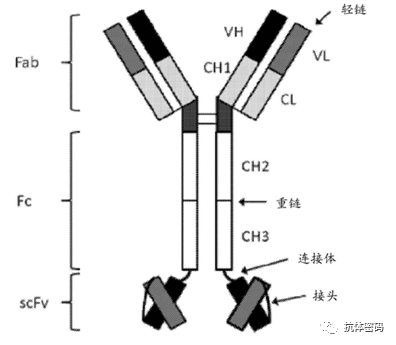
BL-B01D1 is a bispecific antibody ADC targeting EGFR/Her3 developed by BaiLi Pharmaceutical. In addition to the bispecific ADC, BaiLi Pharmaceutical has also developed a bispecific antibody targeting EGFR/Her3. According to its published patents, the structure of the EGFR/Her3 bispecific antibody may resemble the 2+2 symmetric structure of a full antibody fused with scFv (subject to company disclosure).
Mechanistically, BL-B01D1 can block the binding of ligands to EGFR and HER3 simultaneously, and upon binding to EGFR and HER3, it can enter cells through endocytosis, releasing the small molecule toxin ED04 via hydrolytic enzyme cleavage, thereby preventing DNA replication and RNA synthesis in tumor cells, and disrupting DNA structure to further kill tumor cells. This drug has already entered clinical trials in China.
3
JSKN003
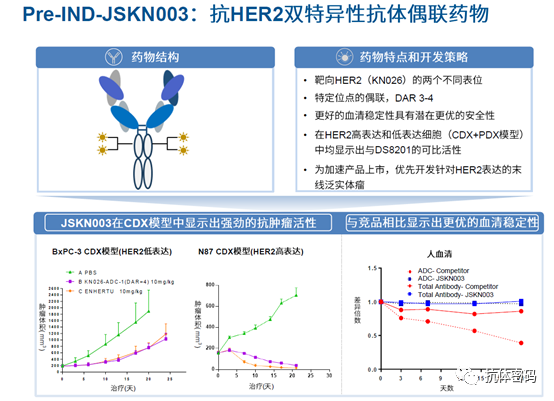
JSKN003 is a bispecific antibody ADC targeting HER2 developed by CStone Pharmaceuticals. This bispecific antibody is a modification and design based on KN026, similar to ZW-49, targeting two different epitopes of HER (ECD4/trastuzumab and ECD2/pertuzumab). JSKN003 employs specific site conjugation with a DAR value of 3-4, showing comparable efficacy to ENHERTU (DS-8201a) from Daiichi Sankyo in animal models with low HER2 expression (BxPC-3) and high HER2 expression (N87 CDX). Furthermore, JSKN003 exhibits good stability in serum, theoretically offering better safety profiles.
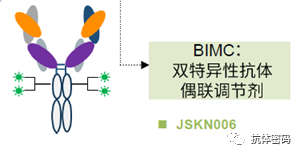
In addition to developing bispecific ADCs, CStone Pharmaceuticals is also working on bispecific antibody conjugate modulators.
4
REGN5093- M114
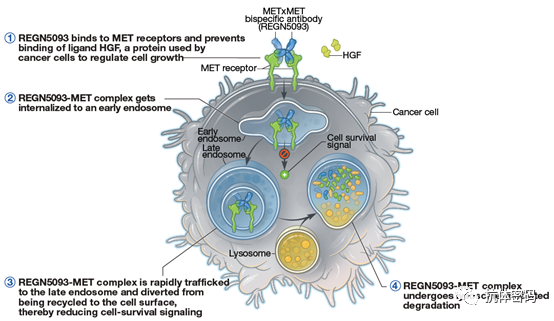
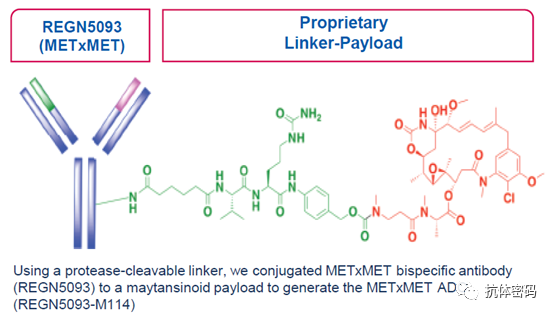
REGN5093- M114 is a bispecific ADC targeting two different epitopes of MET developed by Regeneron. This antibody is a 1+1 asymmetric bispecific antibody, linked via the M114 linker to the toxin M24 (a derivative of Meditoxin), with a DAR value of approximately 3.2. It can simultaneously bind to two different epitopes of MET and effectively block the binding of HGF to MET, preventing the activation of related pathways. Additionally, when the antibody binds to the MET on the tumor cell surface, the 2+2 complex formed by the antibody and MET can be internalized into the tumor cell and degraded in lysosomes, thereby reducing MET’s recycling expression on the cell surface. Moreover, the cleavable linker in REGN5093- M114 releases the M24 toxin upon enzymatic cleavage in lysosomes, inhibiting tumor growth by acting on microtubules.
Unlike other antibodies, the naked antibody REGN5093 also exhibits certain tumor-inhibiting effects and has shown good efficacy in various preclinical models. Regeneron has pushed both the naked antibody REGN5093 and the ADC bispecific antibody REGN5093- M114 into clinical trials.
5
M1231
M1231 is a bispecific ADC targeting MUCI/EGFR co-developed by Sutro and Merck. This bispecific ADC employs Sutro’s non-natural amino acid site-specific conjugation technology and utilizes Merck’s SEED bispecific antibody technology platform to prevent heavy chain mismatching. The antibody targeting MUCI is in the scFv format, while the antibody targeting EGFR is in the Fab format, eliminating the light chain mismatching issue found in traditional bispecific antibodies. In production, the antibody expression uses Sutro’s cell-free XpressCF system, and non-natural amino acids are site-specifically inserted during production to facilitate subsequent site-specific conjugation of the bispecific antibody. The toxin used is a microtubule inhibitor, hemiasterlin, conjugated to the antibody via a cleavable Val-Cit linker.
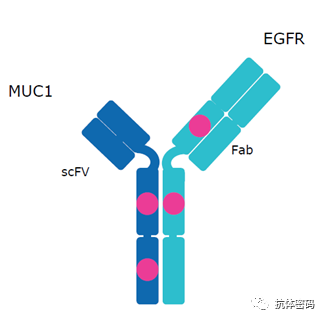
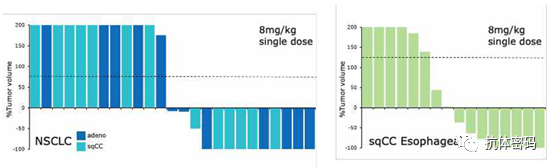
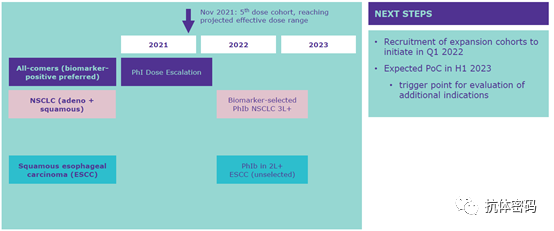
Merck chose MUCI/EGFR as targets because studies have shown that MUCI and EGFR are co-expressed in various tumor cells, such as ESCC, NSCLC, and SCCHN, while their co-expression in normal tissues is very low. This theoretically reduces on-target toxicity and increases the therapeutic window. Additionally, studies indicate that antibodies that simultaneously bind to two antigens on the tumor surface facilitate rapid internalization and release corresponding toxins to inhibit tumor cell growth.
6
BaiO Pharma Bispecific ADC YH012
BaiO Pharma’s bispecific ADC is constructed on its RenLiteTM bispecific antibody platform, which prevents light chain mismatching using common light chains and employs a Knob-In-Hole mechanism to prevent heavy chain mismatching. This platform enables high-purity bispecific antibody production. Based on this, they utilize inter-chain cysteine for conjugation, with a cleavable dipeptide VC (valine-citrulline) linker and the toxin MMAE.
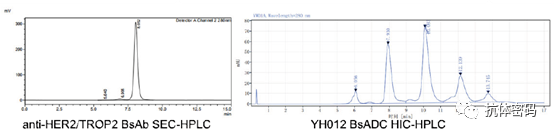
Source: BaiO Pharma official website
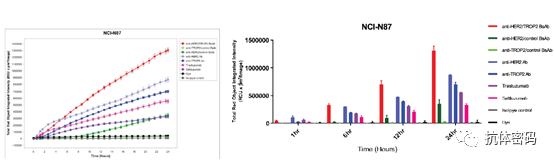
In NCI-N87 tumor cells, the bispecific ADC YH012 can be rapidly internalized by tumor cells, and its internalization efficiency is superior to that of single-target control ADC drugs.
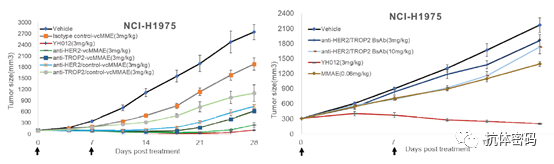
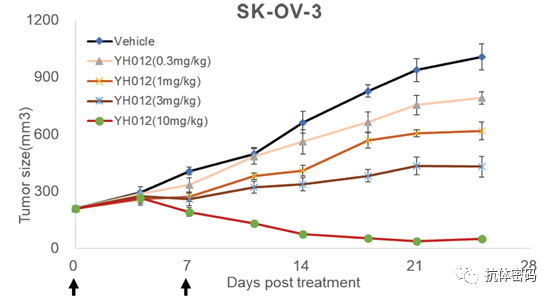
In in vivo models, the bispecific ADC YH012 effectively inhibits tumor cell growth, showing better efficacy than monoclonal antibodies conjugated with the same toxin and outperforming higher doses of naked bispecific antibodies.
7
Conclusion
Bispecific antibodies are complex, and their efficacy is related to the combination of antibody targets, antibody structure, and the affinity of the two antibodies. ADCs are also complex, with efficacy influenced by the antibody, linker, and toxin. Thus, bispecific ADCs are even more complex, requiring a deep understanding of the mechanisms of bispecific antibodies and the principles of ADCs. Currently, bispecific ADCs are just starting, with most in preclinical stages. Preliminary data suggest that bispecific ADCs may offer better efficacy than naked antibodies, but safety and effectiveness still need clinical validation.
References
1. YH012, a Novel Bispecific Anti-HER2 and TROP2 Antibody-Drug Conjugate, Exhibits Potent Antitumor Efficacy
2. CN113512122A
3. As disclosed by the company on its official website