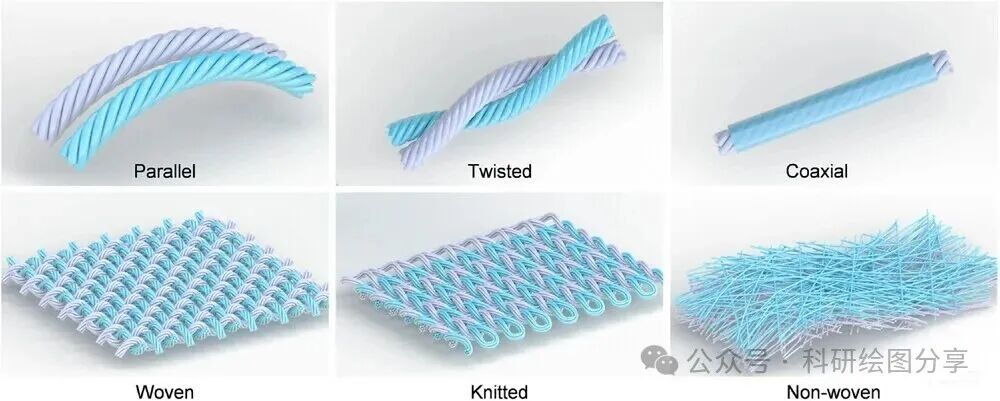
Advances in Textile‐Based Triboelectric Sensors for Physiological Signal Monitoring. Advanced Functional Materials (IF 18.5) Pub Date: 2025-04-09, DOI: 10.1002/adfm.202426081. The progress of textile-based triboelectric sensors for physiological signal monitoring integrates sensing and therapeutic capabilities into everyday textiles, making it an effective approach for developing continuous and wearable sensors. Textile-based triboelectric sensors possess remarkable features such as high sensitivity, excellent breathability, and programmable structures, making them ideal for capturing subtle physiological signals from the human body to prevent chronic diseases. This article comprehensively introduces the working mechanism, material selection, manufacturing techniques, and structural design of textile-based triboelectric nanogenerators. An in-depth analysis of physiological signal monitoring applications ranging from cardiovascular monitoring, electrocardiograms, electromyograms, respiratory monitoring, and sleep monitoring to motion tracking is provided. Furthermore, a closed-loop intelligent textile wearable system is proposed, which includes active sensing, energy supply, real-time feedback, data processing, and healthcare, addressing the major challenges and bottlenecks in wearable technology. This article is expected to provide the audience with some general strategies and novel ideas for further exploring higher-performance textile-based triboelectric sensors.
Disclaimer: This article is for research illustration purposes only!!! If there is any infringement, please contact the backend for deletion or other processing. This article may contain subjective conclusions from the authors of the literature and does not represent the views of the editors. There may inevitably be omissions and errors in the text, and criticism and correction are welcome.