1. Introduction: Temperature – The “Lifeline” of Steel Metallurgy
Steel metallurgy is a physical and chemical process that occurs at extremely high temperatures, with temperature being the most critical process parameter throughout. From iron ore to high-performance steel, the temperature at each stage directly determines the quality of the final product, the energy consumption of the production process, the safety lifespan of the equipment, as well as production efficiency and costs. It can be said that without precise temperature measurement and control, there would be no modern steel industry. Temperature sensors serve as the “eyes” and “skin” that perceive this “lifeline,” and the advancement and application level of their technology directly reflect the degree of automation and intelligence in the steel industry.
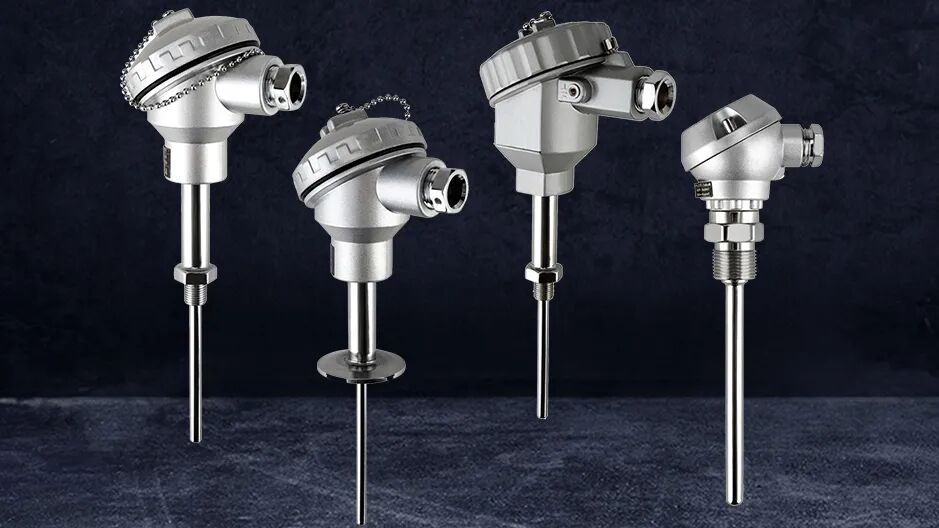
2. Core Temperature Sensing Technologies and Their Principles
In the extreme and harsh environments of the steel industry (high temperatures, dust, corrosion, and molten metal erosion), a major category of temperature sensing technologies is primarily applied:
-
Contact Temperature Measurement: Thermocouples
Working Principle: Based on the Seebeck effect, two different materials are connected to form a circuit. When there is a temperature difference at both ends, a thermoelectric potential is generated in the circuit.
-
Industry Application Characteristics:
Advantages: High measurement accuracy, can be directly inserted into the molten metal to obtain real and reliable temperature values.
Disadvantages: Consumable, especially when measuring molten steel and iron, it is used once.
-
Common Types:
Type S (Platinum-Rhodium 10-Platinum): Suitable for oxidizing atmospheres, can be used at temperatures up to 1300℃ for long-term use and 1600℃ for short-term use. It is the absolute mainstay for steelmaking and refining.
Type B (Platinum-Rhodium 30-Platinum-Rhodium 6): Suitable for oxidizing atmospheres, with a higher upper measurement limit, can be used at 1600℃ for long-term use and 1800℃ for short-term use. Commonly used for high-temperature molten steel measurement.
Type K (Nickel-Chromium-Nickel-Silicon): Cost-effective, wide range (-200~1300℃), widely used in heating furnaces, flue gas, rolling mills, and other relatively low-temperature areas.
3. Specific Applications of Temperature Sensors in the Entire Steel Production Process
-
1. Ironmaking Stage: The “Thermometer” of the Blast Furnace
Application Points: Blast furnace iron trough, iron ladle, hot blast stove.
Requirements: Monitor the temperature of molten iron to ensure stable blast furnace conditions and prevent freezing or overheating of the furnace.
Solution:
Contact Type: Use consumable Type S or B thermocouples, periodically inserted into the molten iron flow to obtain precise temperatures, serving as a key basis for process control.
-
2. Steelmaking and Refining Stage: The “Decisive Point” for Quality Control
Application Points: Converter/Electric furnace tapping, ladle, LF furnace, RH refining device.
Requirements: Controlling the “final temperature” is the soul of the steelmaking process, directly related to the quality of molten steel and alloy yield.
Solution:
Absolute Mainstay: Rapidly consumable thermocouples (paired with temperature guns and paper tube probes). Operators insert them multiple times at the end of blowing, before tapping, and at the refining station to obtain accurate and reliable core temperatures of molten steel within seconds, serving as the gold standard for production operations and quality assessment.
-
3. Continuous Casting Stage: The “Guardian” of the Solidification Process
Application Points: Ladle/Intermediate ladle, secondary cooling zone, slab exit.
Requirements: Control the overheating of molten steel to ensure stable drawing speed; monitor the surface temperature of the slab in the secondary cooling zone, optimize cooling strategies, and prevent defects such as cracks.
Solution:
Molten Steel Temperature: Use consumable thermocouples for point measurement in the ladle and intermediate ladle.
4. Selection and Maintenance: The Key to Ensuring Measurement Reliability
Correct Selection: Choose based on the measurement object (molten, solid, gas), temperature range, environmental atmosphere (oxidizing/reducing), accuracy requirements, response speed, and budget, comprehensively selecting contact or non-contact sensors.
Maintenance and Calibration: Regularly verify thermocouples and temperature measuring instruments to ensure system accuracy.
Addressing Challenges: For dust and moisture interference, choose infrared thermometers with dust removal functions; for high-temperature molten materials, select high-quality, thermal shock-resistant protective tube materials.
5. Conclusion
Although small, temperature sensors are a key technological cornerstone supporting the massive structure of modern steel industry. From thousand-degree molten iron to fiery steel slabs, precise temperature perception and control run through the entire process of steel production, ensuring safety, enhancing quality, and reducing costs while increasing efficiency. A deep understanding of their applications, along with reasonable selection and maintenance of sensors, is crucial for promoting the intelligent upgrade and high-quality development of the steel industry.
Company Introduction
Weilian Fengran Sensor Technology Co., Ltd. specializes in platinum resistance/thermocouples/thermistors/DS18B20 temperature sensors and provides integrated temperature solutions, holding several invention and utility model patents. The company has over 10 years of industry experience and knowledge, focusing on high-quality products and excellent customer service, driven by research and development, and designs and develops high-quality products and provides reasonable solutions through in-depth communication with customers, combined with actual user needs.
 Long press to scan the QR codeto view the company website for more information