
✦
3D printing technology, as an additive manufacturing technique, has made significant progress in the pharmaceutical field in recent years due to its advantages in personalization, high precision, and the ability to manufacture complex structures. This article summarizes the six commonly used types of pharmaceutical 3D printing technologies available in the market and outlines the four major advantages of pharmaceutical 3D printing technology, providing a beneficial reference for promoting the development of 3D printed pharmaceuticals.
✦
✦
3D printing technology, also known as additive manufacturing, is a process controlled by computer programs that directly manufactures three-dimensional entities from materials such as metals, polymers, and adhesives based on a three-dimensional digital model of the object. Compared to traditional manufacturing techniques, 3D printing can reduce complex process flows and produce objects with special shapes or complex internal structures with high production efficiency. In the pharmaceutical field, 3D printing technology has gradually become an important means for new drug research and production due to its advantages in personalization, high precision, and the ability to manufacture complex structures.
Part
1
Types of Pharmaceutical 3D Printing Technologies Over the past 30 years, the pharmaceutical 3D printing industry has developed various types of technologies. According to the classification standards of the Additive Manufacturing Technologies Committee of the American Society for Testing and Materials, six types of 3D printing technologies based on four principles—material extrusion, binder jetting, powder bed fusion, and photopolymerization—are applied in the pharmaceutical field. These six technologies are Melt Extrusion Deposition (MED), Fused Deposition Modeling (FDM), Semi-Solid Extrusion (SSE), Powder Binding (PB), Selective Laser Sintering (SLS), and Stereolithography (SLA). Each technology has its differences and advantages..
1.1 Melt Extrusion Deposition Technology
Melt Extrusion Deposition (MED) technology involves first mixing active pharmaceutical ingredients with excipients in a predetermined ratio in a feeding device. Under high temperature and pressure conditions, the powdered raw materials and excipients are mixed and melted to form a flowable melt. After homogenization, the mixture is transferred to a precision extrusion device, where it is extruded with high precision through a nozzle, layer by layer, according to a pre-designed three-dimensional structure on a three-dimensional motion platform, forming a pharmaceutical formulation that is then cooled and shaped into the designed three-dimensional structure.[1].
MED uses a mixing extrusion device that effectively achieves the mixing, melting, and delivery of raw materials and excipient powders, enabling continuous feeding and printing. The use of precision extrusion devices allows for high-precision printing, and through multiple printing stations and innovative engineering techniques such as print head arrays, it can construct complex and unique internal three-dimensional structures of pharmaceutical formulations with high efficiency and throughput, achieving precise control over drug release time, site, rate, and pattern. This addresses the shortcomings of other 3D printing technologies based on material extrusion principles, such as FDM and SSE, in drug preparation.[2] As of now, MED technology is the most widely applicable and clinically valuable pharmaceutical 3D printing technology in the field of solid formulations. As an emerging pharmaceutical method, MED provides a comprehensive solution for the design, development, production, and supply chain of innovative drugs, modified new drugs, and generics.
1.2 Fused Deposition Modeling Technology
Fused Deposition Modeling (FDM) technology uses rollers to feed pre-prepared drug-containing thermoplastic materials into a temperature-controlled nozzle. The material is then heated and melted in the nozzle, and under computer control, the print head moves along the cross-sectional outline and filling path, precisely extruding the semi-flowable material at designated locations and guiding the molten material to solidify and bond with surrounding materials, layer by layer, to form a three-dimensional entity.[3] The FDM 3D printing process generally includes modeling, obtaining drug-loaded filaments, and printing the target formulation. It is often combined with melt extrusion technology, producing high-quality intermediate filaments for subsequent preparation by melting and mixing the drug with excipients in the extruder.[4].
Compared to the cumbersome tablet compression process of traditional tablets, FDM 3D printing technology does not require pre-mixing, granulation, drying, or compression of drugs and excipients. It only requires the preparation of filaments suitable for the diameter of the 3D printer’s feed inlet, allowing for layer-by-layer stacking to form tablet shapes.[5] The printing equipment is compact and inexpensive, does not use organic solvents, and has simple and efficient operational procedures, significantly saving formulation preparation time.[6] The main drawbacks of FDM are the need for pre-manufactured drug-containing filaments, which are unsuitable for heat-sensitive drugs, and limitations in printing materials and drug loading.[7].
1.3 Semi-Solid Extrusion Technology
Semi-Solid Extrusion (SSE) technology involves pre-filling semi-solid materials into a syringe, which are then extruded by applying pressure through pneumatic, piston, or screw mechanisms. The extruded material hardens to support subsequent layers for continued printing. By stacking layer by layer, a printed solid structure is ultimately formed. Tablets printed using SSE technology have a smooth appearance, with reported quality deviations within 5%; the operating temperature is relatively low, and the printing process can occur at room temperature, avoiding drug degradation caused by high temperatures; the process is simple, and a wide variety of excipients can be used.[8] The printing materials are typically a mixture of pharmaceutical excipient powders with water or other organic solvents, creating a flowable semi-solid that can accommodate a wide range of drug loading.[9] The ease of changing materials in the print head allows for the use of disposable syringes, meeting GMP environment requirements.
SSE technology requires high stability of the semi-solid solution due to the need for mixing and dissolving materials, leading to a lengthy and demanding pre-treatment process. Additionally, the presence of solvents in the semi-solid materials necessitates heating post-printing to remove solvents for further processing.[10] The post-processing is complex, resulting in longer production cycles.[11] Although SSE theoretically allows for various three-dimensional dosage forms, the actual printing process can involve long curing times and high production costs.
1.4 Powder Binding Technology
Powder Binding (PB) technology is one of the earliest techniques applied in pharmaceutical 3D printing. This technology involves separately loading a powder mixture and a binder solution into hoppers and binder reservoirs, respectively. The droplets ejected from the inkjet head layer by layer bond the pre-laid solid powder. During the printing process, the powder mixture is dispensed from the hopper, and a built-in roller spreads the powder into a thin layer. The inkjet head then sprays binder droplets according to a pre-designed digital model file, depositing them on the powder bed as required. After completing one layer of printing, the platform descends, and the process is repeated for the next layer until the object is formed, which is then removed from the powder bed.[12].
PB technology can achieve a high drug loading capacity, up to 1,000 mg, making it suitable for high-dose and rapidly acting drugs. The tablets produced have high porosity, allowing for rapid wetting and disintegration, particularly suitable for the preparation of orally disintegrating tablets and other immediate-release formulations.[13] However, tablets printed using PB technology have rough surfaces, making them prone to breakage during transport, requiring careful packaging.[14] The process is relatively complex, with challenges in controlling dust during production and multiple procedures. After printing, the tablets require powder removal and recovery. The printing materials consist of liquid binder materials and powder bed materials, both of which present challenges in selection, and powder recovery is difficult. The tablets also require drying treatment during production, necessitating heating of the powder bed and removal of residual solvents. Controlled-release formulations are challenging to produce, and this technology is generally used for laboratory research, making large-scale industrial promotion difficult, especially for hollow structures.[15].
1.5 Selective Laser Sintering
Selective Laser Sintering (SLS) technology is based on the principle of powder bed fusion, where a laser source scans selectively to sinter solid powder materials to form drugs. During the printing process, a powder spreading device evenly lays a layer of powder on the forming workbench. The computer controls the two-dimensional scanning trajectory of the laser based on the sliced model of the prototype, selectively sintering solid powder materials to form one layer of the part. After completing one layer, the forming workbench descends by one layer thickness, and the powder spreading device lays down new powder, with the laser beam scanning and sintering the new layer. This process continues until the three-dimensional part is formed.[16].
SLS printing devices have lower resolution, resulting in rough tablet surfaces, and the powder bed generally requires heating. Since both the drug and polymer are subjected to heat during the preheating and sintering processes, high thermal stability is required for both materials.[17] The printing materials are thermoplastic polymers, and if they cannot effectively absorb the laser for sintering, additional laser-absorbing agents may need to be added, increasing the complexity of the process and the drug loading capacity. SLS technology is suitable for printing simple tablets for clinical research, but powder recovery is challenging. Post-processing of printed tablets is complex, making it difficult to form tablets with complex structures, and there is limited flexibility in designing internal three-dimensional structures of drug formulations. In 2020, Merck utilized SLS technology to develop drugs for orphan diseases and oncology indications, leading to commercial production.
1.6 Stereolithography Technology
Stereolithography (SLA) technology is based on the principle of photopolymerization, where liquid photosensitive resin undergoes rapid polymerization under ultraviolet light of a specific wavelength, transforming from liquid to solid for the preparation of 3D printed products. A vat filled with liquid photopolymer resin is scanned by a laser beam, which solidifies the liquid at the scanned points. As the resin solidifies layer by layer, the three-dimensional entity is printed. If the drug can be mixed in the resin, it can be easily loaded.[18].
SLA technology offers high printing precision, achieving micron-level accuracy, and fast forming speed, making it suitable for printing microneedles and applications in multifunctional biomedical devices, implants, tablets, transdermal patches, and microneedle preparations.[19] Typically, printing occurs at room temperature, making it suitable for heat-sensitive drugs, effectively avoiding degradation of drug materials. Currently, there are no large-scale production devices available, and it can only print simple structures such as multi-layer tablets or rings, but cannot print complex structures with different materials on the same plane, such as chamber models. Due to issues with the safety of photosensitive resins, limitations of printing materials, and chemical reactions between photopolymers and drugs, the commercialization of SLA 3D printed drugs still faces many challenges.
Part
2
Advantages of Pharmaceutical 3D Printing Technology
2.1 Personalized Drug Customization
Compared to traditional pharmaceutical technologies, 3D printing technology offers flexibility in adjusting drug dosages, combinations, and production methods, making it more conducive to drug personalization. 3D printed drugs can be customized based on individual patient needs, genetic characteristics, disease states, gender, and age, allowing for precise control over the geometric shape and size of drug formulations, internal spatial distribution, and drug release rates. This enables better absorption, distribution, metabolism, and elimination of drugs in the body, maximizing pharmacological effects while minimizing adverse reactions, increasing patient compliance and adherence, and meeting the diverse needs of different patients.[20].
For drugs with narrow therapeutic indices, 3D printing technology provides a method for manufacturing tablets with precise dosages, reducing the potential risks associated with dosage variations and medication errors. 3D printed orally disintegrating tablets can be personalized to allow patients to take medication even in special circumstances where sufficient drinking water is unavailable. 3D printed tablets can achieve controlled release, allowing patients to flexibly adjust their drug intake based on their physical conditions.[21].
Khaled et al.[22] developed a polypill containing five drugs using 3D printing technology: immediate-release aspirin, hydrochlorothiazide, sustained-release atenolol, pravastatin, and ramipril. This formulation features distinct and independent release behaviors for each drug component, indicating that complex drug treatment regimens can be combined into a single tablet tailored to individual needs, enhancing medication safety and adherence. 3D printing technology also has unique advantages in pediatric medication, allowing for accurate dosing designed according to different growth stages of children, improving dosing flexibility, and enabling the design of tablets with cartoon patterns and bright colors to appeal to children.[23] 3D printed drugs are expected to promote personalized medicine and precision medicine, providing patients with more treatment options.
2.2 High Drug Loading Capacity and Rapid Disintegration
In traditional drug preparation methods, tablet formulations can only load 30-40% of active ingredients, requiring multiple excipients, resulting in larger tablet sizes that complicate swallowing and reduce patient adherence. Pharmaceutical 3D printing technology can design tablets with appropriate and accurate dosages, significantly improving drug loading capacity, reducing tablet size, and alleviating swallowing difficulties, thus avoiding toxicity issues arising from excessive drug dosages.
The 3D printed levetiracetam orally disintegrating tablet (brand name: Spritam), developed by Aprecia Pharmaceuticals for the oral treatment of epilepsy, received FDA approval in 2015 and is available in four specifications: 250 mg, 500 mg, 750 mg, and 1,000 mg. The tablet can carry 50-80% of the active ingredient, significantly reducing its size and allowing it to disintegrate rapidly with only a small amount of liquid or saliva, with a disintegration time of approximately 1-15 seconds, thus reducing swallowing difficulties for patients.[24] Recently, Cui et al.[25] selected levetiracetam as a model drug and successfully prepared a high-load immediate-release formulation based on SSE technology. The results showed a maximum drug loading of 96%, significantly reducing the proportion of excipients in the tablet formulation and decreasing the size of the formulation. Due to its unique preparation principles, 3D printing technology can greatly reduce the proportion of excipients in formulations, facilitating the preparation of high-load tablets and lowering the difficulty of producing high-dose drugs.
2.3 Precise Manufacturing of Special Shapes and Complex Structures
Traditional pharmaceutical technologies lack good micro-precision control and spatial precision regulation capabilities, while pharmaceutical 3D printing technology is a digital production technology based on computer models. It constructs objects layer by layer, allowing for flexible design and control of the appearance and internal structure of drugs through material selection, model design, and process parameter adjustments. This enables better control over drug release cycles, release locations, and release rates, producing drug formulations with special shapes or complex internal structures, such as multi-partition compound formulations, irregular formulations, sustained-release formulations, and controlled-release formulations, achieving functionalities unattainable by traditional technologies and meeting various clinical medication needs.[26]. For example, the T20 product approved by the FDA by Sanofi utilizes an innovative dosage structure to deliver the drug at the correct time and dose to the appropriate gastrointestinal site, providing solutions for the development of complex formulation technologies.
2.4 Efficient and Rapid Prototype Development
Compared to traditional pharmaceutical processes that require many procedures, complex workflows, extensive equipment, and manual supervision, pharmaceutical 3D printing processes are simple and streamlined, offering advantages of “rapid prototyping” and “one-step forming.” This allows for fast and precise drug production, accelerating the new drug development process, which holds significant economic value for both drug manufacturers and patients. For instance, MED 3D printing is a straightforward, continuous, and intelligent production technology where the four steps of feeding, mixing, 3D printing, and packaging are fully automated. The entire production process is controlled by a data collection and monitoring system, combined with process analytical technology, enabling real-time monitoring and production feedback control of key process parameters, intermediates, and final products, improving product quality and reducing production costs while facilitating regulatory oversight.
Additionally, the production equipment required for 3D printed drugs is much smaller than that of traditional pharmaceutical equipment, allowing for on-demand production, which has significant advantages in both large-scale and small-scale drug production. Large-scale drug production involves fewer steps, continuous and digital processes, and flexible batch definitions based on demand, effectively improving production efficiency. Small-scale drug production, such as for clinical trial medications, can flexibly and quickly produce drugs with different components or dosages, accelerating the identification of effective candidate drugs and reducing new drug development costs.
Part
3
Current Development Status of the Pharmaceutical 3D Printing Industry
In 1996, the world’s first pharmaceutical 3D printing company, Therics, was established in the United States, marking the beginning of the pharmaceutical 3D printing industry. In 2015, the world’s first 3D printed drug, Aprecia’s Spritam, received FDA approval, signifying the official entry of 3D printing technology into drug development and production, gaining recognition from regulatory authorities and sparking a wave of research in 3D printed drugs. After nearly 30 years of development, pharmaceutical 3D printing has transitioned from scientific hypothesis to reality, with policy encouragement and support driving the industry’s growth. The FDA has defined 3D printed drugs as an emerging technology in pharmaceuticals and maintains an open and welcoming attitude towards the review of 3D printed drugs. The Center for Drug Evaluation of the National Medical Products Administration (NMPA) has expressed recognition and interest in the application of 3D printing in the pharmaceutical industry and is willing to actively promote modern continuous manufacturing.
In recent years, as an emerging technology, pharmaceutical 3D printing has seen some companies take the lead in this field. Data shows that there are currently over fifty companies and institutions globally that have entered the 3D printing sector. Pharmaceutical 3D printing, with its digital and personalized manufacturing approach, injects new momentum and models into drug development. Companies in the pharmaceutical 3D printing sector have different technical preferences and are developing along their respective commercial development paths, with the two main directions being personalized medicine and large-scale production.
3.1 Personalized Medicine
Due to the advantages of 3D printing technology in facilitating personalized drug production, some specialized pharmaceutical 3D printing companies are focusing on personalized medicine, such as FabRx, MultiplyLabs, CraftHealth, and DiHeSys. FabRx is at the forefront of personalized medicine, researching various technologies suitable for pharmaceutical 3D printing, including FDM, SLS, SLA, SSE, and Direct Powder Extrusion (DPE). They have previously prepared personalized medications for children with maple syrup urine disease. Clinical trial results indicate that they can better control blood levels of leucine, isoleucine, and valine in patients, and the taste and color are well accepted by patients. FabRx has now partnered with the Gustave Roussy Cancer Center in France to develop personalized medications for early breast cancer treatment. Personalized medicine requires knowledge accumulation in related disciplines such as disease mechanisms and drug action mechanisms, as well as a large amount of data from digital medicine reserves, and special review policies from regulatory authorities to provide customized drugs for individuals. Currently, regulatory authorities in the United States and Europe are actively exploring guidelines for personalized medicine in collaboration with pharmaceutical companies, helping new technologies address the different clinical needs arising from individual differences. It is expected that the era of personalized medicine will arrive in the next 10 to 20 years.
3.2 Large-Scale Production
Pharmaceutical 3D printing for large-scale production follows the current drug production model, aligning with the regulations of drug development, registration, and commercial circulation. It involves developing fixed-dose drug products, conducting drug registration, and large-scale production for supply to various national markets. Pharmaceutical 3D printing companies such as Aprecia in the United States and Sanofi in China are developing along the path of large-scale drug production, successfully applying 3D printing technology to drug product development and commercialization. Aprecia has developed a large-scale production system that meets GMP requirements, capable of producing 100,000 tablets per day, and has already launched a 3D printed drug. Sanofi’s pharmaceutical 3D printing company has an automated, continuous GMP 3D printing production line, with an annual production capacity of 50 million tablets, and two drugs, T19 and T20, have received FDA approval for clinical trials. T19 is the second 3D printed drug product to enter the registration phase globally. Additionally, large multinational pharmaceutical companies like Merck are also exploring large-scale production, initiating an innovative project for pharmaceutical 3D printing, developing commercially viable drugs through selective laser sintering technology. Currently, they are producing clinical trial medications using pharmaceutical 3D printing technology, with plans for large-scale production in the future, predicting a 60% reduction in formulation development time and a 50% reduction in the raw materials needed for drug preparation during clinical phases I-III.
Part
4
ConclusionPharmaceutical 3D printing technology, as an emerging intelligent pharmaceutical technology, shows broad application prospects in the pharmaceutical field, presenting both opportunities and challenges. In the future, through continuous optimization of production processes, materials, and cost control, along with improved regulatory policies, 3D printing technology is expected to bring more innovations and breakthroughs to the pharmaceutical industry, ushering in a new era of intelligent pharmaceuticals.
References
[1] Peng Tao, Sun Minjie, ANWAR-FADZI Ahmad Fahmi, et al. Research Progress of 3D Printing Technology in Pharmaceutical Formulations [J]. Progress in Pharmacy, 2024, 48(7): 484-495.
[2] Shu Ju. Sullivan: Pharmaceutical 3D Printing Industry Report [EB/OL]. 2022-5-17 [2025-1-20]. https://mp.weixin.qq.com/s/4rCZGpAYLZ6aGhJ7Nq_KkA.
[3] Wasti S, Adhikari S. Use of biomaterials for 3D printing by fused deposition modeling technique: a review [J]. Front Chem, 2020, 8(1):315-328.
[4] Kafle A, Luis E, Silwal R, et al. 3D/4D printing of polymers: fused deposition modeling (FDM), selective laser sintering (SLS), and stereolithography (SLA) [J]. Polymers (Basel), 2021, 13(18):3101.
[5] Deshkar S, Rathi M, Zambad S, et al. Hot melt extrusion and its application in 3D printing of pharmaceuticals [J]. Curr Drug Deliv, 2021, 18(4):387-407.
[6] Vaz V M, Kumar L. 3D printing as a promising tool in personalized medicine [J]. AAPS PharmSciTech, 2021, 22(1): 49.
[7] Cailleaux S, Sanchez-Ballester N M, Gueche Y A, et al. Fused deposition modeling (FDM), the new asset for the production of tailored medicines [J]. J Control Release, 2021, 330: 821-841.
[8] Seoane-Viaño I, Januskaite P, Alvarez-Lorenzo C, et al. Semi-solid extrusion 3D printing in drug delivery and biomedicine: personalized solutions for healthcare challenges [J]. J Control Release, 2021, 332(12): 367-389.
[9] Goyanes A, Allahham N, Trenfield S, et al. Direct powder extrusion 3D printing: Fabrication of drug products using a novel single-step process [J]. Int J Pharm, 2019, 567:1.
[10] Roulon S, Soulairol I, Lavastre V, et al. Production of reproducible filament batches for the fabrication of 3D printed oral forms [J]. Pharmaceutics, 2021, 13(4):472.
[11] Auriemma G, Tommasino C, Falcone G, et al. Additive manufacturing strategies for personalized drug delivery systems and medical devices: fused filament fabrication and semi-solid extrusion [J]. Molecules, 2022, 27(9):2784.
[12] Tian P, Huang S Y, Yang F, et al. Formulation optimization of 3D printed tablets by central composite design and response surface method [J]. Chin J New Drugs, 2018, 27(10): 1188-1193.
[13] Lin Qifeng, Chen Yanzhong, Ye Xingchen, et al. Design of star points – effect surface method optimization of 3D printed fast-acting rescue heart disintegrating tablets and their quality evaluation [J]. Chinese Medicinal Materials, 2020, 43(2):415-418.
[14] Fina F, Goyanes A, Gaisford S, et al. Selective laser sintering (SLS) 3D printing of medicines [J]. International Journal of Pharmaceutics, 2017, 529(1-2):285-293.
[15] Sen K, Mehta T, Sansare S, et al. Pharmaceutical applications of powder-based binder jet 3D printing process-A review [J]. Advanced Drug Delivery Reviews, 2021, 177:113943.
[16] Han Xiaolu, Wang Shanshan, Peng Jing, et al. Research progress of artificial intelligence in 3D printed drugs [J]. Acta Pharmaceutica Sinica, 2023, 58(6):1577-1585.
[17] Charoo N A, Ali S F B, Mohamed E M, et al. Selective laser sintering 3D printing-an overview of the technology and pharmaceutical applications [J]. Drug Development and Industrial Pharmacy, 2020, 46(6):869-877.
[18] Martinez P R, Goyanes A, Basit A W, et al. Fabrication of drug-loaded hydrogels with stereolithographic 3D printing [J]. International Journal of Pharmaceutics, 2017, 532(1): 313-317.
[19] Li H, Xu L, Zhong W, et al. Recent advances of photocurable 3D printed pharmaceutical preparations [J]. Chin Pharm J, 2021, 56(15): 1189-1195.
[20] Prasad L K, Smyth H. 3D Printing technologies for drug delivery: A review [J]. Drug Dev Ind Pharm, 2016, 42(7):1019-1031.
[21] Liu Chenxi, Kang Hongjun, Wu Jinzhuz, et al. 3D printing technology and its application in the medical field [J]. Materials Engineering, 2021, 49(6):66-76.
[22] Khaled SA, Burley JC, Alexander MR, et al. 3D printing of five-in-one dose combination polypill with defined immediate and sustained release profiles [J]. J Control Release, 2015, 217:308-314.
[23] Wang Senyi, Li Sijia, Tu Yingying, et al. Application and challenges of 3D printing technology in oral solid formulations [J]. Chinese New Drug Journal, 2020, 29(8):881-889.
[24] Wang Xue, Zhang Can, Ping Qinen. Research progress of 3D printing technology in high-end pharmaceutical formulations [J]. Journal of China Pharmaceutical University, 2016, 47(2):140-147.
[25] Cui M S, Pan H, Fang D Y, et al. Fabrication of high drug loading levetiracetam tablets using semi-solid extrusion 3D printing [J]. J Drug Deliv Sci Technol, 2020, 57:101683.
[26] Yu Hongyan, Xu Guanghui, Jia Nuan. Research progress of 3D printing technology in oral solid formulations [J]. Chinese Modern Applied Pharmacy, 2021, 38(16): 2033-2038.
Authors | Tan Xiaoli, Chen Qian, Wu Xingao, Liu Xingyu, Zeng Shuiyan
Editor | Shao Lizhu
Reviewer | He Fa

Must-Watch Video
Recommended Reading
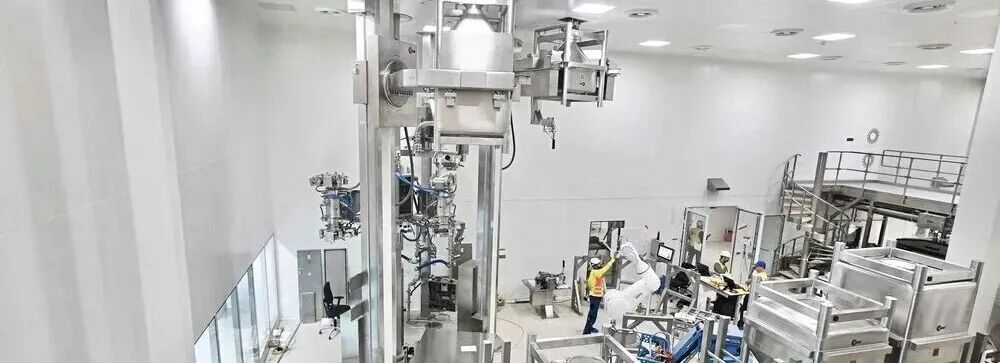
Bayer’s digital operations directly liberate labor in fully automated tablet production workshops!

Research on strategies for screening and improving microbial strains in biopharmaceutical fermentation

Analysis of the application prospects and countermeasures of artificial intelligence in the biopharmaceutical field
This article is authored by Tan Xiaoli, Chen Qian, Wu Xingao, Liu Xingyu, Zeng Shuiyan, affiliated with Chongqing Chemical Vocational College. The article is sourced from Anhui Chemical. It is for educational exchange only. Reprinted by the “Pharmaceutical Process and Equipment” public account. Follow the “Pharmaceutical Process and Equipment” public account for the latest innovations, news, and hot topics in the pharmaceutical industry.