While reporting on news in the additive manufacturing industry, I noticed a peculiar phenomenon: industry insiders generally believe that it is standard practice for manufacturers to publicly disclose the equipment used in their production. However, this behavior is actually quite unusual—throughout history, manufacturers have rarely had the incentive to publicly share their production processes, just as all industries instinctively protect their trade secrets.
This practice of publicly disclosing production details is gradually becoming more common, likely stemming from the commercialization of machine tools combined with the contemporary public relations-oriented society. In other words, the sale of machine tools for mass production has become a core aspect of manufacturing operations. To promote their equipment, manufacturers occasionally need to carefully select certain user cases for publicity.
For those who have long followed news in the machine tool industry (including the additive manufacturing sector), the continuous flow of information creates an illusion of “we know how products are made,” which is not the case. Ultimately, it remains extremely rare for companies to publicly disclose details about their product manufacturing.
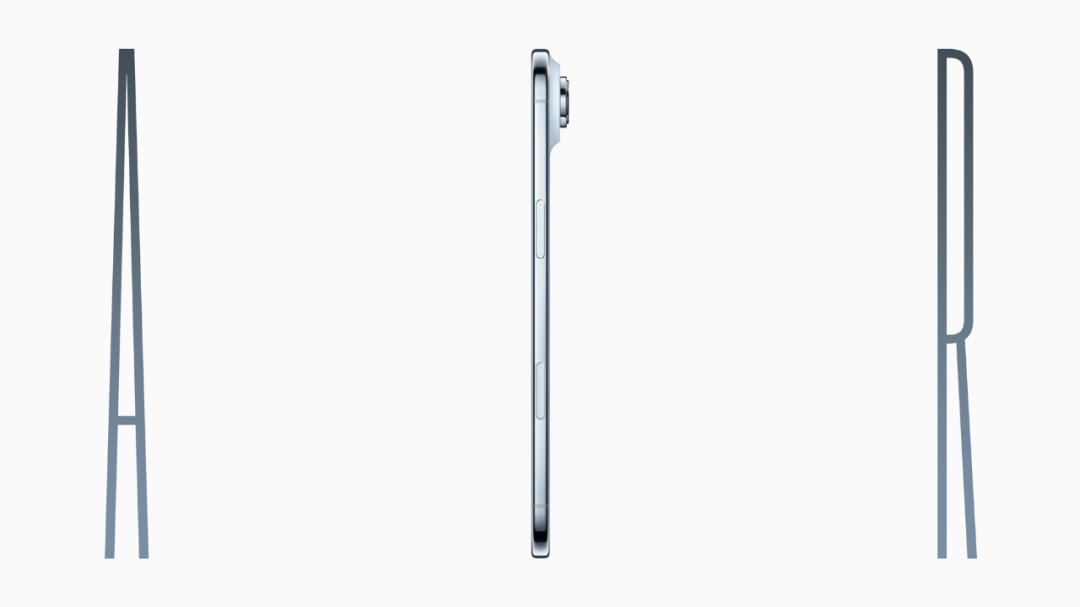
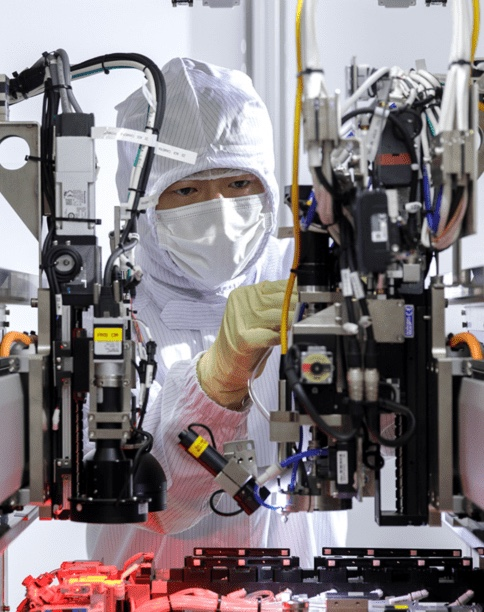
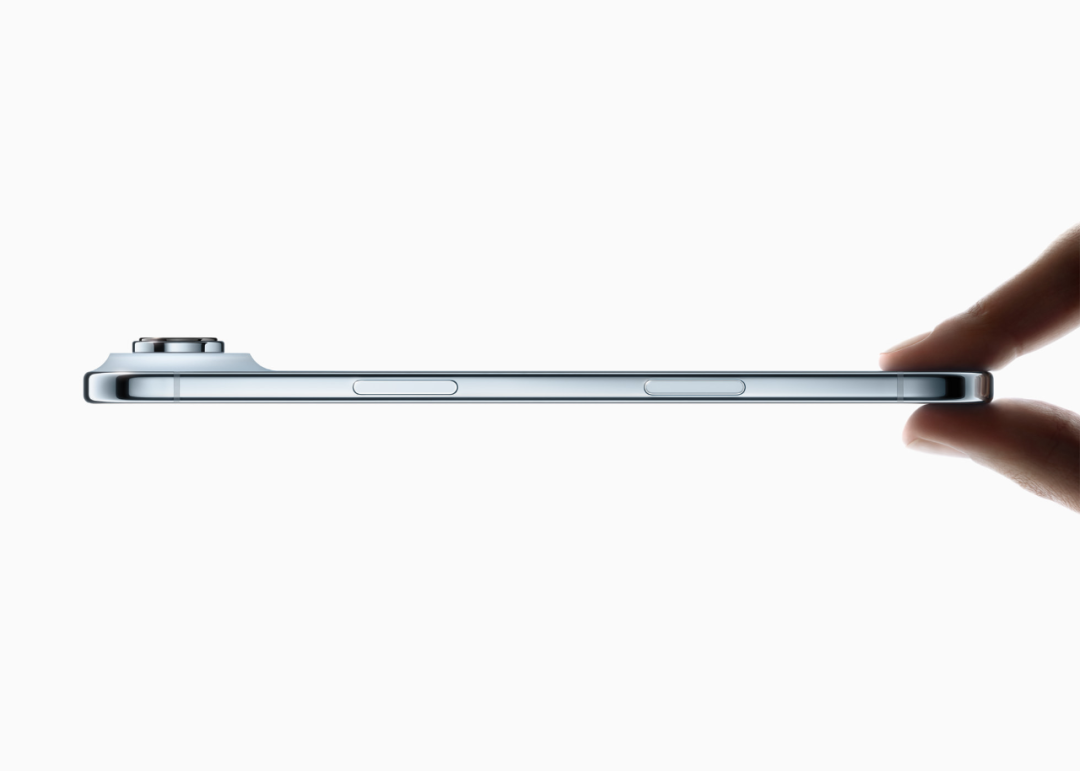
This reflection resurfaced recently due to Apple’s announcement: the company has begun using 3D printed titanium components in the new iPhone Air and the long-rumored Apple Watch. This brings to mind a point often mentioned in the AM industry: “Consumers do not care whether a product is made using 3D printing.”
So, if Apple believes consumers care (and they clearly do), are we underestimating consumer interest, or has Apple lost its marketing insight? I believe it is neither, as Apple’s large-scale promotion of AM technology is primarily aimed not at consumers.
It is essential to recognize Apple’s influence on the U.S. and global economy, as well as the transformations facing the manufacturing supply chain. In early August, during a visit to the White House, Apple CEO Tim Cook announced a $600 billion investment in U.S. manufacturing over the next four years.
In this context, the “Apple Manufacturing Academy,” a collaboration between Apple and Michigan State University, officially opened in Detroit a month before the announcement, aiming to “help U.S. companies transition to advanced manufacturing through the implementation of artificial intelligence and smart manufacturing technologies.”
This is not Apple’s first establishment of such facilities: two years ago, I reported on the first Smart Manufacturing Forum held at the R&D accelerator set up by the company at Pohang University of Science and Technology in South Korea. Notably, this $55 million facility was established by Apple in response to fines from the Korean Fair Trade Commission.
An interesting correlation is that less than three weeks after the Smart Manufacturing Forum, news emerged about Apple using 3D printed titanium components in the Apple Watch. This pattern of “holding small and medium-sized enterprise manufacturing integration events → releasing news about metal AM applications weeks later” may not be a coincidence. As the industry consensus states: “Every move by Apple is meticulously planned.”
I believe Apple’s disclosure of metal AM applications is not aimed at consumers but is intended to convey a message to stakeholders in the manufacturing industry. Especially in the context of the Trump trade war and the reshoring of manufacturing, although previous reports indicated that the Chinese brand Xi’an Puli Tech is deeply involved in Apple’s AM ecosystem, the public mention of 3D printing technology itself suggests the capability to shift supply chain components to other regions.
This shift is already in progress: Apple has announced the transfer of most of its iPhone assembly business destined for the U.S. to India—despite the fact that most components are still produced in China, this is still a significant move. As many observers have pointed out, Apple will need years to complete a major transformation of its supply chain. However, at this stage, Apple is clearly sending a strong signal of reform, and more astonishing changes are happening every day.
Meanwhile, reports from two years ago about the Chinese government banning civil servants from using iPhones still remain shrouded in mystery. Google searches can only find contradictory information with no updates since 2023.
This does not indicate that Apple will withdraw from China—an article in the New York Times in May pointed out that it may be difficult for Apple to survive if it leaves China. However, the mere fact that this question can be raised indicates that a dramatic change in the global supply chain is imminent. It is crucial for Apple and the global economy to formulate viable contingency plans. Given Apple’s immense influence, even the implementation of a backup plan could be enough to reshape the global manufacturing landscape.


 @ 3D Printing Insights
I am Xu Fanglei, a design professional, PhD, Fellow of the Royal Society of Arts, focusing on industrial design, additive manufacturing, and business models. Here, I will use my expertise and experience to take you deep into the world of 3D printing, sharing the latest industry dynamics, interpreting cutting-edge technologies, and discussing business applications.
 END
END







 Welcome to add the editor’s WeChatto learn about the latest developments in the 3D printing industry
 About 3D Printing Technology
To provide timely integration of industry insights, technology trends, application scenarios, competitive strategies, and in-depth dynamics for practitioners in 3D printing and artificial intelligence in China, the U.S., and globally, offering high-value information. We are passionate about 3D printing and welcome contributors from around the world.
Disclaimer:3D Printing Technology has no commercial cooperation, sponsorship, employment, or other interests with the companies mentioned in this article.3D Printing TechnologyImages and videos are sourced from the internet and are for auxiliary reading purposes only, with no commercial intent.All rights belong to the original authors. If there are any infringement issues, please contact the rights holders promptly, and we will delete them immediately. The copyright of the images in this article belongs to the copyright holders,3D Printing Technologywatermarks are automatically added for auxiliary reading and do not represent ownership of the images. For image usage, please consult the relevant copyright holders.3D Printing TechnologyThe article does not constitute any investment advice,3D Printing Technologyis not responsible for any direct or indirect losses caused by the use of the information in this article.For more exciting content, please follow us