Background
This article is the fifth in the series on telecom AIOps intelligent agents. Building on the previous articles focusing on monitoring, diagnosis, and optimization, it centers on the closed-loop management of operational events and knowledge accumulation—automated post-incident review reports. We have constructed an AI reporting agent based on Dify’s workflow orchestration capabilities and the RAGFlow knowledge base. Its core task is to automatically capture and integrate data from the entire fault lifecycle, generating professional and in-depth post-incident review (PIR) reports tailored for different audiences (technical experts, management).
The scenarios in this series of articles stem from the TMF Catalyst project initiated by major telecom companies such as Verizon (USA), BT Group (UK), and Etisalat (UAE): Unleash the potential of GenAI-powered 5G network slicing.
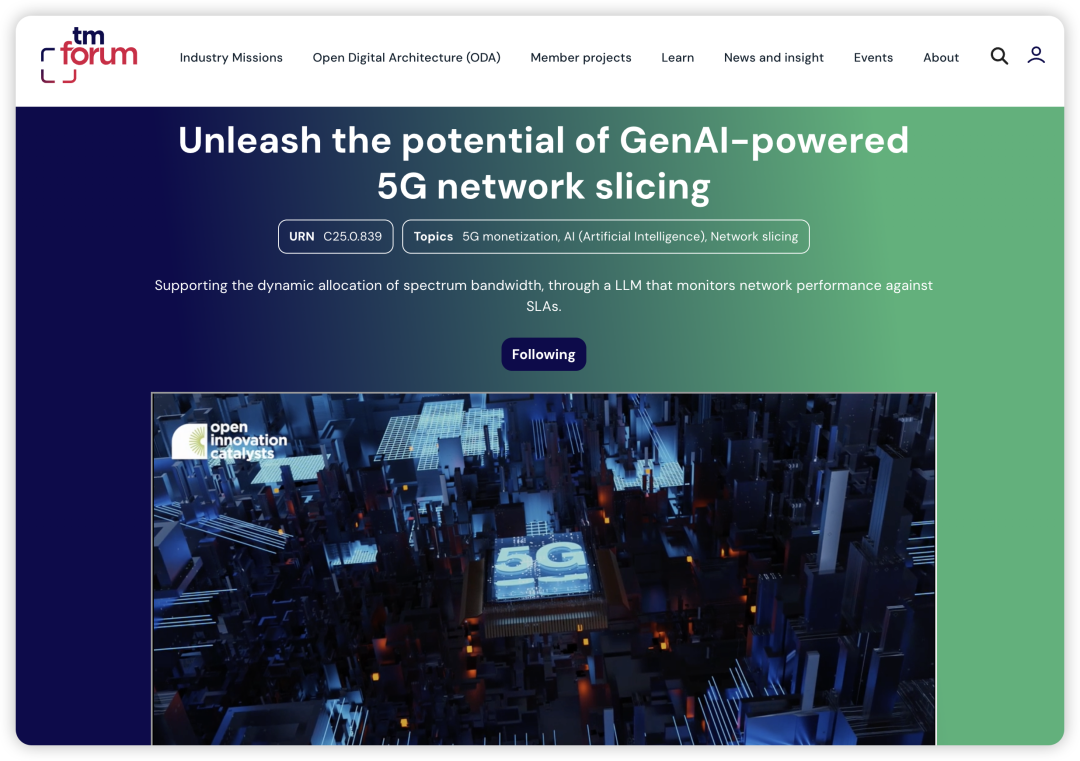
As the commercial deployment of 5G deepens, network slicing, as a core technology, provides customized network services for vertical industries (such as smart ports, ultra-high-definition live streaming, and autonomous driving). However, ensuring end-to-end SLA for these slices is a significant challenge. Traditional NOCs (Network Operation Centers) rely on domain-specific, static threshold-based monitoring systems, leading to alarm storms, slow fault localization, and inefficient cross-team communication, making it difficult to meet dynamic and stringent SLA requirements.
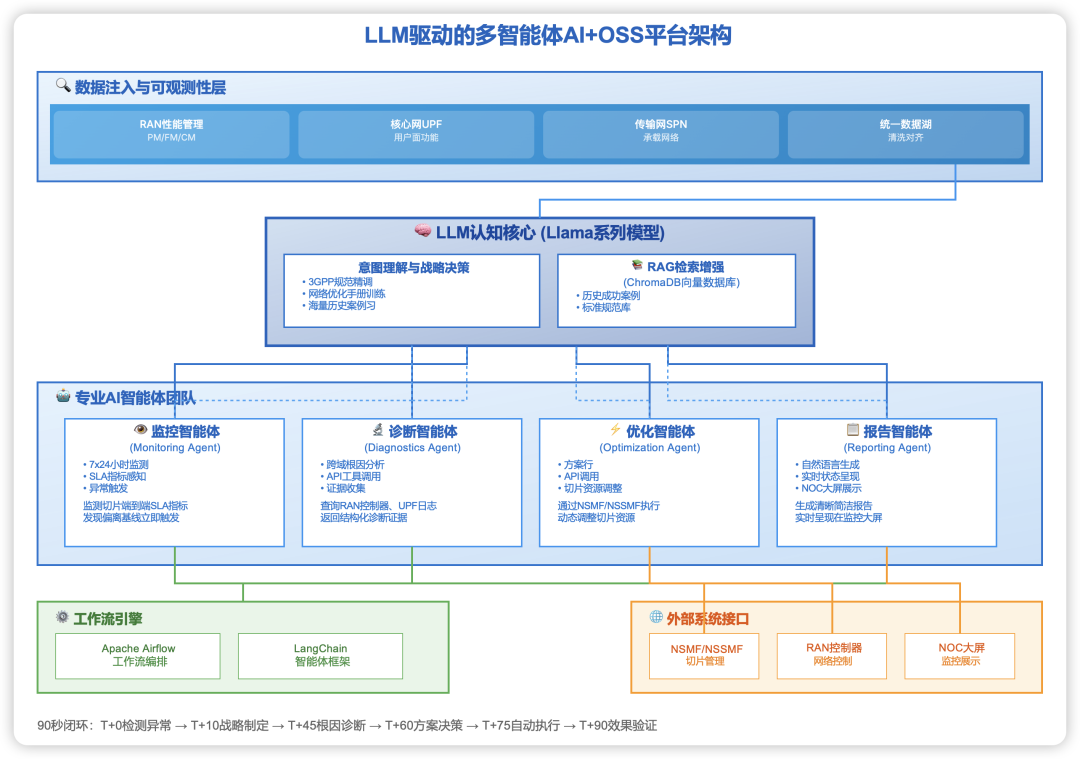
A previous article by the author delved into a highly challenging scenario—ensuring dynamic service quality (QoS) for eMBB slices during large sporting events—and proposed a solution deeply aligned with the concept of “self-intelligent networks” (1) Top-Level Design: Practical Application of AI Multi-Agent Collaborative Architecture in 5G Slicing Optimization. It elaborated on how to adopt a new AI+OSS paradigm, with a large language model (LLM) as the “cognitive core” and four specialized AI agents working collaboratively, achieving a revolutionary transformation from passive “fault repair” to proactive, autonomous “experience assurance,” ultimately paving the way for the large-scale commercial implementation of 5G slicing.
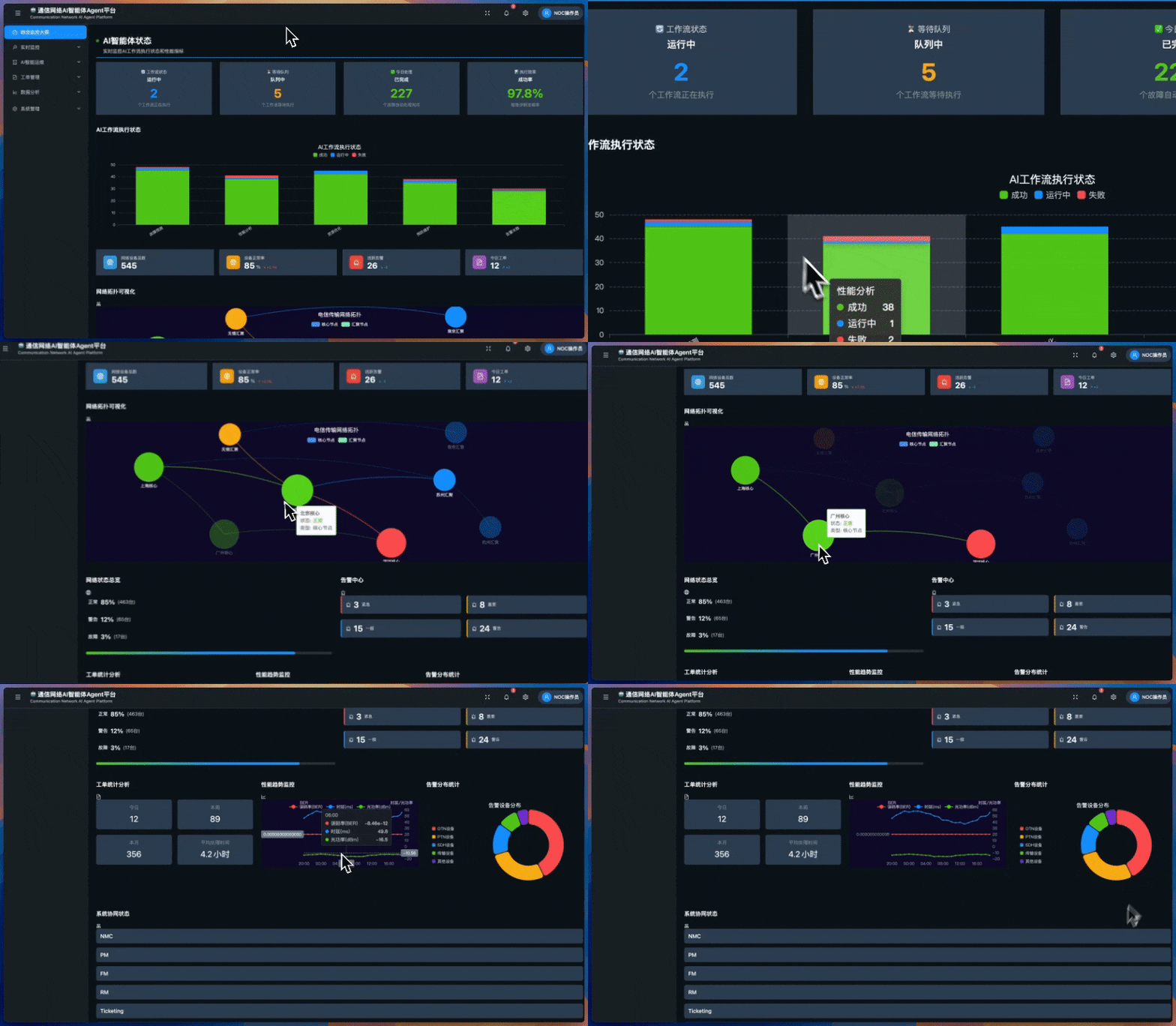
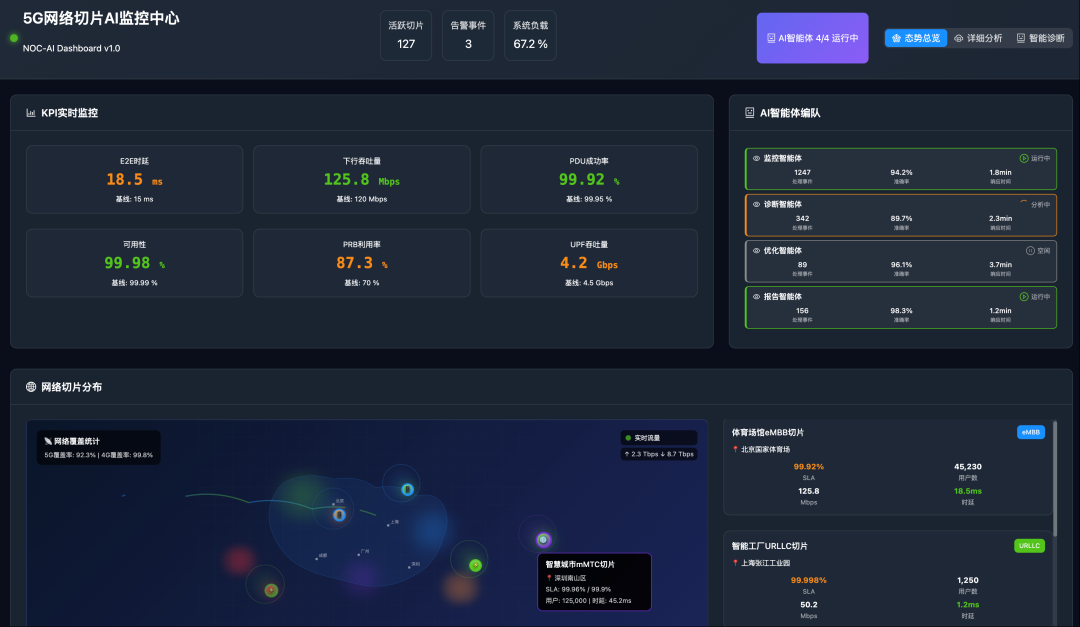
- 1. Monitoring Agent: Responsible for 24/7 uninterrupted monitoring of network slice performance and SLA metrics, serving as the team’s “sentinel.” (2) Monitoring Agent: Practical Application of AI Multi-Agent Collaborative Architecture in 5G Slicing Optimization
- 2. Diagnostics Agent: Responsible for querying and correlating data across systems and domains upon receiving alerts to identify the root cause of issues, acting as the team’s “detective.” (3) Diagnostics Agent: Practical Application of AI Multi-Agent Collaborative Architecture in 5G Slicing Optimization
- 3. Optimization Agent: Responsible for executing specific network adjustment operations (such as resource scheduling and configuration changes) based on diagnostic conclusions and LLM-approved plans, serving as the team’s “engineer.” (4) Optimization Agent: Practical Application of AI Multi-Agent Collaborative Architecture in 5G Slicing Optimization
- 4. Reporting Agent: Responsible for reporting the entire event handling process and results to human experts in natural language, acting as the team’s “communicator.” 【Intelligent Agent to be realized in this article】
In the construction of highly autonomous networks, merely achieving automatic fault repair is insufficient. Knowledge accumulation and experience inheritance are key to achieving continuous system evolution. The value of AI large models in this process lies in their information aggregation, deep summarization, and natural language generation capabilities. They can automatically weave together diverse data scattered across various operational systems—from alarm timestamps to KPI curves, from diagnostic logs to optimization scripts—into a logically coherent, detailed, and insightful review report.
Traditional post-incident review meetings and report writing are extremely time-consuming tasks for NOCs, often requiring multiple departmental experts to spend days organizing materials and aligning statements. The AI reporting agent compresses this process from “days” to “minutes,” not only freeing up valuable expert resources but also ensuring that every network event is standardized and comprehensively recorded and analyzed, providing high-quality data for the continuous enrichment of the knowledge base and the iterative optimization of AI models.
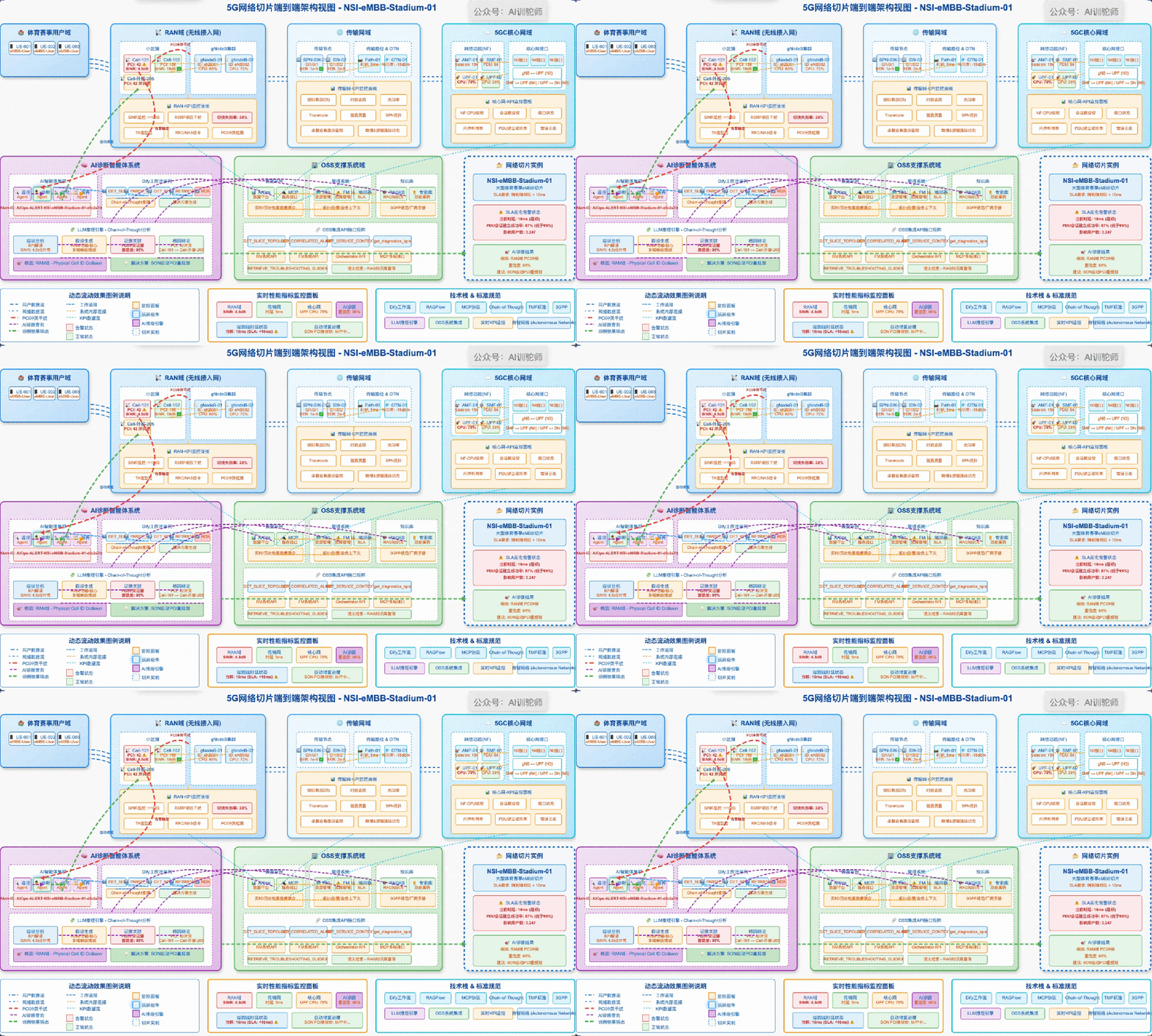
The core systems involved in this case include: AIOps Data Platform, Business Process Orchestrator, Fault Management System (FM), Resource Management System (RM), and RAG Knowledge Base (RAGKB).
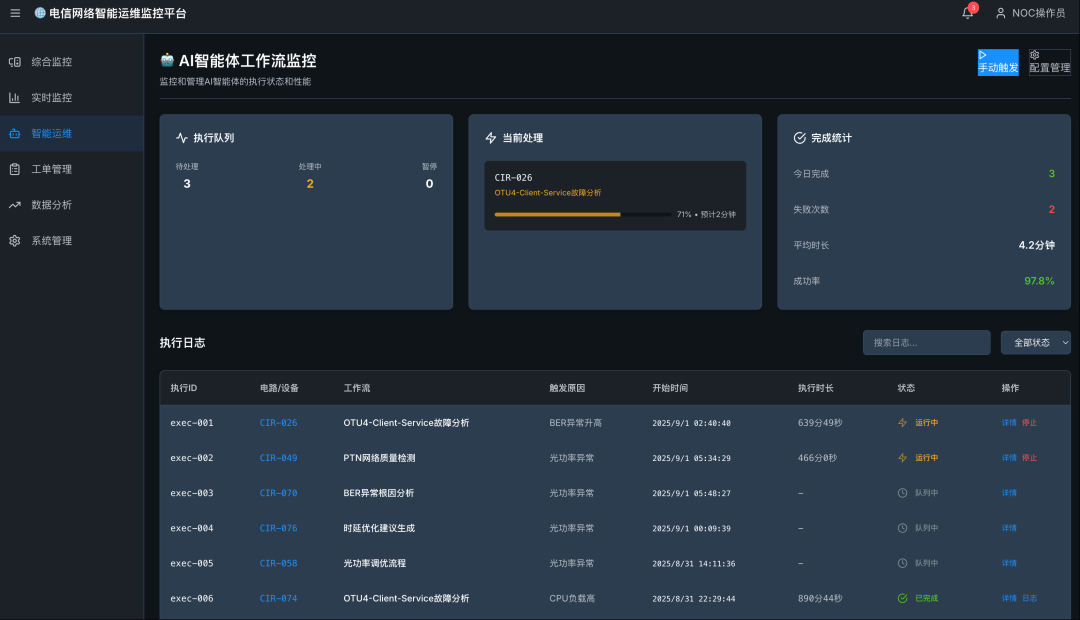
1. Scenario Description
The starting point of this case is that the AI Optimization Agent successfully executed a network optimization action plan (MOP), resolving the PCI conflict issue of the eMBB network slice for a large sporting event. The incident ticket <span>MOP-PCI-OPT-Cell-External-205-0f3b4c1a</span> has been closed, and the network has returned to normal.
However, the closed-loop of operations has not yet been completed. Management needs to understand: What was the root cause of this incident? What impact did it have on the business? How was our response speed? How can we avoid similar issues in the future? Frontline engineers need a detailed technical summary for archiving and learning. The task of the AI Reporting Agent is to automatically answer all these questions.
Report Subject: Full Review of PCI Conflict Incident
1. Report Trigger
- • Input: Closed MOP ID pushed from the
<span>AI Optimization Agent</span>or ticketing system, such as<span>MOP-PCI-OPT-Cell-External-205-0f3b4c1a</span>.
2. Report Objectives
- • Comprehensive Review: Automatically aggregate all relevant data from the entire chain from the occurrence of the event to its resolution.
- • Multi-Dimensional Perspective: Generate two core reports: one detailed technical review report for the technical team, and one business impact and performance summary report for the management.
- • Knowledge Accumulation: Structurally update the key findings and solutions from this incident into the RAG knowledge base for future AI agents to learn.
3. Key Reporting Elements
When generating the report, the AI Reporting Agent will collect and integrate the following information:
| Information Category | Key Data Items | Query System | Report Value |
|---|---|---|---|
| Event Timeline | Alarm time, diagnosis completion time, repair start/end time | FM/AIOps Platform | Construct a precise event evolution process down to the second. |
| Diagnostic Conclusion | Root cause, evidence chain | AIOps Platform (RCA Report) | Clearly explain “why it happened”. |
| Optimization Actions | Executed MOP, specific operational steps, execution results | AIOps Platform (MOP Records) | Detail “what we did” and “how well we did it”. |
| Performance Impact | KPI comparison chart before and after SLA degradation (latency, success rate, etc.) | AIOps Data Platform | Quantitatively display the scope of the problem’s impact and the effectiveness of the repair. |
| Business Impact | Number of affected customers, SLA breach duration, estimated economic loss | Orchestrator | Assess the severity of the incident from a business perspective. |
| Performance Metrics | MTTD, MTTK, MTTR (Mean Time to Detect, Mean Time to Know, Mean Time to Repair) | AIOps Platform (calculated) | Measure the overall efficiency of this AIOps process. |
2. On-Site Situation
In a traditional NOC, the post-incident review workflow after closing an incident is as follows:
- 1. The project manager or frontline supervisor manually creates a review task and assigns domain experts (wireless, core, transport) to participate.
- 2. Each expert logs into their respective OSS systems, manually exports relevant alarms, performance data, and logs for the specified time period.
- 3. Team members spend half a day or even a full day holding a review meeting, aligning information and standardizing statements.
- 4. A designated engineer spends several hours or even days compiling all materials into a lengthy Word or PPT report.
- 5. The report undergoes multiple rounds of email revisions and approvals, ultimately being archived.
This process is not only inefficient but also results in varying report quality, with key information easily overlooked, making it difficult to form standardized knowledge assets. The AI Reporting Agent aims to completely automate this process.
3. System Architecture
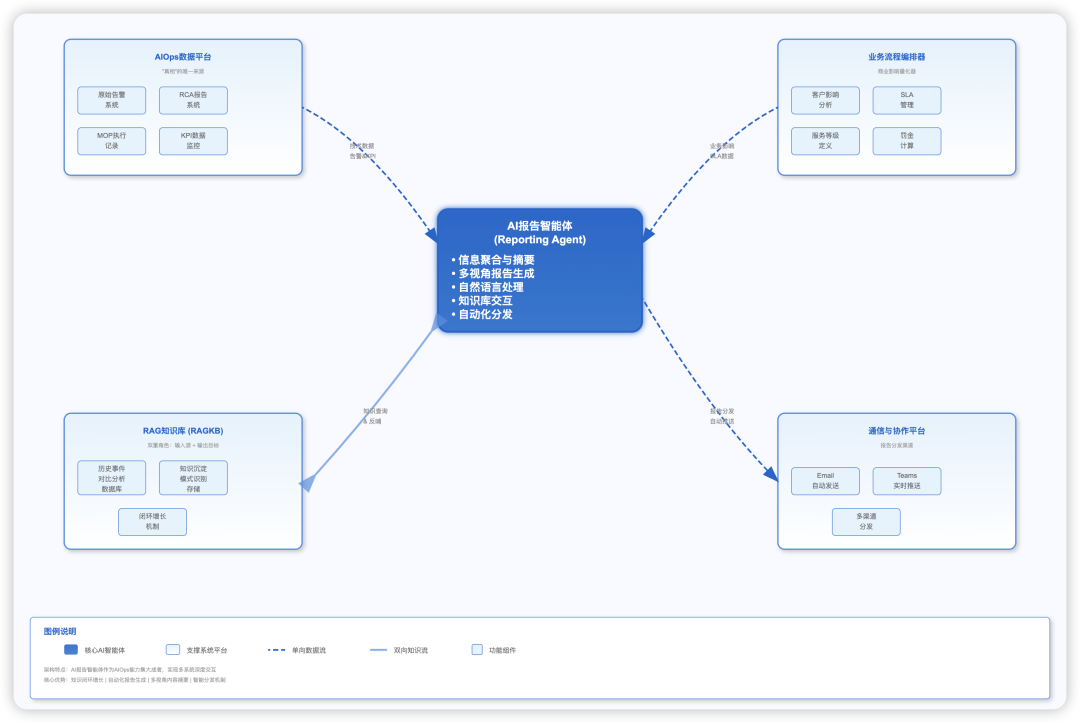
The AI Reporting Agent, as a culmination of AIOps capabilities, interacts extensively and deeply with various systems.
1. AIOps Data Platform
As the sole source of “truth,” it provides all technical data for the entire lifecycle of the event, including raw alarms, RCA reports, MOP execution records, and detailed KPI data before and after SLA degradation.
2. Business Process Orchestrator
As the quantifier of “business impact,” it provides key data needed to calculate business losses, such as the list of affected customers, their service levels, and SLA breach penalty clauses.
3. RAG Knowledge Base (RAGKB)
In this process, RAGKB plays a dual role:
- • Input Source: The agent can query the knowledge base to compare this incident with similar historical incidents to assess the efficiency of this handling.
- • Output Target: After report generation, its core content (such as “typical patterns of PCI conflicts leading to SINR degradation” and “validation of SON automatic optimization schemes”) will be structured back into the knowledge base, achieving closed-loop growth of knowledge.
4. Communication and Collaboration Platforms (e.g., Email, Enterprise Instant Messaging)
As the distribution channel for reports. After generating the report, the agent can automatically send the technical report to designated technical expert email groups and push the business report to management email groups based on preset rules.
4. Technical Solution
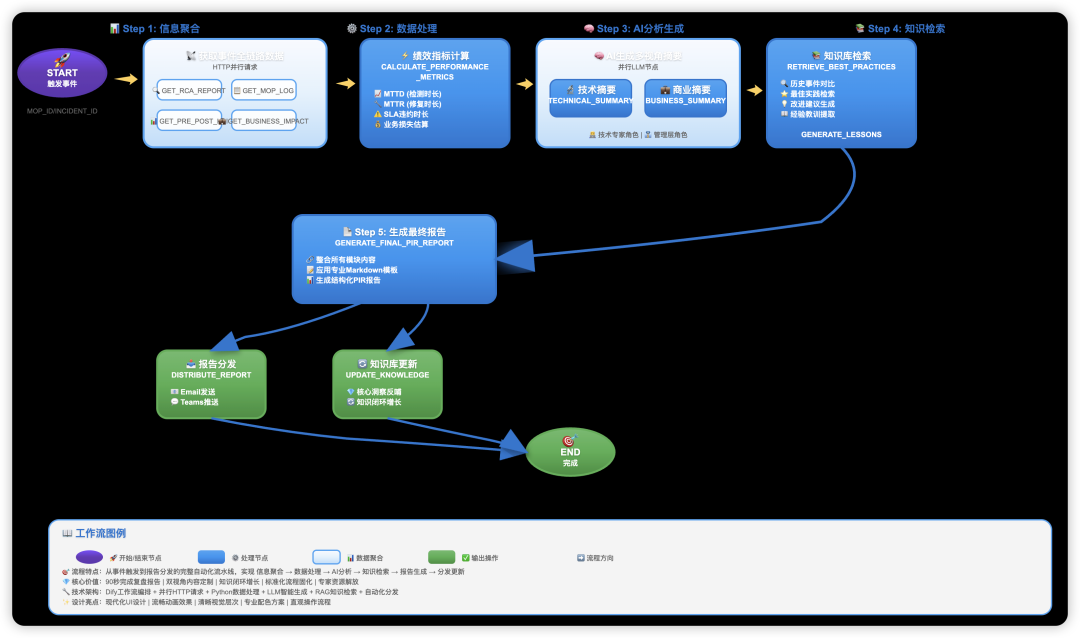
The Dify workflow of the AI Reporting Agent is a typical pipeline of “information aggregation -> multi-perspective analysis -> formatted generation”.
Step 1: Obtain Full Link Data of the Event
- • Node Type: HTTP (parallel)
- • Node Name:
<span>GET_INCIDENT_DATA_...</span> - • Function: The workflow is triggered by the
<span>mop_id</span>or<span>incident_id</span>passed in from the<span>Start</span>node. This step retrieves all structured data related to the event through parallel HTTP requests from the AIOps platform and BSS/Orchestrator: - •
<span>GET_RCA_REPORT</span>: Retrieve the diagnostic report. - •
<span>GET_MOP_LOG</span>: Retrieve the optimization action plan and its execution log. - •
<span>GET_PRE_POST_KPIS</span>: Retrieve KPI data for one hour before and after the event. - •
<span>GET_BUSINESS_IMPACT</span>: Retrieve affected customer and SLA information.
Step 2: Integrate and Calculate Core Performance Metrics
- • Node Type: Code
- • Node Name:
<span>CALCULATE_PERFORMANCE_METRICS</span> - • Function: This Python code node is the hub of data processing. It receives the results of all parallel API calls from the previous step, integrates them, and calculates key operational performance metrics:
- • MTTD (Mean Time to Detect): The time from when the event actually occurred to when it was alerted by the
<span>Monitoring Agent</span>. - • MTTR (Mean Time to Resolve): The total time from when the alert occurred to when the
<span>Optimization Agent</span>confirmed the issue was resolved. - • SLA Breach Duration: Calculate the time window during which SLA metrics exceeded the committed values.
- • Estimated Business Loss: Estimate the economic impact based on the affected customer levels and breach duration.
Step 3: AI Generates Multi-Perspective Summary
This step generates customized content for different audiences through two parallel LLM nodes.
- 1. Generate Technical Summary:
- • Node Type: LLM
- • Node Name:
<span>GENERATE_TECHNICAL_SUMMARY</span> - • Function: Under the prompt guidance of the “senior technical expert” role, the LLM receives all technical data (RCA report, MOP logs, KPI chart data) and generates a detailed, in-depth technical analysis summary.
- • Node Type: LLM
- • Node Name:
<span>GENERATE_BUSINESS_SUMMARY</span> - • Function: Under the prompt guidance of the “NOC Director” role, the LLM receives key business impact data and high-level event summaries, generating a concise executive summary focused on business impact and management insights.
Step 4: Retrieve Knowledge Base and Generate Improvement Suggestions
- • Node Type: Knowledge Retrieval & LLM
- • Node Name:
<span>RETRIEVE_BEST_PRACTICES</span>&<span>GENERATE_LESSONS_LEARNED</span> - • Function: Input the root cause of this incident (e.g., “PCI conflict”) into the RAGKB for retrieval, identifying relevant best practices and preventive measures. Then, the LLM node receives this information and, combined with the specifics of this incident, generates “lessons learned” and “future improvement suggestions.”
Step 5: Assemble and Generate Final Report
- • Node Type: LLM (based on Dify’s template functionality)
- • Node Name:
<span>GENERATE_FINAL_PIR_REPORT</span> - • Function: This is the final output node of the workflow. It integrates all previously generated modules (technical summary, business summary, performance metrics, improvement suggestions) into a professionally formatted Markdown template, generating a complete, rich-content post-incident review (PIR) report.
Step 6: Report Distribution and Knowledge Base Update
- • Node Type: HTTP & End
- • Node Name:
<span>DISTRIBUTE_REPORT</span>&<span>UPDATE_KNOWLEDGE_BASE</span> - • Function: The last step of the workflow is action. Through the HTTP node, it calls the API to distribute the report to designated email addresses or instant messaging. At the same time, it calls the RAGKB API to update the core insights of this incident into the knowledge base.
<span>End</span>node finally displays the generated report content.
5. Sample Post-Incident Review (PIR) Report for 5G Network Slicing
1. Basic Report Information
- • Report ID (PIR ID):
<span>PIR-20250813-001</span> - • Related Incident Ticket:
<span>MOP-PCI-OPT-Cell-External-205-0f3b4c1a</span> - • Incident Title: eMBB Slice
<span>NSI-eMBB-Stadium-01</span>SLA Degradation Incident - • Report Generation Time:
<span>2025-08-13 21:00 UTC</span> - • Report Generated By: AI Trainer – Reporting Agent
2. Executive Summary
On August 13, 2025, at 20:30 UTC, the high-value eMBB slice serving a large sporting event experienced severe performance degradation.The AIOps platform automatically completed the entire process of monitoring, diagnosing, and repairing within 90 seconds, successfully preventing the expansion of SLA breaches and avoiding user complaints. The root cause of the incident was identified as RAN-side PCI conflict, which was resolved through SON system automatic PCI re-planning. This incident highlights the efficiency of the AIOps system in handling complex cross-domain faults and suggests that the automated handling process for such issues be solidified as a standard model.
3. Event Timeline and Performance Metrics
- • Event Start (KPI First Deviation from Baseline):
<span>20:29:15 UTC</span> - • AI Monitoring Agent Alert (MTTD):
<span>20:30:00 UTC</span>(45 seconds) - • AI Diagnostics Agent Completed RCA:
<span>20:35:00 UTC</span> - • AI Optimization Agent Completed Repair:
<span>20:36:30 UTC</span> - • SLA Restored to Normal:
<span>20:37:00 UTC</span> - • Total Resolution Time (MTTR): 7 minutes
- • SLA Breach Duration: 7 minutes
4. Root Cause Analysis Summary
The root cause of the incident was identified as PCI conflict on the RAN side. The cell <span>Cell-101</span> (PCI: 42) located in the southern stand of the venue experienced overlapping interference with the macro station cell <span>Cell-External-205</span> (PCI: 42) located 1.5 kilometers away, causing the SINR value at the edge of the coverage area of <span>Cell-101</span> to plummet from 18dB to 4.5dB, severely affecting user access and data transmission quality.
5. Remediation Actions Summary
AI Optimization Agent automatically selected the plan to trigger the SON system for PCI re-planning. This plan was assessed as having the lowest risk and highest efficiency. The SON system successfully assigned a new unique PCI <span>45</span> to <span>Cell-External-205</span>. Within 5 minutes after the operation, the SINR of <span>Cell-101</span> recovered to 17.5dB, and the end-to-end latency of the slice dropped from 35ms to 11ms, fully restoring the service.
6. Business Impact Assessment
- • Affected Customers: Approximately 1,200 eMBB slice users located in the southern stand area.
- • Business Impact: Affected users experienced approximately 7 minutes of buffering during 4K video streaming or slow loading of AR applications.
- • Economic Impact: Due to the rapid response of the AIOps system, potential brand reputation loss and compensation for VIP customers due to large-scale user complaints were successfully avoided.
7. Lessons Learned and Improvement Suggestions
- • Lessons Learned: Low-priority SON system “potential PCI conflict” alerts should be given higher weight by the AIOps platform, especially during major event assurance periods.
- • Improvement Suggestions:
- 1. [Automation Strategy]: It is recommended to elevate the processing priority of “PCI conflict alerts within major event assurance areas” to “high” and authorize the AI Optimization Agent to automatically execute repairs during non-peak business hours.
- 2. [Knowledge Base Update]: The “symptom-root cause-solution” pattern of this incident has been automatically updated to the RAG knowledge base, which will improve the speed and accuracy of diagnosis for similar future incidents.
6. System Extension Features
- • Interactive Report Dashboard: Push the generated Markdown report to a BI platform (such as Grafana) and combine it with real-time data sources from the AIOps data platform to generate an interactive PIR dashboard that supports drill-down analysis.
- • Multi-Language Report Generation: Add a parameter to the last LLM node to allow specification of output language, generating localized reports for multinational operational teams.
- • Root Cause Trend Analysis: Regularly execute a Dify workflow to analyze the root causes of all PIR reports from the past month, automatically generating root cause trend reports to identify the most frequent fault types, providing data support for long-term network optimization and investment decisions.
- • Automated Knowledge Base Validation: After the “lessons learned” in the report are adopted and implemented, verify whether the relevant KPIs have improved through the AIOps platform, forming a complete learning loop from “incident” to “knowledge” to “validation.”
7. Data Structures Involved in the Case
AIOps Data Platform – MOP Execution Log Data Structure
Description: Records detailed logs of the optimization agent executing the action plan.
| Field Name | Chinese Name | Data Type | Comments |
|---|---|---|---|
<span>MopID</span> |
MOP ID | <span>String</span> |
Primary key, e.g., “MOP-PCI-OPT-…-0f3b4c1a”. |
<span>RcaID</span> |
Related RCA Report ID | <span>String</span> |
|
<span>Status</span> |
Execution Status | <span>String</span> (Enum) |
<span>SUCCESS</span>, <span>FAILED</span>, <span>IN_PROGRESS</span>. |
<span>StartTime</span> |
Start Time | <span>Timestamp</span> |
|
<span>EndTime</span> |
End Time | <span>Timestamp</span> |
|
<span>ExecutionLog</span> |
Execution Log | <span>Array[Object]</span> |
Contains execution commands, timestamps, and results for each step. |
CREATE TABLE `tabAIOpsMopLogs` (
  `name` varchar(140) NOT NULL,
  `creation` datetime(6) DEFAULT NULL,
  `modified` datetime(6) DEFAULT NULL,
  `MopID` varchar(140) DEFAULT NULL,
  `RcaID` varchar(140) DEFAULT NULL,
  `Status` varchar(140) DEFAULT NULL,
  `StartTime` datetime(6) DEFAULT NULL,
  `EndTime` datetime(6) DEFAULT NULL,
  `ExecutionLog` json DEFAULT NULL,
  PRIMARY KEY (`name`),
  UNIQUE KEY `mop_id_unique` (`MopID`)
) ENGINE=InnoDB;
(For other data structures such as RCA reports, slice KPIs, service definitions, etc., please refer to previous intelligent agent documentation.)
8. Case Source Code
Dify Workflow YAML Source Code
# dify-workflow-telecom-monitor.yml
# Follow this public account (AI Trainer) and send a private message to obtain the Dify workflow YAML source code.
Workflow Code Node Code (<span>Code-CALCULATE_PERFORMANCE_METRICS.py</span>)
import json
from datetime import datetime

def calculate_metrics(rca_report_str: str, mop_log_str: str) -> dict:
    """
    Calculates key performance metrics like MTTD and MTTR from incident data.
    """
    try:
        rca_report = json.loads(rca_report_str)
        mop_log = json.loads(mop_log_str)

        # Assume RCA report contains alarm timestamp
        alert_time_str = rca_report.get("alert_timestamp")
        # Assume MOP log contains resolution timestamp
        resolve_time_str = mop_log.get("EndTime")

        if not alert_time_str or not resolve_time_str:
            return {"error": "Missing timestamps in input data."}

        # ISO 8601 format example: '2025-08-13T20:30:00Z'
        alert_time = datetime.fromisoformat(alert_time_str.replace('Z', '+00:00'))
        resolve_time = datetime.fromisoformat(resolve_time_str.replace('Z', '+00:00'))

        mttr_seconds = (resolve_time - alert_time).total_seconds()

        # Assume there is an actual event occurrence time
        event_start_time_str = rca_report.get("event_start_timestamp")
        event_start_time = datetime.fromisoformat(event_start_time_str.replace('Z', '+00:00'))
        mttd_seconds = (alert_time - event_start_time).total_seconds()

        return {
            "mttr_minutes": round(mttr_seconds / 60, 2),
            "mttd_seconds": round(mttd_seconds, 2)
        }
    except Exception as e:
        return {"error": f"Failed to calculate metrics: {str(e)}"}

def main(rca_data: str, mop_data: str) -> dict:
    return calculate_metrics(rca_data, mop_data)
Workflow Prompt (<span>Prompt-LLM-GENERATE_FINAL_PIR_REPORT.md</span>)
# Role and Goal
You are the Chief Network Officer (CNO) of a major telecommunications company. Your task is to generate a comprehensive, multi-audience Post-Incident Review (PIR) report for a significant network event. The report must be clear, data-driven, and provide actionable insights.

# Core Task
Synthesize all the provided summaries, metrics, and data into a single, cohesive, and professionally formatted Markdown report.

# Critical Output Constraint
Your output MUST be a single Markdown document following the exact structure below. Use placeholders where data is not available.

---
### Input Data for PIR Report Generation

#### 1. Technical Summary (from `GENERATE_TECHNICAL_SUMMARY` node)
{{#GENERATE_TECHNICAL_SUMMARY.text#}}

#### 2. Business Summary (from `GENERATE_BUSINESS_SUMMARY` node)
{{#GENERATE_BUSINESS_SUMMARY.text#}}

#### 3. Performance Metrics (from `CALCULATE_PERFORMANCE_METRICS` node)
- **MTTD**: {{#CALCULATE_PERFORMANCE_METRICS.mttd_seconds#}} seconds
- **MTTR**: {{#CALCULATE_PERFORMANCE_METRICS.mttr_minutes#}} minutes

#### 4. Lessons Learned & Recommendations (from `GENERATE_LESSONS_LEARNED` node)
{{#GENERATE_LESSONS_LEARNED.text#}}

#### 5. Raw Incident Data (for context)
- **RCA Report**:
{{#GET_RCA_REPORT.body#}}

- **MOP Log**:
{{#GET_MOP_LOG.body#}}

- **Business Impact Data**:
{{#GET_BUSINESS_IMPACT.body#}}


---
### Your Task: Generate the Final PIR Report

Now, assemble all the pieces into the final report using the following Markdown template.


# Post-Incident Review (PIR) Report

## 1. Basic Information
- **PIR ID**: `PIR-{{#Start.incident_id#}}`
- **Incident Title**: {{#GET_RCA_REPORT.body.Title#}}
- **Report Generation Time**: {{{{sys.query_datetime | format_datetime(format='YYYY-MM-DD HH:mm:ss Z')}}}}
- **Generated By**: AI Reporting Agent

---

## 2. Executive Summary
{{#GENERATE_BUSINESS_SUMMARY.text#}}

---

## 3. Timeline & Key Metrics
- **Event Start**: `{{#GET_RCA_REPORT.body.event_start_timestamp#}}`
- **AI Alert (MTTD)**: `{{#GET_RCA_REPORT.body.alert_timestamp#}}` (**{{#CALCULATE_PERFORMANCE_METRICS.mttd_seconds#}} seconds**)
- **Resolution Complete**: `{{#GET_MOP_LOG.body.EndTime#}}`
- **Total Time to Resolve (MTTR)**: **{{#CALCULATE_PERFORMANCE_METRICS.mttr_minutes#}} minutes**

---

## 4. Root Cause Analysis Summary
{{#GENERATE_TECHNICAL_SUMMARY.text#}}

---

## 5. Remediation Actions Summary
*A summary of the MOP executed by the Optimization Agent.*

---

## 6. Business Impact Assessment
*Details from the BSS/Orchestrator.*

---

## 7. Lessons Learned & Recommendations
{{#GENERATE_LESSONS_LEARNED.text#}}
Dify Workflow External Interface
# Follow this public account (AI Trainer) and send a private message to obtain the Dify workflow external interface source code.
If you find the content good, please follow
and give a thumbs up, share, and recommend. Your support is my motivation for continuous updates.
Selected Previous Articles
(4) Optimization Agent: Practical Application of AI Multi-Agent Collaborative Architecture in 5G Slicing Optimization(3) Diagnostics Agent: Practical Application of AI Multi-Agent Collaborative Architecture in 5G Slicing Optimization(2) Monitoring Agent: Practical Application of AI Multi-Agent Collaborative Architecture in 5G Slicing Optimization(1) Top-Level Design: Practical Application of AI Multi-Agent Collaborative Architecture in 5G Slicing OptimizationInnovations and Implementation Directions of AI Intelligent Operations in Telecom NetworksRevealing: Why ChatGPT is Becoming More ‘Understanding’? The Answer to Why AI Assistants Suddenly Become Smarter Lies in These 5 StepsNew Play of AI Multi-Agent Collaboration: Closed-loop Automation from Monitoring → Diagnosis → Optimization → Reporting(Source Code Attached) First Public Release! Complete Technical Solution for Automated Repair of 5G Slices Based on AI Intelligent AgentHow to Build an AI Diagnostics Agent to Ensure 5G Network Information Communication for Sports EventsFrom American Telecom Giant Verizon to Middle Eastern Digital Carrier Etisalat, Global Operators are Replicating the 5G Slice AI Agent Monitoring ParadigmBest Practice Case of Self-Intelligent Networks: Building a New Intelligent Operations Paradigm for the Commercialization of 5G SlicesDesign Methodology and Case Studies of AI Intelligent Agents in AIOps for Telecom Networks(Source Code Attached) Building a Smart Optimization AI Intelligent Agent for Communication Transmission Networks with Dify+RAGFlow, Quickly Achieving Network Fault Prediction and Automated OperationsEverything Can Be MCP: Teaching You How to Handcraft MCP Services from Scratch, Making AI Intelligent Agents the Brain of the IndustryFrom Ticket-Driven to AI-Driven Paradigm Shift, Huawei’s AI Innovation Empowers the Evolution of OSS in the 5G EraWhen AI Intelligent Agents ‘Understand’ 3GPP Standards, 5G Network Optimization Experts PanicBuilding an AI+OSS Intelligent Agent Platform with Langchain+Airflow, Doubling the Efficiency of Telecom Operators’ NOCLet AI+OSS Intelligent Agents ‘Fish for Needles in the Haystack’ in Telecom Networks, Achieving Millisecond Association and Quality Optimization of Multi-Circuit Cascading Faults, Redefining Network Operations BoundariesBuilding a TMF-Compliant AI+OSS Intelligent Agent Platform for Communication Network Quality Optimization, Quickly Generating Business Performance Optimization Plans, Achieving Intelligent Transformation from Passive Response to Proactive Prediction(Source Code Attached) Building Industrial Internet MCP Services and AI Intelligent Agents with Dify+RAGFlow, Quickly Achieving Predictive Maintenance for Pump Enterprises’ CNC Machine Tools[50,000-Word Long Article, Including Case Studies] Perfectly Implementing Knowledge Graphs and Low-Code Development Based on DeepSeek Private Deployment RAGFlow Industry Knowledge Base and Intelligent AgentsThe Secret Weapon of Qwen3 Large Model AI Agents Imitating “Human Memory”—Open Source Dynamic Knowledge Graph GraphitiHow to Rent Servers for Private Deployment of DeepSeek at Low CostLocal Deployment of DeepSeek-R1 Commercial-Grade Knowledge Base with LangChain+RAG+Agent, Perfectly Achieving Low-Code Visual Process OrchestrationSeeing Through the Principles of Transformers with the Llama Large Model Architecture DiagramHow to Build Efficient AI Intelligent AgentsLlama 3.2 90 Billion Parameter Visual Multi-Modal Large Model Local Deployment and Case Demonstration