In the realm of 3D printed creative works, lighting fixtures have always been a perennial favorite. A model with excellent light transmission not only warms the entire space but also embodies the creator’s technical skills and aesthetic sensibilities. Today, we will conduct a practical test of two highly regarded transparent materials in the industry—Polymaker’s Polylite PC and PolySmooth—to see which one performs better in terms of light transmission.
1. Test Preparation: Fair Comparison, Focusing on Light Transmission
To ensure objective results, we printed uniform solid cubes measuring 50*50cm as test samples. We specifically chose thicknesses of 2cm and 3cm to simulate common wall thicknesses in different lighting designs.
The key point is that we prepared two sets of samples for each material:
One set retained the original printed state to observe the most authentic printing effect.
The other set underwent alcohol post-processing to explore the extent of improvement in light transmission through polishing.
Through this method, we hope to eliminate the influence of printing lines and directly assess the light transmission potential of the materials themselves.
2. Visible to the Naked Eye: Results Clearly Distinguish the Two
After careful comparison, the characteristics of the two materials and the enhancements brought by post-processing are very evident:
PolySmooth + Alcohol Polishing = Stunning Transparency
After the alcohol spray treatment, the performance of the PolySmooth sample can be described as a “transformation.” The surface printing lines almost completely disappeared, becoming as smooth as crystal, with a qualitative leap in light transmission, appearing uniform and bright as light passes through. Notably, it already had excellent gloss when formed on a smooth printing plate, reflecting brightly with only a slight yellow tint, which adds to its appeal.
Polylite PC = Warm Matte Texture
In contrast, Polylite PC takes a different aesthetic route. It naturally possesses a subtle matte effect, softening the light as it passes through, creating a very gentle diffused light that effectively reduces glare. This characteristic makes it particularly suitable for creating lighting fixtures that do not require “brightness” but seek a “warm” light and shadow atmosphere.
3. Summary of Experience and Artwork Appreciation
In summary, both materials have their strengths:
If you pursue ultimate transparency and a crystal-like gloss, PolySmooth with alcohol post-processing is undoubtedly your top choice.
If you prefer soft, glare-free, uniform lighting to create an immersive light and shadow experience, then the natural matte texture of Polylite PC will be the best option.
Polymaker’s materials have always assured us in terms of performance and reliability, and this test has once again confirmed that.
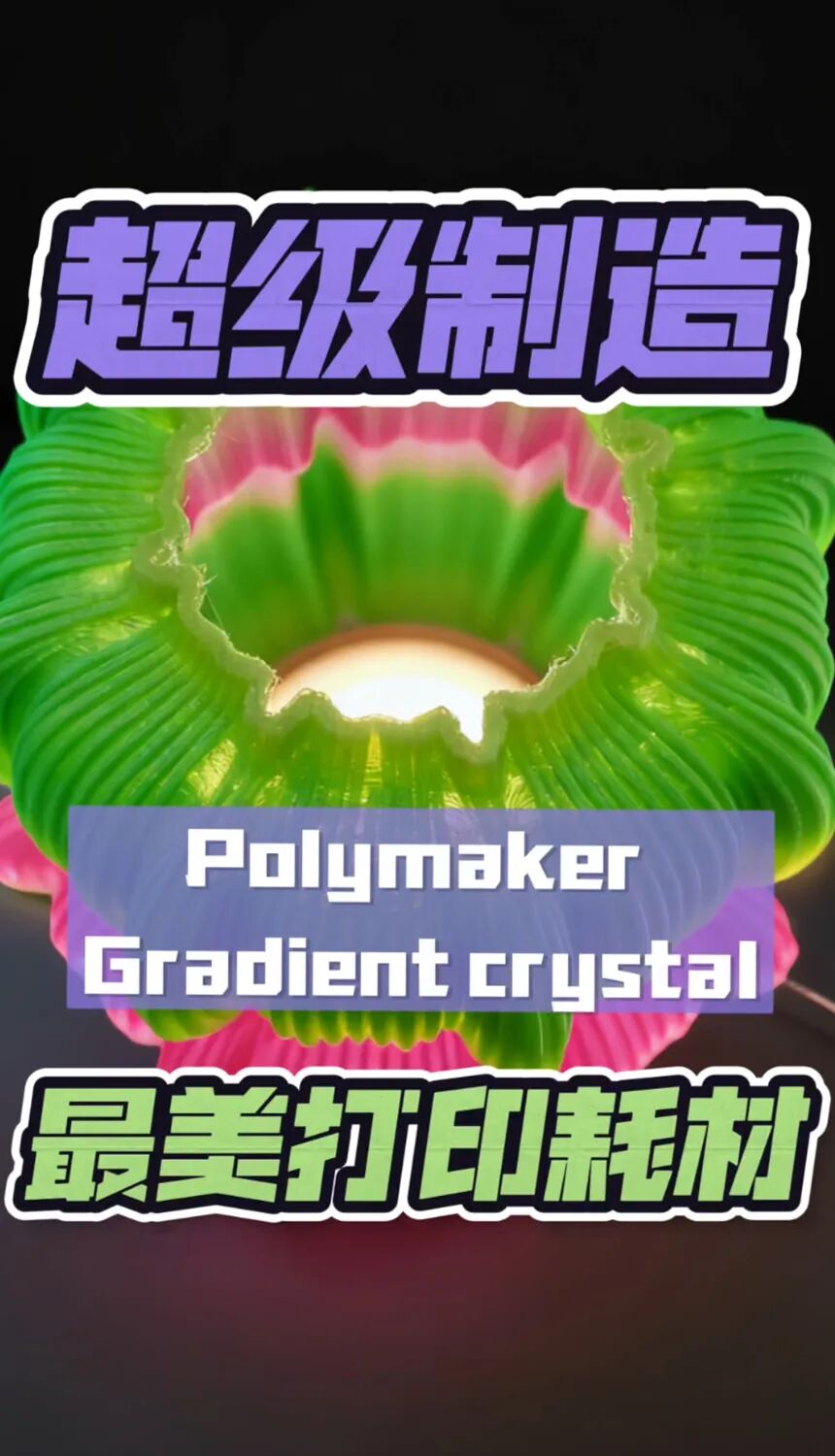
Finally, let us appreciate this lamp created using Polylite PC! The soft light permeates through the slightly matte shell, spreading a warm and peaceful atmosphere throughout the space, which is the aesthetic created by the collaboration of 3D printing and material science.
@ 3D Printing Insights
I am Xu Fanglei, a design professional with a PhD, a Fellow of the Royal Society of Arts in the UK, focusing on industrial design, additive manufacturing, and commercial modeling. Here, I will use my expertise and experience to take you deep into the world of 3D printing, sharing the latest industry trends, interpreting cutting-edge technologies, and discussing commercial applications.
 END
END

 Welcome to add the editor’s WeChatto learn about the latest trends in the 3D printing industry
 About 3D Printing Technology
We integrate insights, technological trends, application scenarios, competitive strategies, and in-depth dynamics from the industry in China, the US, and globally for professionals in 3D printing and artificial intelligence, providing high-value information. We are passionate about 3D printing and welcome contributors from around the world.The English website3DPTimes is also launched, focusing on the 3D printing field, producing a wealth of high-quality cutting-edge information and technical content.
Disclaimer:3D Printing Technology has no commercial cooperation, sponsorship, employment, or other interests with the companies mentioned in this article.3D Printing TechnologyImages and videos are sourced from the internet and are for auxiliary reading purposes only, with no commercial intent.All rights belong to the original authors. If there are any infringement issues, please contact the rights holders in a timely manner, and we will delete them immediately. The copyright of the images in this article belongs to the copyright holders,3D Printing Technologywatermarks are automatically added for auxiliary reading and do not represent ownership of the images. For image usage, please consult the relevant copyright holders.3D Printing TechnologyThe article does not constitute any investment advice,3D Printing Technologyis not responsible for any direct or indirect losses caused by the use of the information in this article.For more exciting content, please follow us