On August 26, 2025, the State Council issued the “Opinions on Deepening the Implementation of the ‘Artificial Intelligence+’ Action”, marking a significant push for top-level design of the ‘Artificial Intelligence+’ initiative. Since the introduction of the ‘Artificial Intelligence+’ action in the 2024 government work report, the empowerment of AI across various industries has begun to show results. Media reports indicate that recent semi-annual reports from AI listed companies show that the commercialization of AI products and services has positively impacted their performance. The year 2025 is widely discussed as the inaugural year for AI commercialization.
In various industries, seeking new business opportunities through new technologies is a forte of Guangdong, a land of innovation and commerce.Guangdong boasts a large number of high-quality technology innovation enterprises, a complete technology industry chain and supply chain, as well as the most comprehensive range of industrial categories in the country, providing rich exploration space for the commercialization of AI.
 AI-Driven Brand Expansion Yields Tenfold Profit Growth
“We are a profitable AI company, and the reason we can be profitable is that we help many Chinese brands expand overseas and earn high profits comparable to European and American brands, allowing them to afford to pay us.” Li Shuhua, founder and CEO of Taidong Technology, stated that the company has achieved profitability and successfully established a business logic in the AI-driven overseas service sector.
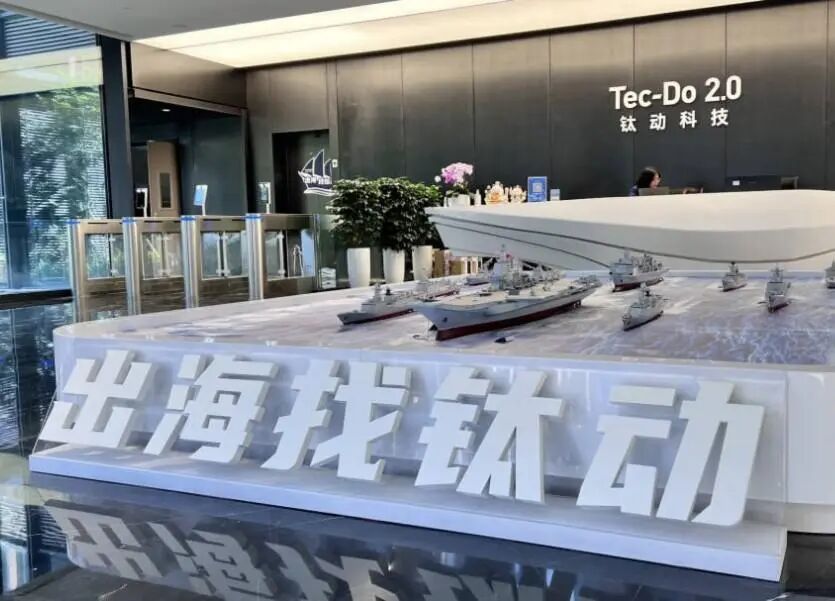
Taidong Technology
According to reports, Taidong Technology is the first technology company to apply AIGC in overseas marketing scenarios, helping Chinese brands quickly conduct digital media placements in overseas markets, enhancing corporate content operation efficiency, and significantly improving the digital export capabilities of enterprises. Currently, this locally innovative AI service company founded in 2017 has served over 80,000 Chinese enterprises in their overseas expansion, covering more than 200 countries and regions globally, with 1,500 employees worldwide.
The rapid expansion of business is attributed to the tangible value that AI technology services bring to clients in terms of product export growth. Li Shuhua explained that traditional Chinese manufactured products like clothing and cosmetics sold to overseas brands yield only about 5% profit for Chinese enterprises, whereas if products can be sold directly under their own brand in overseas markets, the profit margin can reach about 80%, comparable to European and American brands.
However, for many Chinese manufacturing enterprises, expanding their brand overseas is not easy. One major pain point is the difficulty in understanding what kind of promotional content overseas users prefer. “AI technology can quickly generate placement plans, helping enterprises rapidly optimize and validate their placement strategies, a level of efficiency that was previously unattainable by humans,” Li Shuhua said. Solving the ‘impossible’ problems for enterprise clients with AI technology and bringing them overseas ‘bestsellers’ and sales growth is key to this Guangdong enterprise’s successful commercialization of AI.
Industrial Scenarios Require AI to Become a Value-Leveraging ‘Lever’
Using AI technology to bring significant value enhancement to enterprises is not limited to terminal sales; Guangdong, as a major industrial province, also has ample space for AI+ innovation and services in the industrial manufacturing sector. In recent years, many manufacturing enterprises have faced pressure on profit margins due to changes in external environments, market demand fluctuations, and competitive challenges, creating an urgent need to introduce new technologies like AI while being sensitive to cost control.
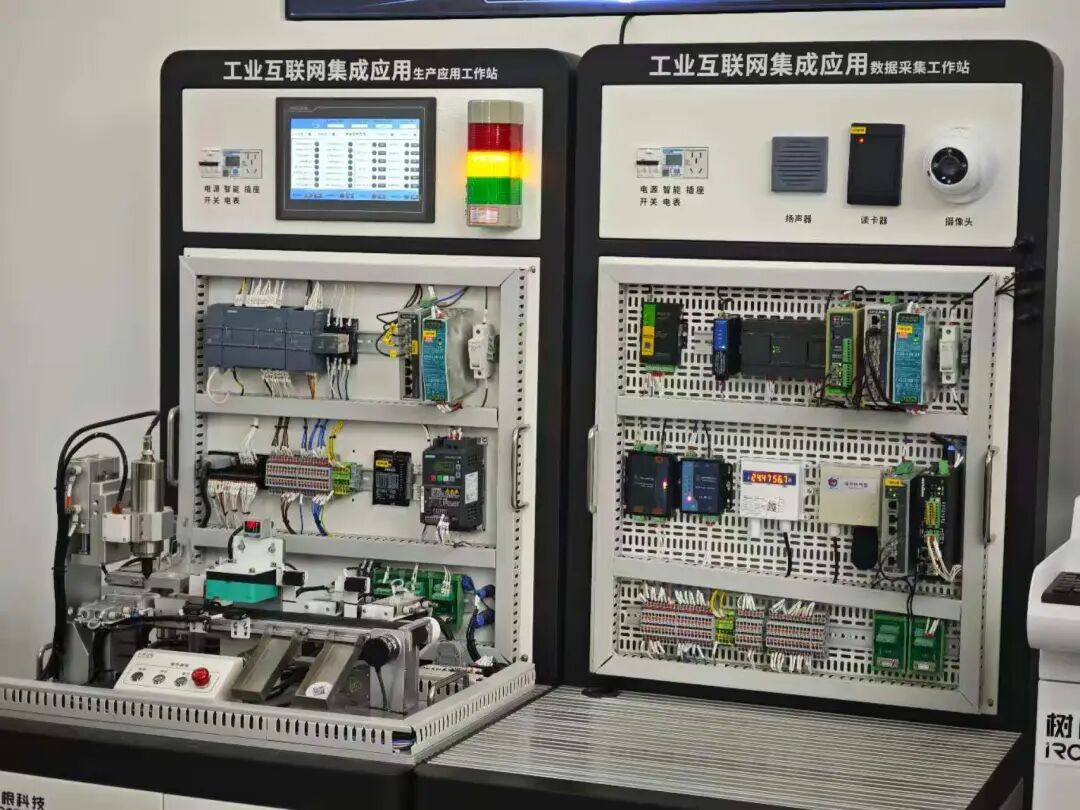
Shugen Technology Industrial Internet Workstation
At the headquarters of Shugen Technology in Haizhu District, Guangzhou, Sun Baigui, Chief Scientist of Artificial Intelligence at Shugen Technology, stated that the thin profit margins in the manufacturing sector are a reality, which also raises higher demands for service providers to manufacturing enterprises: “In the current manufacturing industry, which is focused on cost, can we leverage lower costs to deliver greater value to enterprises?”
Sun Baigui indicated that the value-to-cost ratio provided by manufacturing service providers was previously about 2:1, but in the future, it should reach 10 times or even dozens of times. “We need to continuously lower our prices while raising the achievable value, creating a super value gap; this is our problem-solving approach.”
To achieve this greater multiplier effect, Sun Baigui believes that AI technology is the key ‘lever’. “In the past, we found that the biggest problem in industrial intelligence was its difficulty in replication.” Sun Baigui said that each industrial production line is fundamentally different, requiring a dedicated solution for each line, which incurs significant R&D costs and human investment.
However, integrating multimodal intelligent agent technology will bring tremendous opportunities and changes. “In the era of AI+Industry, we hope to create standard solutions applicable to Factory A, Factory B, and Factory C, allowing not only large factories but also small and medium-sized industrial enterprises to achieve significant productivity improvements at a lower cost.”
Commercialization Pioneers on the Eve of Explosive Growth in Consumer Scenarios
In addition to serving enterprises and the industrial sector, a number of Guangdong AI innovation companies have made long-term technological accumulations and application validations in direct consumer scenarios, poised to take the lead in commercialization.
Recently, Guangzhou-based autonomous driving technology company WeRide announced the launch of its new mass-produced autonomous ride-hailing service vehicle (Robotaxi) GXR, which officially commenced 24-hour unmanned commercial operations in Huangpu District, Guangzhou. Users can hail a ride using the WeRide app from any location within Huangpu District to any destination within the district.
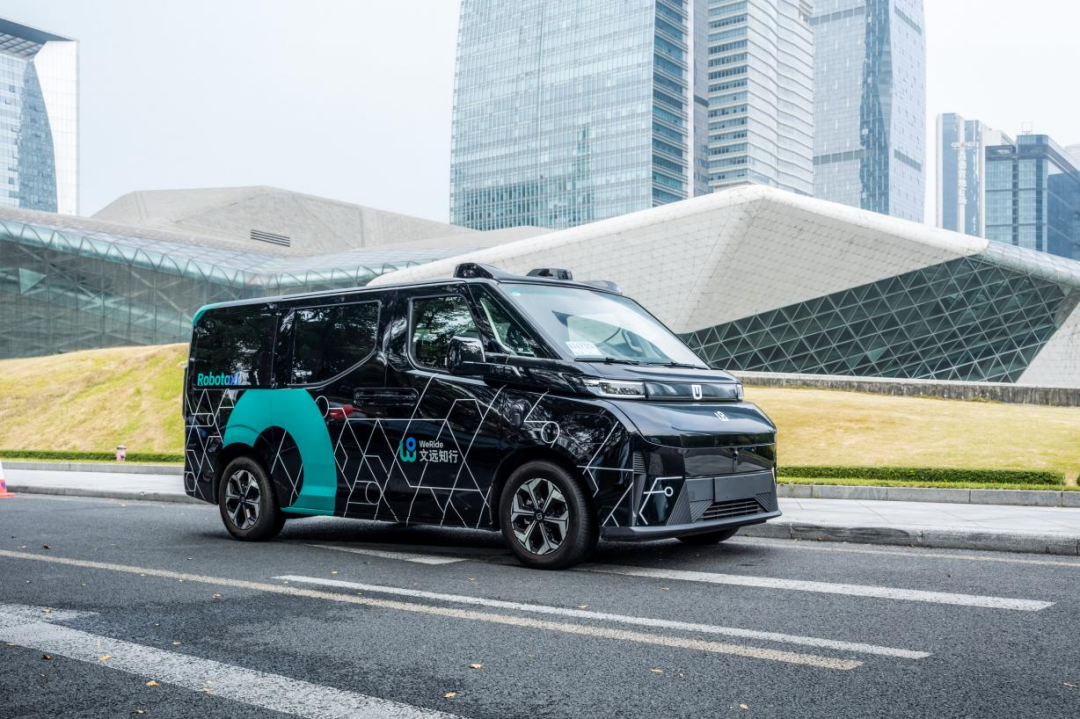
WeRide Robotaxi Model
At the second (Guangzhou) International Public Transport New Energy and Digital Technology Industry Expo held on September 4, Guangzhou Public Transport Group reportedly announced a procurement plan for 100 autonomous vehicles. Autonomous vehicles are also expected to appear during the upcoming 15th National Games.
Currently, the large-scale commercialization of Robotaxi is accelerating, which will test the technical and commercial operational capabilities of enterprises in the soon-to-explode market. According to Zhang Yuxue, public relations manager at WeRide, WeRide has achieved commercialization faster than other L4 players, having launched five major product lines. Its technology is based on the WeRide One autonomous driving universal technology platform, allowing for scalable application of WeRide’s technology across a wider range of products and scenarios, thereby reducing R&D, operational, and supply chain costs, and achieving faster commercialization.
As early as the end of November 2019, WeRide launched the country’s first fully open Robotaxi commercial operation service for citizens, covering 144.65 square kilometers of core urban open roads in Huangpu District and Guangzhou Development Zone. A joint passenger survey report on Robotaxi released by WeRide and Tsinghua University’s Transportation Research Institute shows that WeRide has accumulated nearly 30% loyal users who ride WeRide’s autonomous taxis at least once a week. Additionally, its products, including China’s first mass-produced autonomous sanitation vehicle, unmanned street sweeper S1, and unmanned logistics vehicle, have been applied in multiple cities and scenarios.
Guangdong Has Released Three Batches of 78 AI+ Application Scenarios
Not limited to technology demonstrations and parameter “competitions”, focusing on the commercialization breakthroughs of AI+ practical application scenarios is not only a common characteristic of AI enterprises growing in Guangdong’s innovative business environment but also an important policy direction for the Guangdong Province to promote the innovative development of the artificial intelligence and robotics industry.
On September 5, the Office of the Leading Group for the Innovative Development of the Artificial Intelligence and Robotics Industry in Guangdong Province released the “‘Artificial Intelligence+’ Application Scenarios (Third Batch)”, which includes application demands from five major industries: marine economy, ecological environment, state-owned assets, culture, and energy, with a total of 26 application scenarios. The notice stated that relevant industry authorities should organize to accelerate the opening of application scenarios, select and publish typical industry application cases, and actively support the construction of related scenarios.
Accelerating the implementation of the ‘Artificial Intelligence+’ action, Guangdong is at the forefront. Currently, Guangdong has released three batches of ‘Artificial Intelligence+’ application scenarios, with the first batch of 30 scenarios covering four major industries: manufacturing, education, healthcare, and security, officially released in April this year. The second batch of 22 scenarios was released on May 19 this year, covering four major industries: transportation, civil affairs, finance, and agriculture. As of now, Guangdong has sorted and released a total of 78 specific scenarios across 13 industries in three batches of ‘Artificial Intelligence+’ application scenario demands.
According to Qu Xiaojie, Deputy Director of the Guangdong Provincial Department of Industry and Information Technology, various forces in Guangdong are intensifying efforts to push the development of the artificial intelligence and robotics industry into the fast lane. From January to May 2025, the scale of Guangdong’s core artificial intelligence industry exceeded 100 billion yuan, firmly maintaining its position in the national first tier; the production of industrial robots and service robots reached 124,700 units and 4,169,800 units, respectively, with year-on-year growth of 33% and 8.2%, and the production of industrial robots accounted for over 40% of the national total, ranking first in the country for five consecutive years.
Qu Xiaojie stated that Guangdong has currently promoted the establishment of a cross-departmental coordination mechanism for the expansion of artificial intelligence and robotics application scenarios, actively cultivating and developing application markets. Guangdong will rely on its broad application scenario advantages to focus on enhancing the adaptability of general large models to specific industry or professional scenario needs, developing and launching a batch of vertical large models that meet specific industry or professional scenario demands, and promoting the application of artificial intelligence across various industries.
AI commercialization looks to Guangdong! As Guangdong promotes the deep application of artificial intelligence across various industries, the commercialization exploration paths of AI enterprises in various fields will allow us to witness the profound changes brought about by artificial intelligence and robotics technology.
Editor | Su Yunjia, Nandu Bay FinanceProofreader | Nandu Bay Finance Zheng ShuifengExecutive Editor | Publicity Department Gao ChaoContent Source | Nandu N Video
Recommended Reading

Xi Jinping: The Development Prospects of the Private Economy are Broad and Promising; It is the Right Time for Private Enterprises and Entrepreneurs to Shine

Leading the Development of New Quality Productive Forces and Building a Modern Industrial System—The Guangdong Provincial Conference on Promoting the Construction of a Modern Industrial System by Private Enterprises was Held in Dongguan

Gathering Industry Technological Wisdom to Build an Innovation High Ground for the Industry—The First Member Meeting and Inaugural Meeting of the Guangdong Artificial Intelligence and Robotics Industry Alliance was Held in Guangzhou