01【Scientific Background】
Despite the widespread application of 3D printing technology in fields such as medicine, aerospace, automotive, microfluidics, and biomanufacturing, its fundamental process has seen little essential change over the past 40 years: users design models using computer-aided design (CAD) software, which are then translated to the printer for layer-by-layer or volumetric manufacturing. Further research into embedded sensors and feedback loops aims to enhance automation levels and has made significant progress in achieving online quality control of printed products. However, 3D printers remain primarily passive tools that execute commands without any awareness of the composition and nature of the environment in which the printing process occurs. Additionally, in the field of bioprinting, the functionality of living cells and human tissues is closely related to the relative positions of their structures and components (such as particles, fibers, and living cells), but traditional technologies cannot precisely control the distribution patterns of these components within the printed object, making it difficult to replicate the complex structures and functions of biological tissues (such as vascular networks). Therefore, there is an urgent need for an intelligent printing system with ‘perception-response’ capabilities.
02【Innovative Results】
Based on this, Professor Riccardo Levato and his team from Utrecht University in the Netherlands published a paper in Nature titled “Adaptive and Context-Aware Volumetric Printing,” developing a novel 3D printing method called GRACE (Generative, Adaptive, Context-Aware 3D Printing). This new method integrates 3D imaging, computer vision, and parametric modeling to achieve automatic recognition and response to embedded features in the printing environment, thereby generating highly customized and functional three-dimensional structures. GRACE can quickly and automatically generate complex structures that directly correspond to features from cellular to macroscopic scales, requiring minimal user intervention. Here, the researchers demonstrate its versatility in applications ranging from synthetic objects to biomanufacturing, including adaptive vascular geometries surrounding cell-laden bioinks, thereby enhancing functionality. GRACE also enables precise alignment during continuous printing and detects and compensates for opaque surfaces through shadow correction. GRACE is compatible with various printing methods and surpasses traditional additive manufacturing limitations in automating registration and adapting print designs to printable material content, opening new possibilities for tissue engineering and regenerative medicine.

01
【Illustrative Analysis】
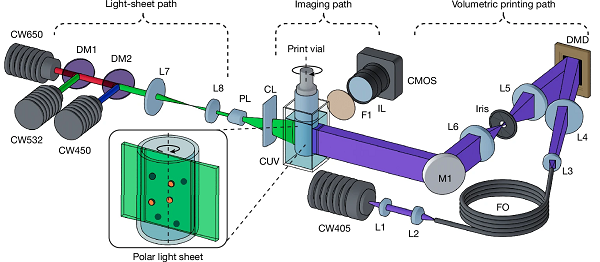
Figure 1, Schematic Diagram of the GRACE Printing Experimental Setup © 2025 Springer Nature
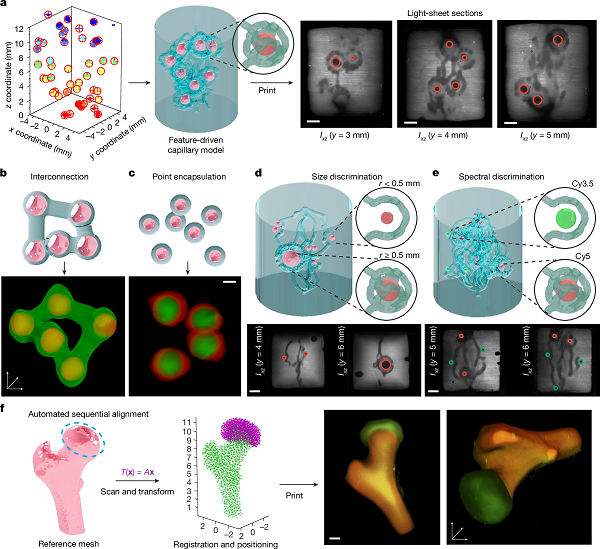
Figure 2, GRACE Allows Adaptive and Feature-Driven Printing of Complex Geometries © 2025 Springer Nature
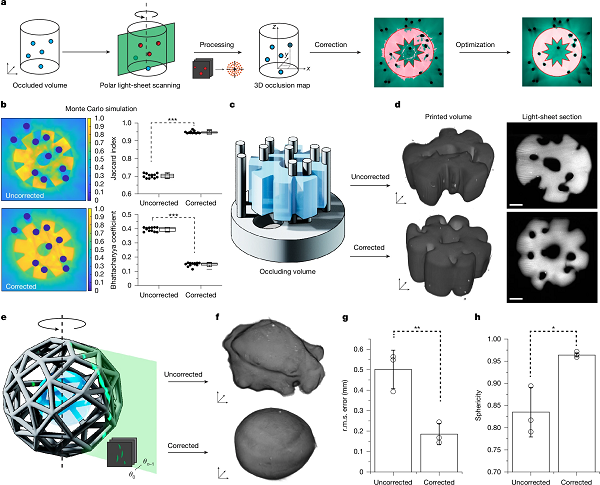
Figure 3, Light Sheet Mapping and Shadow Correction of Obscured Structures © 2025 Springer Nature
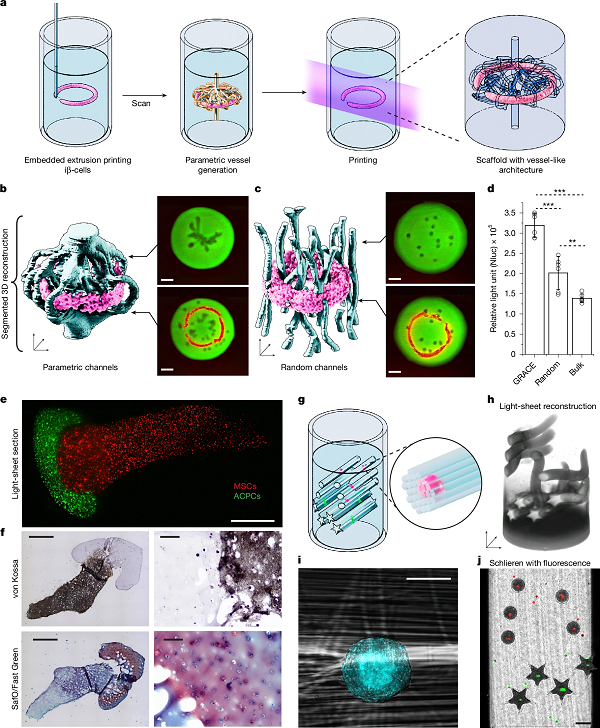
Figure 4, GRACE Bioprinting © 2025 Springer Nature
03【Scientific Inspiration】
In summary, this research has developed a generative, adaptive, and environment-aware 3D printing technology—GRACE, which integrates 3D imaging, computer vision, and parametric modeling, pioneering a paradigm shift from ‘preset model-passive printing’ to ‘environment-aware-adaptive printing.’ GRACE not only breaks through the limitations of traditional printing processes but also provides a powerful technical platform for biomanufacturing, tissue engineering, and multi-material printing. In the future, with further improvements in imaging speed, resolution, and AI modeling capabilities, GRACE is expected to achieve larger scales, higher precision, and more complex functionalities in multi-scale tissue construction, propelling regenerative medicine and intelligent manufacturing to new heights.
Original details: Adaptive and context-aware volumetric printing (Nature 2025, 645, 108-114)
This article is contributed by Dabin Ge.
Copyright StatementSource: Materials Science Network. For reprints, please contact the backend