 Abstract: Antibody-drug conjugates (ADCs) are the star therapy in the field of cancer treatment today, combining the targeting ability of monoclonal antibodies with the cytotoxicity of small molecule drugs, effectively striking tumor cells like “precision missiles”.This article starts with the basic structure and mechanism of action of ADCs, analyzes the challenges faced in clinical applications, and introduces next-generation designs such as bispecific ADCs and probody-drug conjugates, showcasing the current development status and future potential of this therapy.

1. ADC: How the “Precision Missile” in Cancer Treatment is Formulated?
Antibody-drug conjugates (ADCs) are a new type of cancer treatment that merges biological antibodies with chemical drugs. The core design concept is to enable the drug to “precisely target” tumor cells while minimizing damage to normal cells. Structurally, a complete ADC consists ofan antibody, a linker, and cytotoxic payload, and the synergistic effect of these three components determines the final efficacy and safety of the ADC.The antibody serves as the “navigation system” of the ADC, responsible for recognizing and binding to specific antigens on the surface of tumor cells. In clinical development, IgG1 is the most commonly used antibody subtype, as it not only binds tightly to tumor antigens but also activates immune cells such as natural killer cells and macrophages, enhancing the anti-tumor immune response. The ideal target antigen should be highly expressed on tumor cells and almost absent in normal tissues, such as CD22, HER2, and TROP2, which are commonly targeted by approved ADC drugs and are considered “tumor-specific markers”. However, higher affinity of antibodies is not always better; excessively high affinity can create a “binding site barrier” that hinders ADC penetration into tumor tissues. Therefore, scientists adjust the antibody structure, using small molecule antibodies like single-domain antibodies and scFv, to balance targeting and penetration.The cytotoxic payload is the “warhead” of the ADC and the core force that kills tumor cells. These payloads are mainly divided into three categories:microtubule inhibitors (e.g., MMAE, DM1), DNA damaging agents (e.g., calicheamicin, PBD), and topoisomerase inhibitors (e.g., SN-38, DXd). They possess strong killing power, with some DNA damaging agents having half-maximal inhibitory concentrations (IC50) reaching picomolar levels. The drug-antibody ratio (DAR), which indicates the number of payloads attached to each antibody, is a key design parameter for ADCs—too low a DAR may lead to insufficient efficacy, while too high a DAR may cause ADC accumulation in the bloodstream, resulting in severe toxic side effects. Typically, a DAR of 2-4 is considered optimal.The linker is the crucial bond connecting the “navigation system” and the “warhead”. It must meet two core requirements: stability in the bloodstream to prevent premature release of the payload that could harm normal cells; and efficient release of the payload upon reaching tumor cells. Linkers are mainly classified into cleavable and non-cleavable: cleavable linkers utilize the acidic environment, proteases, or reducing agents within tumor cells to release the payload, and can also kill surrounding tumor cells that do not express the target antigen through the “bystander effect”; non-cleavable linkers need to be degraded in lysosomes, which, while more stable, lack the bystander effect.
2. The “Operational Process” of ADCs and Current Clinical Status
The mechanism of action of ADCs resembles a precise “military operation”: first, the antibody recognizes and binds to the antigen on the surface of tumor cells, then the ADC-antigen complex enters the cell through endocytosis, forming an early endosome; after the endosome acidifies and matures into a lysosome, the linker is cleaved, and the cytotoxic payload is released. These payloads either disrupt the microtubule structure of tumor cells, blocking cell division, or damage DNA, triggering apoptosis. More cleverly, hydrophobic payloads can diffuse to surrounding tumor cells, producing a bystander effect, addressing the treatment challenges posed by tumor antigen heterogeneity (Figure 1).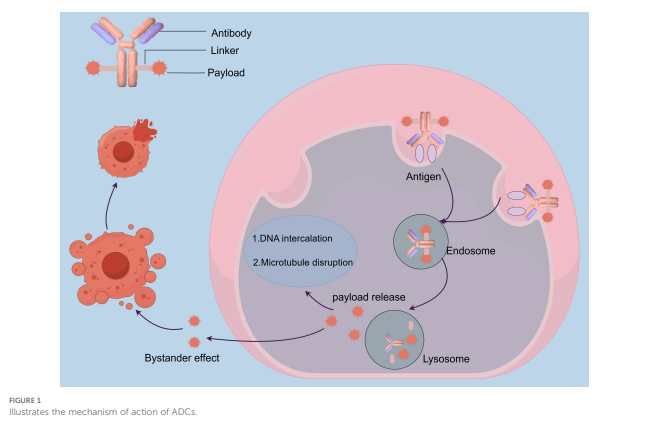 Since the first ADC drug, Mylotarg, was approved in 2000, by the end of 2023, the FDA has approved 13 ADC drugs for market, covering various cancers such as breast cancer, lymphoma, and ovarian cancer. In the clinical research phase, at least 100 ADCs are undergoing trials at different stages. In terms of market size, the global ADC market has surged from $1.6 billion in 2017 to $7.9 billion in 2024, with a compound annual growth rate of 37.3%, and is expected to exceed $64.7 billion by 2030, highlighting its immense clinical and commercial value.However, the clinical application of ADCs is not without challenges; tumor heterogeneity is a major cause of treatment resistance. For instance, antigen expression heterogeneity can allow tumor subclones with low antigen expression to evade ADC killing, spatial heterogeneity can limit ADC penetration into the tumor core, and phenotypic plasticity can enable tumor cells to downregulate antigen expression through epithelial-mesenchymal transition (Table 3). Additionally, the toxicity issues of ADCs cannot be ignored; even approved drugs may cause adverse reactions such as interstitial lung disease and ocular toxicity, with some drugs being withdrawn from the market due to excessive toxicity.Table 3 Mechanisms by which tumor heterogeneity affects ADC efficacy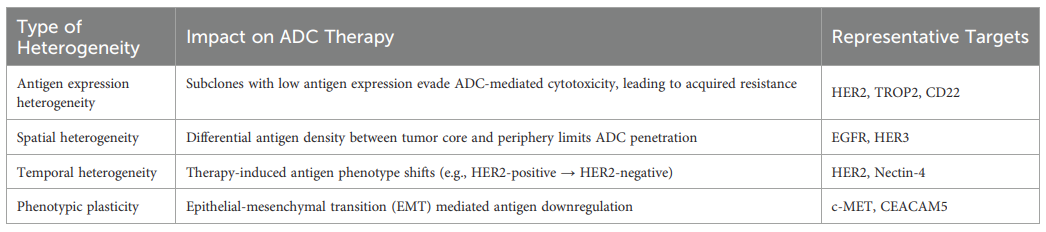
3. Next-Generation ADCs: Upgraded Solutions to Pain Points
To overcome the limitations of traditional ADCs, scientists have developed various innovative designs for next-generation ADCs, making cancer “missiles” more precise and efficient.
(1) Bispecific ADCs
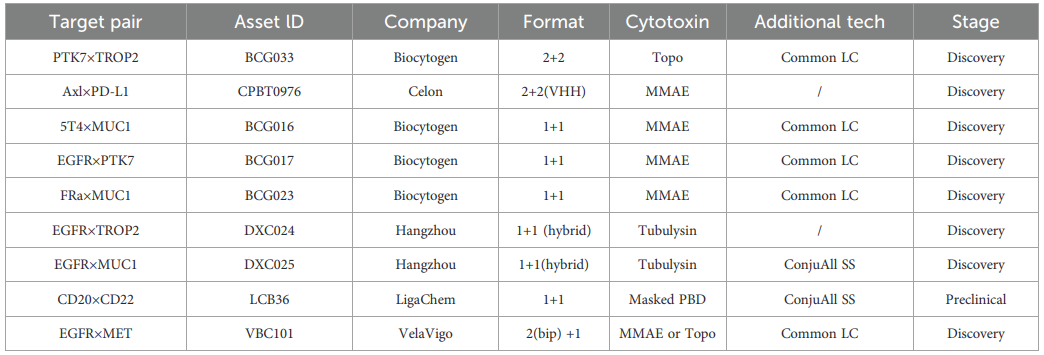
Traditional ADCs often target a single antigen, making them susceptible to resistance due to the loss of tumor antigens. In contrast, bispecific ADCs can bind to two different epitopes of the same antigen, while bispecific ADCs can simultaneously target two different tumor antigens, significantly enhancing targeting precision and killing efficiency. For example, the bispecific ADC BL-B01D1, which targets EGFR and HER3, has shown an objective response rate of 63.2% in patients with EGFR-mutant non-small cell lung cancer, effectively addressing the issue of multidrug resistance (Table 5).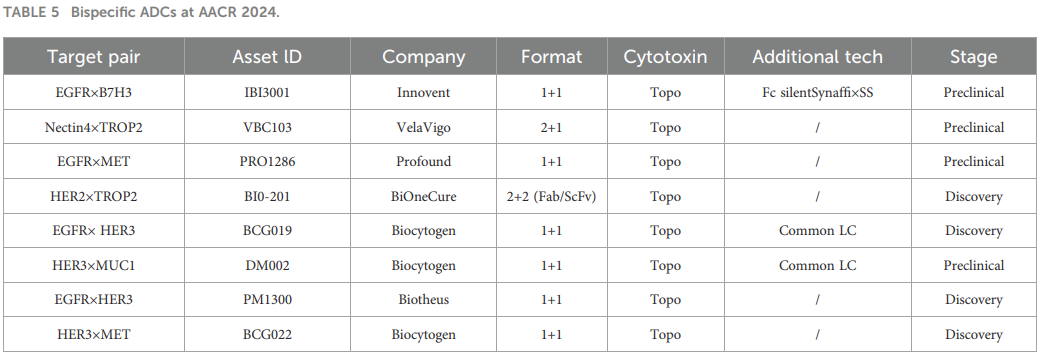
(2) Probody-drug Conjugates
Traditional ADCs may cause toxicity due to low expression of target antigens in normal tissues. Probody-drug conjugates add a “shield” to the antibody— in normal tissues, the antibody’s antigen-binding region is covered by masking peptides, preventing it from binding to the antigen; upon reaching the tumor microenvironment, tumor-specific proteases cleave the linker peptide, removing the masking peptide, restoring the antibody’s targeting ability and releasing the payload (Figure 2). This design significantly reduces off-target toxicity; for instance, the EGFR-targeting HTI1511 has shown far superior tumor suppression effects in animal studies compared to traditional drugs, with good safety profiles.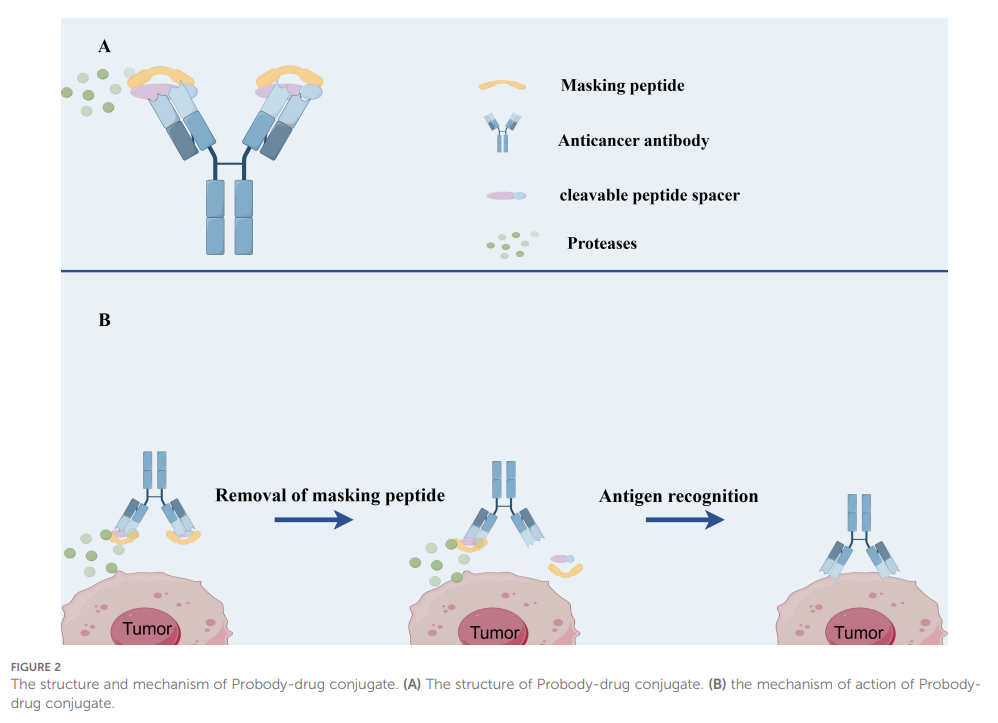
(3) Immune-stimulatory ADCs (ISACs)
This type of ADC is no longer limited to directly killing tumor cells but delivers TLR7/8 agonists, STING agonists, and other immune modulators as payloads to the tumor microenvironment, activating the body’s innate and adaptive immunity, transforming “cold tumors” into “hot tumors” that are sensitive to immunotherapy (Figure 3). They can also be used in combination with immune checkpoint inhibitors to further enhance anti-tumor immune responses, becoming an important complement to immunotherapy.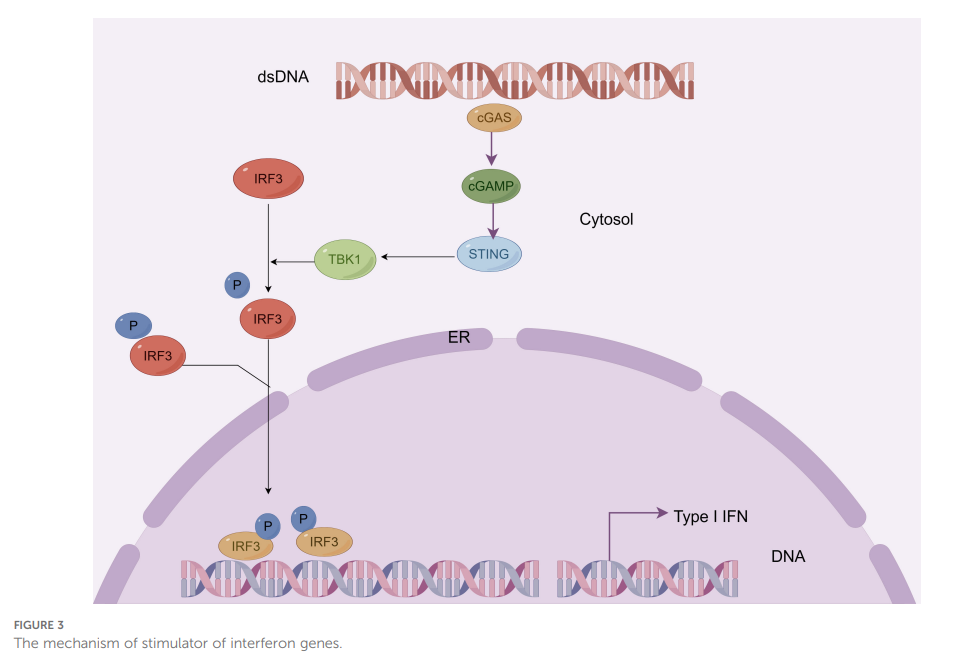
(4) Degrader Antibody Conjugates (DACs)
DACs combine ADCs with protein degradation technology, using degraders such as PROTACs and molecular glues as payloads. After entering tumor cells, the degraders recruit E3 ubiquitin ligases, leading to the ubiquitination and degradation of tumor-associated proteins. Compared to traditional cytotoxic payloads, they can more precisely target specific oncogenic proteins, providing new strategies for treating “undruggable” tumor targets (Figure 4).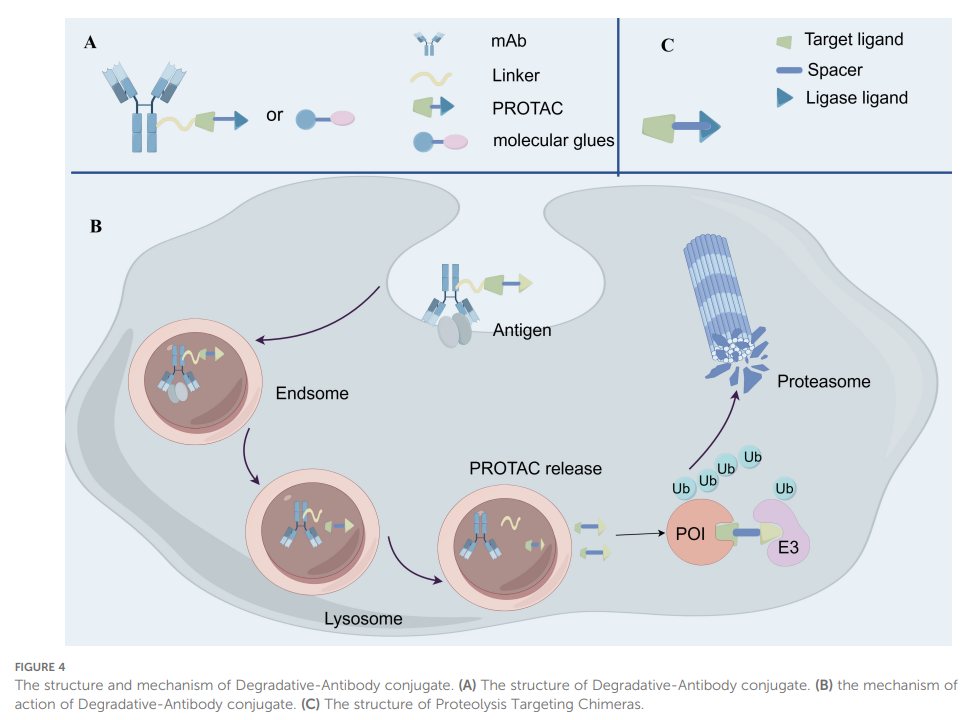
(5) Dual Payload ADCs
Considering the heterogeneity of solid tumors, dual payload ADCs attach two different mechanism payloads to one antibody, such as combining a microtubule inhibitor and a DNA damaging agent, attempting to overcome resistance through synergistic effects. However, the development of such ADCs is still in its early stages, requiring precise selection of payload combinations and balancing the efficacy of both payloads to achieve an effect greater than the sum of its parts.
4. The Future of ADCs: Opportunities and Challenges
ADCs are undoubtedly a significant breakthrough in precision oncology, but they still face numerous challenges: complex pharmacokinetics complicate dose adjustments, insufficient stability of linkers may lead to premature payload release, and the diversity of tumor resistance mechanisms requires more effective counter-strategies. Additionally, the high costs of ADC development and production, along with the clustering of targets (e.g., HER2 and TROP2 becoming hotspots for development), may lead to market homogenization and competition.However, with technological advancements, these issues are gradually being addressed: site-specific conjugation technologies make ADC production more uniform, new linkers enhance the controllability of payload release, and new mechanisms such as immune stimulation and protein degradation broaden the application boundaries of ADCs. In the future, the combination of ADCs with immune checkpoint inhibitors and targeted therapies, along with the development of companion diagnostic technologies, will enable this “precision missile” to play a greater role in the cancer battlefield, bringing hope to more cancer patients.