As the integration of artificial intelligence and the Internet of Things (IoT) enters a deep phase, China’s AIoT industry is undergoing a fundamental transformation from connecting all things to intelligently linking all things, from data collection to value creation. Looking back from the perspective of the end of 2025, the industry is shifting from technology-driven to value-driven, from single-point breakthroughs to ecological collaboration.
Recently, the Zhici Research Institute and the Wuxi IoT Innovation Promotion Center jointly released the “2026 China AIoT Industry Panorama Report” (hereinafter referred to as the “Report”), which systematically proposes the “Intelligent Value” four-dimensional model for the first time, outlining a new industrial landscape for the AIoT 2.0 era. Huage has deeply studied the report to analyze this impending industrial transformation for you.
1. “Intelligent Value”: The Underlying Logic of AIoT 2.0
The “Report” creatively proposes that the AIoT industry in 2026 will present a new architecture of “communication and perception as dual foundations, with intelligence and value weaving an infinite cycle.” This design is not only a profound insight into the essence of the industry but also an accurate grasp of future development.
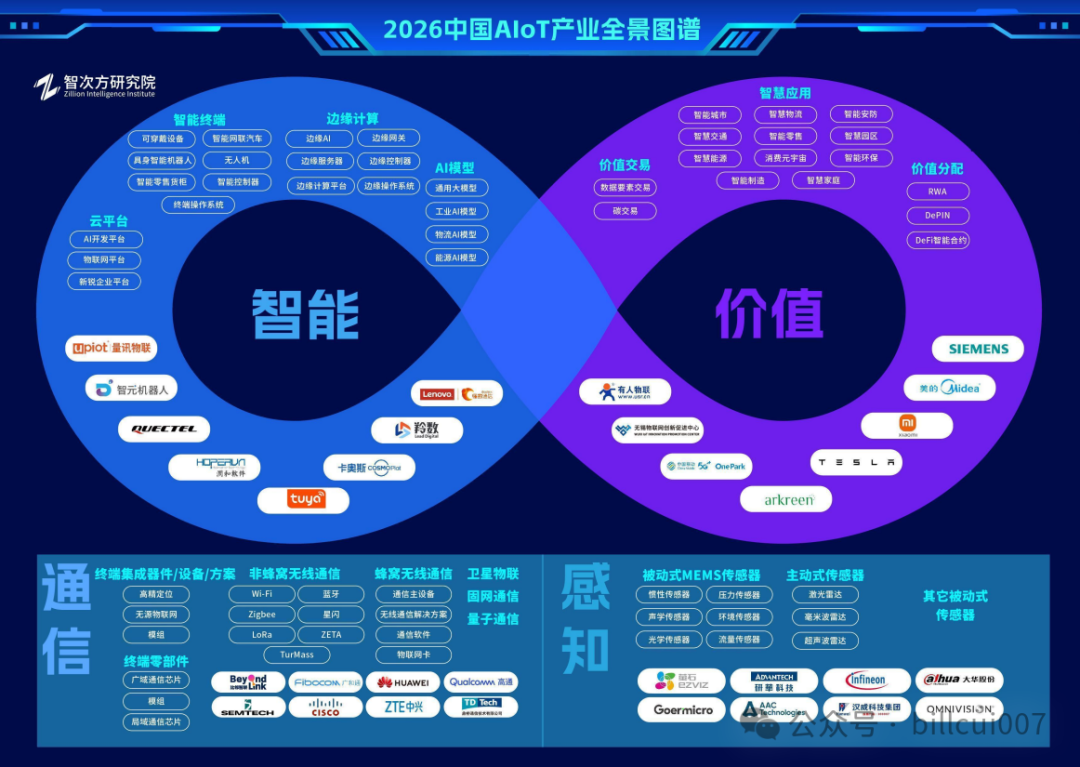
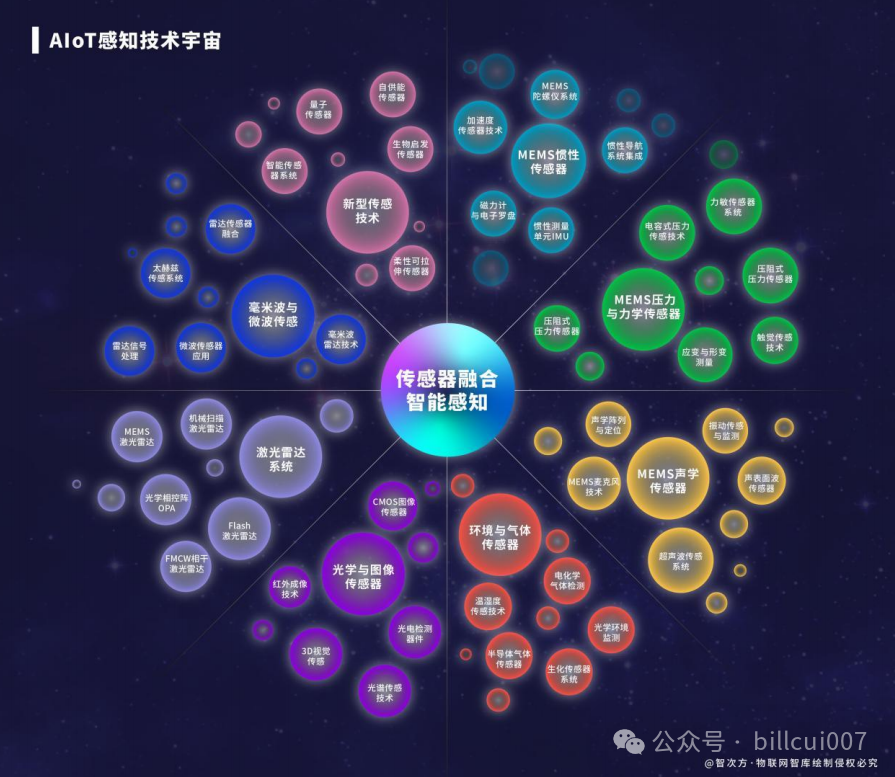
“Communication” and “perception” are no longer simple functional modules but solid foundations for data flow. The evolution of communication technologies such as 5G-Advanced, RedCap, star flash technology, and passive IoT makes connections faster, broader, and smarter. Perception technologies such as MEMS sensors, LiDAR, millimeter-wave radar, and flexible stretchable sensors extend the digital “tentacles” of the physical world into every corner.
More critically, the “∞” symbol formed by “intelligence” and “value” symbolizes the perpetual cycle of technological innovation and commercial value. Edge AI has become a universal capability, with lightweight models and hardware acceleration enabling intelligence to migrate from the cloud to the edge and terminals; multi-modal intelligent natives make the integration of vision, radar, and acoustics standard; generative AI significantly reduces the cost of labeling perception data; the parallel evolution of deterministic networks and vertical AI models provides reliable intelligent systems for high-reliability scenarios such as industry and transportation.
2. Five Insights: The Industry Barometer for 2026
The “Report” distills five core insights through in-depth research, pointing the way for industry development:
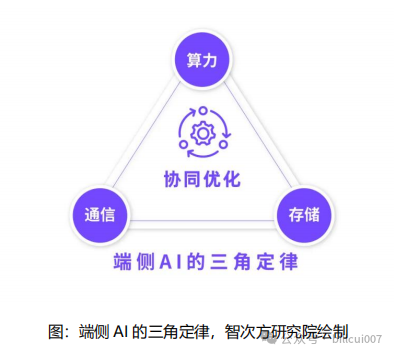
Insight 1: Edge AI First. AI is migrating from the cloud center to “edge + cloud,” with lightweight models (such as visual recognition models under 10MB) and SoC chips integrated with NPU becoming mainstream. 5G-A and RedCap technologies provide uplink capabilities of 1Gbps and air interface latency of less than 1 millisecond, forming a real-time closed loop. This shift enhances system response speed by 100 times and reduces cloud computing costs by 40%, creating new market opportunities for smart agriculture in remote areas and offshore equipment monitoring.
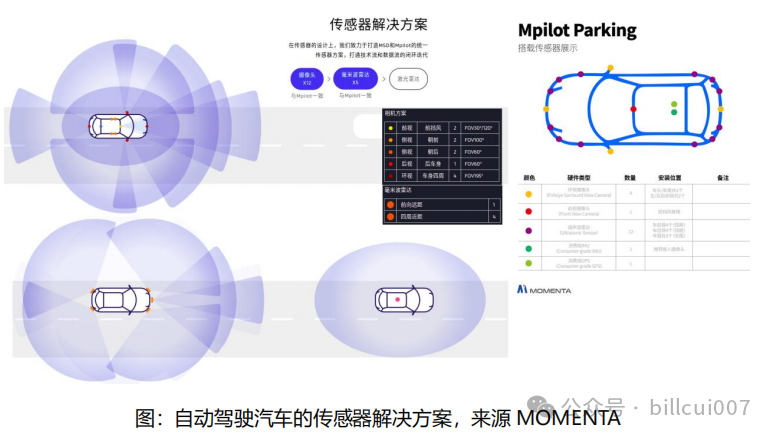
Insight 2: Native Multi-modal Intelligence. Perception data is an asset, and the integration of vision + radar + acoustics has become the default configuration. In the field of autonomous driving, a combination of 8 cameras, 4 millimeter-wave radars, and 1 LiDAR achieves 360-degree perception without blind spots through spatiotemporal synchronization and feature-level fusion. In chemical plant safety monitoring, the false alarm rate of multi-modal systems is reduced by 95%, and the missed alarm rate is reduced by 99%, truly achieving “preventing problems before they occur.”
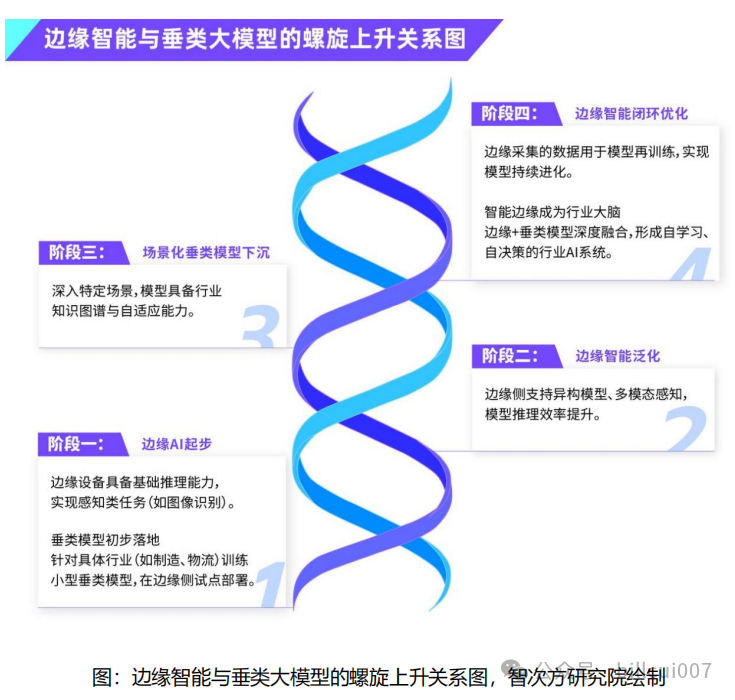
Insight 3: Parallel Evolution of Deterministic Networks and Vertical AI Models. Industrial Internet, vehicle-road-cloud scenarios require microsecond-level latency and 99.9999% reliability, with TSN and 5G URLLC technologies providing the foundation for deterministic networks. At the same time, vertical AI models emphasize interpretability and auditability, shifting from “black boxes” to “white boxes” that can explain decision-making bases. The deep integration of the two constructs a new generation of trustworthy intelligent systems.
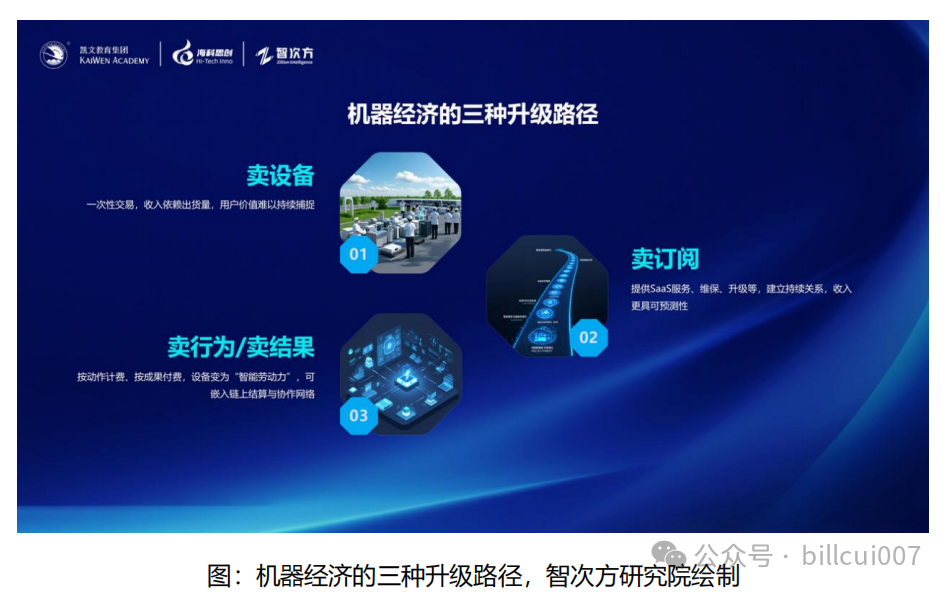
Insight 4: Data Elements and SLAization. Business models are shifting from “selling devices/models” to “paying for performance/results,” with service level agreements (SLA) becoming the contractual language for cross-domain collaboration. The data element market achieves secure circulation through technologies such as blockchain and privacy computing, forming a complete transaction system from raw data to processed data, model data, and insight data.
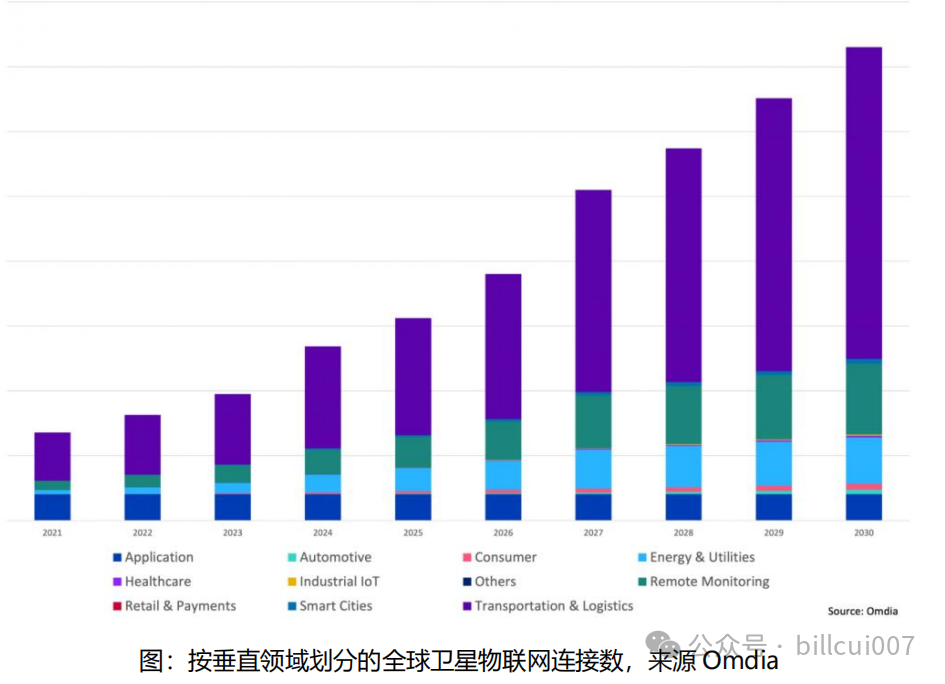
Insight 5: Integration of Satellite and Ground as Wide Area IoT Infrastructure. The cost of low-orbit satellite IoT modules has dropped to 50 RMB, with a compound annual growth rate of 23.8% in connection volume. The integrated network of air, land, and sea deeply couples with AIoT, providing “permanent items” for marine monitoring, emergency rescue, and coverage in remote areas, truly achieving ubiquitous connectivity.
3. Technical Map: Deep Integration of Four Major Sectors
The “Report” divides the industry into four major sectors: communication, perception, intelligence, and value, each undergoing profound changes.
Communication Sector evolves from a pipeline to a comprehensive capability platform of “connection + perception + computation + intelligence.” By 2026, 5G-A integrated communication and perception base stations will simultaneously undertake data transmission and environmental perception functions, with intelligent endogenous networks achieving autonomous optimization. The number of RedCap connections will exceed 1 billion, with seamless switching between satellite communication and ground networks, and star flash technology will be widely applied in scenarios such as smart cars and smart homes.

Perception Sector presents three major trends: multi-modal integration, intelligence, and scene expansion. By 2024, the market size of CMOS image sensors will reach $23.2 billion, with a significant increase in the share of Chinese manufacturers; MEMS microphones, pressure sensors, and inertial sensors have achieved global competitiveness; the cost of LiDAR and millimeter-wave radar in the autonomous driving field is rapidly decreasing; cutting-edge technologies such as flexible sensors, quantum sensors, and self-powered sensors are opening up new blue oceans.
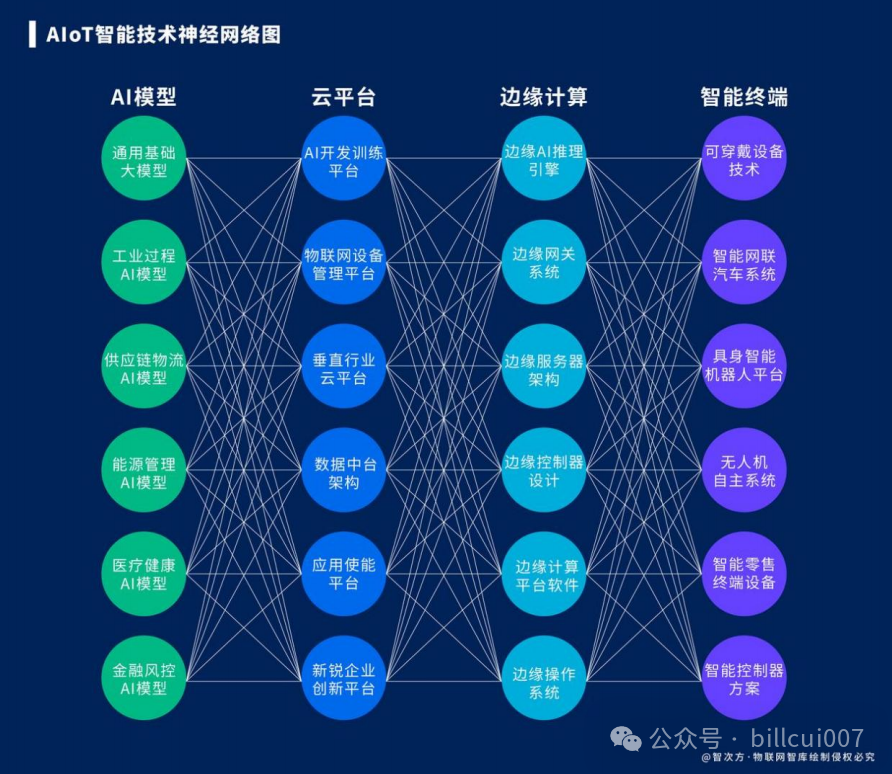
Intelligence Sector is centered on the rise of edge computing. By 2025, in the global edge computing market, retail and service industry investments will account for 28%, manufacturing will account for 25%, and the financial services industry will grow the fastest (CAGR > 15%). A distributed intelligent architecture composed of edge AI inference engines, edge gateways, and edge servers allows AI capabilities to sink into factory workshops, retail stores, and community substations, achieving millisecond-level response and data locality.
Value Sector explores data elementization and business model innovation. The data element trading market is shifting from “selling devices” to “paying for results,” with new element markets such as carbon trading, computing power markets, and IP trading markets gradually maturing. DePIN (Decentralized Infrastructure Network) activates long-tail innovation through a token incentive mechanism, allowing IoT devices, computing nodes, and communication facilities to achieve co-construction and sharing.
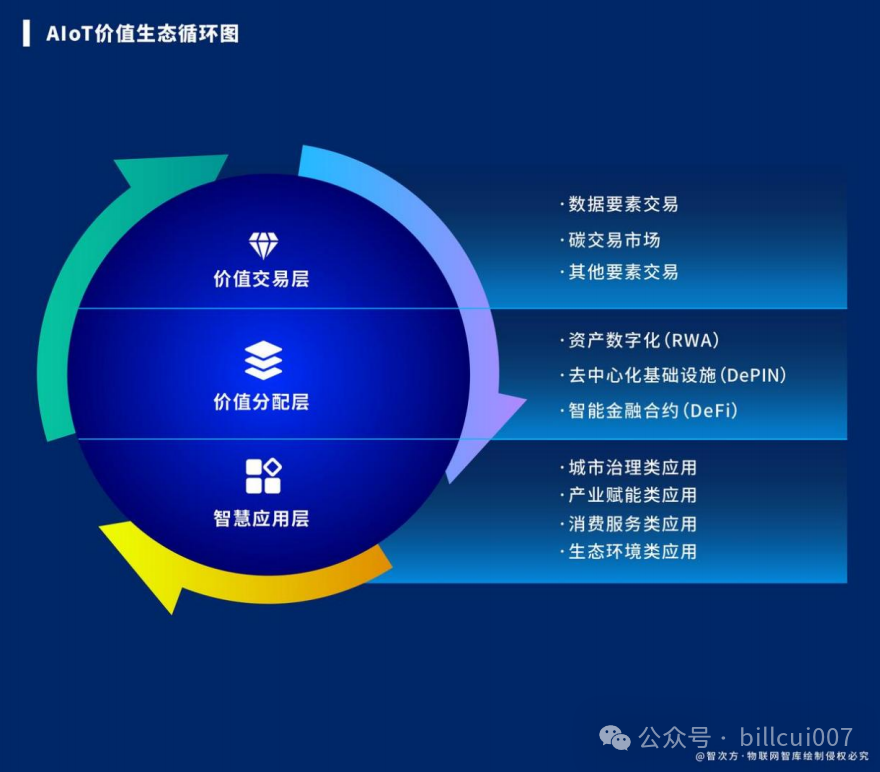
4. Ten Scenarios: Value Realization through Cross-Domain Orchestration
The true value of “Intelligent Value” lies in cross-domain collaboration. The “Report” outlines ten collaborative scenarios, each a model of technological integration and business innovation.
Vehicle-Road-Cloud Integration: Achieving commercial operation of L4-level autonomous driving through the collaboration of 5G-A deterministic networks, multi-modal perception, and vertical AI models. Companies like Lenovo provide customized network slicing, automotive-grade connection management, and SLA guarantees through their “AI + 5G” vehicle networking solutions, transitioning autonomous driving from testing to large-scale operation.
Smart Warehousing: AGV scheduling, goods-to-person picking, and intelligent sorting systems require full wireless network coverage and low latency. The “Smart Warehousing Networking Solution” from Yourenwulian achieves seamless roaming of AGVs, real-time monitoring of equipment status, and energy consumption optimization, upgrading traditional warehouses into efficient collaborative logistics hubs.
Smart Retail: The HiveLink global wireless cloud broadband solution addresses the rapid deployment needs of chain stores and the high bandwidth requirements of live streaming sales. Multi-network integration dynamic redundancy technology ensures 99.98% connection reliability, and centralized management on the cloud platform improves operational efficiency by 90%, providing a “plug-and-play” network foundation for new retail.
Industrial Intelligence: Flexible manufacturing requires deep collaboration among equipment, production lines, and supply chains. The smart factory solution from Yourenwulian connects “cloud-pipe-edge-terminal” through protocol conversion, edge AI, and digital twin technologies, achieving interconnection of all factory equipment, transparent production data, and predictive maintenance, significantly improving OEE (Overall Equipment Efficiency).
Urban Spatiotemporal Perception and Emergency Response: Constructing a digital twin of the city through multi-level perception from satellite remote sensing, drones, ground sensors, and communication base stations. In emergency response, multi-department, multi-level, and multi-resource collaborative scheduling improves rescue efficiency by more than three times.
Energy and Storage Charging: Coordinating source, network, load, and storage requires precise forecasting and scheduling. Arkreen uses blockchain and IoT technologies to put the data of distributed photovoltaics, energy storage, and charging piles on-chain, building a DePIN network that allows every kilowatt of green electricity to be traceable and tradable, enabling household users to participate in the carbon market for profit.
Green Parks and Equipment Maintenance: The fusion analysis of energy, environment, and equipment data achieves predictive maintenance and energy efficiency optimization. China Mobile’s OnePark platform applies 5G private networks, edge computing, and digital twin technologies to park management, reducing energy consumption by 15-30% and maximizing the value of equipment throughout its lifecycle.
Healthcare and Wearable Devices: Privacy computing technology enables health data to realize value under the premise of “usable but invisible.” Edge AI monitors heart rate, blood oxygen, and sleep in real-time on wearable devices, reducing abnormal warning response time from hours to seconds; federated learning allows hospitals to collaborate on disease research without data leaving the domain, resulting in more accurate models.
Whole Home Intelligence and Spatial Computing: From devices to scenes to ecosystems, companies like Xiaomi and Huawei break brand barriers through standards like OpenHarmony and Matter, achieving cross-terminal interoperability. Spatial computing technology allows home environments to understand human behavior, predict needs, and proactively serve, transitioning from “smart control” to “intelligent coexistence.”
Low-altitude Economy and Air-Ground Collaboration: Drone swarms, countermeasures, and air-ground communication networks construct a low-altitude intelligent transportation system. 5G/6G networks provide reliable communication guarantees, while AI enables autonomous obstacle avoidance and task collaboration, allowing the low-altitude economy to transition from “wild growth” to “orderly prosperity.”
5. Wuxi Paradigm: A Chinese Sample of Industrial Clusters
Wuxi, as China’s first national-level demonstration zone for the IoT industry, has validated the importance of “ecological thinking” through over a decade of practice. By 2024, Wuxi’s IoT industry scale will exceed 500 billion RMB, with 588 enterprises achieving revenue of over 250 billion RMB.
Gradual Cultivation of an Innovative Ecosystem: Wuxi has built a complete cultivation system of “eagles – gazelles – quasi-unicorns.” 60 national-level specialized and innovative “little giants,” 7 manufacturing single champions, and 390 high-tech enterprises have formed a collaborative pattern of “elephants dancing and ant armies.” Envision Energy has ranked first globally in wind power orders for three consecutive years, Wingtech Technology’s intelligent terminal R&D platform serves global Android manufacturers, and Aotaiwei Intelligent Equipment leads the industry in photovoltaics and lithium batteries.
A Complete Industrial Chain: From infrared sensors of Infineon, RF front-end of Zhaoshengwei, to optical communication devices of Finisar, edge computing platforms of Cloud Factory, and energy services of Longxin Technology, Wuxi covers the entire chain from “chips – devices – equipment – platforms – applications.” This vertical integration capability significantly enhances the efficiency of technology transformation, shortening the cycle from laboratory to market by over 50%.
Scenario-Driven Application Innovation: Wuxi enterprises excel at deeply integrating technology with scenarios. The lithium bromide unit of Shuangliang Energy achieves remote operation and energy efficiency optimization through the IoT; the lithium battery production line of Xian Dao Intelligent realizes virtual debugging and predictive maintenance through digital twins; the LiDAR of Zhongke Optoelectronics provides three-dimensional perception for environmental monitoring. These applications not only solve industry pain points but also create replicable and promotable business models.
Positive Interaction between Policies and Markets: The Wuxi government adheres to the principle of “not overstepping, not lacking,” creating an innovative environment through industrial planning, public platforms, talent policies, and scene openness. Infrastructure such as public technology service platforms, testing and certification centers, and data middle platforms reduce the innovation costs for enterprises. At the same time, the government dares to “let go,” allowing enterprises to become the main body of innovation, with the market allocating resources, stimulating endogenous motivation.
6. Future Outlook: Moving Towards a Trillion-Level Intelligent Economy
The “Report” predicts that by 2034, the number of global IoT connections will exceed 40 billion, with the market size approaching one trillion dollars, and China will account for nearly one-third of the share. Behind this is the triple drive of technology, policy, and market.
On the Technical Level: Research on 6G has begun, with frontier technologies such as terahertz communication, visible light communication, and quantum communication being validated; new computing architectures such as storage-computing integration and optoelectronic fusion are breaking through the von Neumann bottleneck; the collaboration of general large models and vertical models allows AI capabilities to be both “large and comprehensive” and “small and precise.”
On the Policy Level: The State Council’s “Artificial Intelligence +” action clearly states that by 2027, the application penetration rate of intelligent terminals and intelligent agents will exceed 70%, and by 2030, it will exceed 90%, making the intelligent economy an important growth pole. National strategies such as the market-oriented allocation reform of data elements, carbon peak and carbon neutrality goals, and new infrastructure construction provide a broad stage for AIoT.
On the Market Level: On the consumer side, smart homes, smart connected vehicles, and wearable devices are entering a replacement and upgrade cycle; on the industrial side, industrial Internet, smart energy, and smart logistics are transitioning from pilot projects to large-scale deployment; on the social side, urban governance, emergency safety, and environmental protection have an urgent demand for intelligence.
Conclusion
The curtain of the AIoT 2.0 era has already been raised. From “connection” to “intelligent connection,” from “function” to “value,” and from “single point” to “ecology,” the industry is undergoing a profound paradigm shift. As the “Report” states, AIoT is not only a technological revolution but also a new paradigm of value creation.
For practitioners, this means they must shift from a single technology application mindset to constructing a system capability of “Intelligent Value” in four dimensions; for investors, this means moving from “valuation bubbles” to focusing on real value creation and sustainable business models; for policymakers, this means shifting from “subsidy-driven” to creating an open, fair, and orderly element market.
In this transformation, Wuxi provides a replicable “Chinese sample”: strategic determination, ecological thinking, innovation-driven, application traction, and government-enterprise collaboration. These experiences are not only applicable to the IoT industry but also have universal significance for other strategic emerging industries.
The future of ubiquitous intelligence has arrived, and the infinite cycle of value has just begun.
(This article is based on the “2026 China AIoT Industry Panorama Report” and does not represent Huage’s views.)
Recommended Links: Like
Like
 Industry Research | In-depth Analysis of Talent Supply and Demand Trends in the Artificial Intelligence IndustryIndustry Research | Open Full-Stack Intelligent Service Robot EcosystemIndustry Research | China AIGC Application Panorama Report – 2025 AI Application Trends and OpportunitiesIndustry Research | 2024 Global Humanoid Robot Industry Panorama Insight ReportIndustry Research | DeepSeek Accelerates Multi-Modal AI Large Models to Open a New Era of Intelligent Cockpits – 2025 China Multi-Modal AI Large Model Cockpit Application Insight Research Report (Download)Industry Research | Huaxi Securities Humanoid Robot Industry Research ReportIndustry Research | Sensors: Essential Perception for Robots to Interact with the External WorldIndustry Research | AI50 Annual Keywords – Tencent Research InstituteIndustry Research | 2025 Six Major Future Industry Development Trends and Eight AI Landing Scenario Insights ReportChina’s Sensors Lag Behind by More than 10 Years, 96% of High-End Products Depend on Imports, and the “Bottleneck” Phenomenon is Prominent! Experts Critique the Industry Status#Technology Service IndustryForeword to “100 Questions about Technology Services”: Exploring the Path with a Hundred Questions, Knocking on the Door of a New Era of Technology Services“100 Questions about Technology Services” Issue 1: What is the Technology Service Industry? What specific business forms does it include?“100 Questions about Technology Services” Issue 2: What role does the Technology Service Industry play in the modern industrial system?“100 Questions about Technology Services” Issue 3: What is the significance of developing the Technology Service Industry for cultivating new quality productivity?“100 Questions about Technology Services” Issue 4: How does “soft technology services” forge “hard industrial strength”?“100 Questions about Technology Services” Issue 5: What are the “hardcore services” of the Technology Service Industry?“100 Questions about Technology Services” Issue 6: What is the scale and development speed of China’s Technology Service Industry?“100 Questions about Technology Services” Issue 7: What is the quantity and service network of China’s Technology Service Industry?“100 Questions about Technology Services” Issue 8: What progress has been made in technology trading and achievement transformation in China?“100 Questions about Technology Services” Issue 9: What specific manifestations does the Technology Service Industry have in supporting the transformation and upgrading of manufacturing?“100 Questions about Technology Services” Issue 10: What characteristics does the development pattern of the Technology Service Industry in advanced regions like Beijing have?“100 Questions about Technology Services” Issue 11: What are the key policies for promoting the high-quality development of the Technology Service Industry at the national level?“100 Questions about Technology Services” Issue 12: The Ministry of Industry and Information Technology’s “point, line, surface, body” strategy to create a new ecology for the Technology Service Industry“100 Questions about Technology Services” Issue 13: The “four transformations” of the Technology Service Industry“100 Questions about Technology Services” Issue 14: How is artificial intelligence reshaping the traditional model of the Technology Service Industry?“100 Questions about Technology Services” Issue 15: What role does the construction of a standard system play in the development of the Technology Service Industry?“100 Questions about Technology Services” Issue 16: What kind of technology transfer system has been constructed in China?“100 Questions about Technology Services” Issue 17: What is the significance of building a national integrated technology market?“100 Questions about Technology Services” Issue 18: The innovative model of “paying after use” to solve the difficulties of achievement transformation“100 Questions about Technology Services” Issue 19: Technical managers – the “chief translators” of technology achievement transformation“100 Questions about Technology Services” Issue 20: What channels are currently available for cultivating technical transfer talents in China?“100 Questions about Technology Services” Issue 21: What position does concept verification occupy in the technology achievement transformation chain? Why is it important?“100 Questions about Technology Services” Issue 22: How can universities and research institutions build concept verification centers?“100 Questions about Technology Services” Issue 23: What specific work does pilot testing (intermediate testing) include? Why is it a key link in achievement transformation?“100 Questions about Technology Services” Issue 24: What institutions can provide pilot testing services? How can pilot testing platforms achieve sustainable development?#Artificial Intelligence#AIUnderstanding the “Opinions on Deepening the Implementation of the “Artificial Intelligence +” Action” in One PictureThe State Council’s Opinions on Deepening the Implementation of the “Artificial Intelligence +” ActionMcKinsey: Research Report on the Next Innovation Revolution Driven by Artificial IntelligenceDisruption or Replacement: How Artificial Intelligence is Shaking Up the Job Market?The Internet Queen Mary Meeker has just released a 340-page “Artificial Intelligence Trends Report,” summarizing 10 core pointsDecoding China’s AI Industry InnovationDecoding the AI Industry Ecosystem in China: From Panorama to Technological Deepening and Scene BreakthroughsNVIDIA’s Market Share in China Plummets from 95% to 0%: Huang Renxun Warns of the “Double Loss” Risk of US Export Controls#Technology Achievement Transformation #Incubator #Innovation Ecology of Technology Achievement Transformation – Building a New Paradigm of Collaborative Symbiosis of Innovation ElementsThe People’s Daily’s In-Depth Report on Technology Achievement Transformation, Involving Empowerment of Achievements, Construction of Pilot Testing Platforms, and Incentives for Technical ManagersThe State Council’s Executive Meeting Studies Improving the Comprehensive Service System for Going Global Enterprises, Providing Strong SupportChina-US Technology “Dual Peak Showdown”: How China is Transitioning from Follower to Leader in Key Technology Fundamental Research?The List of Effective Candidates for the 2025 Academician Election of the Two Academies is Announced!Chinese Academy of Sciences Academician Qiao Hong: Embodied Intelligence Presents Ten Development TrendsThe Investment Promotion and Development Committee Releases a Heavy Document, New Regulations on Government Funds Clarify the Cancellation of Return Investment RatioWhy have so many policies for technology achievement transformation been introduced, yet the difficulties of transformation remain unsolved?Jiangsu Industrial Technology Research Institute: How Does the Innovation Engine Drive Industrial Upgrading?Entrepreneurial transformation has risks! A doctoral supervisor from a prestigious 985 university has been filed for embezzling 190 million RMB【Extraction of Technological Experience】The Key to Germany’s Technological Leadership: A Unique Paradigm of Governance System and Capability ModernizationBehind the Rapid Growth of the Technology Service Industry: Policy Dividends, Regional Clusters, and Transformation PainsBenchmarking the New Regulations of the Ministry of Industry and Information Technology! Multiple Provinces Will Revise the Management Measures for IncubatorsChinese Academy of Sciences Technology Innovation Development Center: Grasping the Logic of the Integration of Technological Innovation and Industrial Innovation to Cultivate New Quality ProductivityThe Chinese Association for Science and Technology Releases Major Scientific Issues, Engineering Technical Challenges, and Industrial Technical Problems for 2025Gradual Cultivation, Standard Guidance, Financial Collaboration – Technology Enterprises Incubators Will Welcome Multiple Policy BenefitsShould Technology Achievement Transformation Focus on the Industrial Side or the Research Side?Understanding Technology Achievement Transformation and Its Six Transformation Methods in One Article!Stanford University’s Technology Transfer Office OTL: The Innovation Engine of Technology TransferWang Tianmiao’s Notes | Value Incubation: How to “Emerge” More Technological Innovation Industries?Xian Jiaotong University’s Party Secretary Lu Jianjun: Promoting Enterprise-Led Integration of Production, Learning, and Research to Solve Innovation ProblemsInsights and Suggestions on the Current Situation of the Integration of Technological Innovation and Industrial InnovationThe Core of Technology Transfer is Not Technology, but Transactions! These Three Types of People are Naturally Suitable to be “Technical Managers”The Director of the Torch Center of the Ministry of Industry and Information Technology, Lv Xianzhi, Proposes: Building a “Technical Manager +” Ecological System; Accelerating the Layout of Concept Verification Platforms and Pilot Testing PlatformsViewpoint | The Conceptual Connotation and Era Causes of New R&D Institutions (Series Report One)Viewpoint | The Construction and Development of New R&D Institutions (Series Report Two)Viewpoint | The Organization and Strategic Management of New R&D Institutions (Series Report Three)Understanding Concept Verification Centers: The Key to Verification and the National Layout CodeBreaking the Deadlock · Reconstruction · Rebirth – The Scientific Breakthrough and Practical Path of the “Five Element Method” for Evaluating Technology AchievementsBy September 2027! The National Unified Technology Transaction Service Platform’s Four Major Projects Have Officially LaunchedLiu Zhongfan: Improving the Mechanism for Technology Achievement Transformation and Accelerating the Formation of New Quality ProductivityHow Ordinary People Can Benefit from Technology Achievement TransformationComparison of the Management Measures for Technology Enterprise Incubators Before and After RevisionThe Ministry of Human Resources and Social Security’s Office Notice on Carrying Out Pilot Reforms of Professional Technical Talent Management Services5 Questions + 1 Picture, Understanding the “Management Measures for Technology Enterprise Incubators” of the Ministry of Industry and Information TechnologyComparison of the Technology Enterprise Incubator Recognition Management Measures (Draft for Comments) with the Original Management Measures160 million RMB! A well-known 985 university has completed a major technology achievement transformation worth over 100 million RMB5.30 | National Science Workers’ Day: With the Light of Science and Technology, Forge the Chapter of the EraViewpoint | The Core of Technology Achievement Transformation is “Human Transformation”The Ministry of Industry and Information Technology: Supporting the Deep Integration of Artificial Intelligence and the Technology Service Industry, Creating “AI + Technology Service” Application ScenariosLatest! The Torch Center of the Ministry of Industry and Information Technology Releases the Ranking of the Number of National Technology Transfer Institutions and PersonnelThe Torch Center of the Ministry of Industry and Information Technology Discusses the Six Major Challenges Facing the Construction of Technical Manager Teams and the Next Steps for Top-Level Design WorkAccelerating the Transition from “Large Quantity to Strong Quality,” Technology Innovation Incubators Become Accelerators of Technology Achievement TransformationThe Six Major Operating Models of Entrepreneurial IncubatorsPolicy Interpretation | Promoting the Development of the Technology Service Industry around R&D, Technology Transfer and Transformation, and Enterprise Incubation, “Hardcore Services” Cultivating More Hard Technology Enterprises