
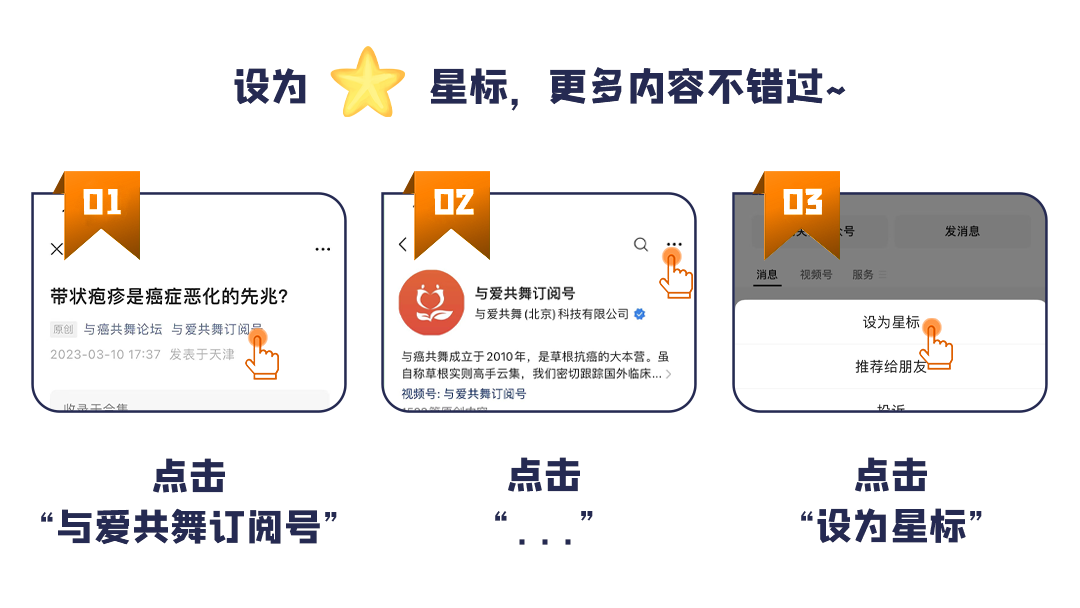
Follow below to not miss cancer knowledge~
1
Three Major Therapies for Lung Cancer Have Shortcomings, Urgent Need for Innovative Drugs
In recent years, significant progress has been made in the treatment of advanced non-small cell lung cancer, with a growing variety of therapeutic drugs leading to a triad of targeted, immunotherapy, and chemotherapy.
-
Targeted therapy focuses on specific targets within tumor cells, allowing for precise strikes that reduce damage to normal cells and significantly decrease side effects. However, targeted therapy is only effective for patients with corresponding targets (gene mutations).
-
For patients with no available drugs or targets, immunotherapy has become another important option. Immunotherapy activates the body’s anti-tumor immunity to indirectly kill tumor cells, with relatively mild side effects, and if treatment is halted, the effects can persist. However, single-agent treatment has limited effectiveness.
The above two treatment methods have become the first-line standard treatment options for advanced lung cancer, significantly prolonging patient survival time. However, both targeted and immunotherapy struggle to avoid resistance issues. Chemotherapy remains an unavoidable treatment choice for most patients after developing resistance.

Image source: Shutterstock
Chemotherapy uses cytotoxic drugs to destroy rapidly proliferating cells, thus unable to accurately distinguish between proliferating tumor cells and normal cells, leading to numerous adverse reactions. It is akin to a “mass destruction weapon” that indiscriminately attacks both. This has become a significant factor limiting the clinical application of chemotherapy. Is there a way to make chemotherapy more precise and specifically target tumor cells? This would reduce adverse reactions and improve efficacy, right?
2
Magic Bullet ADC Drugs
The concept of making chemotherapy drugs more precise was proposed over 100 years ago by the father of immunology, Paul Ehrlich, who vividly referred to it as a “magic bullet.” With advancements in science and technology, in the 1980s, American scholars revisited this idea and proposed the theory of “precision missiles against cancer,” ultimately successfully developing antibody-drug conjugates, or ADCs. Since the first ADC was launched in the United States in 2000, currently 16 ADC products have been launched globally.
3
The Three Major Components of ADC Drugs
We can think of ADC drugs as a drone; this “drone” is composed of three major components: the “aircraft,” “ammunition,” and “link.” The “aircraft” part is the monoclonal antibody (abbreviated as mAb), which is responsible for precisely delivering the “ammunition,” which is the cytotoxic drug (the chemotherapy drug), targeting and eliminating proliferating tumor cells through mechanisms that affect cell division, thereby stopping tumor growth and spread. The “link” connects the aircraft and the ammunition.
The aircraft (mAb) must be able to fly accurately to the tumor cells without harming innocent bystanders and must not be eliminated by the immune system. The ammunition (cytotoxic drugs) needs to have a certain membrane permeability so that when the “ammunition” explodes, it can also destroy nearby tumor cells. Additionally, the ammunition should degrade quickly to reduce the risk of residual unexploded ammunition harming normal cells. The link is also crucial, requiring a secure connection during transportation of the ammunition, so it does not release the ammunition prematurely before reaching the tumor, causing collateral damage; once at the tumor, it must ensure the ammunition is released to kill the tumor cells.

Image source: Shutterstock
From the above introduction, it is clear that the requirements for ADC’s “three major components” are very high, and achieving this is not easy. Therefore, the first-generation ADCs had many deficiencies and unstable efficacy. However, ADC drugs have undergone two updates and iterations. The new generation of ADCs has significant upgrades in all “three major components,” improving stability, increasing drug load, enhancing precision, and reducing non-target toxicity. Additionally, the membrane permeability of the drug-loaded components is better, addressing the insufficient efficacy issues of the first two generations of ADCs due to tumor heterogeneity.
4
Two New ADCs in the Lung Cancer Field
Currently, ADC drugs have made significant strides in multiple fields, including breast cancer, with new achievements continually emerging in lung cancer. It is expected that several ADC products for lung cancer will be launched in the next two years. Among these, the most noteworthy are the new generation ADC drugs, HER2-targeting T-DXd (DS-8201) and TROP2-targeting Dato-DXd. T-DXd has already been approved in the United States for the treatment of HER2-mutated non-small cell lung cancer, becoming the first ADC in the lung cancer field, and has subsequently been approved for the treatment of HER2-positive (IHC 3+) solid tumors (including non-small cell lung cancer) in the United States. Dato-DXd is the first ADC drug in the lung cancer field to achieve positive results in Phase III clinical trials, with broad-spectrum characteristics that will meet the treatment needs of a wider range of advanced lung cancer patients.
5
T-DXd Pioneers HER2 Lung Cancer Treatment
Analysis results from the DESTINY-Lung05 Phase II clinical study indicate that among treated Chinese patients with HER2-mutated non-small cell lung cancer, T-DXd can reduce tumors in at least 58.3% of patients by at least 30%. The median progression-free survival time for 50% of patients with non-progressing tumors is at least 10.8 months. The efficacy of T-DXd in treating treated Chinese HER2-mutated non-small cell lung cancer is superior to that of global patients, and the results of the DESTINY-Lung05 Phase II clinical study are expected to accelerate the approval of T-DXd in China for HER2-mutated treated non-small cell lung cancer indications.
In addition to HER2 mutations, T-DXd has recently been approved in the United States for the indication of HER2-positive (IHC 3+) solid tumors (including non-small cell lung cancer). Results from the DESTINY-Lung01 clinical study show that T-DXd treatment for HER2-positive (IHC 3+) treated non-small cell lung cancer can reduce tumors in at least 52.9% of patients by at least 30%, with half of the patients with significant tumor reduction maintaining the effect for at least 6.9 months.
T-DXd is the first to enable targeted treatment of HER2 in non-small cell lung cancer, bringing a new treatment option for HER2 patients.

Image source: Shutterstock
6
Dato-DXd Expected to Become a New Choice for Treating Treated Non-Squamous Non-Small Cell Lung Cancer
The TROPION-Lung 01 is a global Phase III clinical study that enrolled patients with non-small cell lung cancer who are resistant to immunotherapy, targeted therapy, and chemotherapy. The results showed that in the non-squamous Dato-DXd group, 31% of patients had tumors shrink by at least 30%, while only 13% in the non-squamous docetaxel group. The response rate in the Dato-DXd group is nearly three times that of docetaxel increased by nearly 3 times. The median progression-free survival (PFS) in the non-squamous Dato-DXd group reached 5.5 months, meaning half of the patients in the Dato-DXd group had non-progressing tumors and survived for at least 5.5 months, while in the docetaxel group, this time was only 3.6 months. The 6-month progression-free survival rate for the Dato-DXd group was 46.6%, while the docetaxel group was 28.2%. Dato-DXd significantly delayed disease progression for patients.
The success of the TROPION-Lung 01 study has opened the door for Dato-DXd’s use in lung cancer treatment, and in the future, Dato-DXd will explore more combination therapy options, likely replacing some traditional chemotherapy drugs.

Image source: Shutterstock
7
ADC Safety Superior to Traditional Chemotherapy
Thanks to their high targeting, T-DXd and Dato-DXd have good safety profiles. Compared to traditional chemotherapy drugs, the proportion of patients treated with Dato-DXd who had to reduce or discontinue the dose due to more severe drug-related adverse reactions is also lower. This means that patients receiving ADC treatment are more likely to complete their treatment on time and at the prescribed dose, maximizing the drug’s efficacy and also leading to a higher quality of life.
In conclusion, ADC can be said to be another life-extending “gift” that modern medicine has brought to lung cancer patients after immunotherapy and targeted therapy, and it is expected to be applied to both treated and untreated patients, replacing traditional chemotherapy and allowing more patients to receive effective and low-toxicity treatment.
Expert Introduction

Professor Zhou Jianya
Zhejiang University School of Medicine
First Affiliated Hospital
-
Professor, PhD supervisor, chief physician;
-
Director of the Respiratory Department at the First Affiliated Hospital of Zhejiang University School of Medicine;
-
Director of the Zhejiang Provincial Clinical Medical Research Center for Respiratory Diseases;
-
Director of the Chinese Society of Clinical Oncology (CSCO), member of the Non-Small Cell Lung Cancer Committee;
-
Member of the Tobacco Disease Group of the Respiratory Branch of the Chinese Medical Association, member of the Medical Ethics Group;
-
Deputy Director of the Respiratory Disease Branch of the Zhejiang Medical Association;
-
Vice President of the Respiratory Physicians Branch of the Zhejiang Physicians Association;
-
Member of the Lung Cancer Committee of the Zhejiang Anti-Cancer Association, standing member of the Tumor Marker Committee;
-
New drug reviewer of the National Medical Products Administration;
-
Visiting scholar at the Sidney Kimmel Comprehensive Cancer Center at Johns Hopkins University;
-
Principal investigator of three National Natural Science Foundation projects, with over ten first-author SCI papers published, and has participated in multiple international multicenter clinical trials.
References
1. Zhu Yixiang, Wang Zhijie. Research Progress and Prospects of Antibody-Drug Conjugates in Lung Cancer [J]. Chinese Journal of Lung Cancer, 2022, 25(7):9.
2. DESTINY-Lung05 Phase II Clinical Study Confirms Significant Survival Benefits of Enhertu® in Previously Treated Chinese HER2 Mutant Advanced Lung Cancer Patients
https://www.astrazeneca.com.cn/zh/media/press-releases/2024/04-10-02.html#!
3. FDA grants accelerated approval to fam-trastuzumab deruxtecan-nxki for unresectable or metastatic HER2-positive solid tumors
https://www.fda.gov/drugs/resources-information-approved-drugs/fda-grants-accelerated-approval-fam-trastuzumab-deruxtecan-nxki-unresectable-or-metastatic-her2
4. N. Girard, I. Okamoto, et al. 59P – Datopotamab deruxtecan (Dato-DXd) in patients with previously treated advanced non-small cell lung cancer (NSCLC): Nonsquamous (NSQ) histology in the phase III TROPION-Lung01 trial.
Annals of Oncology (2024) 9 (suppl_3): 1-53. 10.1016/esmoop/esmoop102569
Free Consultation
Add the assistant on WeChat for: ① Free consultation on cancer-related issues; ② Prize-winning submissions ③ Clinical trials ④ Download the app and join patient groups.

Article Statement: The information in this article aims to convey cutting-edge medical information and research progress, and does not involve recommendations for treatment plans. In clinical practice, please follow the advice and guidance of doctors or other healthcare professionals.

Star mark to follow, don’t miss the wonderful content!

Dancing with Cancer
Scan to add Dancing with Cancer Assistant
Helping you find groups and engage in discussions