Understanding the AI Agent Economy (A2A): The Three Stages of Evolution from “AI Assisting Humans” to “AI Agents Collaborating Independently”. Previously, tasks were handled through “human-to-human interactions” (for example, contacting customer service or negotiating with sales representatives), but in the future, it will transform into “your AI agent interacting with other AI agents”, collaborating autonomously throughout the entire process of negotiation and transaction. This transition is not sudden; it unfolds in three steps, each subtly changing our lives, learning, and work.
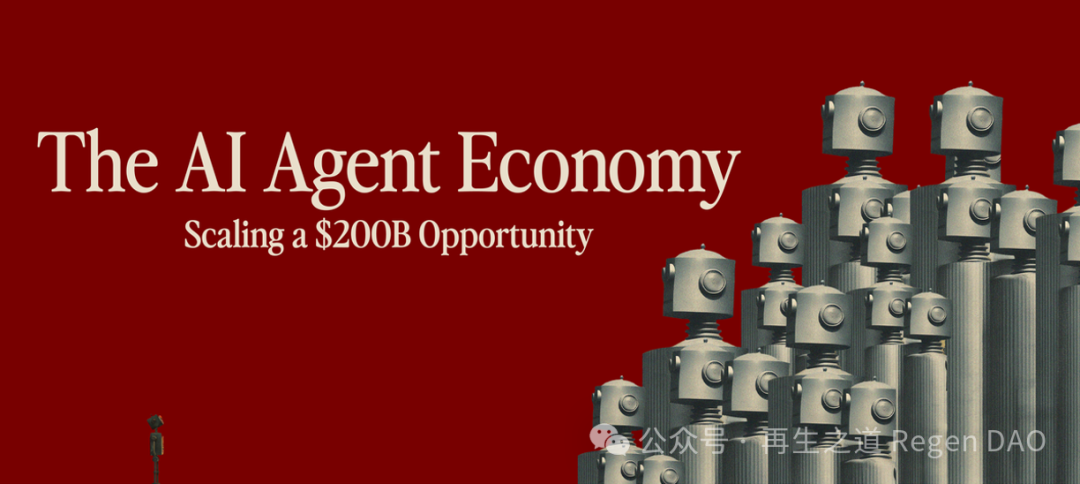
AI has transformed what once seemed “somewhat science fiction” into a force that is reshaping industries and work in a non-linear way. This has led to a new economic paradigm:Agent-to-Agent (A2A) Economy.
In this model, AI agents from different organizations—even agents between businesses and consumers—can collaborate, negotiate, and transact autonomously, completing tasks on behalf of humans.
The core of this transformation lies in the fact that AI agents possess goals and resources, enabling them to handle the entire lifecycle of transactions at a speed and scale far beyond human capabilities. However, like all disruptive innovations, it will not happen overnight; it will unfold in stages, each with varying complexity and levels of adoption.
This article from the Future Lab will guide you through these stages and encourage you to think about how we move towards a fully autonomous A2A economy.
Stage One: Functional Replacement
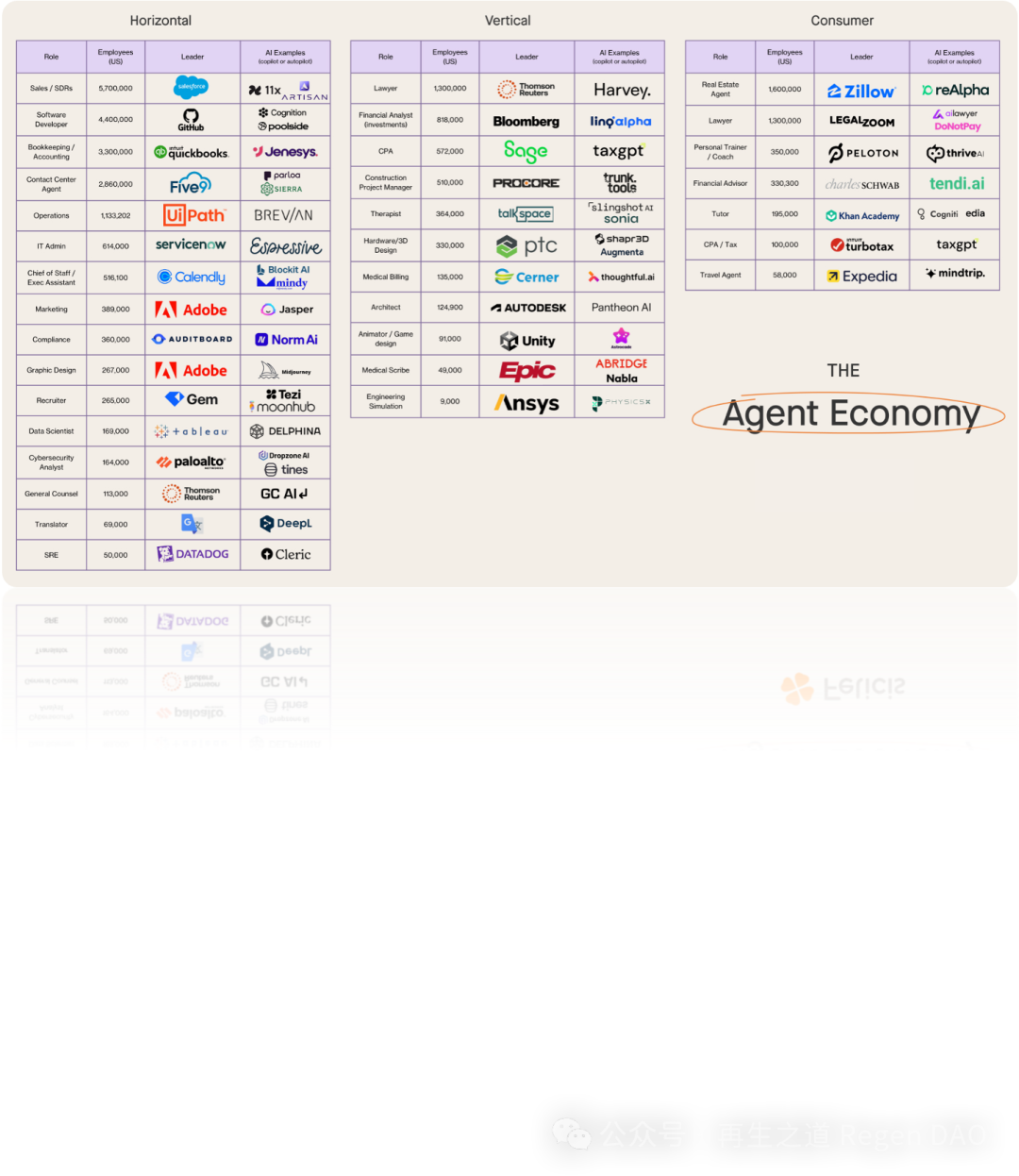
We have already seen AI agents replacing certain roles of human experts, especially with the emergence of vertical AI. This is the first stage of the A2A economy, known asFunctional Replacement. In this stage, AI agents replace specific positions or functions within an organization.
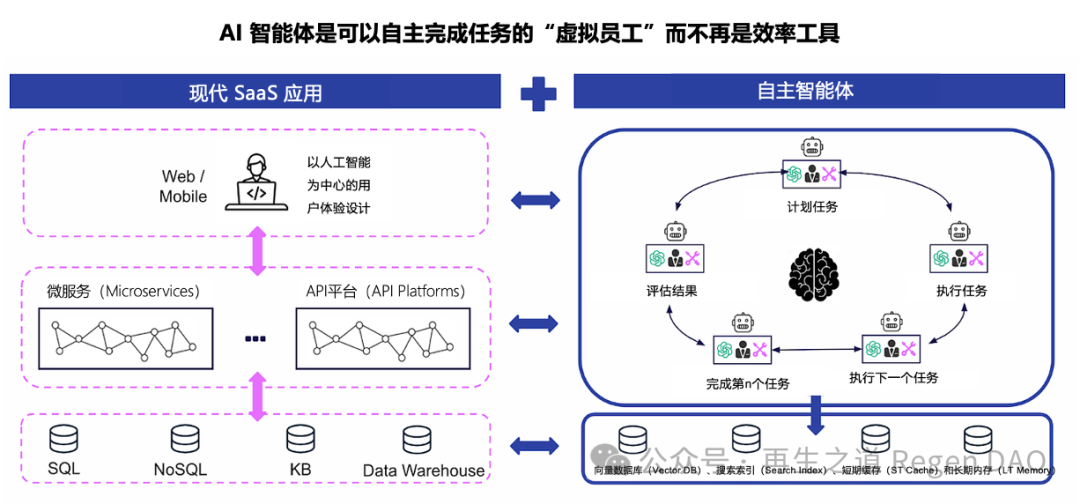
For example, chatbots have completely transformed basic customer service. When you open a website, an automated AI agent pops up immediately to help answer common questions or guide you through processes like resetting passwords or handling returns.
Some companies have even deployed more specialized AI sales assistants capable of answering questions about product features, inventory, and recommending discounts based on real-time user behavior.
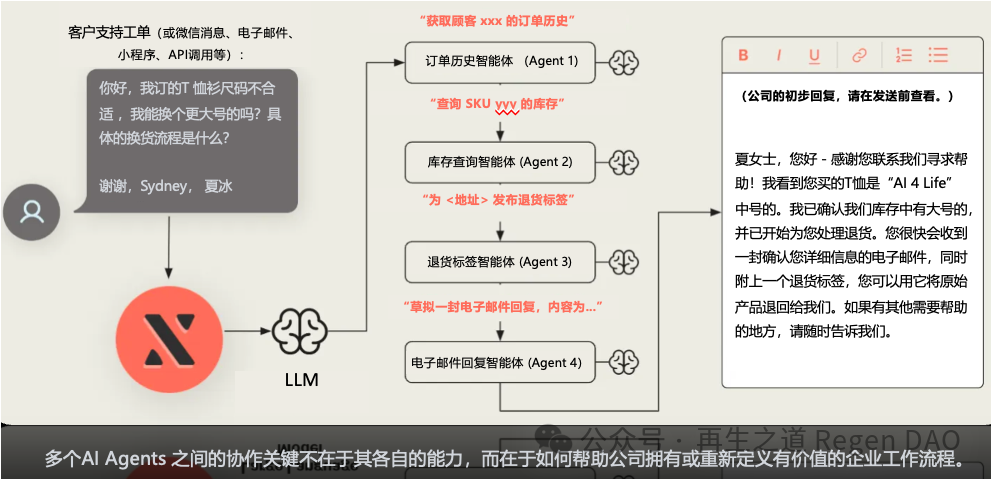
These AI agents bring tangible business value: reducing labor costs, increasing speed, and ensuring consistency. However, they remain limited to specific functions, departments, or scenarios and cannot fully replicate or represent the overall operations of a business.
They are best suited to operate within clearly defined rules, well-established systems, and ample data.
Stage Two: Business Unit Replacement
The second stage is more disruptive. At this point, AI agents upgrade from handling single tasks toreplicating entire stores or business units.
Imagine a retail scenario: an AI agent not only answers your questions but also helps you complete payments, arrange logistics, handle returns, and provide after-sales service—all without human intervention, fully aligned with your budget and preferences.
This is the moment when A2B (Agent-to-Business) and A2C (Agent-to-Consumer) transactions become feasible. In this stage, a single AI agent can serve as the “face” of a business, independently handling services that previously required multiple positions or departments. Efficiency, cost savings, and customer experience will all see significant improvements.
For instance, imagine walking into a Blue Bottle coffee shop, where you no longer need to place your order with a human but instead interact with an AI agent via a voice-enabled tablet, from “What would you like to drink today?” to “Would you like oat milk?”, “For here or to go?”, “Total is 35 yuan, thank you!”—this entire sequence of service is completed by AI.
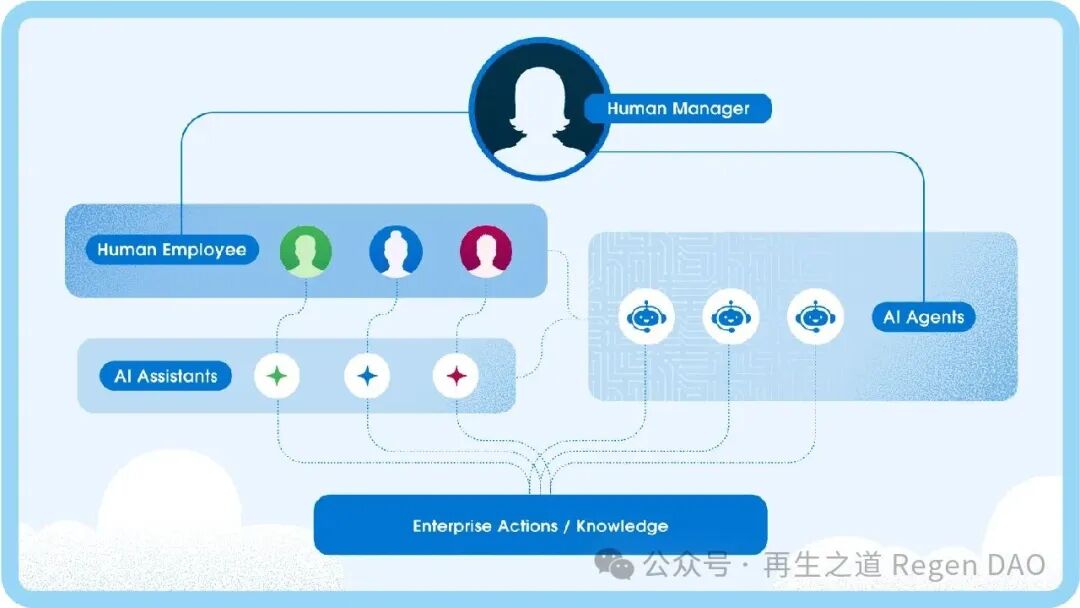
Even better, this agent can communicate with customers in almost any language and can even provide sign language translation for accessibility.
This automated experience, whether online or offline, relies on deep integration with payment systems, order systems, inventory management, logistics, and CRM platforms.
The real challenge lies in how AI agents handle unexpected situations, such as policy changes, edge cases, or non-standard issues.
Therefore, businesses often start testing with a subset of products or services and gradually expand. Early adopters not only gain tangible cost advantages and efficiency improvements but also attract market attention and public relations benefits.
However, this stage may also raise concerns or resistance from some customers, as it clearly threatens to replace certain human jobs.
Stage Three: AI-to-AI Transactions
The final stage is direct transactions between AI agents. This is the ultimate form of this logic. Here, both businesses and consumers will set goals and budgets for their respective AI agents, allowing them to negotiate and transact autonomously.
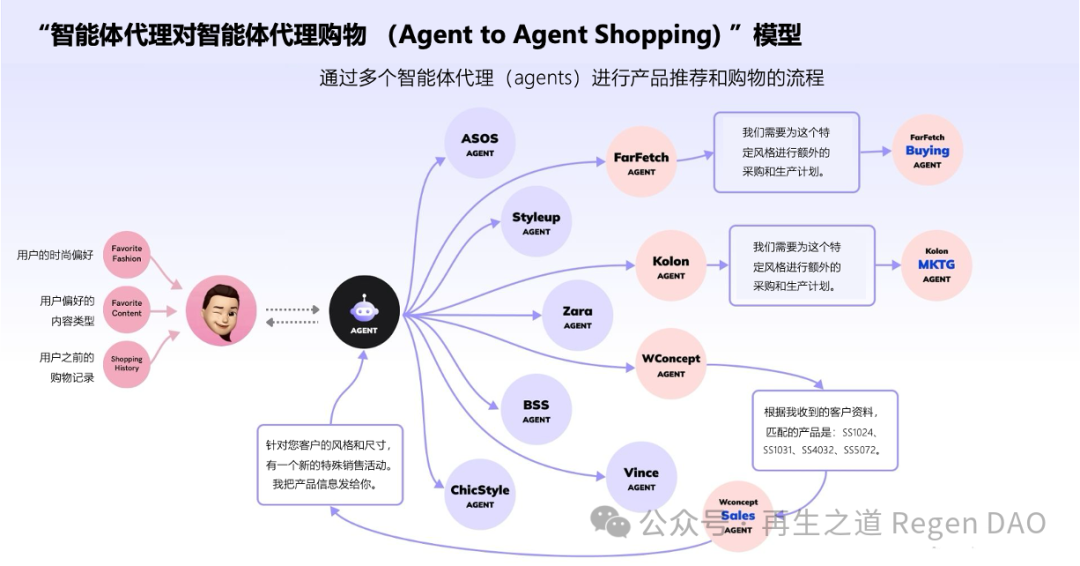
At that point, you will no longer need to browse websites, learn interfaces, or wait for human customer service. Your personal AI agent will automatically gather products, compare prices, complete transactions, arrange logistics, handle after-sales, and provide real-time updates on order progress.
On the business side, AI agents can autonomously manage inventory procurement plans, optimize supply chain logistics, and even dynamically adjust pricing based on A2A negotiation results. The economy will be driven by AI, while humans will only need to set strategic goals and regulatory frameworks at a higher level.
The transaction efficiency and speed at this stage will be unprecedented, but it will also bring new challenges: how to establish trust? Who will be held accountable? How will employment structures be impacted?
Transitional Phase: Hybrid Models and OpenAI Operator
Before reaching the third stage, some transitional hybrid models will emerge. For example, OpenAI’s Operator is a transitional case. Having AI interact through clicking on web pages and loading complex UIs is inefficient; a more reasonable approach is for businesses to directly deploy vertical AI agents to receive orders and interact with other AI tools, thereby streamlining transaction and data exchange processes.
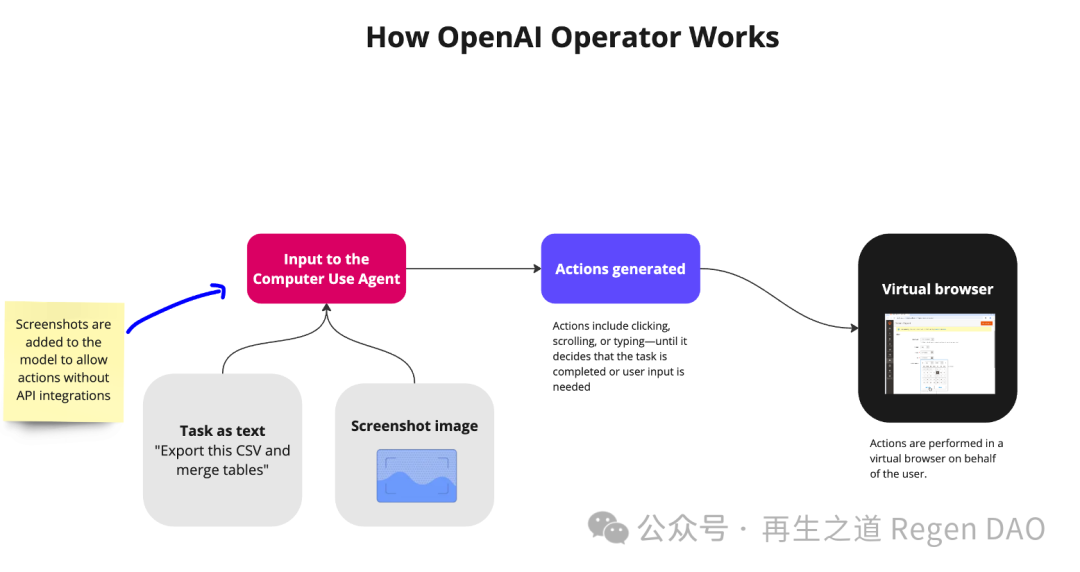
Currently, many B2C interactions still follow the model of “consumers are humans, and businesses use AI agents”; this is the B2A (Business-to-Agent) model. However, the next step will see consumers equipped with personal AI agents, gradually transitioning to A2C (Agent-to-Consumer).
This hybrid model, while less efficient than full autonomy, can help businesses gradually build trust, optimize agent capabilities, and address various potential issues.
The Future: The Rise of A2A Startups
As more companies recognize the vision of an AI agent-driven economy, a wave of startups focused on A2A will rapidly emerge. They will offer plug-and-play AI agents capable of representing a complete business, responsible for marketing, sales, customer service, payments, and fulfillment.
Their pitch will be straightforward: “Hand us your brand guidelines, product catalog, and business policies, and we can deploy an AI-operated store for you.” Even simpler: “Give us access to your Shopify account, and we can launch a complete shopping experience with an AI agent for you.”
As interactions between these agents increase, A2A transactions will gradually surpass human-to-agent interactions, ultimately forming a self-operating ecosystem.
This implies a significant impact: supply chain negotiations, wholesale orders, and even consumer shopping may primarily occur between AI systems.
Humans will still provide “guardrails”—setting budgets, policies, and goals—but daily operations may enter an “autopilot mode” driven by AI.