Atantares Medical Technology Co., Ltd.
Atantares
The Digital World
“Biological Chip” (Part 3)
Published on: 2025/07/11
What Are We Building?
— DNA Storage Products of Atantares Technology
and Roadmap
Total Word Count: 2835 words
Estimated Reading Time: 9 minutes
In the previous two articles, we reviewed the necessity of DNA storage as the next-generation information storage paradigm (Part 1), and the technological evolution and strategic layout of different players globally (Part 2). From “why to do it” to “who is doing it,” we now face a more specific question:
“As a pioneer in DNA storage in China, what products and platforms is Atantares Technology actually building?”
This article will focus on Atantares’ DNA storage products and platform architecture, providing an overview of our current product positioning, self-developed modules, and overall strategic layout. We will elaborate on the underlying technical details in the next article, “Technical Insights.”
What Kind of Products Is Atantares Technology Building?
Our Vision:
To utilize semiconductor technology to create the next-generation life science infrastructure, dedicated to high-throughput synthesis and detection of DNA, RNA, and proteins, enabling key applications such as synthetic biology, biomedicine, and DNA information storage, to meet the rapidly growing demands in healthcare, synthetic biology, and DNA storage fields.
Core Self-Developed Modules and Brief Description:
The DNA storage product system that Atantares is building mainly consists of the following core components:
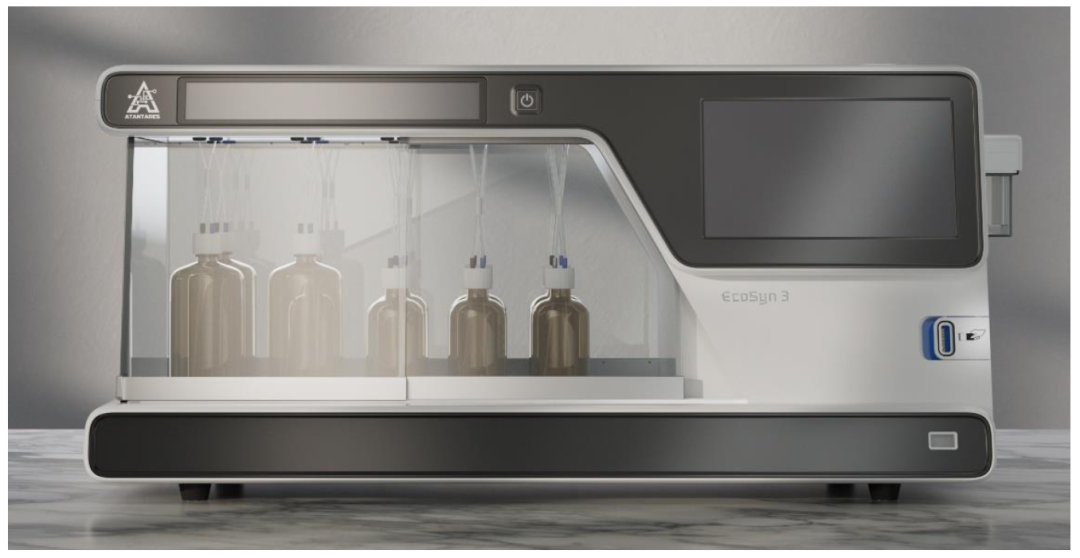
1. Self-Developed Module 1: High-Throughput Synthesizer (EcoSyn)
-
The world’s only commercially available desktop high-throughput DNA synthesizer based on CMOS electrochemical in-situ synthesis
-
Supports tens of thousands of parallel syntheses, fully automated operation, and modular design, suitable for both research and industrial scenarios
-
Synthesis error rate as low as 1/2500 nt, reagent consumption reduced by 90%, with safety, stability, and repeatability, providing significant cost advantages
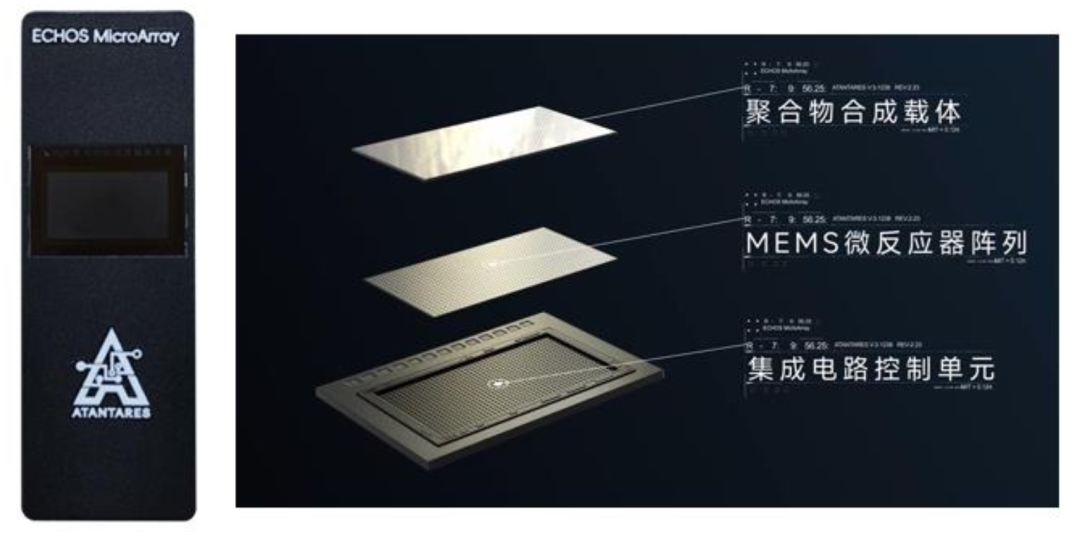
2. Self-Developed Module 2: ECHOS MicroArray Synthesis Microarray Chip Series
-
High precision, high density, and high compatibility design, redefining the efficiency boundaries of gene synthesis
-
High-Throughput Series (H Series) utilizes silicon-based semiconductor technology, capable of integrating tens of thousands of synthesis units, meeting the needs for primer pools, library construction, DNA information storage, drug development, and more
-
Medium-Throughput Series (M Series) employs glass substrate semiconductor technology, catering to large-capacity synthesis needs and NGS probe synthesis applications
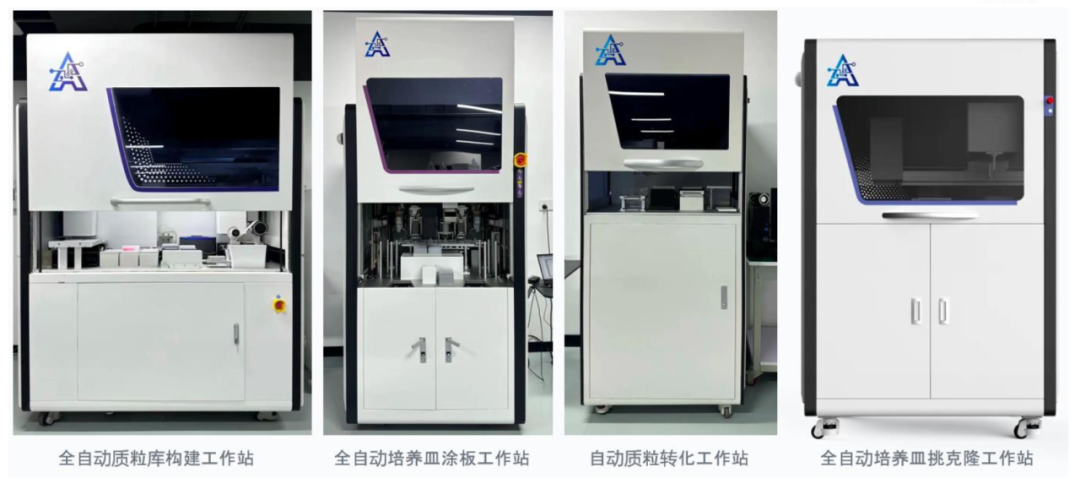
3. Self-Developed Module 3: Fully Automated Gene Synthesis Platform
-
Fully automated gene synthesis platform that seamlessly connects the entire process from plasmid construction, plating, transformation to clone screening, creating a “one-click” DNA engineering assembly line
Product Pathway Architecture:
-
Base Layer: Chip synthesis platform built on CMOS+MEMS (ECHOS series chips, synthesis array, CMOS control circuits, MEMS electrode fabrication)
-
Engineering Layer: Synthesizers, automated stitching and error correction systems (EcoSyn synthesizer, AI synthesis engine, in-situ error correction system, in-situ stitching module, fully automated gene synthesis platform)
-
AI Layer: Utilizing large-scale experimental data to drive model learning, optimizing base addition sequences and reaction conditions, planning stitching paths and error correction through algorithms, constructing a closed-loop system of design-synthesis-detection-feedback, significantly improving synthesis success rates and accuracy
-
Application Layer: In the field of DNA data storage, adapting to scenarios such as cold data storage, cultural heritage storage, and space exploration information backup
CEO Interview |
Why Did We Choose This Path?
In this article, we specifically interviewed Dr. Zhao Xin, the founder and CEO, regarding questions such as “Why DNA storage?”, “Why did Atantares choose this path?”, and “How is it different from global companies?”, to hear his thoughts on technology choices, industry trends, and team rhythm.
Q
Does China need autonomous and controllable DNA storage technology?
A
Dr. Zhao Xin: “I believe the answer is a very clear ‘yes.’ DNA storage is not only a cutting-edge direction for the industry but also a strategic technology that the country is actively promoting. Since 2018, China has included DNA storage in its national strategic science agenda at the policy level. The policy on ‘60 Major Scientific Issues and Major Engineering Technical Challenges’ specifically established projects related to DNA storage, including high-throughput DNA synthesis innovation technology and instrument development, as well as the technology development for using synthetic DNA for data storage. The national ‘14th Five-Year Plan’ also clearly outlines the layout direction for cutting-edge technologies, including DNA storage, strengthening the interdisciplinary innovation between information science and life sciences, materials, and other fundamental disciplines (the integration of BT and IT), with DNA storage being a key intersection in this direction. I believe this is not only a timely window of opportunity but also an important step for China to achieve autonomous construction of a technological system in this field and establish the capability for the next-generation information infrastructure.””
Q
Why did Atantares choose to do DNA storage?
A
Dr. Zhao Xin: “DNA storage is not an option for Atantares; it is a natural extension and realization of the value of Atantares’ platform capabilities.
Currently, the main bottleneck in DNA information storage is the high synthesis cost, and CMOS-based electrochemical synthesis is the technology path with the highest synthesis density and lowest cost. The barriers to CMOS synthesis technology are extremely high, and as the only company in China with self-developed CMOS synthesis chip and equipment technology capabilities, Atantares Technology’s layout in DNA data storage is a positive response to the national strategy.
Faced with the explosive growth of global data and the bottleneck of silicon-based storage technology, DNA is seen as a key carrier for the next-generation storage revolution due to its ultra-high storage density, ultra-long lifespan, and low energy consumption. The industry is still in its early stages, and companies with underlying chip technology and system integration capabilities have the opportunity to seize the high ground. Atantares is such a technology-driven platform company, building the infrastructure for the DNA storage era.”
Q
Where are we now?
A
Dr. Zhao Xin: “We have currently completed the development and initial commercialization of the first-generation desktop synthesizer, which is the only high-throughput oligonucleotide synthesis platform in China based on CMOS chips, supporting parallel synthesis of tens of thousands of sequences, and has gained recognition from many leading downstream customers. The launch of this product marks our transition from the laboratory to a true industrialization starting point.
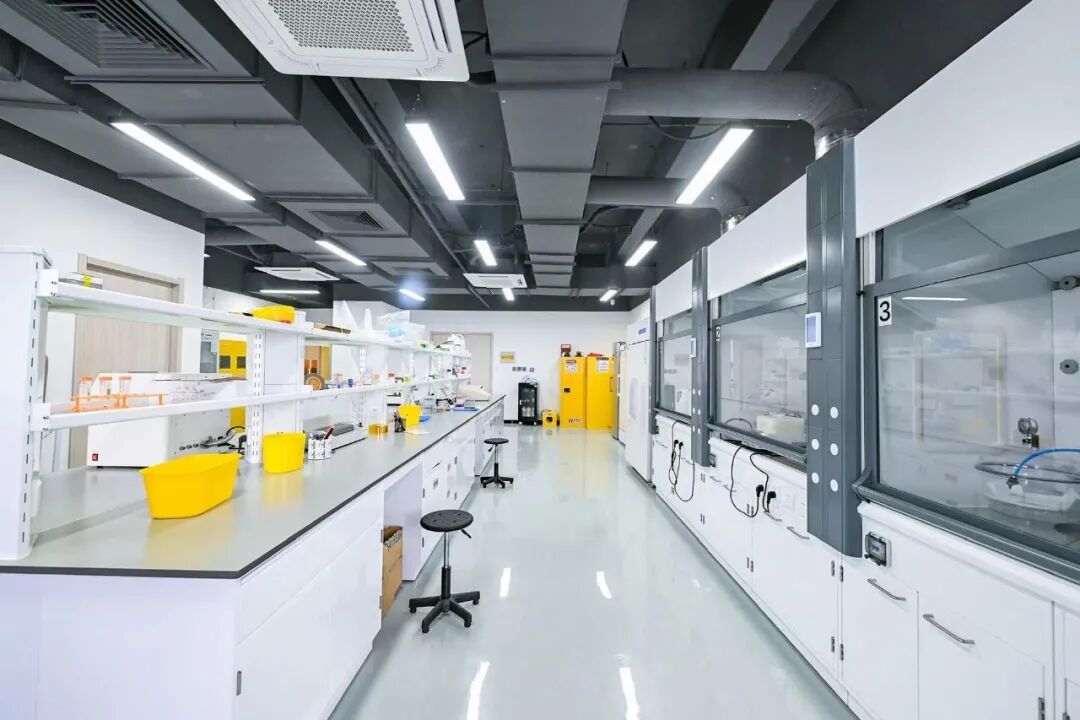
At the same time, we have also mass-produced several self-developed chips, including the CMOS-based H19K and H88K series, which integrate 19,200 and 88,000 synthesis units, respectively. In terms of production and validation, we have established a research and development center and pilot laboratory in Suzhou, covering an area of over 3,000 square meters, to support the research and industrialization of the chip synthesis platform. Our MEMS electrode synthesis experiments have achieved a minimum pitch of 16 microns, with synthesis efficiency exceeding 99%, and MEMS electrode processing capability reaching 1 micron pitch, which is currently the smallest chip processing and synthesis capability in China.
We are currently developing a “ten million electrode CMOS synthesis” chip, aiming for a single chip with ten million synthesis points (per square centimeter), laying the foundation for large-scale DNA writing.”
Q
What do you think is the most critical aspect of the DNA storage industry?
A
Dr. Zhao Xin: “The core of DNA storage lies in the integration of high-throughput low-cost synthesis, sequencing, encoding and error correction algorithms, and systematic deployment capabilities. Companies that excel in a particular link need to further collaborate and integrate to achieve a feasible, scalable, and standardized information storage solution.”
Atantares’ Rhythm and Roadmap
Atantares is steadily advancing the commercialization path from core platform technology to industrial applications. Currently, we are focusing on promoting the marketization of electrochemical high-throughput DNA synthesis technology, prioritizing services for downstream application scenarios such as biomedicine, synthetic biology, and sequencing. In this process, Atantares’ self-developed ECHOS chip platform and EcoSyn automated synthesis system have achieved significant advantages in throughput and cost breakthroughs, moving towards productization.
On this basis, Atantares will gradually expand into DNA information storage scenarios, addressing the core bottlenecks in the current storage field regarding large-scale writing costs and efficiency through chip-level synthesis. Our medium- to long-term goal is to launch commercial DNA storage solutions for cold data storage within 3-5 years, building the infrastructure for the next generation of information storage.
Conclusion: Moving from “Product” to
“Path” Next Steps
In the past few years, we have completed the construction from the underlying chip platform, self-developed synthesizer, to the initial closed-loop system, and Atantares Technology’s DNA storage products are gradually moving from “technical possibility” to “engineering realization.” However, we are more clearly aware that the product is not the end; the path is key.
The transformative potential of DNA as an information medium has been validated in multiple cutting-edge technology routes. What truly determines whether it can serve the future data society is not just the performance indicators of a single module, but an entire path that can support the industrialization of storage—from synthesis density, writing costs, to system stability and data decoding closed loops.
We believe that future DNA storage must not only be usable but also reliable, trustworthy, and scalable. What Atantares is building is a path towards industrialization: it starts from chips, traverses system engineering, and ultimately reaches real-world scenarios.
In the next article, “Technical Insights”, we will continue to explore the underlying details of this path, taking you into Atantares’ core technology modules and how we use the “biological chip” approach to give the digital world a new physical form.

Shanghai Atantares Medical Technology Co., Ltd.
✦
Intelligent Chips Empowering Medical Technology
✦
◈ Email: [email protected]
◈ Website: www.atantares.com
◈ Address: Room 902, Shiqi Center, 236 Chuangyuan Road, Suzhou Industrial Park, Jiangsu Province | Building B, Tengfei Innovation Park, 388 Xinpings Street, Huqiu District, Suzhou, Jiangsu Province
“

Official Account

Video Account
Continuously Focus on Innovative Chip Technology
Intelligent Chips Empowering Medical Technology
Transform
Healthcare with
Intelligent Silicon