The US President is Anxious! Rare Earth Chip Design Software is Out, How Important are These Three Cards?
Hello everyone, I am Lao Chen. Recently, I came across a thought-provoking piece of news: US media revealed that the President is willing to offer three treasures to ease tensions: rare earths, the lifting of restrictions on chip design software, and jet engine technology. Seeing this news, I have mixed feelings!
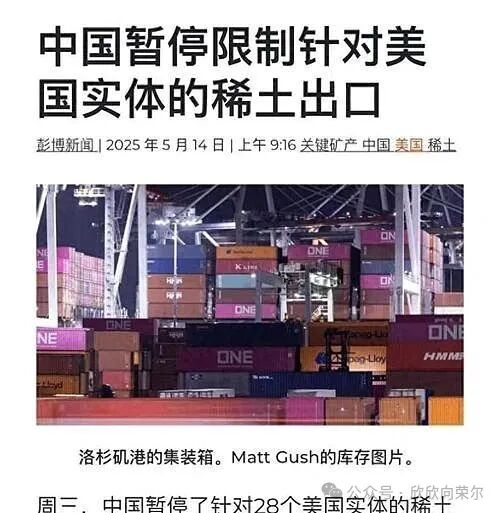
It is important to note that these three items are not casually offered. What was the attitude of the Americans back in the day? They wouldn’t sell you chips, wouldn’t give you design software, and guarded engine technology like a fortress. So why are they suddenly so generous now? To put it bluntly, they are anxious!
Why is the US Suddenly So “Generous”?
Let’s first talk about the rare earth issue. China controls about 85% of the global rare earth supply. Which of the US’s high-tech weapons and military equipment can do without rare earths? Without rare earths, their F-35 fighter jets are just lumps of iron, and missiles become useless.

Next is the chip design software. The US has always regarded this as their last trump card: Want to make chips? Without our EDA software, you can’t do it! But now, companies like Huada Jiutian and Gexin Electronics in China have already made breakthroughs in 28nm processes. The Americans see that if they don’t loosen up, they will really be left behind.
The most surprising is the jet engine technology. This is a core competency of the US! From General Electric to Pratt & Whitney, the engine technology of these companies has always been a source of pride for the US. However, China’s Changjiang 1000A engine has already successfully completed test flights. Although there is still a gap, the speed of progress is making the Americans uneasy.
The Real Considerations Behind These Three Cards
To be honest, the US’s willingness to offer these three items is a significant investment. Why? Because they have realized that their blockade has not only been ineffective but has accelerated China’s independent innovation. The more you deny me, the more I want to do it myself!

Take chips for example. Originally, China might still have relied on American design software, but after the sanctions, companies like Huawei HiSilicon and SMIC have instead intensified their efforts in independent research and development. Now China is already capable of independently designing 14nm chips, with 7nm on the way.
More critically, the US has discovered that simple technological blockades are no longer effective. China has a complete industrial chain, a vast market, and an increasing number of technical talents. Rather than continuing to confront, it is better to sit down and talk to see if they can gain more benefits from cooperation.
How Should China Respond to This Olive Branch?
In the face of the US’s sudden olive branch, we certainly cannot be overly eager. Although these three items are tempting, we must also see through the US’s true intentions. Are they genuinely seeking cooperation, or do they have ulterior motives?
I believe we should maintain a cautiously optimistic attitude. Cooperation is fine, but we must not give up on independent research and development. Today they are willing to give you something, but tomorrow they might want to take it back. Only by mastering core technologies can we truly secure our position.
Moreover, to be honest, today’s China is no longer the China that could only rely on others. We have the confidence to engage in equal dialogue with the US and the strength to fight for our interests at the negotiating table.
Technological Independence is the Hard Truth
No matter what the US is willing to offer, we must not stop our steps towards independent innovation. The developments of recent years have proven a truth: key technologies cannot be obtained, bought, or begged for. Only by mastering them ourselves can we feel truly secure.

From rare earth processing to chip manufacturing, from software development to engine research, China is gradually breaking the technological monopoly. There may still be gaps, but this gap is rapidly narrowing. The reason the Americans are anxious is that they see this trend.
Therefore, the fact that the US is willing to offer these three items itself indicates the threat posed by China’s technological progress. They do not want to help China develop; rather, they want to slow down China’s pace of catching up through cooperation.
In conclusion, no matter what cards the US plays, China must maintain its own pace. We should cooperate when necessary, but also insist on what we must. Technology knows no borders, but technologists have a homeland! Only by firmly grasping core technologies can we remain undefeated in future competition.
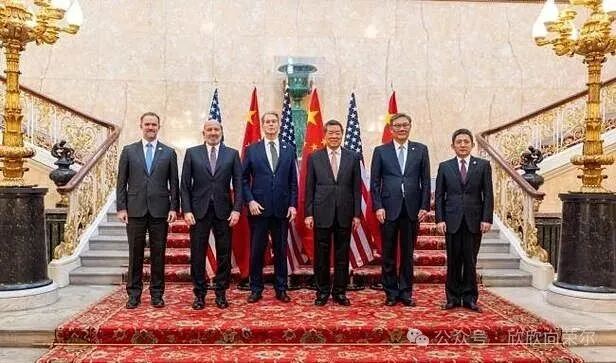
That’s all for today’s topic. Feel free to leave comments for discussion!