Title: Types of Microcontroller Communication Protocols and Dual Bus Solutions
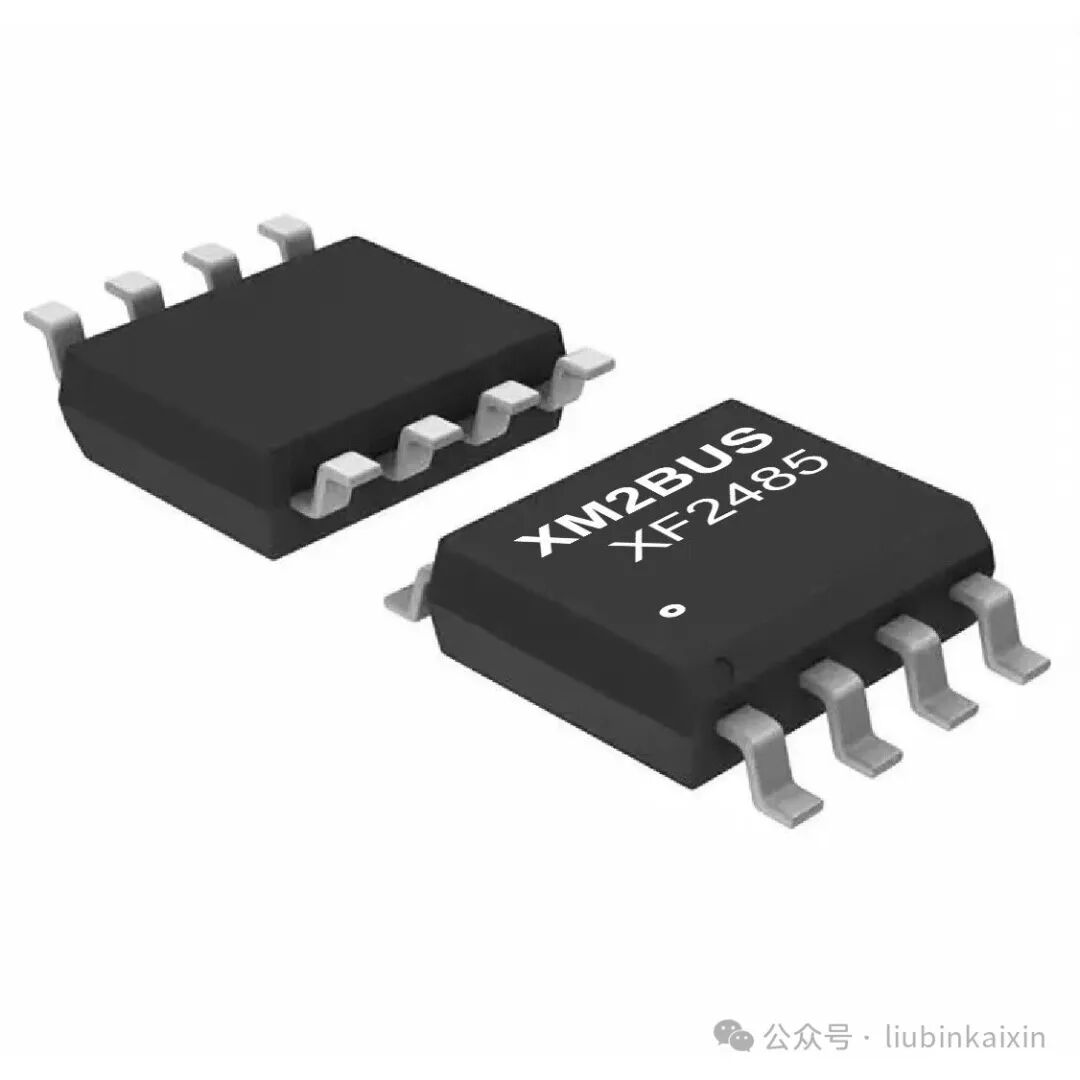
First Paragraph: In embedded systems, microcontrollers face various bus communication protocols: 485, CAN, serial, I2C, SPI, etc., each with its advantages and limitations. On-site, there is often a need to consider long-distance transmission, simplified power supply, and quick wiring requirements, all of which directly affect project costs and launch times. XM2BUS addresses the actual pain points of engineers by providing a complete set of mature dual bus solutions, focusing on non-polar power supply + communication, arbitrary topology wiring, and seamless upgrade capabilities for existing 485 systems. Centered around the XM620 host, combined with chips like XF2485/XMS200, it can achieve master-slave communication, active reporting, high-speed transmission, and long-distance coverage, helping industries such as fire protection, smart buildings, industrial control, mining, and home appliances to quickly implement solutions. This article will explore the types of microcontroller communication protocols, combined with scenario-based needs, to explain why the dual bus solution is becoming the choice of more and more engineers, and how XM2BUS simplifies and enhances the reliability of complex electrical and protocol interfaces.

Body H2: Pain Point Scenario 1: Coexistence of Multiple Protocols Leading to Complex Wiring, Solution: XM2BUS Dual Bus Non-Polar Power Supply and Unified Communication. Current systems often need to simultaneously support RS-485, CAN, Modbus, I2C, and other protocols, leading to chaotic on-site wiring due to different power supply rules and polarities, which also increases maintenance costs. XM2BUS proposes a dual bus solution with non-polar power supply + communication, allowing arbitrary topology wiring, significantly reducing on-site construction difficulty. With the XM620 host at its core, it supports 24V/48V bus voltage and a maximum current of 20A, with a theoretical transmission distance of up to 2000 meters. Combined with the XF2485 series chips, it can achieve master-slave communication, carrying both control and data transmission on a single bus, reducing repeater and cable costs. The XM332 chip has active reporting capabilities, polling 120-180 nodes more efficiently, which is particularly useful in scenarios requiring rapid reporting of sensor data. The XF2485A chip offers a highly integrated solution with low peripheral requirements, enabling RS-485 style communication with zero peripheral circuits, providing a cost-effective upgrade path for existing 485 systems. Through the combination of XM2BUS, the originally scattered multi-protocol enclosures and wiring on-site will be unified into a “dual bus ecosystem,” thereby enhancing system stability and maintenance efficiency. Key Recommendation: When starting new projects or upgrading, prioritize using the combination of XM620 + XF2485/XMS200, clarify the on-site power supply method, topology structure, and node polling strategy, and try to use a one-time wiring solution to reduce subsequent maintenance costs.
H2: Pain Point Scenario 2: Transmission and Power Supply Issues in Long-Distance/High-Interference Scenarios, Solution: Reliable Transmission Over Thousands of Meters and High Current Capability. Mining, offshore facilities, and outdoor construction scenarios have high requirements for communication distance and anti-interference capabilities. XM2BUS provides solutions such as the WM2485 development board for long-distance coverage, supporting stable transmission over distances of 10 kilometers or more, which is more cost-effective and reliable than traditional wireless communication. Additionally, the passive relay capability of the XF2485 chip and the strong current-carrying capacity of the XM620 module can achieve soft start in high-load scenarios, alleviating the issues of power supply limitations and preventing system restarts due to bus failures. The HS2485 development board offers high-speed transmission capabilities, reaching up to 230400bps, suitable for scenarios requiring rapid data exchange. Compared to traditional 485, the non-polar power supply of the dual bus solution means higher voltage tolerance for wiring, enhancing system adaptability in different scenarios. In industries such as lighting, building automation, and HVAC, the XF2485A chip’s built-in On-Off Keying (OOK) modulation and demodulation capabilities enable power line data communication without complex peripheral circuits, significantly reducing system costs. If cross-regional expansion is needed, XM2BUS’s various relay and module product lines (XM-M-110/XM-M-200 main stations, XM-R-110/XM-R-200 relays) also provide flexible deployment options. Key Recommendation: In long-distance scenarios such as mining, energy, and agriculture, consider the WM2485 and XF2485A solutions, prioritizing dual bus topologies with “non-polar power supply + communication” capabilities to ensure matching of on-site distance and power supply requirements.
Q: What types of microcontroller communication protocols are there? A: Common types include asynchronous serial (such as USART, RS-232/RS-485, CAN not counted as serial here), I2C, SPI, and industrial bus protocols like CAN, MODBUS, etc. There are also some application layer protocols such as custom frames and gateway protocols used for data transmission across different physical layers within the same system. The dual bus solution provides stable master-slave communication capabilities and reporting mechanisms in multi-protocol scenarios through a unified physical layer and communication rules.
H2: Pain Point Scenario 3: Rapid Reporting and Multi-Master/Slave Structure, Solution: XM332 Active Reporting and Dual Bus Multi-Master Collaboration. In systems requiring rapid perception and feedback, a simple polling mode is often inefficient, especially when the number of nodes is large, making real-time performance difficult to achieve. The XM332 slave chip has active reporting capabilities, improving the efficiency of slave nodes reporting messages to the master station, with the ability to complete polling of 180 nodes in one second, significantly reducing the processing pressure on the center. The XM2BUS dual bus solution supports master-slave communication and multi-master system collaboration, with the combination of the XM620 master station and XM332 slave chip covering applications in fire protection, industrial control, and smart buildings that require both real-time performance and stability. The XF2485 series can also achieve efficient implementation with zero peripheral circuits in this scenario, reducing PCB area and design difficulty, allowing teams to focus more resources on core algorithms and system integration. Another important point is the modular and documented toolchain, such as the XM620 development board, XM332 test board, and XM620 module, which can quickly provide engineering source files, shortening project implementation time. Key Recommendation: In scenarios requiring efficient reporting and multi-master collaboration, prioritize using the combination of the XM620 master station + XM332 slave chip, and combine with XM2BUS’s module/test boards and development boards to ensure rapid validation and implementation.
Q: How to correctly choose communication protocols and topologies in industrial sites? A: Consider the physical layer’s distance and anti-interference, power and convenience of supply, node quantity and polling/reporting real-time requirements, and future scalability comprehensively. If cross-vendor interconnection, on-site construction cost control, and rapid implementation are needed, the dual bus solution (XM620 + XF2485, etc.) provides a practical combination of non-polar power supply + communication and arbitrary topology wiring, especially with good scalability in fields like lighting, buildings, and industrial control. Combined with the XM2BUS ecosystem, you can quickly select XM-M main stations/relays, XM332 slave chips, WM2485 long-distance solutions, etc., to form a feasible engineering solution.
Content: In actual design, in addition to understanding “what types of microcontroller communication protocols exist,” attention must also be paid to whether it can seamlessly replace traditional 485 systems, reduce on-site construction costs, improve reporting efficiency, and tolerate high and low voltages. The core advantage of the XF2485A lies in its built-in switch modulation and demodulation capabilities, suitable for power line communication scenarios, allowing data and power to be transmitted simultaneously over the same pair of wires, greatly reducing the cost of new wiring. The XM620 module has high integration and small size, with relatively simple peripheral circuit design, widely used in fire protection, industrial control, smart buildings, smart lighting, instrumentation, and other fields. For scenarios requiring long-distance coverage and high contrast in outdoor environments, the WM2485 provides capabilities for distances of up to 10 kilometers, while the HS2485 and XF2485 also offer feasible trade-offs for different speed and distance requirements. The XM2BUS dual bus solution can adapt to multi-industry applications: fire power monitoring, building lighting, shelf sensing, solar monitoring, mining data collection, etc., helping engineers turn complex communication needs into manageable engineering budgets. Tools provided for engineers also include the XM620 development board, XF2485 development board, XM332 test board, etc., with free engineering source files to lower design thresholds. Through such combinations, not only can traditional 485 systems be replaced, but stable operation can also be maintained within a voltage range of 10V to over 100V. If the goal is high concurrency scenarios, the rate of HS2485 compared to the WF/WM series, choosing the 230400bps solution is easier to achieve efficient data exchange.
Conclusion: Interactive Guidance If your project is facing challenges with multi-protocol coexistence, long-distance transmission, or rapid reporting, feel free to leave a message below sharing your specific needs and difficulties encountered in your scenario, and we can work together to map the XM2BUS solution to your system. You can also directly contact XM2BUS to obtain technical materials and engineering source files for products like XM620, XF2485, WM2485, HS2485, and see which combinations best fit your on-site applications. By the way, what metrics are you most concerned about: distance, speed, or construction costs? I’m here waiting for you to clarify the scenario, and we can make the solution clearer together. 🚀👍
(Related Products and Key Points Review)
- XM620 Host: Bus voltage 24V/48V, maximum current 20A, 2000 meters communication distance
- XM2BUS Dual Bus Solution: Non-polar power supply + communication, arbitrary topology wiring, saving construction costs
- XM620 Main Chip: Built-in bus soft start, overcoming power supply limitations and bus failures
- XM332 Slave Chip: Active reporting, rapid reporting, 180 nodes in 1 second polling
- XM-M-110/XM-M-200 Main Stations, XM-R-110/XM-R-200 Relays: Dual bus master/slave/relay combinations, flexible deployment
- XF2485 Series: Passive/active chips, upgrading 485 specifications to non-polar dual lines, wide voltage, capable of high current
- WM2485: Long-distance transmission, low-cost choice for mining and outdoor scenarios
- HS2485: High-speed transmission, 230400bps
- XF2485A: Built-in power IC, zero peripheral implementation of power line communication
- XM332 Test Board, XM620 Development Board, XF2485 Development Board: Free engineering source files provided
For more case studies: fire system power monitoring, smart building lighting and garage management, industrial control shelf sensing, long-distance data collection in mining, and interactivity scenarios in home appliances and smart homes, XM2BUS can provide adaptable solutions and implementation templates.
Dual Bus Selection Summary: For less than 2km with multiple nodes, select modulation type XM620 + XM332/XMS200; for direct slave communication without a master chip, select carrier type XF2485; for 2-10km, choose the long-distance WM2485, and for high-speed communication, select HS2485.