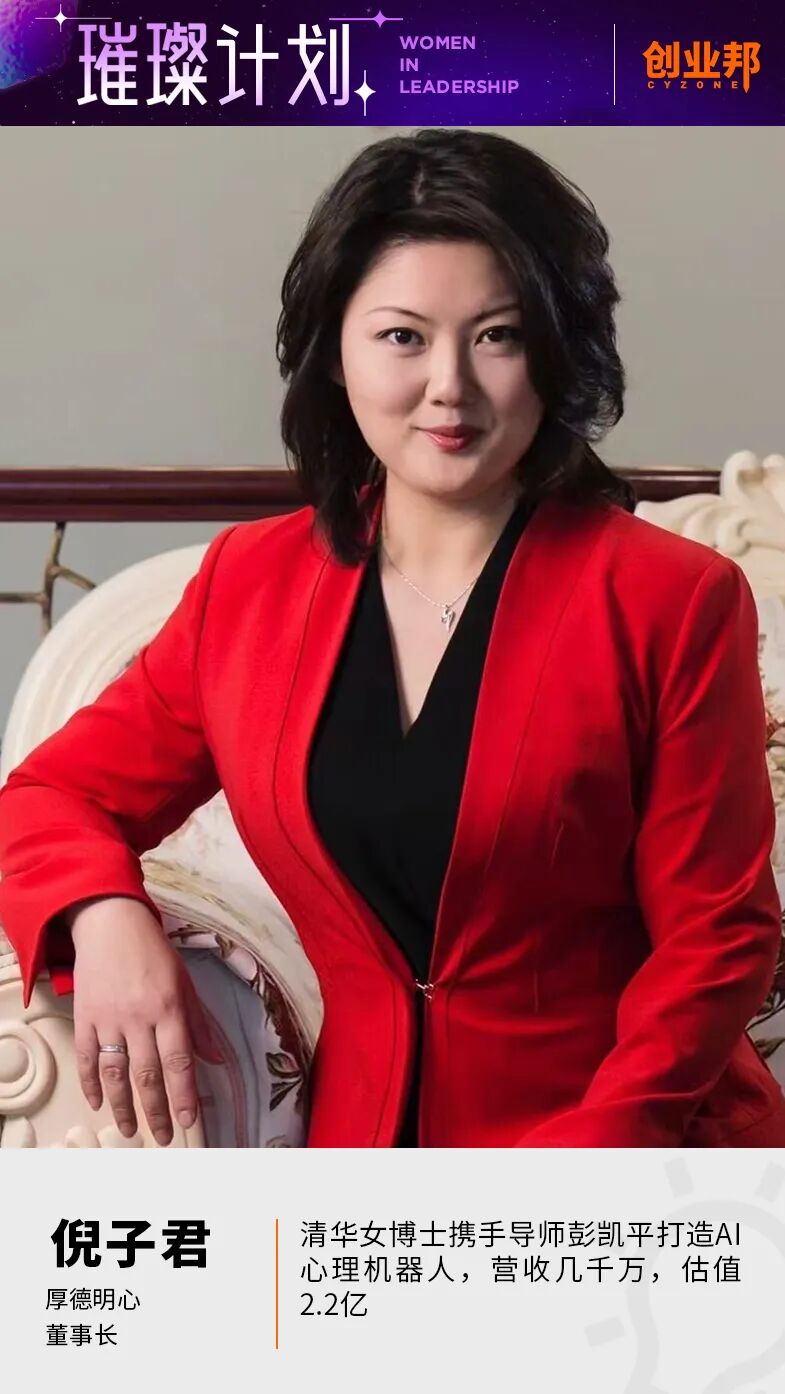
 Author: Yang JingxueEditor: Liu HengtangImage Source: Houde MingxinIn 2021, Ni Zijun was encouraged to abandon her foundation career and choose entrepreneurship, driven by two key events.The first was her initiation and operation of the Beijing Happiness Public Welfare Foundation, which aimed to participate in the Ministry of Civil Affairs rating. According to the rules, if there was government procurement, the rating would be higher. Upon investigation, the team discovered that there were psychological counseling procurement projects in certain cities amounting to as much as 3.2 million, and this was not an isolated case. Ni Zijun felt that the demand for psychological services in society had reached a critical level.The second event was the emergence of generative large models like GPT.“After watching a classmate’s demonstration online, I couldn’t sit still. I knew that generative AI large models would completely disrupt the psychological service industry,” Ni Zijun said, recalling that day when she paced back and forth in her office, overwhelmed with excitement.On March 5, 2021, Ni Zijun had a conversation with her doctoral advisor, Professor Peng Kaiping, a prominent figure in psychology.Ni Zijun stated, “For many years, people have been saying that the spring of psychology has arrived, but in reality, it has never come because an effective market has never formed. Since the pandemic, psychological issues have become prominent, the government has taken notice, and people’s willingness to pay has increased. We need to start doing this.”Peng Kaiping responded, “It should have been done long ago.”Ni Zijun’s husband, the founder of a listed company, understood the difficulties of entrepreneurship and often reminded her that the sea of suffering is boundless, and turning back is the shore.For nearly half a year, Ni Zijun asked herself every morning whether she should start a business until one morning she made the decision.In the living room, she analyzed her reasons and motivations for doing this to her husband.Her husband ultimately expressed unconditional support, agreeing to provide her with financial backing, act as her entrepreneurial mentor, and also take on household chores that she might not have time for.“I previously did public welfare and was very happy; the foundation was doing very well, and we were rated 4A, the highest rating in that period,” Ni Zijun said, but she still chose to pursue entrepreneurship without hesitation.On June 28, 2021, Houde Mingxin, which had been registered in 2003, was relaunched.As a psychology teacher at Tsinghua MBA, Ni Zijun issued a call to action in class, gathering a team that integrated technology and psychology.What Ni Zijun aimed to do was to empower psychology with large models, serving every individual in need.
 Building the Happiness Science Museum,Shifting from ToG to ToCAfter the launch of Houde Mingxin, Ni Zijun rented a large open space, which served as both a conference room and an office. In her words, it was still a makeshift team, with a group of people gathered around a table discussing what to start with.Ni Zijun was the first to introduce Harvard University’s positive psychology to China. For many years, she has focused on the popularization and service of positive psychology, including offering positive psychology courses at Tsinghua MBA, collaborating with Shengjing Network to provide courses on corporate management and family happiness, and initiating the Beijing Happiness Public Welfare Foundation, implementing positive psychology education in approximately 3,300 schools across China.However, using large models for psychological services posed a new challenge for her.Ni Zijun and Peng Kaiping discussed and both agreed that the first step should be to make people aware of happiness. Thus, Houde Mingxin collaborated with the local government in Huangyan District, Taizhou, to establish China’s first popular science and experiential center for positive psychology—the Yongning Happiness Science Museum.This happiness science museum, covering over 4,300 square meters, officially opened in 2023 and is the world’s first experiential and service space for positive psychology.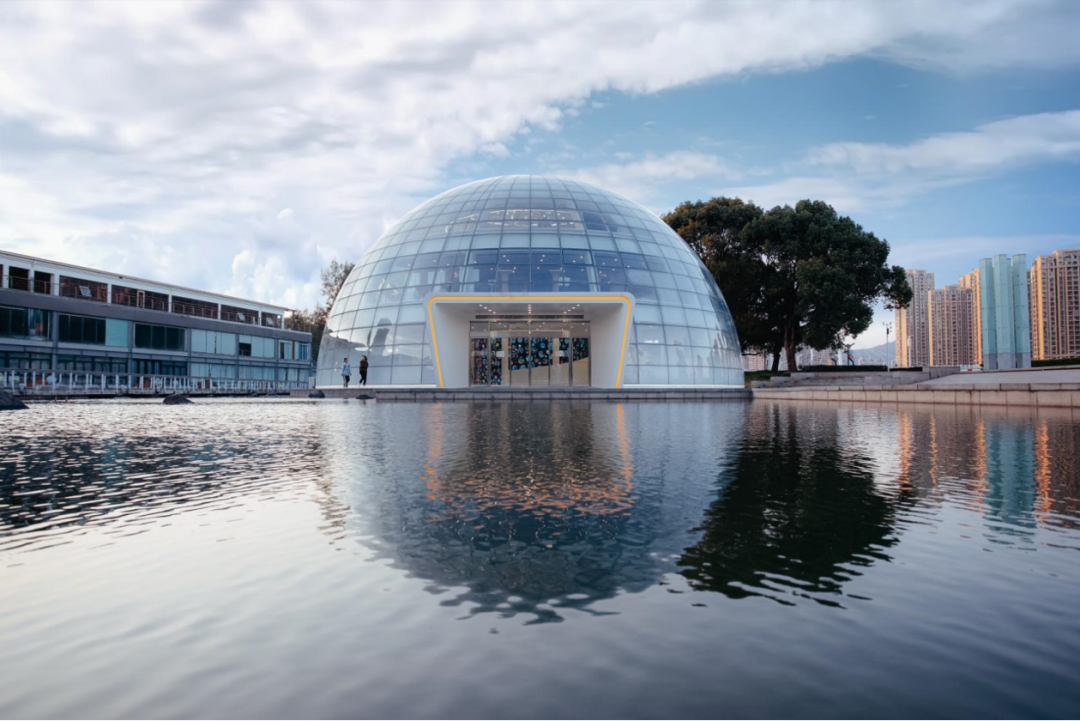
Exterior view of Yongning Happiness Science Museum
The Happiness Science Museum has six major functions, including psychological popularization, psychological assessment, psychological learning and training, one-on-one psychological services, psychological training, and comprehensive psychological management. The museum features various interactive installations related to happiness. Ni Zijun stated that all human senses—sight, hearing, smell, taste, and touch—are related to happiness. The installations in the Happiness Science Museum utilize high-tech methods such as eye movement technology, biofeedback, and EEG technology to help citizens understand the scientific principles of happiness through their senses.“Just like every city used to have a science museum, we want to build happiness science museums in cities to let everyone know what happiness is,” Ni Zijun said.The Happiness Science Museum was funded by the government, while Houde Mingxin provided overall design, technical equipment, and operational support. In the Huangyan Happiness Science Museum, health checks for civil servants, happiness assessments for students, happiness courses, and Alzheimer’s disease screenings for community elders have been conducted.Currently, Houde Mingxin has established collaborations with cities such as Chongqing, Ordos, and Ji’an in Jiangxi, and a happiness science museum in cooperation with Changzhou is about to begin construction.In addition to G-end business, Houde Mingxin also has B-end business targeting schools and enterprises, as well as C-end products aimed at individuals.Houde Mingxin collaborates with schools to establish happiness spaces, providing positive psychology measurement and services for teachers, students, and parents; and partners with enterprises to launch employee happiness programs, helping employees enhance their abilities in personal confidence, emotional management, interpersonal relationships, and career development.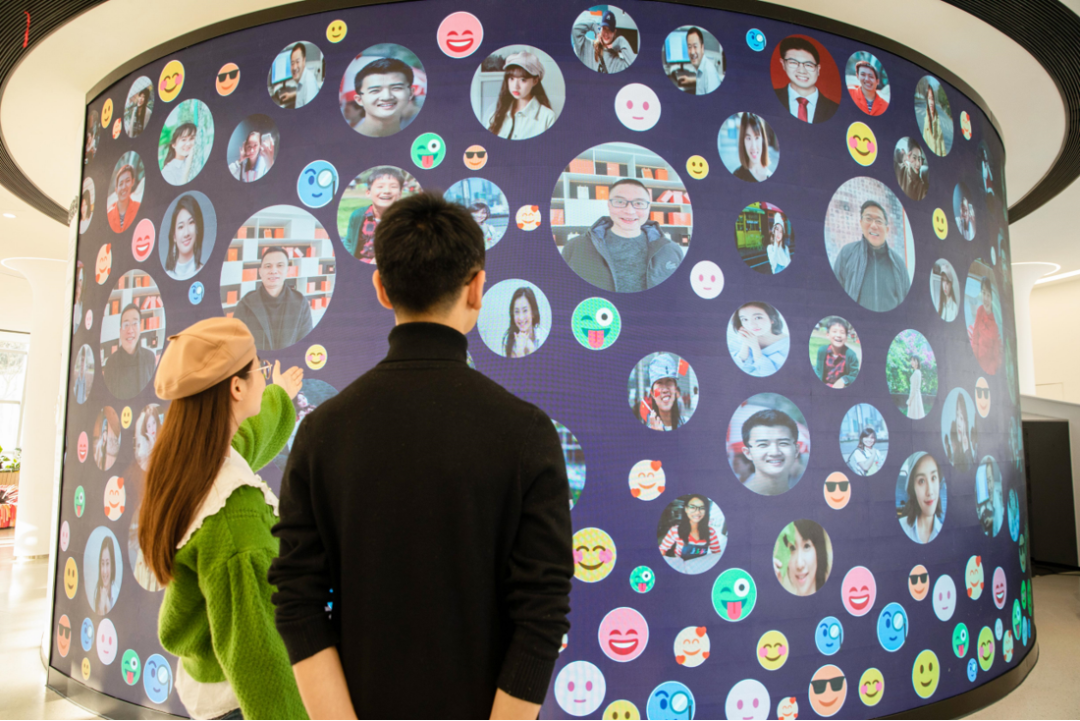
Visitors experiencing fun psychological tests at the Happiness Science Museum
Currently, more than half of Houde Mingxin’s revenue comes from ToG business.Ni Zijun revealed that Houde Mingxin will gradually shift towards C-end.“After analyzing the industry, we found that to provide psychological services and bring warmth to people, we cannot rely on selling boilers. Ultimately, to achieve our mission of making more people happier, we must target every individual at the C-end,” Ni Zijun stated.The first C-end business focuses on family happiness services.“We have provided psychological services to many groups and found that the happiness brought by the family of origin is the foundation of lifelong happiness. In the family, the most important role is the mother, whose relationship with her husband and children forms the basis of the child’s happiness,” Ni Zijun explained.Therefore, Houde Mingxin has a segment of its business dedicated to family education courses for happy mothers. Additionally, there are online group counseling for teenagers, offline summer camp activities, parent-child camps, and standardized products such as the Happy Mother Year Card.The second business is the training of professionals in positive psychology.Houde Mingxin has developed a master course in positive psychology.The lineup of masters is very impressive, including Martin Seligman, the founder of positive psychology, and Ellen Langer, the mother of positive psychology and a professor at Harvard University. Additionally, there is Professor Peng Kaiping, the first head of the psychology department at Tsinghua University, and Professor Fan Fumin, the first to engage in positive group counseling in China.In addition to systematic courses, training for professionals is also paired with live courses and a 24-hour mentor team. Introducing Harvard Positive Psychology,Spreading Psychological ConceptsNi Zijun was the first to introduce Harvard University’s positive psychology to China and conduct extensive practice.In 2006, Ni Zijun encountered Harvard University’s top-ranked course—Positive Psychology. This course, taught by Dr. Tal Ben-Shahar, became extremely popular at Harvard, surpassing the flagship course “Introduction to Economics,” attracting media coverage from CNN and others, which piqued Ni Zijun’s curiosity: why were Harvard’s elite students so interested in this course?“Positive psychology is a science of happiness about strengths and virtues that can help everyone live a flourishing life,” Ni Zijun explained. At the end of the last century, positive psychology was introduced by scholars, beginning the study of how people can live better and happier. Positive psychology gradually became a new trend in the psychology field, with many psychologists conducting research in this direction.In August 2006, Ni Zijun invited Dr. Tal Ben-Shahar to Beijing to discuss course collaboration with Tsinghua University, bringing positive psychology to Tsinghua University.The collaboration unfolded on two levels: the first collaboration involved Dr. Ben-Shahar personally teaching a course on happiness experiences for entrepreneurs and social elites. The second collaboration was the course system collaboration, where Ni Zijun localized the positive psychology curriculum and introduced it into Tsinghua University’s MBA program, serving as a lecturer.Since 2011, Ni Zijun has been teaching positive psychology courses at Tsinghua University’s MBA program for 15 years. At the same time, she has also lectured at organizations and enterprises such as China Unicom, CNOOC, the State-owned Assets Supervision and Administration Commission, and the Olympic Committee, using positive psychology to enhance corporate management.In 2012, invited by Shengjing Network, Ni Zijun established the Shengjing Happiness Research Institute and served as its director, offering four positive psychology courses for entrepreneurs and their families, including Positive Leadership, The Power of Happiness, and Happiness for Women, while also providing training camps for the children of entrepreneurs.Afterward, Ni Zijun studied under psychologist Peng Kaiping and pursued a doctoral degree in psychology at Tsinghua University. During her doctoral studies, she represented Tsinghua University’s psychology department, along with Shengjing Network and the Yajie Chamber of Commerce, to initiate the Beijing Happiness Public Welfare Foundation, launching two free courses for national principals each year to spread positive psychology through public welfare, implementing positive psychology education in approximately 3,300 schools across China.
 The Death of Her MotherLed to a Reassessment of Life’s MeaningIf we trace back, the fundamental driving force behind Ni Zijun’s engagement in psychology should be the chain reaction brought about by her mother’s death.Ni Zijun was born in Qingdao and was very active during her student years, always being the “model student”.Since elementary school, Ni Zijun has been a student leader, even holding the highest positions such as student captain and district captain, actively representing her school in various competitions and hosting various student council activities in Qingdao.“The very important and positive reason behind this is that I was born into a very loving family,” Ni Zijun said. Her father was an officer, and her mother was one of the earliest entrepreneurs in China. Her mother was very open-minded, and they discussed everything, even after Ni Zijun was admitted to Beijing Institute of Technology, she communicated with her mother about her romantic relationships.Ni Zijun successfully entered Beijing Institute of Technology, initially focused on studying abroad. However, her mother’s sudden death caused a significant turn in her life.“When my mother passed away, I was only in my junior year, and this event made me realize that life had no meaning,” Ni Zijun said, reflecting on how this upheaval plunged her into a period of confusion.“My mother was only 52 when she passed away. She worked hard in her entrepreneurial endeavors, and at that time, I felt that her life was particularly unworthy. Why did she have to work so hard?” Ni Zijun recalled, noting that during the memorial service, many people cried over her mother, but those mothers did not know that Ni Zijun could not cry, and she began to feel that everything around her was meaningless.After graduating from Beijing Institute of Technology, at her father’s suggestion, Ni Zijun enlisted as an officer and then pursued an MBA at Tsinghua University. Ni Zijun stated that she seemed to be doing all this out of inertia, rather than from her heart.
 The void left by her mother’s death caused Ni Zijun to lose the sense of meaning she had established since childhood, leading her to become estranged from her surroundings and unable to establish a new connection with the world until she entered Tsinghua University.“After being admitted to Tsinghua MBA, I suddenly didn’t know why I was here. Was it just to learn how to run a business? To make money? What is the meaning of it?” Thus, Ni Zijun delayed her course selection and conducted extensive interviews, asking everyone around her: Why do you live? What do you want to achieve? As she spoke with more people, she discovered that everyone wanted happiness, but regardless of how much wealth or status they had, it seemed that it was not easy for anyone to be happy.Happiness is something everyone desires, but not everyone possesses it. Ni Zijun believed this should be a direction.During her MBA studies, Ni Zijun constantly pondered why people live and where they should go. All her personal assignments, including her final thesis, were focused on business plans related to psychology. Her thesis was discovered by the head of psychology at the University of Manchester in the UK, and they jointly published a paper, which is almost unprecedented in the history of Tsinghua MBA.During her time at Tsinghua MBA, the quest for happiness and meaning in life became the opportunity for Ni Zijun to reconnect with the world, leading her career to the field of psychology and revitalizing her life.
 “I want to seek solid growth,and create value,”During her MBA studies at Tsinghua, Ni Zijun began exploring entrepreneurship in the field of mental health. She, along with two classmates, founded Houde Mingxin, forming a team to provide psychological training services for organizations such as enterprises and schools, enhancing organizational effectiveness and employee happiness.As the national-level psychological counselor certification was just beginning, Ni Zijun passed the exam and became one of the first nationally certified psychological counselors.After graduation, Ni Zijun initially planned to go to Germany to pursue a doctoral degree in psychology. While learning German in Germany, she received an invitation from the chief editor of CCTV’s “Psychological Interview” program to return to China and join the production team. During her time at CCTV, Ni Zijun participated in producing China’s first psychological counseling program, which achieved high ratings and popularized the concept of psychological counseling to the public.Subsequently, Ni Zijun studied under Peng Kaiping and pursued a doctoral degree in psychology at Tsinghua University. Afterward, she established the Shengjing Happiness Research Institute and initiated the Beijing Happiness Public Welfare Foundation, having worked in the field of psychology for 25 years.Today, Houde Mingxin has been relaunched for four years. In Ni Zijun’s view, the most important C-end business is to empower psychological services with AI, allowing every individual in need to have a 24-hour companion in the form of an AI positive psychology robot.Ni Zijun believes that AI can address three major pain points of traditional psychological counseling: first, timeliness, allowing communication anytime and anywhere; second, a sense of security, as AI can bridge the trust gap between clients and human psychological counselors; and third, professionalism, as psychological counselors typically use a maximum of three therapies, while AI can utilize all therapies.The intelligent conversation robot is a psychological large model developed by Houde Mingxin, fulfilling Ni Zijun’s mission of “empowering psychology with high technology.” Houde Mingxin has developed AI products such as the Peng Kaiping conversation robot, providing 24-hour AI positive psychology companionship, which is now available for individual users.Ni Zijun stated that in AI training, Houde Mingxin possesses a large amount of real dialogue data from psychological hotlines, which, after desensitization and cleaning, becomes training data for AI, continuously optimizing algorithms. Currently, Houde Mingxin’s application has received national registration for vertical psychological large models.After pursuing an MBA at Tsinghua, introducing positive psychology from Harvard University, offering happiness courses for entrepreneurs, engaging in public welfare, and finally starting a business in 2021 to empower psychological services with AI, Ni Zijun has traversed 25 years. It is precisely this accumulation of 25 years that has positioned Houde Mingxin at a higher starting point. Ni Zijun stated that in the first year of entrepreneurship, Houde Mingxin became profitable, with revenue exceeding tens of millions, and in the second year, it grew by 300%. At the same time, Houde Mingxin also completed its first round of financing, with a post-investment valuation of 220 million RMB.In the years following her mother’s death, Ni Zijun transitioned from confusion to determination, redefining the meaning of life, which her mother reshaped in another form.Ten years after her mother’s death, Ni Zijun and her brother brought her ashes back to Qingdao for burial. After the burial, they took a walk on the opposite hillside, where magpies were everywhere.“My brother said that my mother’s life was very worthwhile; she did what she loved and created a lot of social value,” Ni Zijun recalled. “At that moment, I made a decision: I would not seek fame and fortune in my life because my mother’s experience taught me that these are meaningless. I want to seek solid growth and create value.”