
#Abstract#
The Internet of Things (IoT) smart sensors possess characteristics such as multi-parameter collection, high-frequency response, and distributed deployment, supporting the evolution of systems towards intelligence and precision. This article constructs an application system for smart sensors suitable for power distribution state recognition, dynamic lighting control, and cable temperature monitoring, focusing on typical sub-modules in building electrical systems. It designs a multi-source heterogeneous node deployment architecture and a data-driven linkage mechanism, conducting deployment verification in actual building scenarios to form a complete technical solution aimed at operational state perception and response execution.


0
Introduction
Under the drive of the “dual carbon” strategy and the background of smart city construction, building electrical systems are accelerating their evolution towards intelligent perception and dynamic control, posing higher requirements for system operational efficiency, energy control accuracy, and safety response speed[1]. IoT smart sensors, with their low power consumption, miniaturization, and networking capabilities, have become an important foundation for perception and decision support in building electrical systems[2].
In current research, He Zhijian et al.[3] proposed an ultra-high-rise power monitoring system based on IoT, which solved the dual power transfer problem but faced limitations in perception accuracy under harmonic environments; Yuan Li et al.[4] utilized integrated sensing and IoT platforms to enhance monitoring capabilities in campus buildings, yet still relied on manual labeling of fault characteristics; Yu Rongsheng[5] expanded the application of intelligent systems in weak current systems but lacked sufficient experimental validation; Yan Wenshuang[6] constructed a smart sensor network to improve building energy efficiency and living experience but did not fully consider the network bottlenecks of large-scale deployment; Yuan Shuai[7] improved construction quality control through multi-modal sensor fusion, lacking long-term monitoring support.
Overall, existing research still has shortcomings in perception accuracy, response speed, and adaptability to large-scale deployment. Based on this, the article constructs a multi-source heterogeneous smart sensor application system around the operational state perception and dynamic response needs of building electrical systems, designs a data-driven linkage mechanism, and explores optimization paths for system perception and response in high-density deployment environments, aiming to enhance the intelligence level and operational reliability of building electrical systems.
1
Overview of Smart Sensors
As front-end components for perception and data generation, IoT smart sensors integrate sensing, processing, and communication functions, possessing high-frequency response capabilities for various physical and environmental parameters[8].
This type of device has evolved from traditional measurement elements, relying on miniaturized design and embedded architecture, gradually forming intelligent nodes with data preprocessing, protocol encapsulation, and self-organizing network functions. Its core structure typically includes a signal acquisition module, analog-to-digital conversion circuit, local processing unit, and wireless communication interface, enabling real-time perception, judgment, and reporting[9].
The relevant technical system encompasses Micro Electro Mechanical System (MEMS) chip design, low-power processor optimization, communication protocol adaptation, and energy management strategy configuration, suitable for high-density, complex deployment scenarios. In the IoT system, smart sensors constitute the core of the perception layer, supporting the system’s precise acquisition of state changes and strategy linkage[10].
2
Specific Applications of IoT Smart Sensors in Building Electrical Systems
2.1
Real-time Warning for Power Distribution Monitoring
The building electrical system adopts a layered deployment approach, embedding three-phase electrical parameter acquisition units with local processing capabilities at busbars, distribution boxes, and terminal circuit nodes. The collected data includes voltage, current, frequency, and harmonic distortion rate, completing waveform sampling and preliminary feature extraction with microsecond-level time resolution. To achieve early warning of anomalies, the system constructs a local fluctuation index S based on parameter fluctuations within a short cycle window, defined by the formula

Where: σI is the standard deviation of current fluctuations within the sampling window; μI is the mean current within the window; ∆U is the instantaneous change amplitude of voltage; U0 is the reference voltage; α and β are weight coefficients determined by adaptive training based on load characteristics. Anomaly determination employs a dynamic threshold strategy, with the early warning trigger condition expressed as

Where: Sbaseline is the baseline fluctuation level extracted from historical normal operation samples; γ is the sensitivity adjustment factor set according to the circuit type.
To enhance the real-time nature of warnings, the system employs a multi-layer optimization mechanism:
1
First, the local nodes set a sliding window that updates the local fluctuation index every 10ms to avoid high-latency accumulation;
2
Second, a rapid initial judgment module is introduced to achieve local anomaly marking and preliminary screening at the edge nodes, reducing data upload delays;
3
Third, long-range radio (LoRa) self-organizing network communication is applied, using a lightweight abnormal event frame transmission strategy to directly push abnormal signals to the energy control platform’s decision engine[11].
2.2
Dynamic Energy Saving for Lighting Control
The building lighting system is based on a dynamic energy-saving architecture of perception – decision – execution closed loop. The perception layer is equipped with illuminance sensors and human presence detectors, forming a dynamic perception network based on regional grouping. According to the real-time collected environmental illuminance Eenv, indoor reference illuminance Etarget, and personnel activity status, the system dynamically calculates the target illuminance correction value Eadj, expressed by the formula

Where: λ is the light compensation factor; Ebaseline is the reference illuminance at the design stage. Introducing a personnel presence probability matrix P(x,y,t), the system dynamically generates regional weights based on spatial coordinates and time t, adjusting the lighting output power L(x,y), expressed as

Where: Lmax is the maximum lighting output power for that area. To achieve energy-saving optimization, the lighting driver unit dynamically balances output brightness based on the above control results, achieving synchronous control of illuminance balance and load reduction[12].
The system employs a predictive model to make short-term predictions of natural light change trends, adjusting the overall compensation strategy based on the light change rate over a 5-minute sliding window, effectively avoiding energy consumption fluctuations caused by frequent switching[13].
2.3
Cable Operation and Maintenance Temperature Perception
Within building cable systems, there are numerous enclosed wiring spaces and interleaved path structures, where local areas are prone to heat accumulation and abnormal temperature rise. To enhance operation and maintenance monitoring capabilities, the system deploys high-density temperature sensing units at key nodes such as cable trays, bus ducts, and distribution interfaces, combined with edge collection modules to achieve real-time data synchronization and dynamic perception[14].
To assess the accuracy of sensor perception, the system introduces a comprehensive evaluation index based on mean square error and drift error. The temperature measurement error εT is defined as

Where: Tmeas,i is the temperature measured during the i-th sampling; Tref,i is the corresponding reference temperature; δT indicates the drift error after long-term operation of the sensor. Sensor data attribution is achieved by combining position number mapping and circuit logic binding, with the attribution function G(x,y) defined as

Where: (x,y) are the coordinates of the real-time sampling point; (xj,yj) are the standard mapping coordinates of cable circuit j, ensuring accurate attribution of data from each node. To identify spatial thermal variation trends along the cable path, the system reconstructs continuous thermal field distribution based on local linear interpolation algorithms, with the temperature gradient ∇T between nodes approximated as

Where: Ti and Ti+1 are the temperature values of adjacent temperature sampling nodes; di,i+1 is the spatial distance between nodes. Figure 1 shows the deployment structure of temperature sensing nodes in the building cable system. The system deploys temperature sensors in key areas such as cable trays and bus ducts, connecting to edge collection modules wirelessly, where edge nodes perform local data aggregation and preliminary anomaly judgment, while the distribution box serves as the backend data processing and alarm triggering center[15].
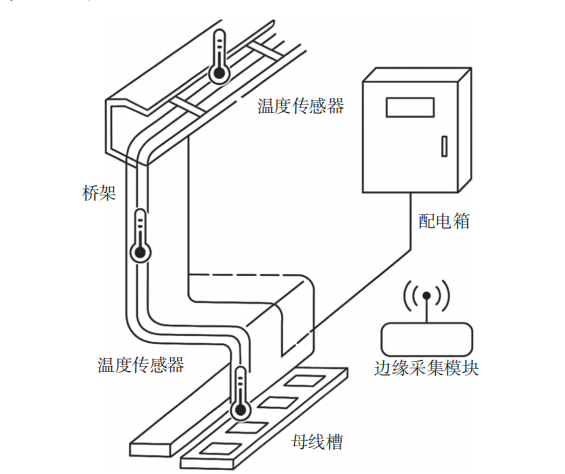
Figure 1: Deployment Structure of Intelligent Temperature Sensing Sensors in Building Cables
3
Application Analysis
3.1
Project Overview
A smart park office building group was selected as the pilot scene. The total building area of this group is approximately 32,000 m², including 5 six-story buildings, with functions covering office, conference, operation and maintenance, and exhibition, equipped with multiple distributed distribution rooms, three types of lighting control circuits, and supporting facilities.
Due to an operational lifespan exceeding 8 years, the original electrical system faced issues such as uneven circuit loads, blind spots in cable temperature rise, and high lighting energy consumption, limiting its energy scheduling accuracy and fault response capability. To improve the system’s operational perception accuracy and visualization management level, the project selected three typical subsystems of the building electrical system, focusing on power distribution monitoring, lighting control, and cable temperature monitoring, deploying 93 intelligent sensor units at key nodes to cover three major parameters: electrical parameters, thermal sensing, and illuminance, achieving dynamic perception of system operational status and multi-modal linkage control.
3.2
Effect Analysis
3.2.1 Power Distribution Monitoring Function Verification
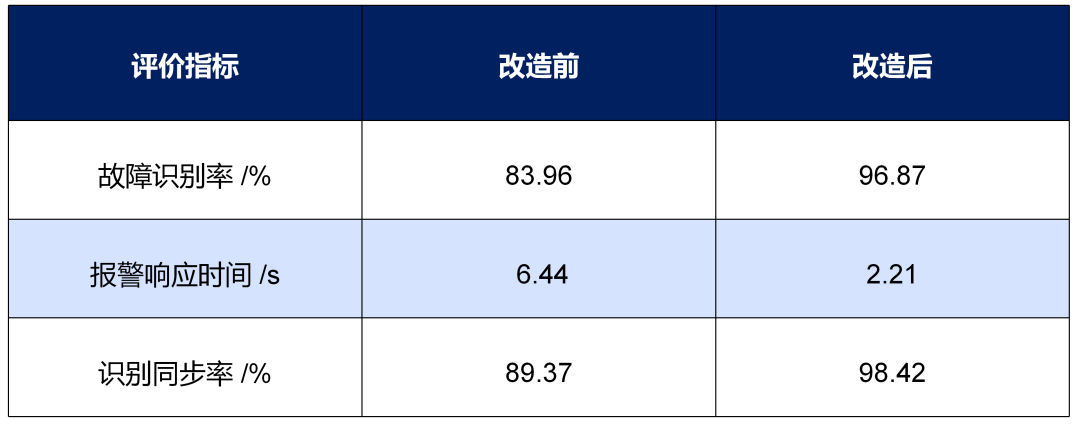
The results of power distribution monitoring are shown in Table 1. Based on layered deployment and local feature extraction strategies, the fault identification rate of the power distribution system improved from 83.96% to 96.87%, and the alarm response time was reduced from 6.44s to 2.21s. The real-time fluctuation index calculation and lightweight event frame transmission mechanism effectively mitigated node delay accumulation and upload blockage. The multi-point synchronized clock design supported an increase in identification synchronization rate from 89.37% to 98.42%, accelerating the convergence of the power distribution system state perception closed loop.
The experiments validated that the layered local judgment and agile upload strategies demonstrated high adaptability in improving fault identification speed and synchronized linkage effects, providing a solid data foundation for subsequent dynamic reconstruction and self-healing scheduling.
Table 1: Comparison of Power Distribution Monitoring Results
3.2.2 Lighting Energy Saving Function Verification
Figure 2 shows the energy consumption comparison over 24 hours.
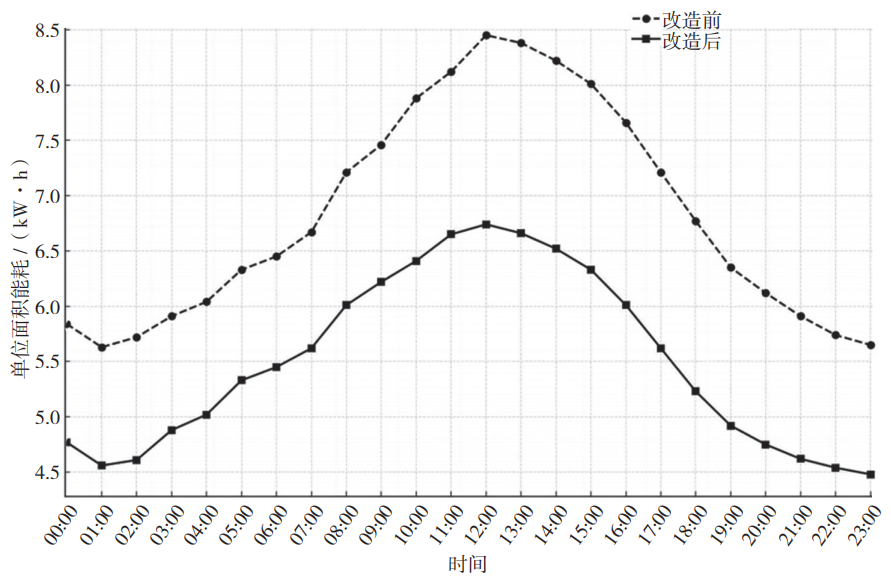
Figure 2: Comparison of Lighting System Energy Consumption
The dynamic perception network drives real-time compensation of illuminance, and the personnel presence probability guides load reduction, resulting in an average decrease of over 16% in energy consumption per unit area throughout the day.
The sliding window light trend prediction and regional brightness adaptive control strategy significantly converged the energy consumption curve during peak hours from 08:00 to 18:00, with a peak reduction of approximately 1.8 kW·h.
After the renovation, the illuminance control error significantly narrowed, and the lighting system output curve closely matched actual environmental changes. The dynamic rhythm load scheduling mechanism achieved a balance between energy consumption reduction and comfort maintenance, fully validating the superiority of the micro-environment perception and linkage adjustment model in actual operational scenarios.
3.2.3 Cable Temperature Sensing Function Verification
Table 2 presents the results of cable temperature sensing.
Table 2: Comparison of Cable Temperature Sensing Results
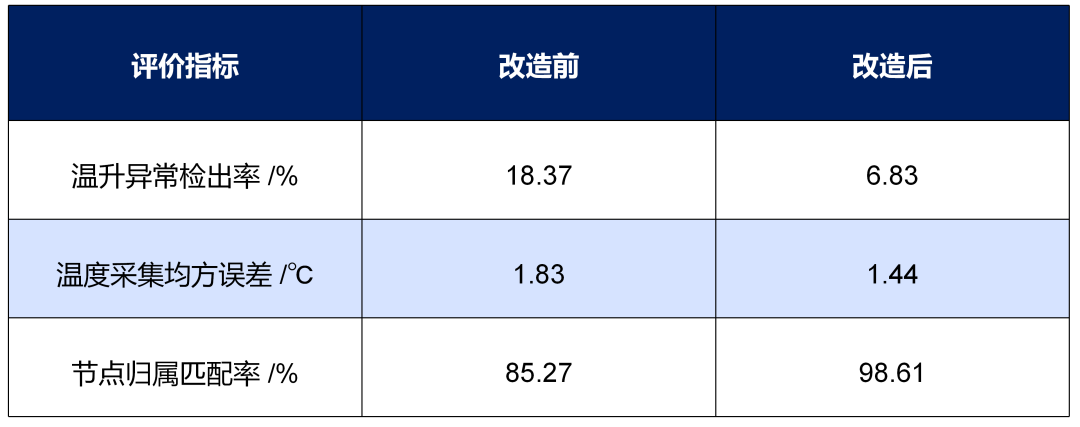
After high-density deployment combined with local thermal variation trend interpolation modeling, the abnormal temperature rise detection rate improved from 18.37% to 68.83%, and the node attribution matching rate reached 98.61%. The mean square error of sampled temperatures was controlled within 1.44 ℃, a decrease of nearly 21% compared to before the renovation.
Local linear interpolation reconstructed continuous thermal fields, and the dynamic attribution algorithm corrected boundary ambiguity issues, presenting the evolution of temperature rise along the cable path with high resolution. The experimental results support the effectiveness of spatial thermal variation zoning perception and attribution analysis methods under complex wiring conditions in enclosed environments, providing precise support for proactive risk identification and operation and maintenance scheduling.
4
Conclusion
The IoT smart sensor system demonstrates robust perception and linkage control capabilities in building electrical scenarios. Layered node deployment, local judgment mechanisms, and data-driven strategies effectively enhance the overall performance of power distribution fault response, dynamic energy saving in lighting, and cable thermal variation identification. This article designs an intelligent perception network for multi-source heterogeneous environments, supporting the precision of operational state perception and adaptive execution strategies in building electrical systems. Future work can deepen optimization in node miniaturization, algorithm lightweighting, and multi-modal data fusion, further expanding the system’s application boundaries and intelligent evolution capabilities.
References
Swipe up to browse
[1] Li Youdong, Yan Chenli, Zhao Yunhui, et al. Mutual benefit or self-sufficiency? Analysis of the configuration of green smart city construction under the “dual carbon” goal [J]. Journal of System Management, 2024, 33(1): 259-274.
[2] Jin Tian, Li Lianjun. Research on real-time monitoring and predictive maintenance technology for intelligent building operation and maintenance based on BIM and IoT [J]. Housing and Real Estate, 2025(8): 65-67.
[3] He Zhijian, Zhou Jiang, Luo Yuezh, et al. Research on intelligent monitoring of ultra-high-rise building equipment power safety based on IoT technology [J]. Automation Applications, 2023, 64(5): 30-32.
[4] Yuan Li. Research on the electrical safety monitoring system of university campus buildings based on intelligent sensor networks [J]. Computer Campus, 2024(12): 139-141.
[5] Yu Rongsheng. Research on construction technology of weak current intelligent system engineering based on IoT architecture [J]. Today’s Automation, 2024(12): 95-97.
[6] Yan Wenshuang. Design of building electrical systems based on intelligent sensor networks [J]. Electrical Technology, 2024(17): 175-177.
[7] Yuan Shuai. Innovative application of multi-modal sensor fusion technology in intelligent building construction quality control [J]. Green Building and Intelligent Architecture, 2025(2): 147-149.
[8] Gao Yukun, Zhao Jie, Zhou Jingjing, et al. Finite element prediction and device performance of piezoelectric fiber composite intelligent sensors [J]. Acta Physica Sinica, 2025, 74(5): 193-202.
[9] Pan Xiaohui. Practical application of smart sensors in IoT [C]// Yangtze River Lighting Technology Forum and Central and Eastern Region Lighting Development Summit Proceedings, 2023.
[10] Xie Baihuang, Li Xuhui. Intelligent mobile system for secondary equipment information in power grid based on IoT and sensor technology [J]. Manufacturing Automation, 2023, 45(8): 12-16.
[11] Yu Guangzuo, Huang Yun, Ni Yunwei. Intelligent monitoring method for the working status of end distribution busbars based on IoT [J]. IoT Technology, 2025, 15(3): 31-33.
[12] Feng Bo. Research on lighting control system based on improved PIR sensors [D]. Dalian: Dalian University of Technology, 2023.
[13] China State Construction Engineering Corporation Second Construction Co., Ltd. An IoT-based intelligent lighting system for power sensing: 202410881672.1[P]. 2024-08-30.
[14] Cai Guangzhu, Wang Lixue, Yang Haiyang, et al. Research on intelligent monitoring system for power cables based on IoT technology [J]. Power Safety Technology, 2023, 25(6): 16-18.
[15] Li Yuanyuan. Intelligent fire protection system for cable channels based on multi-sensing and convolutional recurrent neural networks [D]. Chongqing: Chongqing University, 2023.
——
Intelligent IoT Technology
Content Source | “Intelligent IoT Technology” Vol. 57, No. 2 (2025)
Original Author |
Deng Rui
Chart Production | “Intelligent IoT Technology”
Original Statement: This article is an exclusive original work of “Intelligent IoT Technology” and may not be reproduced without permission. Feel free to share it with friends to benefit more people. Respect originality and maintain a good online environment! For reprints, please contact us, and please indicate the source when quoting.


Follow our public account for more exciting content

[Call for Papers] “Intelligent IoT Technology” Call for Papers on the “AI Large Model” Special Issue
[Original] Prediction Model for Drying Moisture Content of Traditional Chinese Medicine Based on Long Short-Term Memory Artificial Neural Network
Selected News | Policy Guidance, Industry Dynamics, and Technical Insights in the Field of Artificial Intelligence and IoT – Issue 40
[Original] Automatic Detection of Concrete Surface Defects Based on Image Processing
Industrial Large Models for Intelligent Manufacturing: Definitions, Characteristics, Technical Status, and Challenges
[Original] Research on Load Balancing Control of Power IoT Resources for Edge Computing

Share, recommend, and like, at least I want to have one!