PU LI

When it comes to hard technology, many people’s first reaction is “chips”—after all, chips are considered the “grain of industry” and have always been the focus of the industry. However, hard technology is much broader than one might think: the smart driving industry is accelerating towards reality, robots are moving from factories into daily life, and AR/VR is making the “metaverse” no longer just a concept… These fields not only experience rapid technological iterations but also generate a significant demand for non-technical positions. Today, we will break down these emerging hard technology sectors and explore where the opportunities lie in market, operations, product, and sales roles.
01
The “Current Status and Players” in Three Major Hard Technology Fields
Before seeking opportunities, we need to understand the “basic situation” of each sector—where the industry stands, what segments exist in the supply chain, and who dominates the play.
1. Smart Driving: The Sprint from “Assistance” to “Autonomous Driving”
Industry Status: Currently, smart driving is in a critical transition phase from L2 (partial assistance) to L3 (conditional autonomous driving). According to data from the China Passenger Car Association, by 2024, the penetration rate of new cars equipped with L2+ assistance driving in China will exceed 35%, with first-tier cities even reaching over 50%; meanwhile, Robotaxi (autonomous taxi) pilot programs have begun in several cities, such as Shenzhen and Shanghai, allowing unmanned vehicles to operate all day in specific areas.
Supply Chain Composition: The upstream consists of sensors (LiDAR, cameras), chips (autonomous driving-specific chips), and algorithm software; the midstream includes vehicle manufacturers (car companies) and solution providers (e.g., Baidu Apollo, Huawei ADS); the downstream consists of mobility platforms (Didi Autonomous Driving) and urban traffic operators.
Main Players: There are traditional car manufacturers transforming (Tesla FSD, BYD DiPilot), tech companies crossing over (Huawei ADS, Baidu Apollo), and startups focused on autonomous driving (Pony.ai, WeRide).
2. Robotics: From “Industrial Scenarios” to “Robots for Everything”
Industry Status: Industrial robots are already “old players”—by 2024, China’s industrial robot installations will account for 45% of the global total. However, the explosive growth of “service robots” is even more noteworthy: delivery robots in restaurants, shopping mall guide robots, household cleaning robots (e.g., Ecovacs, Roborock), and even surgical robots in the medical field (Da Vinci surgical robot) are rapidly penetrating the market. According to IDC, the market size of service robots in China will exceed 150 billion yuan by 2025.
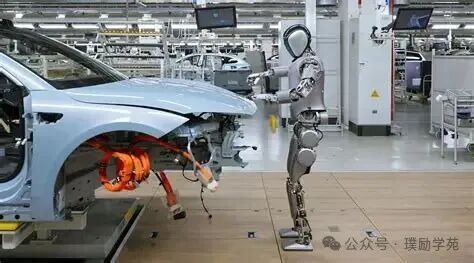
Supply Chain Composition: The upstream consists of core components (servo motors, reducers, controllers); the midstream includes the manufacturing of robots (industrial robots, service robots); the downstream consists of application scenarios (factories, restaurants, medical, home).
Main Players: In the industrial sector, there are FANUC, Yaskawa (foreign), Estun, and Siasun (domestic); in the service sector, there are Ecovacs, Roborock (home), Pudu Technology (restaurant), and Tianzhihang (medical); there are also emerging companies focused on “humanoid robots” (Tesla Optimus, UBTECH Walker).
3. AR/VR: From “Niche Entertainment” to “Industry-Level Applications”
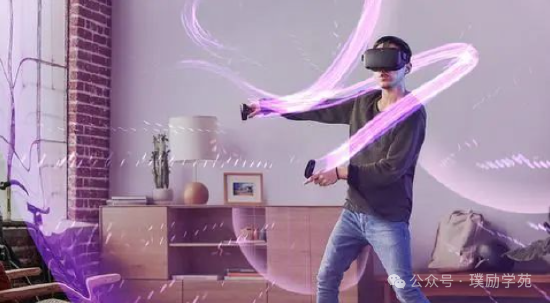
Industry Status: In the past, AR/VR was often seen as “gaming devices,” but it is now rapidly penetrating the industrial sector. For example, in the industrial field, workers use AR glasses to view equipment maintenance guides; in education, students experience “immersive history lessons” through VR; in the medical field, doctors use VR for surgical training simulations. In 2024, global AR/VR headset shipments are expected to grow by 28% year-on-year, with industry-level applications for the first time surpassing consumer-level (gaming, viewing).
Supply Chain Composition: The upstream consists of hardware components (displays, sensors, chips); the midstream includes device manufacturing (headset manufacturers) and content development; the downstream consists of application scenarios (industrial, education, medical, consumer).
Main Players: On the consumer side, there are Meta Quest, Pico (ByteDance), and Sony PS VR; on the industrial side, there are Microsoft HoloLens, Liangliang Vision (industrial AR), and Medivis (medical VR).
02
New Roles and Challenges for Non-Technical Positions
Technical positions are responsible for “creating things,” while non-technical positions are responsible for “ensuring that things are used by more people and used better.” Non-technical roles in these three major sectors are no longer merely “doing menial tasks”; they require precise efforts that align with the characteristics of the industry.
1. Smart Driving: Non-Technical Roles Must Understand “User Trust” and “Policy Rules”
Market Role: The core is “establishing user trust in autonomous driving.” For example, it is necessary to plan “autonomous driving experience events” to allow ordinary users to experience L3 functions firsthand; it is also essential to create “technical popularization content”—after all, many people have concerns about “whether unmanned vehicles are safe”; the market role needs to explain in layman’s terms how “LiDAR identifies obstacles” and “how algorithms respond to emergencies” to lower the cognitive barrier for users.
Challenges: Requires understanding technical logic but must avoid getting lost in “pure technical jargon”; needs to balance “professionalism” and “understandability.”
Operations Role: Divided into “C-end user operations” and “B-end cooperative operations.” C-end needs to collect user feedback—for example, organizing feedback on “misjudgment scenarios” encountered by users while using assistance driving, which needs to be relayed to the technical team; it also requires user segmentation operations, such as providing “exclusive service packages” (like free high-precision map updates) to users who frequently use autonomous driving. B-end needs to coordinate with city traffic departments; for example, Robotaxi pilot programs require coordination with traffic management departments on “operating routes” and “data reporting rules.”
Challenges: B-end cooperation involves policies, safety, and other aspects, requiring strong communication and coordination skills.
Sales Role: Primarily focused on “B-end solution sales.” For example, selling “autonomous driving algorithm packages” to car manufacturers and “unmanned heavy truck solutions” to logistics companies. Sales roles not only need to understand the product but also the client’s business scenarios—for instance, logistics companies care about whether “unmanned heavy trucks can reduce fuel consumption” and “whether they can handle long-distance transport at night”; sales need to provide solutions based on these pain points.
2. Robotics: Non-Technical Roles Must Understand “Scenario Implementation” and “Customer Service”
Product Role: The core is “defining the usage scenarios for robots.” For example, when designing a “restaurant delivery robot,” the product role needs to research the restaurant’s needs—does it require “automatic obstacle avoidance” (to avoid bumping into customers) or “voice interaction” (to respond to customers’ “delivery requests”)? Cost control must also be considered—if the robot’s cost is too high, the restaurant may be unwilling to purchase it, so the product role must find a balance between “functionality” and “price.”
Challenges: Requires in-depth observation of frontline scenarios (e.g., spending time in restaurants to observe workflow) rather than just brainstorming requirements in the office.
Operations Role: Focused on “customer retention.” For example, for industrial robots sold to factories, the operations role needs to regularly follow up on “the robot’s usage status”—are there any malfunctions? Can workers operate it? It also requires providing “after-sales training,” such as teaching factory workers how to perform simple maintenance on the robot. For household cleaning robots, the operations role should focus on “user community operations,” such as building a “user communication area” within the app to encourage users to share “cleaning tips” and enhance user engagement.
Challenges: Customer needs vary greatly across different scenarios (factory vs. home), requiring targeted operational strategy design.
Market Role: Needs to break the perception that “robots = cold machines.” For example, when promoting household companion robots, the market role can plan “parent-child interaction activities” to allow parents and children to experience features like “robots telling stories” and “remote video calls”; when promoting medical surgical robots, the market role should convey the value of “precision and safety” to hospitals and patients, such as using case studies to demonstrate how “surgical robots have smaller error margins than humans.”
3. AR/VR: Non-Technical Roles Must Understand “Content Ecosystem” and “Industry Adaptation”
Product Role: The key is “building a content ecosystem.” The core of AR/VR devices is “content”—if there are no engaging games or useful tools, users will not buy in. Therefore, the product role needs to connect with “content developers,” such as collaborating with gaming companies to develop VR games and with educational institutions to develop AR courses; it also needs to design a “content distribution mechanism,” such as recommending “popular content” in AR/VR app stores to help developers monetize.
Challenges: Building a content ecosystem requires long-term investment, and short-term results may not be visible, requiring patience.
Operations Role: Divided into “content operations” and “industry operations.” Content operations need to filter quality content, such as eliminating VR games with low user ratings; they also need to guide users, for example, when new users first use AR glasses, the operations role needs to design a “beginner’s tutorial” to teach users how to “switch scenes” and “adjust clarity.” Industry operations need to connect with specific industry clients, such as designing an “AR maintenance system” for automotive factories, and the operations role needs to follow up on “the system’s usage effects after going live,” such as whether workers can quickly find faults through AR glasses and whether the interface needs optimization.
Sales Role: Primarily focused on “industry-level solution sales.” For example, selling “VR training equipment” (such as automotive repair simulations, nursing simulations) to training institutions and selling “AR house viewing systems” (allowing clients to view house layouts through mobile AR) to real estate companies. Sales roles need to understand “industry pain points”—for instance, training institutions care about whether “VR training can reduce material costs” (such as automotive training without using real cars, reducing wear and tear); sales need to communicate around these pain points.
03
What Knowledge and Experience Should Be Accumulated Now?
If you want to enter non-technical roles in these hard technology sectors, you don’t have to wait until you “fully understand the technology” before taking action; you can start accumulating from these three directions now:
1. Knowledge Accumulation: First “Understand the Industry,” Then “Focus on the Role”
Read Industry Reports: Pay attention to industry reports on “smart driving / robotics / AR/VR” published by IDC, Gartner, and iResearch, focusing on the three parts: “market size, core players, application scenarios” to establish an industry cognitive framework.
Follow Leading Companies’ Dynamics: Keep an eye on the official accounts/weibo of companies like Tesla, Huawei, Ecovacs, and Meta to see their “new product launches” and “industry collaborations”—for example, when Tesla releases new features for the Optimus humanoid robot, it can indicate the “technical direction of humanoid robots”; when Huawei collaborates with a car company to launch a new autonomous driving solution, it can reveal the “key needs of car manufacturers.”
Learn “Industry Common Terminology”: You don’t need to understand technical principles, but you should know what terms like “LiDAR, servo motors, L4 autonomous driving” mean—for example, when communicating with clients, if a client says they want an “L4 level unmanned vehicle,” you should at least know that “this is fully unmanned driving, requiring no human intervention.”
2. Experience Accumulation: Entering from “Related Scenarios” to Accumulate Transferable Skills
Find Internships/Part-Time Jobs: If you are a student, prioritize internships at companies in these sectors, even if not in core positions (e.g., user operations assistant at a smart driving company, marketing assistant at a robotics company), as you can observe “industry practices” up close; if you are a working professional looking to switch careers, you can first enter from “related industries”—for example, transitioning from consumer electronics sales to robotics sales will be easier, as both require “connecting with customer needs and selling hardware products.”
Engage in “Small Projects”: For example, if you want to work in AR/VR content operations, you can create content on Bilibili/Xiaohongshu reviewing “AR/VR devices” or recommending “VR games” to accumulate experience in “content planning and user interaction”; if you want to work in smart driving marketing, you can try writing articles for an “autonomous driving popularization account” to practice “simplifying technical content.”
3. Soft Skills: These Three Abilities Are More Important Than “Understanding Technology”
Cross-Department Communication Skills: Non-technical roles often need to interface with technical teams (e.g., operations roles providing user feedback to technical teams); you need to be able to “understand technical language and make technical teams understand your language”—for example, instead of saying “this feature is not user-friendly,” say “when users use assistance driving on the highway and encounter a traffic cone, the system did not slow down in time; can we optimize the recognition logic?”
Scenario-Based Thinking: For example, in a robotics product role, you cannot just think about “how powerful the features are”; you also need to consider “whether this feature is useful in the scenario”—for instance, when designing a companion robot for the elderly, the “voice interaction” speed should be slow, and the font should be large, as the elderly may have hearing and vision impairments.
Rapid Learning Ability: The hard technology industry changes rapidly (for example, last year it was about L2 assistance driving, and this year L3 is starting to pilot), requiring a habit of “continuous learning”—for instance, spending one hour a week reading industry news and one month reading one book related to the industry.
The explosion of hard technology is not accidental, and opportunities are always reserved for those who are prepared. — Perhaps your next career breakthrough is here.
-END-
Copyright Notice: Image materials are sourced from publicly available information on the internet, and the copyright belongs to the original authors. If there is any infringement, please contact for removal.
READ MORE