·Follow|Star Students from Changyan have all succeeded!


✦
✧
Introduction to Semiconductor Graduate Studies
✦
Difference Between Major and Research Direction: Simply put, a major is a broad category, while a direction is a specific sub-category; for example, Materials Science and Engineering is a major, while Metal Materials Engineering, Polymer Materials Engineering, Powder Metallurgy and Ceramic Materials Engineering, Corrosion and Protection, and Surface Engineering are specific research directions.
1. Introduction to Semiconductor Major
1. Discipline Introduction
Semiconductor Materials Science is a multidisciplinary master’s program that mainly studies the physical and chemical properties, structure and preparation, and device design and manufacturing of semiconductor materials.
2. Concept and Introduction to Three Generations of Semiconductors
Semiconductors are defined as materials whose electrical conductivity is between that of conductors and insulators at room temperature. The first generation of semiconductor materials refers to elements like silicon and germanium. The second generation includes compounds represented by gallium arsenide and indium phosphide. The third generation typically refers to semiconductor materials with a bandgap greater than or equal to 2.3 eV, also known as wide bandgap semiconductors or high-temperature semiconductors, represented by compounds like silicon carbide (SiC), gallium nitride (GaN), and zinc oxide (ZnO).
2. Current Status and Prospects of Semiconductor Major
1. Current Status
In terms of research on semiconductor materials and devices, China started relatively late and still lags behind international advanced levels. However, the Chinese government, enterprises, and organizations place considerable importance on the integrated circuit and semiconductor industries.
2. Development Prospects
The semiconductor industry is a vital part of modern high-tech industries, with broad application prospects and high socio-economic benefits. The development of the semiconductor industry is rapid both domestically and internationally, and related enterprises are actively recruiting talent. Graduates of semiconductor materials science have a promising employment outlook. According to the statistics from the Third Generation Semiconductor Industry Technology Innovation Strategic Alliance (CASA) in China, in 2020, the total scale of silicon carbide, gallium nitride electronic power, and gallium nitride microwave RF devices reached 10.55 billion yuan, a year-on-year increase of 69.61%.
At the same time, driven by new infrastructure, various industries such as 5G base stations, electric vehicle charging piles, big data centers, artificial intelligence, and intercity rail transit are closely related to semiconductors.
3. Application Fields
The main application fields are as follows: integrated circuits, communication systems, photovoltaic power generation, artificial intelligence, etc.
3. Advantages and Disadvantages of Semiconductor Major
1. Advantages
(1) High technical content, strong innovation
(2) Complete industrial chain, many job opportunities
(3) Generous salary and significant career development space
(4) National policy support, rapid industry development
2. Disadvantages
(1) High difficulty of study, rapid knowledge updates
(2) Intense competition, considerable pressure
(3) Work environment may be harsh
(4) Industry cyclical fluctuations affect employment stability
4. Current Employment Outlook (Key)
The semiconductor industry, as one of the core driving forces behind modern technological development, is undergoing unprecedented transformation and growth. With continuous technological advancements and increasing market demand, the employment outlook for semiconductor majors shows vast potential and space. This is elaborated from six aspects: industry demand growth, broad employment prospects, high-paying job opportunities, significant development space, policy support, and competition and challenges.
1. Industry Demand Growth
In recent years, after experiencing a period of fluctuations, the global semiconductor industry has entered a new growth cycle. Particularly with the rapid development of emerging technologies such as artificial intelligence, the Internet of Things, 5G communication, and electric vehicles, the demand for semiconductor products has surged. According to market research institutions, the global semiconductor market is expected to achieve significant recovery in 2024, with an annual growth rate potentially exceeding 20%, and the market size expected to exceed $600 billion.
Specific Manifestations
(1) Surge in AI Chip Demand: The widespread application of artificial intelligence technology has driven the demand for high-performance computing chips, promoting the growth of the logic chip and new storage chip markets.
(2) Popularization of Smart Terminals: The trend of smart and connected devices such as smartphones, personal computers, servers, and cars is evident, continuously increasing the demand for semiconductor components.
(3) Recovery of the Memory Market: Production cuts in the memory market have driven product prices up, and the increase in the penetration rate of high-bandwidth memory (HBM) has provided momentum for market growth.
2. Broad Employment Prospects
(1) Industry Status
The recovery and growth of the semiconductor industry have directly driven the prosperity of the job market. From chip design, manufacturing, packaging testing, to materials and equipment supply, all segments of the industry chain show strong recruitment demand.
(2) Employment Fields
Graduates from semiconductor materials science can work in semiconductor materials research, semiconductor device process development, device design and manufacturing, IC production, integrated circuit testing and packaging, and other fields.
(3) Talent Status
Employment in the semiconductor field mainly involves industries like polysilicon (chemical energy companies), semiconductors (electronics companies), physics, materials, non-destructive testing (flaw detection, pressure vessel manufacturers), etc. After graduating with a master’s degree, one can work in research institutes or universities. According to the “China Integrated Circuit Industry Talent White Paper (2019-2020 Edition)” compiled by the China Electronics Information Industry Development Research Institute, by 2022, the demand for talent in China’s semiconductor industry is expected to reach about 744,500, with a talent gap of nearly 250,000. Whether in the autumn or spring recruitment, the competition among major companies for talent will only intensify.
3. Entry Companies and Positions
(1) Top 20 Semiconductor Companies in China
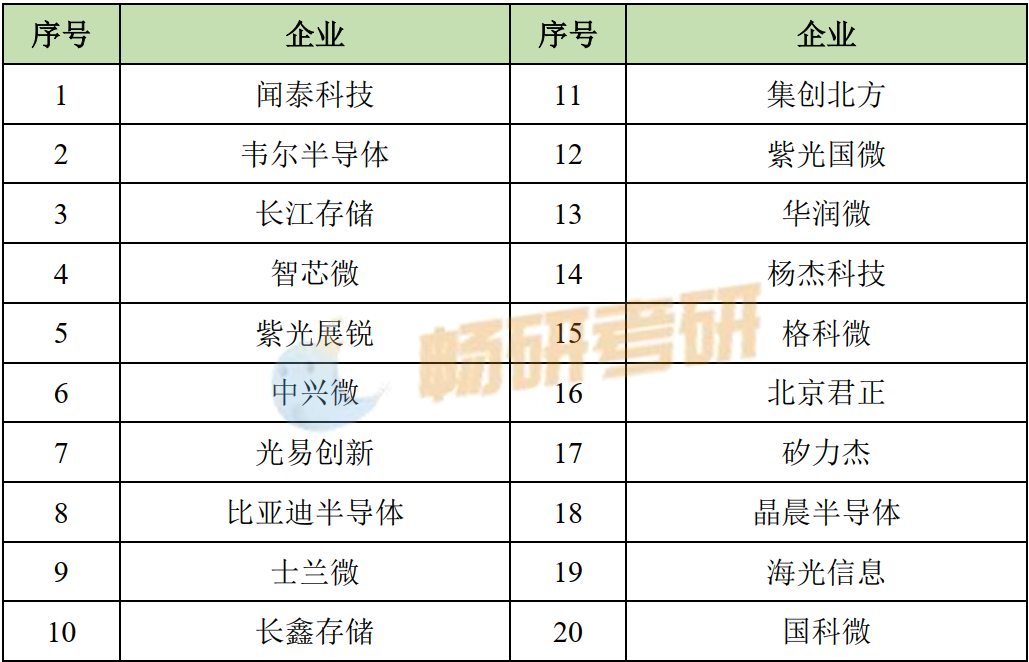
Data source: Zhihu “Frontier Materials” summary of the report “2022 China Semiconductor TOP 100 Companies Research Report” published by Aijimei Consulting
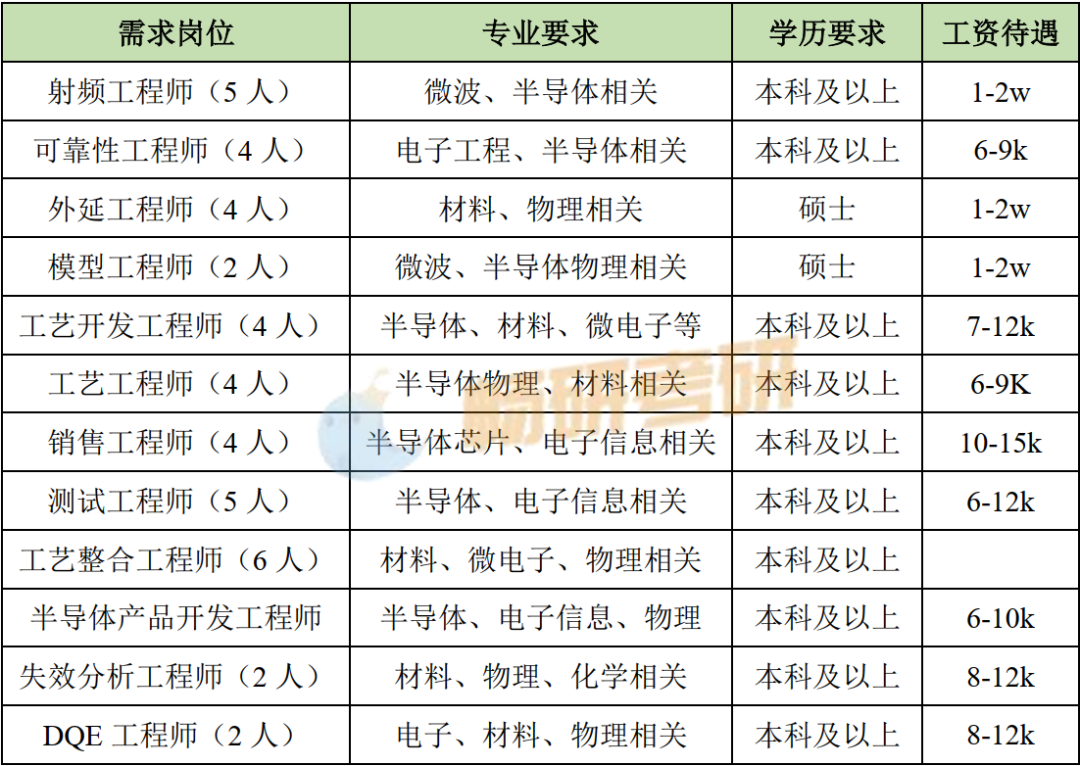
(2)Types of Recruitment Positions
4. Salary Introduction
(1) Median Starting Salary: According to statistics, in first-tier cities, the median starting salaries for semiconductor industry graduates of different educational backgrounds are as follows:
Associate Degree: 7,300 yuan;
Bachelor’s Degree: 9,600 yuan;
Master’s Degree: 12,900 yuan;
Doctorate: 22,100 yuan;
(2) High-Paying Positions: Overall, the salary data for technical positions in the semiconductor industry in first-tier cities can generally reach 200,000 yuan and above. Positions such as chip architecture engineers, analog chip designers, RF chip designers, thin film process engineers, wafer product engineers, and photomask manufacturing engineers, which require high levels of technical expertise and experience, can earn annual incomes of 300,000 yuan or even 500,000 yuan or more.
(3) Salary Differences by City:
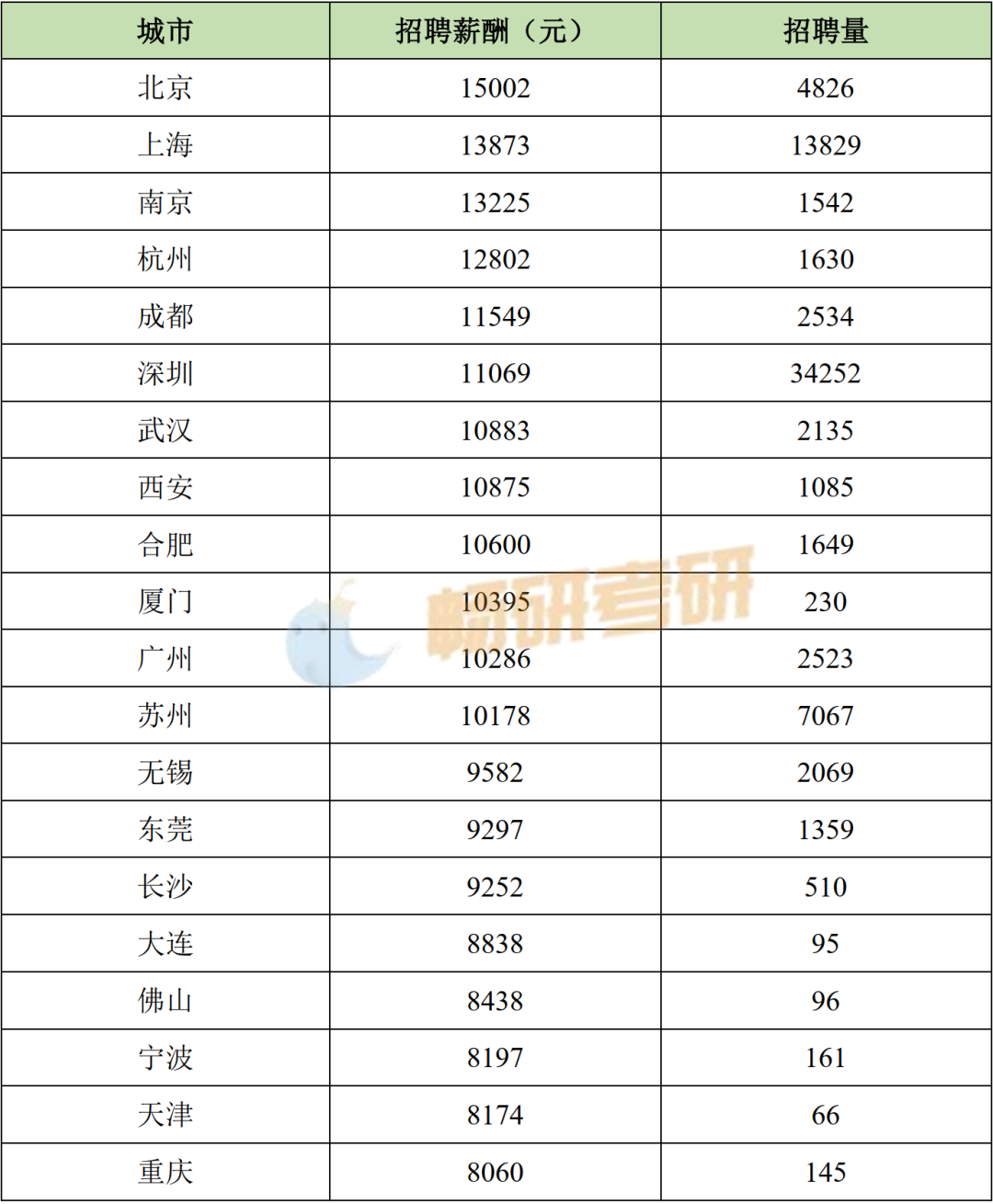
Data from EDA365 Electronic Forum’s compilation of the “2022 Semiconductor Industry Salary White Paper”
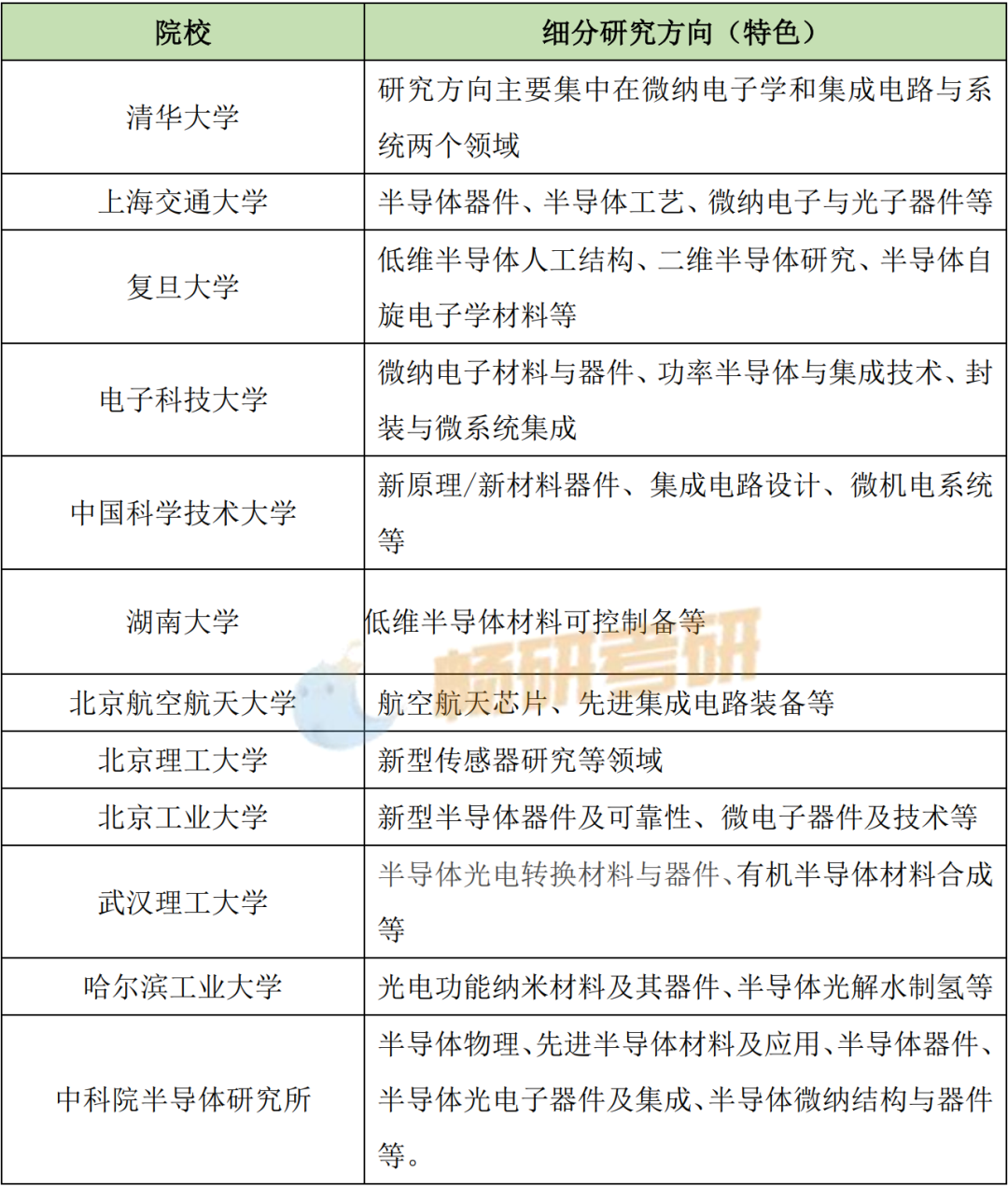
5. Recommended Universities for Material Graduate Studies
–END–
Previous Recommendations
Every year, 3% of answer sheets are filled incorrectly! Come see the correct way to use the answer sheet!
Does the order of answering questions affect scores? Here comes a 400+ answering order!
How great can it be after passing the exam!? Full of motivation after reading!
2026 exam schedule, a comprehensive Q&A plan, teaching you how to prepare!