1. Core Architecture of the Intelligent Road Roller Monitoring System
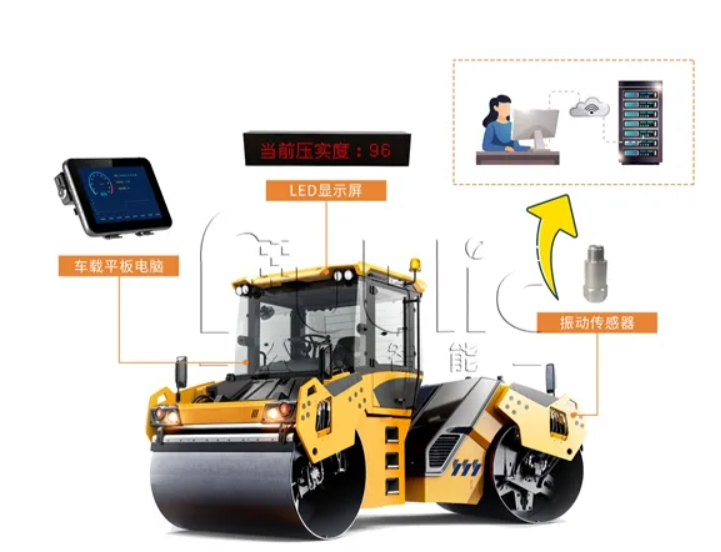
The intelligent road roller monitoring system is centered around “Component Perception – Data Fusion – Intelligent Decision Making”, constructing a comprehensive monitoring network through six categories of sensors. Combined with GNSS positioning and edge computing technology, it achieves dual control of construction quality and equipment health. The system architecture is divided into three layers:
-
1. Perception Layer: Deploy specialized sensors for displacement, tilt, vibration, etc., to collect mechanical status and construction parameters;
-
2. Transmission Layer: Data is transmitted back in seconds via CAN bus and 4G/5G modules, supporting offline caching;
-
3. Application Layer: Data visualization, anomaly warning, and decision output are achieved through onboard terminals and cloud platforms.
2. Key Sensor Technology Solutions and Application Scenarios
(1) Displacement Monitoring: Control of Compaction Depth and Execution Accuracy
-
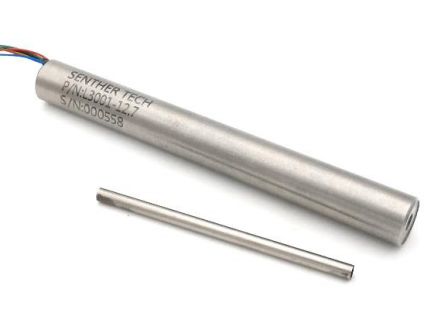
Core Models: Cable displacement sensors D261/D260, LVDT linear displacement sensors L3001-12.7/L2001-5.08
-
Technical Features: The LVDT series uses the principle of differential transformers, with a measurement accuracy of ±0.1% FS, suitable for monitoring hydraulic cylinder extension with ranges of ±5.08 or ±12.7mm; the cable-type D260/D261 has an IP67 protection level, resistant to dust and vibration impacts in construction scenarios.
-
Practical Value: Installed on the hydraulic cylinder of the vibrating wheel, it collects real-time compaction depth data (e.g., thickness of the subgrade fill), combined with GNSS positioning to construct a “Position – Depth” two-dimensional model, ensuring that the deviation of each layer’s compaction thickness is ≤2cm, avoiding density differences caused by uneven thickness.
(2) Tilt Monitoring: Control of Equipment Posture and Construction Slope
-
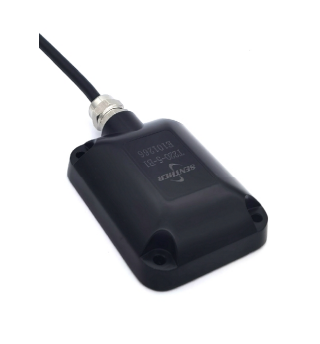
Core Model: Horizontal tilt sensor T220 series
-
Technical Features: Utilizes MEMS inertial measurement units, with dual-axis measurement accuracy of ±0.01°, supporting a wide temperature range of -40℃ to 85℃, seamlessly interfacing with the onboard system via RS485 protocol.
-
Practical Value: Deployed on the body of the road roller and the vibrating wheel bracket, it monitors the levelness of the body (preventing rollover risks) and the compaction slope in real-time. During construction on the Ningyan Expressway, this sensor, combined with BeiDou positioning, reduced the slope compaction error from ±3cm to ±0.5cm, improving the first acceptance rate by 15%.
(3) Vibration Monitoring: Compaction Energy and Equipment Fault Warning
-
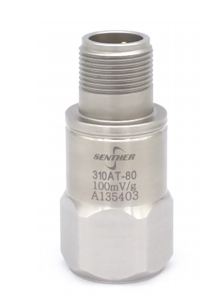
Core Models: Vibration sensors 310A/310AT/310V
-
Technical Features: The 310V series is an industrial vibration velocity measurement sensor with a 4-20mA current velocity output; the 310AT series is an industrial IEPE acceleration sensor for synchronous temperature and vibration measurement, with a frequency response of up to 15000Hz;
-
Layered Applications:
Engine / Drive Shaft: Monitors low-frequency vibrations of 5-30Hz through 310A, identifying anomalies such as bearing wear (vibration amplitude exceeding 0.5g triggers a warning);
Hydraulic Pump / Hydraulic Cylinder: Uses 310V to collect vibration signals caused by pressure pulsations, diagnosing internal leakage faults by combining pressure data, providing a 30-day early warning for hydraulic system failure risks;
Vibrating Wheel: Calculates compaction energy indicators (CMV/OMV) through vibration parameters (frequency, amplitude), quantifying subgrade density.
(4) Pressure Monitoring: Control of Hydraulic System Load and Compaction Strength
-
Core Models: Pressure sensors P1503C (low pressure), P3501 (high pressure)
-
Technical Features: P3501 has a range of 0-40MPa, suitable for high-pressure monitoring at the hydraulic pump outlet; P1503C has a response time of <1ms, accurately capturing dynamic pressure fluctuations in hydraulic cylinders.
-
Linkage Mechanism: Collaborates with displacement sensors to construct a “Pressure – Displacement” curve. In the Yuzhong Line railway project, by monitoring pressure changes in the vibrating wheel (normal range 8-12MPa), it automatically adjusts the excitation force, preventing shear damage to the subgrade caused by overpressure.
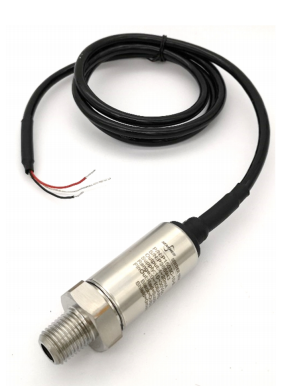
(5) Force Monitoring: Key Structural Strength Warning
-
Core Model: Stress micro-deformation monitoring sensor F5601
-
Technical Features: The patch design adapts to curved installations on the drive beam, with a measurement range of ±100με, accuracy of ±1% FS, supporting long-term online monitoring.
-
Safety Value: Real-time tracking of stress changes in the drive beam, triggering audible and visual alarms immediately when encountering complex geological conditions such as hidden ditches, preventing structural fatigue fractures and extending equipment life by 30%.
(6) Oil Quality Monitoring: Ensuring Health of Lubrication and Hydraulic Systems
-
Core Model: Oil quality sensor MWSEN300
-
Technical Features: Monitors dual parameters of dielectric constant and viscosity, capable of identifying excessive moisture in lubricating oil (>0.5%) and hydraulic oil contamination (above NAS 8 level), with a response time of <5s.
-
Operational Value: In a smart highway project, this sensor provided early warnings of hydraulic oil degradation, preventing hydraulic pump jamming failures, reducing unplanned downtime by 80%, and lowering maintenance costs by 20%.
3. Multi-Source Data Collaboration and Intelligent Applications
-
Time-Space Synchronization Mechanism: Achieves millisecond-level alignment of sensor data and location information through GNSS timestamps, constructing a “Position – Posture – Pressure – Vibration” four-dimensional database to support compaction quality traceability;
-
Edge Computing Preprocessing: The onboard AI chip performs FFT transformation and Kalman filtering on vibration signals, compressing raw data by 90% before uploading to the cloud, reducing bandwidth consumption;
-
Digital Twin Applications: Integrates BIM models with real-time sensor data to simulate compaction distribution in a virtual scenario, providing early warnings of settlement risks in soft soil areas. For example, the Yuzhong Line railway project reduced rework rates by 40% using this technology.
4. Practical Value and Industry Impact
-
Quality Control: Quantifying compaction through vibration and pressure sensors increased the acceptance rate of subgrade from 85% to 99%, forming a traceable “electronic construction file”;
-
Cost Reduction and Efficiency Improvement: Oil quality and vibration monitoring enable predictive maintenance, combined with multi-machine collaborative scheduling, reducing fuel consumption by 20% and shortening project duration by 12%;
-
Compliance Assurance: Full-link data meets ISO9001 and green construction certification requirements, enhancing the company’s bidding competitiveness.
For more product information, please contact us: 0755-85273639