Overview of Effects
Heart of Machine Learning Date: August 25, 2025
✅ 1. Main Functions
The core objective of this integrated evaluation model is to: scientifically, objectively, and accurately evaluate and rank multiple alternative mining equipment options, ultimately selecting the optimal solution.
-
Function of GRA (Grey Relational Analysis): Used to process data and calculate the degree of association between each alternative and the ideal (or negative ideal) solution. It is particularly adept at handling uncertain systems with “small samples and poor information,” analyzing the degree of correlation between different factors.
-
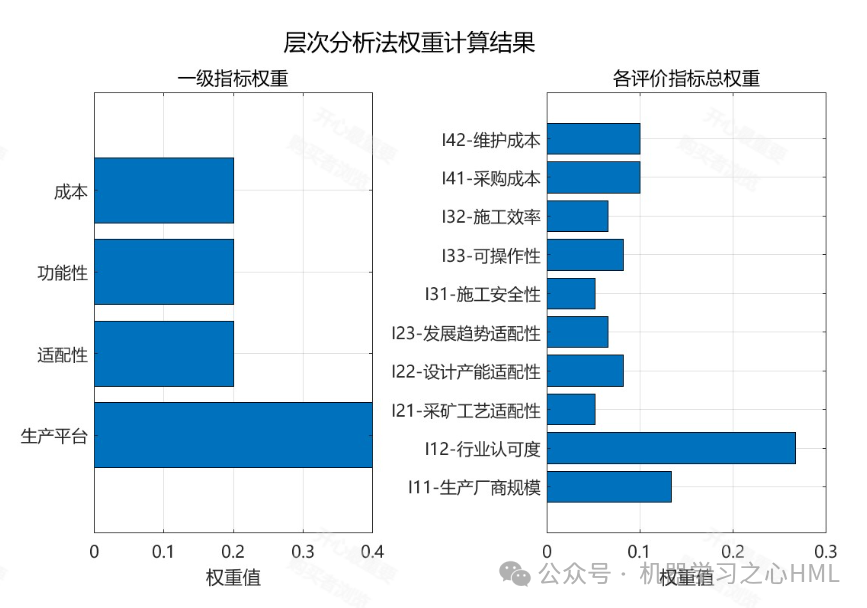
Function of AHP (Analytic Hierarchy Process): Used to scientifically determine the weights of each evaluation index. By constructing a hierarchical structure and pairwise comparison judgment matrix, it quantifies the decision-maker’s subjective experience to obtain the weight values of each index’s relative importance.
-
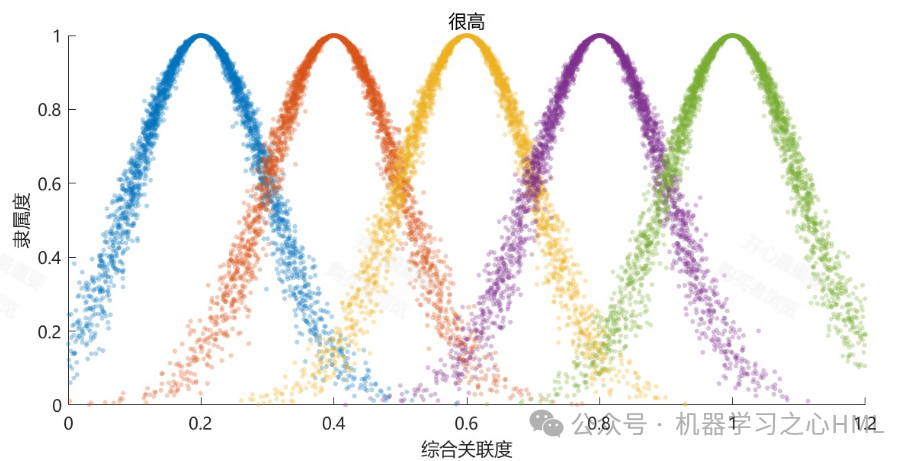
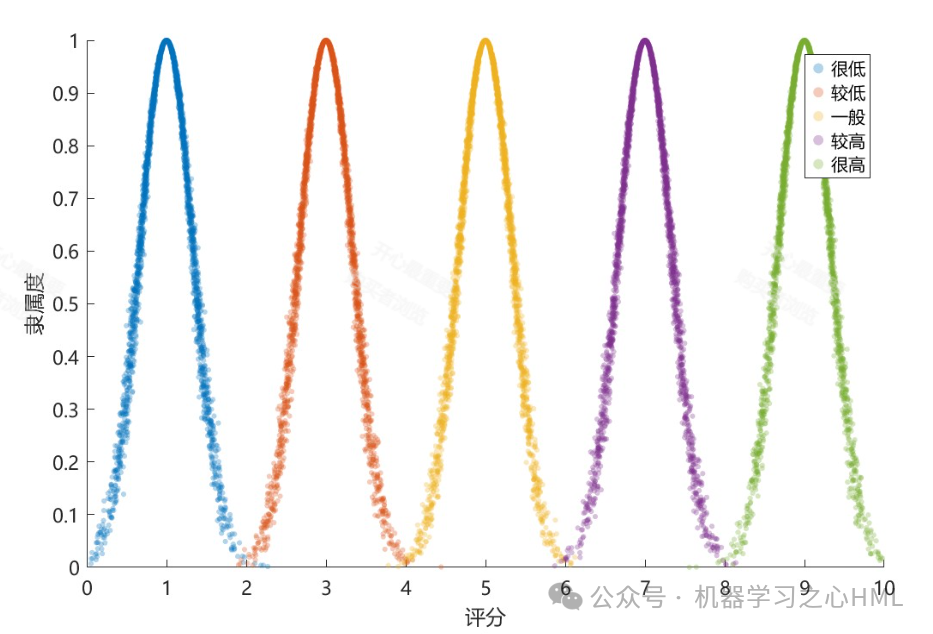
Function of Cloud Model: Used to handle the fuzziness and randomness in evaluations, especially for qualitative indicators (such as “high safety” and “good reliability”). It transforms fuzzy linguistic values (comments) into quantitative numerical representations (represented by three numerical features: expectation Ex, entropy En, and hyper-entropy He), achieving a natural conversion from qualitative to quantitative.
🔗 2. Logical Relationships (Model Framework)
The logical combination of these three is based on the progressive relationship of “Weight-Quantification-Association”:
-
AHP First: First, use AHP to establish the hierarchical structure of evaluation indices and calculate the subjective weights of each index (
<span>W</span>). This serves as the “ruler” for the entire evaluation system, determining the importance of different indices. -
Cloud Model in the Center: Then, utilize the cloud model to convert experts’ qualitative evaluations of qualitative indicators (such as “very good,” “good,” “average”) into quantitative data (comprehensive cloud numerical features or certainty). For quantitative indicators (such as “price” and “power”), normalization is performed. This ultimately forms a normalized decision matrix where all indices are quantified.
-
GRA Concludes: Finally, based on the weights obtained from AHP (
<span>W</span>) and the quantified matrix processed by the cloud model, calculate the grey relational degree of each alternative to the ideal solution. The higher the degree of association, the closer the solution is to the ideal, indicating its superiority. All solutions are ranked based on the degree of association, completing the selection decision.
In summary: AHP determines weights, the cloud model quantifies data, and GRA performs the final ranking.
🧠 3. Algorithm Steps (Technical Route)
Phase One: AHP Determines Index Weights (<span>W</span>)
-
Establish Hierarchical Structure Model: Goal Layer (Optimal Equipment) -> Criterion Layer (such as Technical, Economic, Safety, etc.) -> Index Layer (such as Maximum Excavation Speed, Purchase Cost, Failure Rate, etc.).
-
Construct Judgment Matrix: Invite experts to perform pairwise comparisons of indices at the same level, using a 1-9 scale to judge their relative importance.
-
Calculate Weights and Consistency Check:
-
Calculate the eigenvector of the judgment matrix, and normalize it to obtain the weights of each index
<span>W</span>. -
Calculate the consistency ratio
<span>CR</span>. If<span>CR < 0.1</span>, the weights pass the consistency check; otherwise, the judgment matrix needs to be adjusted.
Phase Two: Cloud Model Processes Evaluation Information
-
Establish Comment Set: Determine evaluation levels, such as
<span>V = {Very Good, Good, Average, Poor}</span>. -
Generate Standard Cloud: For each comment level, generate a standard cloud model
<span>C(Ex, En, He)</span>. For example, the “Very Good” level can correspond to<span>(100, En1, He1)</span>, while “Good” corresponds to<span>(80, En2, He2)</span>, etc. The values of<span>En</span>and<span>He</span>can be determined based on the golden ratio method or expert experience. -
Cloudify Evaluation Information:
-
For Qualitative Indicators: Collect comments from multiple experts on a specific indicator of a device. Use the Inverse Cloud Generator or comprehensive calculations to consolidate a set of linguistic comments into a cloud model representing the evaluation of that indicator
<span>C_ij</span>(for the jth indicator of the ith alternative). -
For Quantitative Indicators: Directly normalize using formulas (e.g., cost-type indicators use min-max normalization, benefit-type indicators use max-min normalization), mapping them to score ranges of [0,1] or [0,100]. These precise values can be viewed as a special cloud with entropy
<span>En=0</span>.
Phase Three: GRA Performs Comprehensive Ranking
-
Determine Ideal Solution: From all alternatives, take the optimal value for each index to form a virtual “ideal solution”
<span>Z+</span>. For cloud model indicators, the ideal solution corresponds to the standard cloud of the optimal level for each indicator (e.g., the cloud corresponding to “Very Good”). -
Calculate Relational Coefficient:
-
Calculate the values of each alternative for each index (if it is a cloud, use the expectation
<span>Ex</span>to represent) and the “distance” or “difference” from the ideal solution’s corresponding index values. -
Use the GRA formula to calculate the relational coefficient for each index
<span>ξ_ij</span>.
Calculate Weighted Relational Degree: Combine the relational coefficients <span>ξ_ij</span> with the weights obtained from AHP <span>W_j</span> to calculate the weighted grey relational degree of each alternative to the ideal solution <span>R_i</span>.<span>R_i = Σ (W_j * ξ_ij)</span>
Ranking and Decision Making: Rank the alternatives based on the relational degree <span>R_i</span> from highest to lowest.<span>R_i</span> The alternative with the maximum <span>R_i</span> is the comprehensive optimal selection of excavation equipment.
⚙️ 4. Parameter Settings
-
AHP Section:
-
Judgment Matrix: Values determined by expert scoring using a 1-9 scale.
-
Consistency Threshold:
<span>CR < 0.1</span>. -
Cloud Model Section:
-
Comment Set: Such as
<span>V = {Very Good, Good, Average, Poor}</span>. -
Standard Cloud Numerical Features: Such as
<span>Very Good(95, 5/2.355, 0.1)</span>,<span>Good(80, 5/2.355, 0.1)</span>, etc. -
Number of Experts: Typically an odd number of experts ranging from 5 to 15.
-
GRA Section:
-
Discriminative Coefficient ρ: Typically set to 0.5, used to adjust the degree of difference in relational coefficients; the smaller the ρ, the greater the distinction.
📈 Summary: Advantages of This Scheme
| Link | Core Problem Solved | Advantages |
|---|---|---|
| AHP | Determining Index Weights | Quantifies subjective judgments, strong systematization, scientifically reasonable |
| Cloud Model | Quantifying Qualitative Information | Effectively handles fuzziness and randomness in evaluations, more natural than traditional fuzzy mathematics |
| GRA | Comprehensive Ranking of Solutions | Does not require large amounts of data, clear analytical thinking, simple calculations |
This GRA-AHP-Cloud Model integrated model fully leverages the strengths of each method while avoiding their weaknesses, forming a very complete, scientific, and applicable comprehensive evaluation methodology for complex industrial systems (such as mining equipment selection).
Code Access (non-public, please do not abuse)